
Bakunawa the Sea Serpent Myth Meaning & Symbolism
A cosmic sea serpent, envious of the moon's beauty, rises to devour it, triggering a celestial battle of chaos and order, loss and restoration.
The Tale of Bakunawa the Sea Serpent
Listen, and hear the tale from when the world was young and the sky was closer to the sea. In the beginning, there were seven moons, seven radiant sisters who danced in a silent, eternal roundel across the velvet night. Their light was gentle, a silver balm on the waves, and the world below slept in peaceful cycles.
But in the deepest trench, where no light ever fell, there stirred a being of immense and ancient longing. This was Bakunawa, a dragon of the abyss, whose body was the very curve of the ocean floor and whose scales held the cold of the primordial dark. Night after night, Bakunawa watched the dance of the moons. It was not fear they inspired, but a terrible, consuming envy. Their beauty was a torment, a glittering prize just beyond the reach of the deep. A hunger, vast and oceanic, awoke within its heart—a hunger to possess that light, to swallow the beauty and make it part of the dark.
So, on a night when the tides swelled with the moon’s pull, Bakunawa stirred. The sea boiled as its colossal form, sleek and powerful as a storm current, rose from the abyss. It broke the surface, a mountain of dripping scale and shadow, and beheld the most beautiful of the seven sisters hanging full and fat in the sky. With a hiss that was the sound of a thousand reefs dying, it surged upwards, its maw opening like a cave to the underworld.
And it swallowed the moon.
Darkness fell, sudden and absolute. The world was plunged into a panic-stricken night. Animals cried out in confusion, and the people, their hearts clutched by primal fear, ran from their homes. They saw the great serpent coiled around their stolen light, a black silhouette against the dimmed stars. But an elder, her voice cutting through the terror, remembered the old wisdom. “Sound the metals! Break its trance!”
The people seized their gangsa and pots, anything of iron or brass that could raise a clamor. They rushed to the shore, beating their instruments with all their might. The air shattered with a deafening, discordant symphony of alarm—a human-made thunder to fight the celestial theft. Bakunawa, startled and disoriented by the shocking noise, faltered. Its grip on the dream of possession broke. With a roar of frustration that shook the very islands, it was forced to release the moon from its throat. The luminous orb, slick with sea-spray and shadow, tumbled back into its place in the sky, and light slowly returned to the trembling world.
But the hunger was not cured, only wounded. Six moons remained, and the memory of their light was now a permanent scar in Bakunawa’s soul. To this day, it is said that when the moon grows full and bright, stirring that old, insatiable envy, Bakunawa rises again. And to this day, the people remember to raise their noise to the sky, not in anger, but in a desperate, rhythmic plea to keep the balance, to remind the serpent of the world above, and to guard the fragile light in the eternal dark.
Cultural Origins & Context
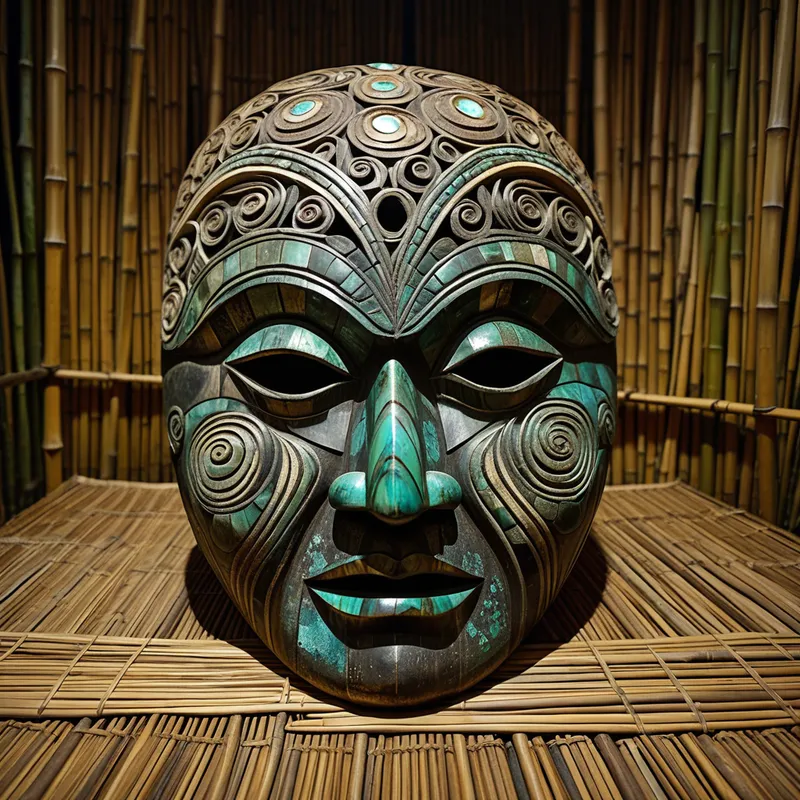
The myth of Bakunawa is a pan-Philippine celestial myth, with strong roots in the pre-colonial animist beliefs of the Visayas and other islands. It was not a singular, canonical text but a living oral tradition, passed down through generations by babaylan and storytellers. Its primary function was etiological, explaining the phenomenon of a lunar eclipse—laon in some dialects—in a pre-scientific world. But its purpose ran far deeper than simple explanation.
It served as a cosmological anchor, teaching about the delicate balance between order (kahawaan) and chaos (idalmunon). The communal act of noisemaking during an eclipse was a critical ritual. It was not mere superstition, but a participatory magic, a collective exertion of human will upon the cosmos. By beating gongs, drums, and pots, the community literally acted out the myth, reinforcing social cohesion and asserting their role as active participants in maintaining cosmic harmony. The myth, therefore, encoded a profound ecological and social principle: the world requires active, communal stewardship to prevent it from being consumed by chaotic, primordial forces.
Symbolic Architecture
At its heart, Bakunawa is not a mere monster. It is the embodiment of insatiable desire, the shadow side of awe. The seven moons represent a state of original, celestial wholeness and perfection. Bakunawa’s envy is the psyche’s confrontation with a beauty or a completeness it feels separate from, a perfection it cannot integrate but can only think to consume.
The serpent does not wish to admire the moon from below; it wishes to become the moon by making the moon part of itself. This is the tragedy of unconscious desire: to destroy the very thing it claims to love.
Bakunawa is the Shadow archetype made cosmic—a vast, unconscious force of lack and yearning that rises periodically to threaten the conscious order (the light of the moon, the regularity of life). The lunar eclipse becomes the perfect symbol for a temporary possession by this shadowy hunger, where the light of consciousness is swallowed by the unconscious. The people’s clamor is the symbolic act of ego-consciousness reasserting itself, using the tools of culture (ritual, noise, community) to break the trance of identification with the devouring impulse.
The Dreamer's Resonance
When this mythic pattern stirs in the modern dreamer, it often manifests as dreams of being pursued by a vast, impersonal force from the deep—a tidal wave, a black vortex, or indeed, a great serpent. The somatic experience is one of primal dread and awe, a feeling of being utterly small before an overwhelming compulsion. This is not the fear of a personal enemy, but of an archetypal one.
Psychologically, this signals the eruption of a deep, unconscious content—an envy, a craving, or a neglected part of the self so powerful it threatens to “eclipse” the dreamer’s conscious identity. It may relate to a consuming ambition, a jealous obsession, or a repressed grief so vast it feels oceanic. The dream is the psyche’s way of showing that a Bakunawa-like hunger has risen from the personal or collective unconscious and is attempting to devour a valued psychic “moon”—perhaps one’s sense of peace, a relationship, or a creative light. The feeling of paralysis in the dream mirrors the mythic trance; the challenge is to find the inner “noisemakers,” the aspects of the self that can shock the system back into balance.

Alchemical Translation
The journey of individuation, the process of becoming whole, is profoundly modeled in this myth. We all begin with a psychic “seven moons”—a potential for wholeness. But development often creates a split: the conscious ego identifies with the light, order, and beauty, while the dark, desiring, envious, and chaotic aspects are repressed into the personal Shadow, our inner Bakunawa.
The eclipse is not a disaster but a necessary nigredo, the blackening phase of alchemy. It is the moment when the shadow rises to meet the light. The goal is not to slay Bakunawa, for it is a part of the whole self. The goal is the ritual enacted by the people: to confront it, to break its hypnotic hold through conscious awareness (the noise), and to force a release.
The transmutation occurs in the release, not the consumption. The moon, having been in the belly of the beast, returns to the sky forever changed—no longer naive to the dark, but resilient, having survived an encounter with its own opposite.
This is the alchemical albedo, the whitening. The integrated self is not the self with seven perfect, untouched moons. It is the self with six moons and a wise, restless serpent in the deep below, a dynamic tension where light is cherished precisely because it is vulnerable, and darkness is acknowledged as a powerful, desiring part of the cosmic self. The individual learns to “make noise”—through introspection, creative expression, or dialogue—whenever the inner serpent threatens to swallow their light, thus mastering the ritual of self-regulation and achieving a more complex, resilient consciousness.
Associated Symbols
Explore related symbols from the CaleaDream lexicon:
- Moon — The celestial object of desire and beauty, representing consciousness, cyclicality, and the fragile light of the ego that is periodically threatened by the unconscious.
- Ocean — The realm of Bakunawa, symbolizing the vast, unknown, and potentially devouring depths of the unconscious mind and primordial chaos.
- Serpent — The core form of Bakunawa, embodying primal energy, envy, transformation, and the shadowy force that challenges static order.
- Sea Serpent — The specific manifestation of the serpent archetype from the deep, representing a colossal, impersonal hunger rising from the collective or personal unconscious.
- Eclipse — The central event of the myth, symbolizing a temporary possession by the shadow, where light is swallowed by darkness in a necessary cosmic cycle.
- Ritual — The communal noisemaking, representing conscious, deliberate action taken to restore balance and break the trance of unconscious compulsion.
- Shadow — The Jungian concept perfectly embodied by Bakunawa: the repressed, undesirable, yet powerful aspects of the self that seek integration.
- Chaos — The state Bakunawa introduces by devouring the moon, representing the undifferentiated, formless potential that exists before and beyond order.
- Rebirth — The return of the moon after the eclipse, symbolizing the restoration of consciousness after a transformative encounter with the shadow, now wiser and more resilient.
- Fate — The seemingly predetermined, cyclical rising of Bakunawa with the full moon, speaking to the inescapable return of repressed contents and the archetypal patterns of the psyche.
- Light — The quality of the moons that Bakunawa covets, representing consciousness, clarity, beauty, and the valued achievements of the ego that must be defended and integrated.
- Dream — The state in which the mythic pattern of devouring and rescue is most actively played out in the modern psyche, a personal theater of cosmic conflict.