
Babalu Aye Myth Meaning & Symbolism
The myth of the divine king who endures profound suffering, transforming affliction into the sacred power of healing and resilience.
The Tale of Babalu Aye
Listen. The story begins not in light, but in shadow. In the time when the world was still learning its own name, there walked a king named Babalu Aye. He was not just a ruler of men, but a sovereign of the very soil, his wealth as vast as the savannah, his health a fortress. He walked with the pride of the leopard, his court a symphony of praise. Yet, in his heart, a seed of hubris took root. He believed his vitality was his alone, a possession, not a sacred gift from Olodumare.
Then, the wind changed. It carried not the scent of rain, but a dry, itching dust. A silence fell upon the land, broken only by a new sound—a faint, collective sigh of discomfort. A strange affliction descended from the heavens, a scourge that cracked the skin and fevered the blood. It touched the poor in their huts and, defiantly, it scaled the palace walls. It found the king. His unassailable health crumbled. His smooth skin erupted in lesions; his strong legs weakened. The court that sang his praises now whispered in fear. The scent of herbs and incense was replaced by the smell of fear and decay.
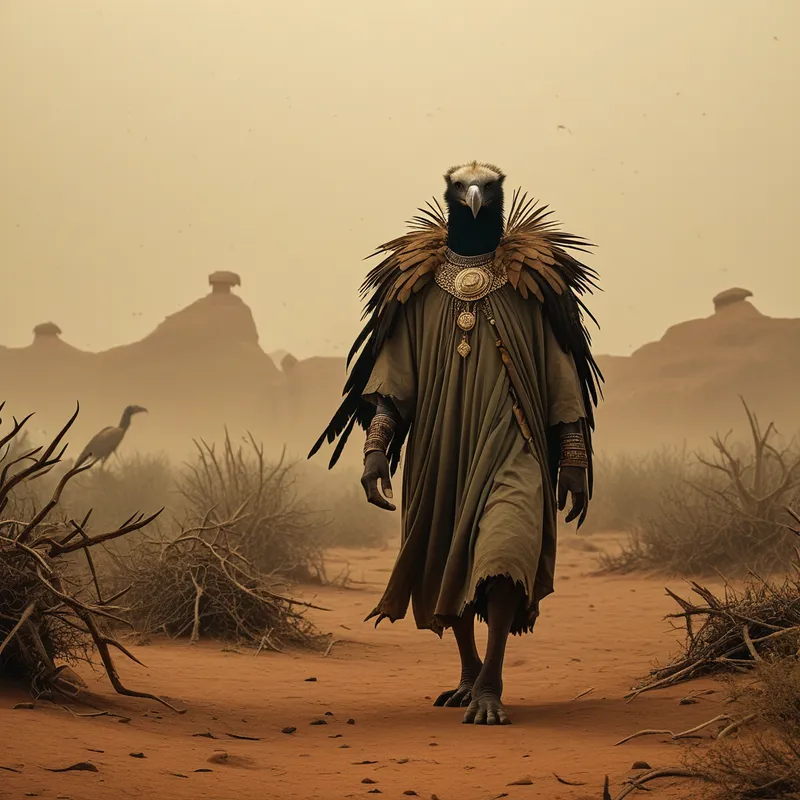
Cast out by his own people, driven by terror of his contagion, Babalu Aye was exiled. The proud king became a shuffling figure in the wilderness, leaning on a rough-hewn staff. He wandered the barren places, the no-man's-lands between towns. The sun, once his crown, now scorched his wounds. The earth, his domain, was now his hard bed. In his profound suffering, a great alchemy began. His pride dissolved into the dust. His rage cooled into a deep, aching empathy. As he suffered, he listened—to the rustle of dry leaves that hinted at medicinal plants, to the scuttling of creatures that knew the secrets of the soil, to the silent suffering of all who were cast out like him.
His journey led him to the forge of Ogun, and to the deep wisdom of Osanyin. From them, he did not seek a cure for himself, but the tools to understand the affliction. He learned the language of the earth’s remedies. In his ultimate humility, he was remade. When he finally returned, it was not as a king demanding tribute, but as a physician offering understanding. He carried not gold, but a gourd of water and a bag of herbs. The sores remained upon his body, not as marks of shame, but as sacred maps of survival. He had absorbed the poison and transmuted it into compassion. The outcast had become the healer, the scourge transformed into a sacred path. The one who knew disease most intimately became the master of its relief.
Cultural Origins & Context
This narrative is not merely a story but a living pillar of Isese and the Orisha traditions that spread across the Atlantic through the tragedy and resilience of the transatlantic slave trade. In Yorubaland, Babalu Aye (also deeply revered in the diaspora as Saint Lazarus) is an Orisha of profound duality. His myths were preserved and transmitted orally by priests (babalawos and iyalorishas), through ritual invocations (oriki), and in the sacred verses of the Ifa corpus.
Societally, his function was and remains crucial. He embodies a fundamental truth: that which threatens the community’s physical integrity—disease, epidemic, poverty—must be acknowledged, respected, and ritually engaged with, not merely feared and ostracized. His worship involves offerings (ebo) of cool water, popcorn, and pennies—items associated with the poor and the sick. This practice reinforces a social contract of empathy, reminding the community of their duty to care for the afflicted and destitute. His myth served as a cosmological explanation for suffering and a ritual technology for managing it, transforming a source of terror into a locus of sacred power and communal responsibility.
Symbolic Architecture
At its core, the myth of Babalu Aye is a profound map of the psyche’s relationship with affliction. He symbolizes the archetypal wounded healer, a figure whose authority is born not from perfection, but from profound, integrated experience with the shadow realms of existence.
The most potent medicine is always distilled in the crucible of personal suffering.
His physical sores are the ultimate symbol of vulnerability and visibility. In a world that often hides pain, his wounds are unabashedly present. They represent the Shadow made manifest—all the aspects of life we fear, reject, and try to quarantine: illness, decay, poverty, need. His exile is the psychological moment when our own suffering, or our fear of the suffering in others, causes us to banish parts of ourselves or our community. The gnarled staff is not just a support; it is the axis mundi of his new identity, connecting the heavens of his former glory to the hard earth of his reality, a symbol of resilience forged in absolute humility.
The transformative journey occurs when he stops fleeing his condition and begins to study it. This is the shift from victimhood to curious engagement with one’s own pain. His acquisition of herbal knowledge from Osanyin represents the conscious integration of the shadow—learning the hidden gifts and insights buried within the wound itself. He does not return cured; he returns transformed, with the wound integrated as a source of wisdom and power.

The Dreamer's Resonance
When this mythic pattern stirs in the modern dreamer, it often signals a profound somatic or psychological initiation into the realm of the wounded healer. To dream of lesions, rashes, or a pervasive sense of being “infected” or “unclean” may not be literal, but symbolic of a psychic affliction—a corrosive shame, a hidden grief, or a feeling of being emotionally or spiritually “contagious” to others.
Dreams of being cast out, of wandering barren landscapes, or of leaning heavily on a stick mirror Babalu Aye’s exile. They point to a deep-seated feeling of isolation resulting from some perceived flaw or life circumstance. The psyche is enacting the exile so that the necessary alchemy can begin in solitude. Conversely, dreaming of offering water or simple herbs to a sick person, or of finding healing plants in a wasteland, signals the emergence of the healing function from within the wound-state itself. It is the dream ego beginning to translate its own suffering into empathy and resourcefulness, moving from identification with the affliction to stewardship of it.
Alchemical Translation
For the modern individual navigating the path of individuation, Babalu Aye’s myth models the non-linear path of psychic transmutation. The process begins with a fall from a state of identified perfection or control (the proud king). The affliction that strikes is the inevitable eruption of the unconscious—repressed emotions, neglected needs, or a life lived out of alignment with the soul’s purpose.
The king must become the beggar so the beggar can become the king.
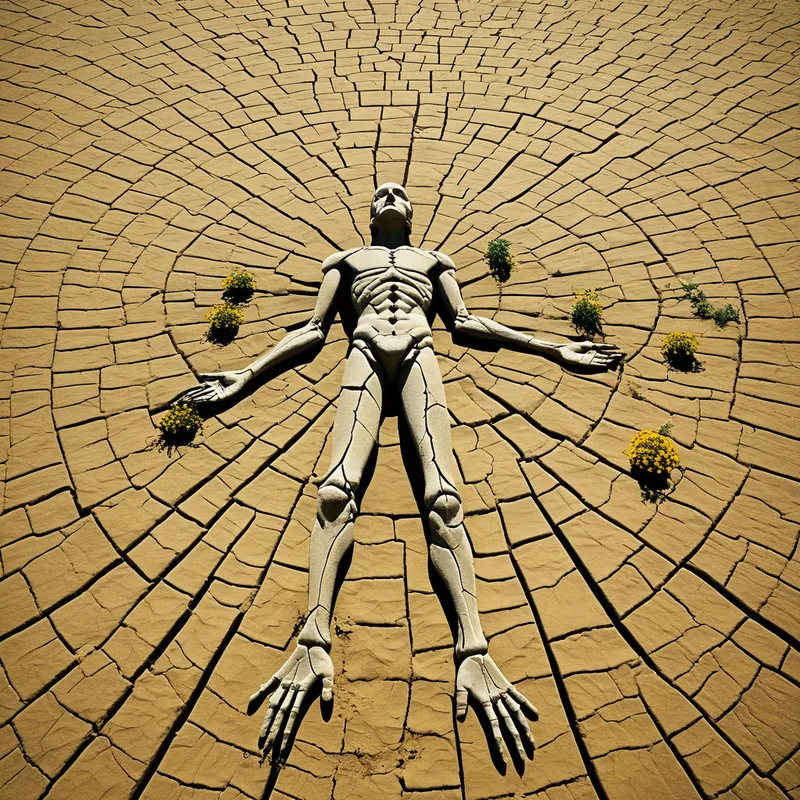
The critical alchemical stage is the exile. This is the necessary nigredo, the dark night of the soul, where one must fully inhabit the suffering without the old identities and defenses. It is a painful but sacred dissolution. In this space, the drive for a quick “cure” (a return to the old state) must be surrendered. Instead, one learns the “herbal knowledge”—the subtle, patient, earth-bound practices of self-observation, therapy, creative expression, or somatic awareness that slowly transmute the raw material of pain.
The return is not a restoration, but an ascent to a higher synthesis. The integrated individual does not erase their wounds; they carry them as part of their story, their compassion, and their unique ability to “heal” others because they speak from the place of having been there. The gourd of water they offer is the wisdom that true healing often comes not from grand solutions, but from the basic, cooling waters of presence, acknowledgment, and shared humanity. One becomes a vessel that holds both disease and remedy, understanding them as two aspects of the same sacred life force.
Associated Symbols
Explore related symbols from the CaleaDream lexicon:
- Wound — The central symbol of Babalu Aye, representing visible suffering, vulnerability, and the point where the sacred enters a broken vessel to initiate transformation.
- Healing — The ultimate purpose and power derived from his journey, signifying not the eradication of wounds, but the wisdom and compassion born from integrating them.
- Earth — His domain and his bed; symbolizing the grounded, material reality of suffering and the source of all medicinal, nourishing remedies.
- Journey — His exile and wandering path, representing the necessary, lonely pilgrimage through the landscape of one's own affliction to find meaning.
- Water — The primary offering to him, symbolizing cleansing, cooling, the relief of suffering, and the fundamental, humble act of compassion.
- Staff — His gnarled walking stick, a symbol of resilience, support, and the new identity forged in humility and endurance.
- Outcast — His state of exile, representing the psychological experience of being rejected for one's flaws or differences, and the solitude where transformation begins.
- Herbs — The knowledge gained from Osanyin, symbolizing the subtle, natural wisdom and practical remedies found within the heart of the problem itself.
- Gourd — The vessel that carries his healing substances, representing containment, the sacred tool that holds the dual powers of disease and cure.
- Poverty — His association with beggars and the destitute, symbolizing the state of utter need that strips away pride and opens the soul to sacred humility and connection.