Athena vs. Ares Myth Meaning & Symbolism
The mythic clash between Athena's strategic intelligence and Ares's primal fury, representing the eternal human struggle between ordered mind and chaotic passion.
The Tale of Athena vs. Ares
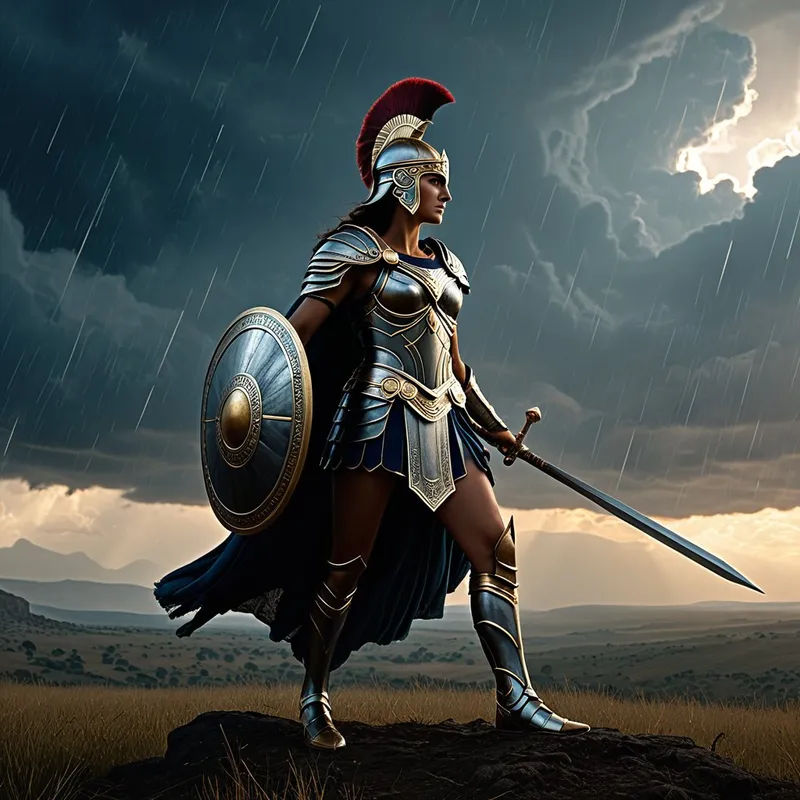
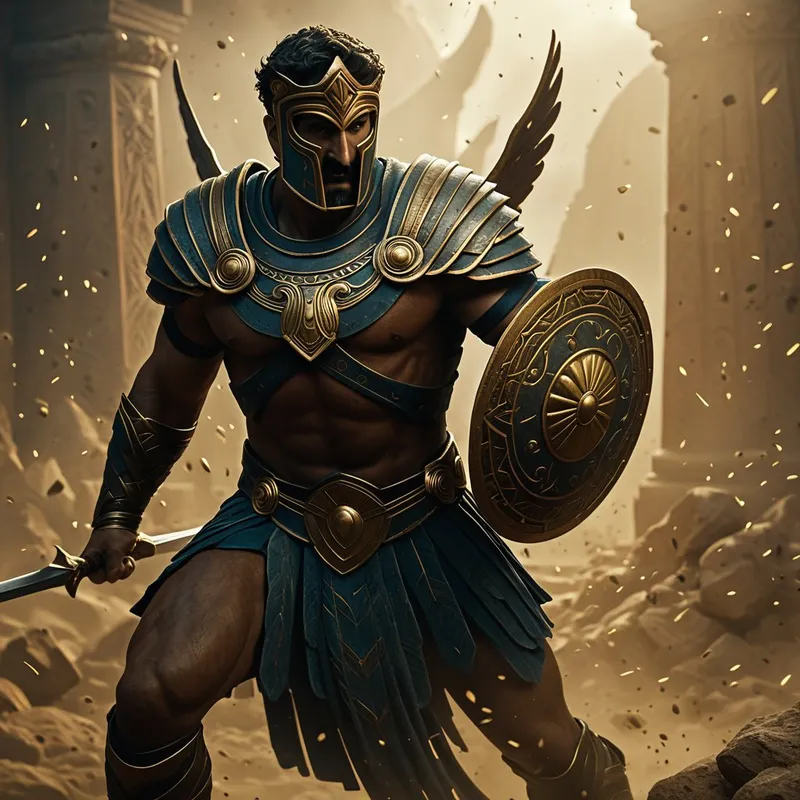
Hear now the clash that shook the plains of Ilion, a strife not merely of men but of divine essence. The air was thick with the din of bronze, the screams of horses, and the dust of dying glory. On one side stood Ares, the Scourge of Men. His form was a tempest of fury, his armor stained not with patina but with fresh gore, his voice the roar of a thousand shields splintering. He reveled in the [chaos](/myths/chaos “Myth from Greek culture.”/), driving men to a frenzy where friend and foe were meat for the spear.
And opposing him stood [Athena](/myths/athena “Myth from Global/Universal culture.”/), born not of woman but sprung fully armed from the mind of Zeus. Her gaze was clear, her armor bright as a polished mirror. She did not revel; she observed. She moved through the carnage not as a force of nature, but as a master artisan, her presence a cool current in the fevered air. Where Ares embodied the why of war—the rage, the terror—[Athena](/myths/athena “Myth from Global/Universal culture.”/) mastered the how—the stratagem, the turning point, the well-placed blow.
The conflict crystallized around a mortal hero, Diomedes, fueled by Athena’s own courage. She guided his hand, veiled him in mist, and granted him the dreadful power to see and strike the gods themselves. Diomedes’ spear, guided by divine strategy, found the flesh of Ares, drawing a bellow of pain that shook the very earth. But the true blow was yet to come.
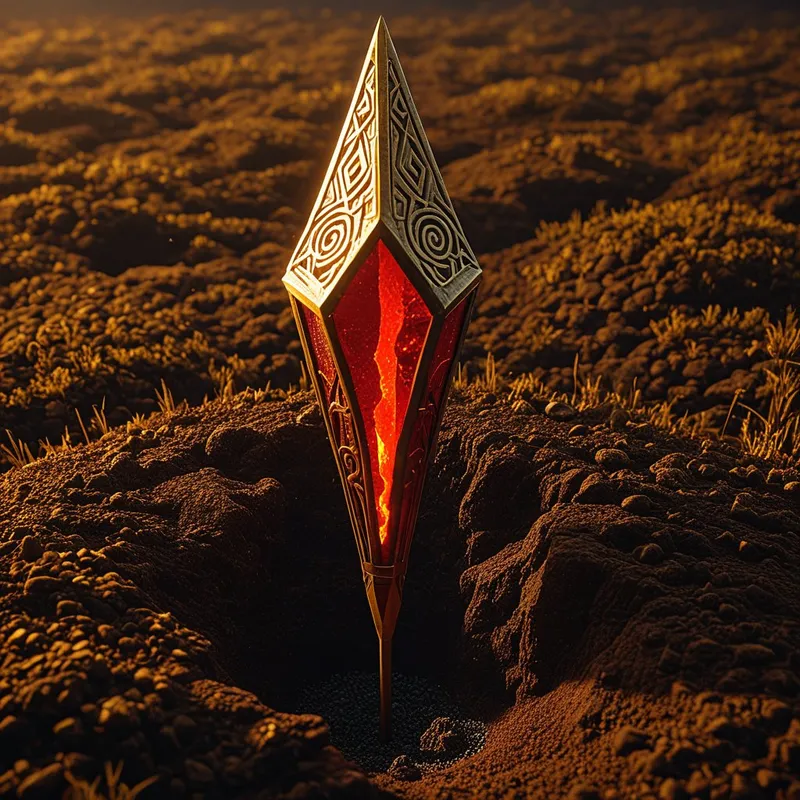
Athena herself took up a stone—a boundary marker, a [thing](/myths/thing “Myth from Norse culture.”/) of order and measure—from the Trojan plain. This was no weapon of the forge, but a tool of the polis, of civilization. With a force that held the precision of geometry, she hurled it. It struck Ares on the neck, a point of vulnerability, where the helmet meets the corselet. The god of raw strength was felled not by a greater strength, but by a perfect application of force. His seven-acre body crashed to the dust, his brazen armor clattering like a fallen citadel. Whimpering, shamed, he fled the field, a stream of divine [ichor](/myths/ichor “Myth from Greek culture.”/) staining [the earth](/myths/the-earth “Myth from Hindu culture.”/), ascending to Olympus to nurse his wounds and his wounded pride. The field, for a moment, knew a different silence—not the absence of noise, but the presence of a calculated pause. Athena wiped the stone clean and returned to the work of war.
Cultural Origins & Context
This myth, immortalized in [Homer](/myths/homer “Myth from Greek culture.”/)’s Iliad (Book 5), was not mere entertainment for the ancient Greeks. It was a foundational narrative recited by [bards](/myths/bards “Myth from Celtic culture.”/) at feasts and festivals, a psychic map of their deepest values. The Iliad was a core text of Greek education, and this divine duel served as a crucial commentary within it. In a society that revered both martial prowess and civic order, the tension between Ares and Athena was a lived reality.
Ares was often viewed with ambivalence—a necessary evil, perhaps, but one more readily worshipped in regions like Thrace, associated with “barbarian” frenzy. Athena, in contrast, was the patron of Athens, the goddess of the city-state itself. Her victory symbolized the [triumph](/myths/triumph “Myth from Roman culture.”/) of the civilized, collective ideal over the individualistic, destructive blood-rage. The myth functioned as a societal lesson: true power and safety for the polis lay not in unleashing chaos, but in channeling force through wisdom, craft, and strategic law. It taught that the mind, properly applied, could master the blind fury that dwells in every heart and on every battlefield.
Symbolic Architecture
Athena and Ares are not simply two gods of war. They represent the [bifurcation](/symbols/bifurcation “Symbol: A fork, split, or division representing a critical choice, duality, or the branching of paths in life or consciousness.”/) of a single, terrifying [human](/symbols/human “Symbol: The symbol of a human represents individuality, complexity of emotions, and social relationships.”/) experience into its constituent archetypal poles.
Ares symbolizes the undifferentiated psychic force—raw aggression, unchecked [passion](/symbols/passion “Symbol: Intense emotional or physical desire, often linked to love, creativity, or purpose. Represents life force and deep engagement.”/), the id unleashed. He is the [shadow](/symbols/shadow “Symbol: The ‘shadow’ embodies the unconscious, repressed aspects of the self and often represents fears or hidden emotions.”/) of conflict: the personal rage, the tantrum, the destructive [impulse](/symbols/impulse “Symbol: A sudden, powerful urge or drive that arises without conscious deliberation, often linked to primal instincts or emotional surges.”/) that seeks only to consume. He is war as a state of being, a [chaos](/symbols/chaos “Symbol: In Arts & Music, chaos represents raw creative potential, uncontrolled expression, and the breakdown of order to forge new artistic forms.”/) that erases boundaries and identities.
Athena symbolizes the differentiated [application](/symbols/application “Symbol: An application symbolizes engagement, integration of knowledge, or the pursuit of goals, often representing self-improvement and personal development.”/) of force. She is [the ego](/myths/the-ego “Myth from Jungian culture.”/)’s [capacity](/symbols/capacity “Symbol: A measure of one’s potential, limits, or ability to contain, process, or achieve something, often reflecting self-assessment or external demands.”/) to take raw [energy](/symbols/energy “Symbol: Energy symbolizes vitality, motivation, and the drive that fuels actions and ambitions.”/) and shape it with intelligence. She represents [strategy](/symbols/strategy “Symbol: A plan of action designed to achieve a long-term or overall aim, often involving competition, resource management, and foresight.”/), discipline, skill (techne), and the higher [purpose](/symbols/purpose “Symbol: Purpose signifies direction, meaning, and intention in life, often reflecting personal ambitions and core values.”/). Her weapons—the [spear](/symbols/spear “Symbol: The spear often symbolizes power, aggression, and the drive to protect or conquer.”/), the [aegis](/symbols/aegis “Symbol: A divine shield or protective mantle, often associated with Zeus or Athena in Greek mythology, representing supernatural protection, authority, and divine power.”/), the [boundary](/symbols/boundary “Symbol: A conceptual or physical limit defining separation, protection, or identity between entities, spaces, or states of being.”/) [stone](/symbols/stone “Symbol: In dreams, a stone often symbolizes strength, stability, and permanence, but it may also represent emotional burdens or obstacles that need to be acknowledged and processed.”/)—are extensions of a conscious mind. She is conflict in service of order, protection, or a defined goal.
The stone that fells Ares is the symbol of the conscious act that interrupts the autonomous complex. It is not an act of greater violence, but of precise, timely intervention.
Their conflict, therefore, is the eternal human [drama](/symbols/drama “Symbol: Drama signifies narratives, emotional expression, and the exploration of human experiences.”/) between the autonomous, consuming affect and the conscious, shaping intellect. Athena’s victory is not the eradication of Ares, but his subjugation to a higher principle. She does not kill him; she wounds him and sends him away. The chaotic force is always present, but it need not rule the [psyche](/myths/psyche “Myth from Greek culture.”/).
The Dreamer’s Resonance
When this mythic pattern stirs in the modern dreamer, it signals an internal civil war. To dream of chaotic, uncontrollable violence—a raging figure, a destructive storm, a senseless battle—may be the psyche presenting the Ares complex: a surge of repressed anger, frustration, or passionate impulse that threatens to overwhelm the conscious personality.
Conversely, dreaming of a calm, armored figure, a strategic game, or finding a perfect tool in chaos may be the emergence of the Athena function. The dream ego is seeking the inner resource of cool judgment and tactical thinking.
Often, the dreamer may feel caught between these forces: a situation at work or in a relationship feels like a chaotic battlefield, and the dream searches for the “boundary stone”—the clear, simple, decisive action that can restore a sense of order. The somatic experience can be one of heat and agitation (Ares) suddenly met with a cooling, focusing clarity (Athena), a literal “taking in hand” of one’s own energies.
Alchemical Translation
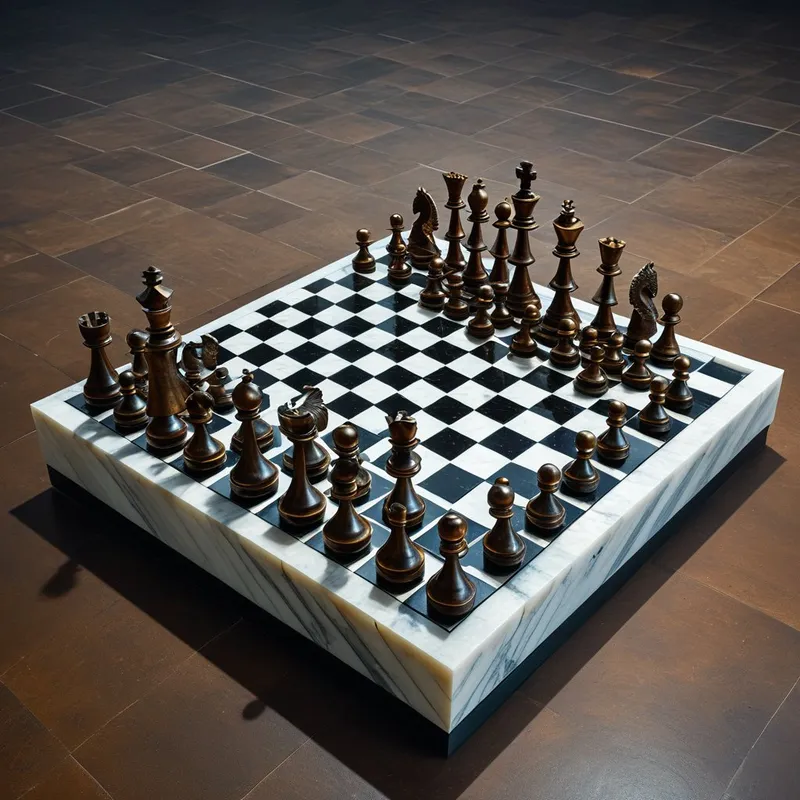
For the individual on the path of individuation, the Athena-Ares myth models a critical alchemical operation: the [separatio](/myths/separatio “Myth from Alchemical culture.”/) and subsequent [coniunctio](/myths/coniunctio “Myth from Alchemical culture.”/) of opposing psychic elements.
The first step is the separatio—the recognition that the chaotic, passionate, destructive impulses within (Ares) are not the totality of one’s being. They must be distinguished from the conscious self. This is the moment of naming the rage, the jealousy, the untamed desire.
The second step is the intervention of the Athena consciousness. This is not repression, but skillful engagement. It asks: What is the raw energy of this anger? Can it be honed into the resolve to set a boundary? What is the chaos of this desire? Can it be channeled into a creative act? The “boundary stone” is the conscious choice, the crafted word, the disciplined practice that redirects the flow.
The alchemical goal is not a psyche where Ares is dead, but one where his formidable energy is metabolized by Athena’s craft. The raw copper of passion is alloyed with the tin of wisdom to form the bronze of purposeful action.
The final, integrated state is the coniunctio—[the sacred marriage](/myths/the-sacred-marriage “Myth from Various culture.”/). This is the individual who can access fierce passion but direct it with clarity; who can feel deep rage but express it with precise, effective communication; who can engage in necessary conflicts without becoming identified with the chaos of conflict. The war within becomes a disciplined, inner council. The psyche is no longer a battlefield, but a well-defended, wisely ruled city. [The owl](/myths/the-owl “Myth from Celtic culture.”/) of Athena sees in the dark, not to eliminate the shadows, but to navigate them with profound intelligence.
Associated Symbols
Explore related symbols from the CaleaDream lexicon: