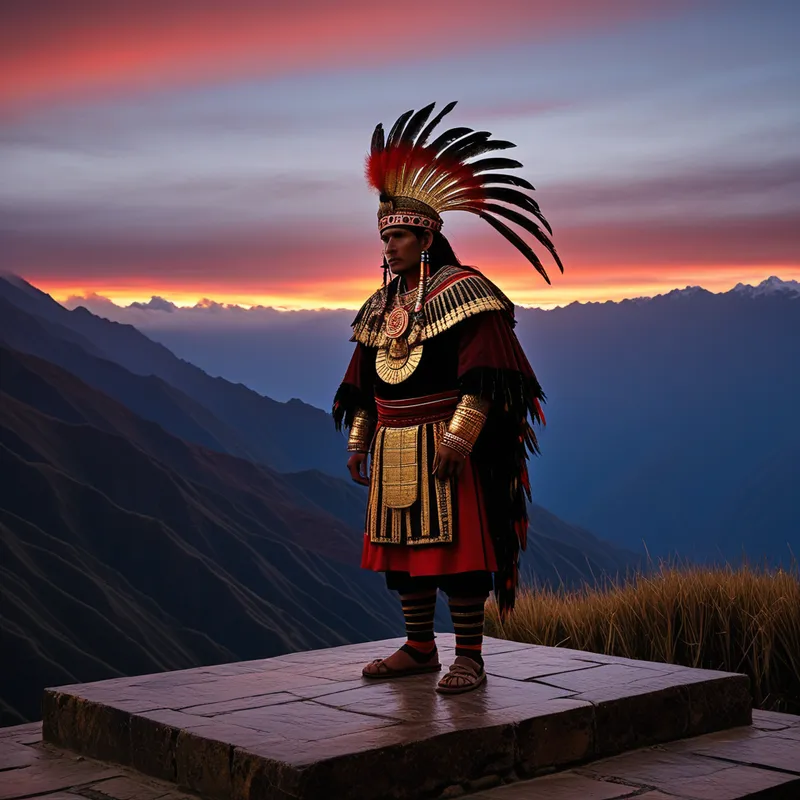
Atahualpa's Prophecy Myth Meaning & Symbolism
A prophecy foretells the arrival of strangers who will shatter the Tawantinsuyu. The last sovereign, Atahualpa, faces a destiny that demands the ultimate sacrifice.
The Tale of Atahualpa's Prophecy
Listen. The air is thin here, on the roof of the world, and carries whispers from the belly of time. The Tawantinsuyu stretched like a puma along the spine of the Andes, its stones fitted by the hands of gods and its people nourished by the breath of Viracocha. But a chill wind had begun to blow, a whisper in the temples that made the sacred flames gutter.
It was said that the Inti himself had grown troubled. In the deep observatories of Cusco, the amautas, the wise ones, read the language of the stars and the trembling of the earth. They saw omens: comets with hair of fire streaking the night, earthquakes that sighed through the foundations of Coricancha, and the sacred llamas of the Sun weeping tears of blood. The oracles of Pachamama fell silent, and the rivers spoke in troubled murmurs.
Then came the prophecy, passed from trembling lips in the shadow of the great stones. It spoke of the return of Viracocha, or beings like him, from across the endless eastern sea. They would come bearing thunder and a strange, insatiable hunger for the sweat of the sun—gold. They would be bearded, pale as the underbelly of a fish, and their words would be a weapon sharper than any tumi. They would shatter the ayni that held the world in balance. The Sapa Inca, the child of the Sun, would be captured not by strength of arms, but by a trick of language and a hunger he could not comprehend.
And so it was. Atahualpa, the sovereign, victorious in a bitter war of succession, rested at Cajamarca. When the strangers arrived, he saw they were few, clad in metal like hard beetles. He, the ruler of millions, descended to the plaza in unimaginable splendor, carried on a litter of gold and silver, surrounded by nobles unarmed in peace. The air was thick with the scent of ichu grass and tension. A friar approached, holding a black book—a Breviary. He spoke words of a foreign god and demanded submission.
Atahualpa, curious, took the book. He held it to his ear. It did not speak. He shook it. It gave no oracle. In disdain, born of a cosmology where sacred power was palpable, he cast it to the ground. This was the sign the strangers awaited. Thunder erupted from metal tubes. Steel flashed in the sun. The plaza became a slaughterhouse of feathers and gold. The Sapa Inca was taken, his divinity imprisoned in a stone room.
In captivity, he bargained with his captors, offering a room filled with gold and twice with silver for his freedom. The empire stripped its temples to fulfill the ransom, a river of sacred metal flowing to feed the strangers' hunger. But the promise was a lie woven in a tongue that knew no ayni. The ransom paid, the sentence was passed: death by fire. At the last, offered conversion to a foreign god to die by the cleaner strangulation of the garrote, a final choice was made. The prophecy was complete. The world of the Four Quarters was broken. The last act of the Son of the Sun was to step from one order of existence into another, leaving his people in a dawn that felt like endless night.
Cultural Origins & Context
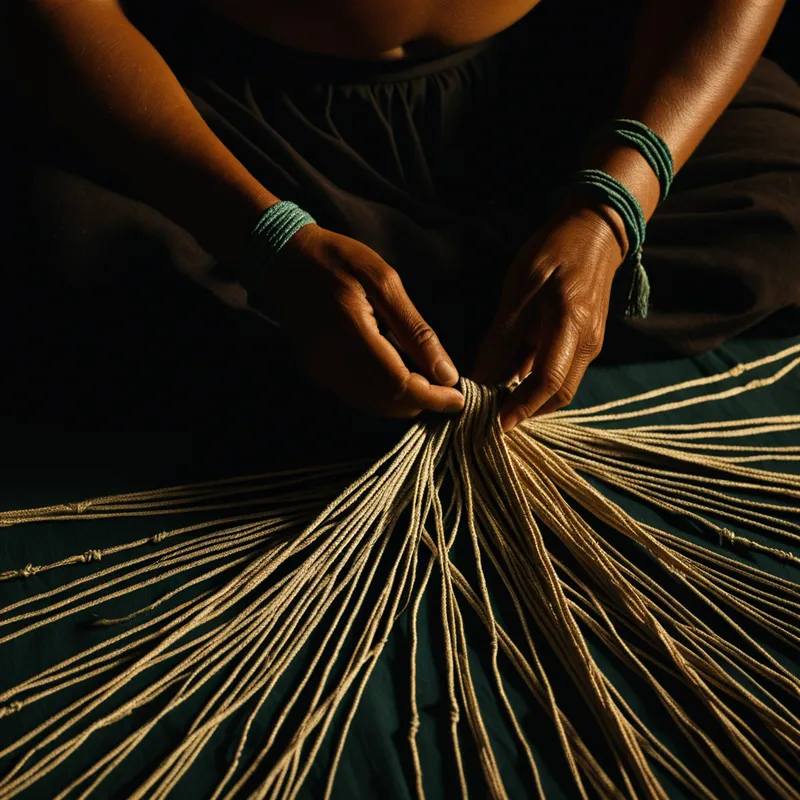
This narrative is not a single, codified myth from a sacred text, but a prophetic motif that crystallized in the oral histories and post-conquest chronicles of the Andes. It represents a profound cultural memory, a retrospective weaving of omens, historical trauma, and cosmological understanding into a coherent story of fate. The tellers were the surviving amautas (wise men) and quipucamayocs (keepers of the quipu), who, in the shattered world after 1532, sought to explain the inexplicable: how a vast, powerful empire could fall to a handful of men.
Its societal function was multifaceted. For the conquered, it served as a theodicy—a way to reconcile the cataclysm with their worldview. The fall was not due to the weakness of Inti or Pachamama, but the fulfillment of a tragic, inevitable cycle. It transformed a military defeat into a cosmological event, preserving a sense of dignity and order within the chaos. The prophecy also legitimized resistance; if it was foretold, then the struggle against the new order was part of the same sacred narrative.
Symbolic Architecture
At its core, the myth is about the collision of two irreconcilable logics: the sacred, reciprocal, cyclical logic of the Andean world and the profane, linear, acquisitive logic of the emerging modern age. Atahualpa is the ultimate symbol of the old order's consciousness.
The hero is not the one who avoids fate, but the one who embodies the tragic intersection of cosmic law and historical rupture.
The Breviary is a central symbol. To Atahualpa, a sacred object must be oracular, alive with voice or spirit (camac). Its silence proves its impotence, leading him to reject it. To the Spaniard, its sacredness is abstract, contained in the written word. The act of throwing it down is not just an insult, but a profound failure of translation—a moment where two entire realities fail to perceive each other. His captivity and ransom represent the systematic desacralization of a world: the sacred metal of the sun god, meant to adorn temples and mummies, is converted into mere currency, its spiritual value extinguished.

The Dreamer's Resonance
When this myth stirs in the modern psyche, it often manifests in dreams of profound cultural or personal "conquest." One may dream of being a revered leader in a familiar, meaningful system (a family, a company, a personal belief structure) suddenly rendered impotent by the arrival of an alien, incomprehensible, and ruthlessly efficient new logic.
The somatic feeling is often of paralysis in a gilded cage—a beautiful, familiar space that has become a prison. There is a deep sense of betrayal, not just by others, but by the very rules of reality one trusted. The dreamer may be offering their most precious inner "gold"—their creativity, love, or faith—to appease some foreign "captor" (a new boss, a societal expectation, a health diagnosis), only to find the ransom is never enough, and the terms keep changing. This is the psyche processing its own "collapse of meaning," where an old, functional identity is overthrown by forces it cannot communicate with.
Alchemical Translation
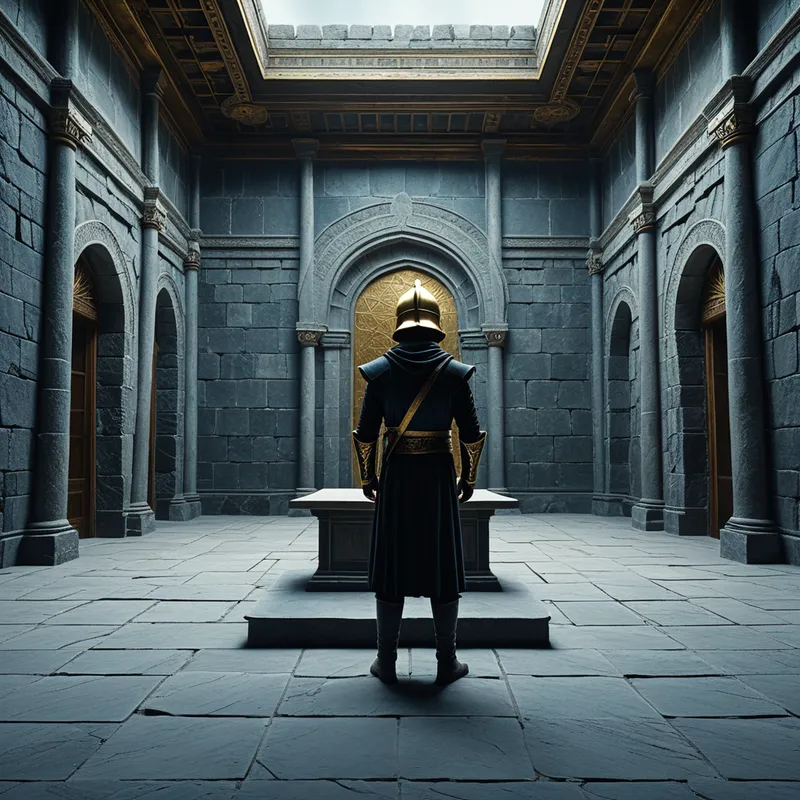
The alchemical journey here is one of the most severe: the mortificatio or blackening of the sovereign self. Atahualpa's path is the ultimate individuation crisis—the conscious ego (the Sapa Inca) that has ruled a vast, ordered inner kingdom is confronted with a power from the outside that it cannot integrate, only be destroyed by.
The transmutation begins when the gold of the old self is surrendered, not to buy freedom, but to purchase the awareness that freedom must now be of a different order.
The prophecy itself is the emerging Self, the totality of the psyche, warning of an inevitable rupture. The choice Atahualpa makes at the end—to accept a new form of death (conversion/strangulation) over the old (fire)—is the critical moment of alchemical translation. It is the reluctant, tragic acceptance that the old form of sovereignty must die so that something of its essence can pass into a new, unimaginable age. For the modern individual, this myth maps the process of enduring a psychological cataclysm—a divorce, a failure, a loss of faith—where one must let the old "empire" of the self be ransacked and dismantled. The goal is not to rebuild the old kingdom, but to discover, like the surviving Andean spirit, how to weave the shattered threads of the old quipu into a new pattern of meaning on the other side of conquest.
Associated Symbols
Explore related symbols from the CaleaDream lexicon:
- Gold — The sweat of the sun, representing divine essence, sovereignty, and spiritual value, which is tragically transmuted into a mere commodity of conquest in the myth.
- Prophecy — The foreknowledge of inevitable rupture, representing the unconscious awareness of a necessary, yet devastating, transformation that the conscious self must endure.
- Sun — The divine ancestor Inti, symbolizing the old order, paternal lineage, and the conscious light of a culture that is eclipsed.
- Sacrifice — Atahualpa's ultimate offering of his life and the empire's treasure, representing the forced surrender of a cherished identity to an incomprehensible new reality.
- Death — Not an end, but a transformation of sovereignty, marking the brutal transition from one world of meaning to another.
- Circle — The shattered cosmic order of reciprocity (ayni), representing a world where balance is broken and must be reformed on new, unknown terms.
- Temple — The Coricancha and other sacred spaces, representing the inner sanctum of belief and identity that is plundered and desecrated.
- Veiled Prophecy — The omens of comets and weeping llamas, representing the subtle, often-ignored signals from the deep psyche that a great upheaval is imminent.
- Scroll of Prophecy — The unspoken knowledge held by the amautas, analogous to the unconscious knowing that carries the blueprint for both destruction and potential future integration.
- Key — The misunderstood Breviary, representing a potential tool for a new form of understanding that is rejected because it does not fit the old locks of perception.
- Shadow — The conquistadors, representing the ruthless, acquisitive, and alien aspect of the unconscious that invades and overthrows the ruling conscious order.
- Destiny — The inescapable arc of the narrative, representing the terrifying yet sacred alignment of personal fate with vast, impersonal historical and psychological forces.