Astral Travel Myth Meaning & Symbolism
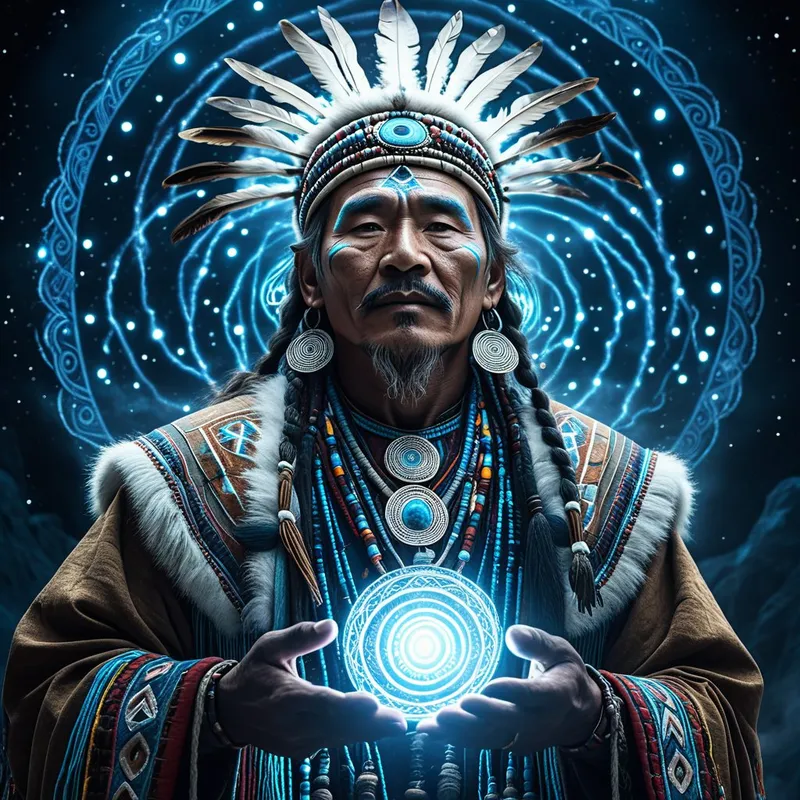
A shaman journeys beyond the body to retrieve lost souls, navigating cosmic realms of spirit and shadow to restore balance.
The Tale of Astral Travel
Listen. The fire is low, the night is deep, and the wind carries the voices of the otherworld. In the heart of the birch forest, within the hide-bound walls of the yurt, the air grows thick with the scent of damp earth and smoldering sage. The people are gathered, their faces etched with a silent plea. A child lies cold, breath shallow, eyes vacant—a soul adrift, stolen by a sudden sickness or a malicious whisper from the shadows.
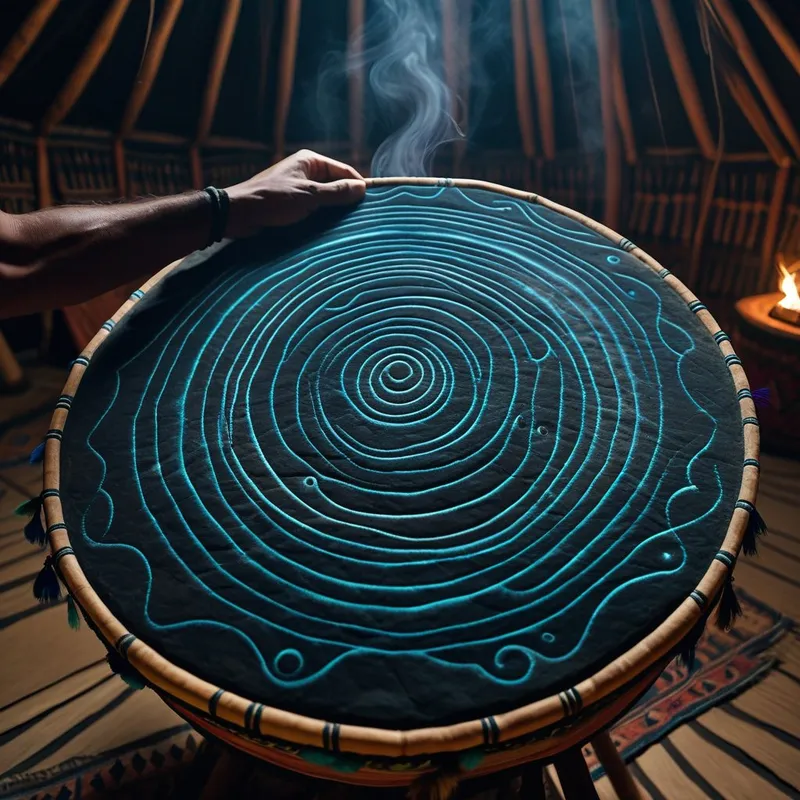
The shaman rises. His robe is heavy with the weight of iron pendants and carved bone, the teeth of the bear, the claw of the eagle. He takes up the drum, its skin stretched taut over the ring of sacred wood. The first beat is a heartbeat torn from the silence. Thump. It is the pulse of the world. Thump-thump. It is the gallop of the spirit-horse. The rhythm is not just sound; it is a ladder, hammered into the air, rung by rung.
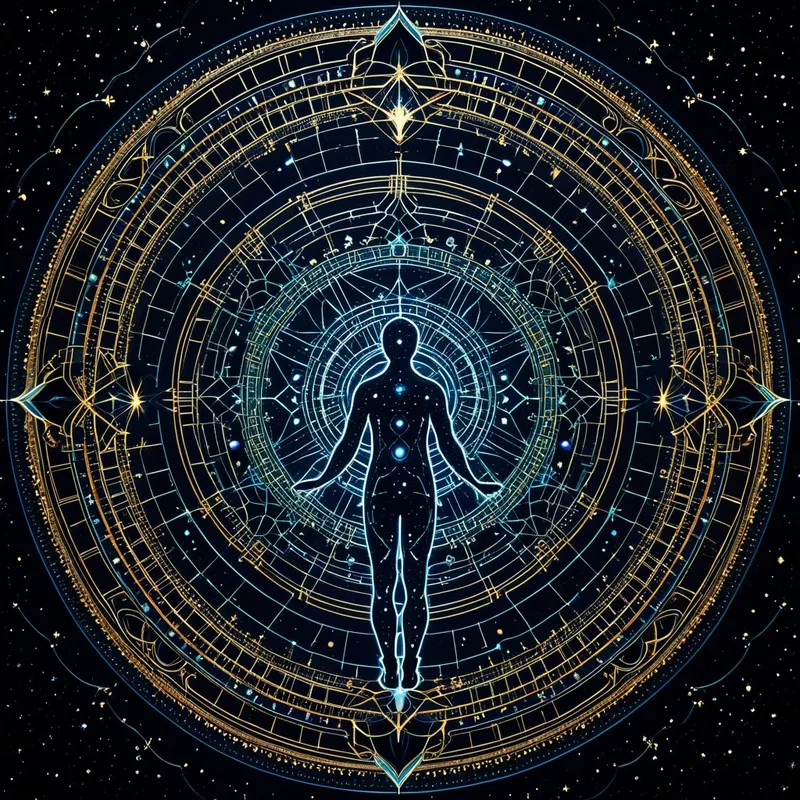
He begins to chant, a low, guttural song that does not come from his throat but from the stones beneath the earth. His eyes lose focus, seeing not the worried faces, but the veils between the worlds as they begin to shimmer and part. The drumming quickens. His body sways, then trembles violently. With a final, gasping breath, his form slumps. But the people do not cry out, for they see it: a shimmering, luminous shape, a second self, peeling away from the still chest. A cord of silver light, finer than spider-silk and stronger than iron, tethers this glowing form to the flesh.
The shaman’s free-soul ascends. The roof of the yurt is no barrier. He rises through the smoke-hole into a sky alive with different stars. He is flying now, not on wings, but on will. Below him, the Middle World—the world of forests, rivers, and human struggle—shrinks to a patterned hide. He is drawn upward, toward the Upper World, a realm of blinding light and ancestral voices. But the child’s soul is not there among the benevolent spirits.
He turns his gaze downward, plunging through layers of murky twilight. The air grows cold and heavy. This is the Lower World, a landscape of primal memory and coiled potential. Gnarled roots of the World Tree plunge into dark waters. Here, shapes move in the gloom—helpful animal guides with eyes of amber, but also formless hungers that sense his alien light. He follows the faint, fading echo of the child’s laughter, a thread of sound in the roaring silence.
He finds it in a damp hollow—a tiny, flickering ember of consciousness, clutched by a clinging shadow of fear. There is no battle of claws, but a contest of song. The shaman’s spirit-form sings the child’s true name, the songs of its mother, the stories of its clan. The shadow writhes, starved of such specific, loving vibration. It releases its grip. The shaman cups the soul-spark gently, folding it into his own luminous body.
The return is a rushing river against the current. He follows the unwavering silver cord back, down through the cosmic layers, through the roof of the yurt, and into the waiting, breathless shell of his own body. With a great, shuddering inhalation, he slams back into his senses. The drum falls silent. In the sudden quiet, he leans over the child, and with a breath that carries the scent of ozone and distant rain, he breathes the spark back into the small chest. The child’s eyelids flutter. A warmth returns to the skin. The people exhale a single, shared breath. Balance is restored. The traveler has returned.
Cultural Origins & Context
This narrative pattern is not a single myth but a foundational experiential paradigm across shamanic traditions worldwide, from the Siberian taiga to the Amazon rainforest and the Arctic tundra. It is less a story told for entertainment and more a map of a documented, ritualized practice. The “myth” was lived and performed by the shaman, often following a profound initiatory crisis—a “shamanic sickness” involving dreams, visions, and a symbolic dismemberment and rebirth. This experience provided the personal authority to navigate the non-ordinary realities.
The knowledge was transmitted orally, but more crucially, through direct apprenticeship and ecstatic experience. An elder shaman would guide the novice, teaching the rhythms, the songs (icaro or yoik), and the mental disciplines required for the journey. Its societal function was paramount: it was a technology of healing, divination, and ecological balance. The shaman acted as a psychopomp, mediator, and repairer of the cosmic order, retrieving lost souls (soul loss being a primary diagnosis for illness), negotiating with animal spirits for hunting success, and ensuring the community remained in harmony with the unseen layers of existence.
Symbolic Architecture
At its core, the myth of astral travel is a grand metaphor for the autonomy of consciousness and the multi-layered nature of the psyche. The free-soul represents the mobile, aware essence of the individual—what we might call the observing ego or the transcendent function. The physical body is the anchored, earthly vessel, the seat of personal history and identity.
The silver cord is the ultimate symbol of connection; it is the lifeline of meaning that ensures the explorer can never be truly lost, only temporarily displaced.
The three-tiered cosmos—Lower, Middle, and Upper Worlds—is a profound map of the psyche. The Lower World symbolizes the personal and collective unconscious: the realm of instincts, repressed memories, primal fears, and untapped potentials (the animal guides). The Middle World is the realm of consensus reality and waking ego-consciousness. The Upper World represents the realm of higher principles, archetypal wisdom, spiritual ancestors, and the superordinate personality. The journey itself is symbolic of introspection, of deliberately descending into one’s own depths or ascending to seek guidance, in order to retrieve something vital that has been lost, repressed, or stolen.
The Dreamer's Resonance
When a modern individual dreams of floating out of their body, flying uncontrollably, or finding themselves in bizarre, layered landscapes while aware of their sleeping form, they are touching the shamanic pattern. This is not merely random neural firing; it is often a somatic and psychological signal of a necessary dis-identification.
Such dreams frequently occur during periods of intense stress, illness, or life transition—echoing the “shamanic sickness.” The psyche is signaling that the conscious identity (the “body”) is under siege or is too rigid, and a part of the self (the “free-soul”) must travel to find resources, perspective, or healing. The feeling of fear in the dream often accompanies the ego’s resistance to this necessary separation. Conversely, the feeling of liberation and panoramic vision signifies the healing potential of gaining a meta-perspective on one’s life situation. The dream is an autonomous act of psychic self-regulation, attempting to retrieve a lost sense of vitality or purpose from the “spirit world” of the unconscious.

Alchemical Translation
For the modern individual pursuing individuation—the process of becoming a whole, integrated Self—the astral travel myth provides a dynamic model for psychic transmutation. The first step is the “drumming,” the deliberate act of altering ordinary consciousness. This translates to active imagination, meditation, or deep introspection—creating the “rhythm” that loosens the ego’s grip on its standard narrative.
The journey is the engagement with inner contents. “Descending to the Lower World” is the courageous confrontation with the shadow, the complexes, and the wounded parts of oneself. It is retrieving the lost “child soul”—one’s innate creativity, spontaneity, or joy that was sacrificed for adaptation. “Ascending to the Upper World” is seeking the inner sage or connecting to transpersonal values that provide meaning beyond the personal drama.
The ultimate alchemical goal is not to live in the spirit world, but to return to the Middle World—your embodied life—transformed, carrying the retrieved gold of insight to ennoble your human existence.
The critical phase is the return. This is integration. Insights gained in meditation or therapy must be “breathed” back into daily life, changing behavior, relationship patterns, and self-perception. The silver cord ensures the process remains grounded; it is the thread of embodiment, the reminder that transcendence is in service to life, not an escape from it. To complete the shamanic cycle is to heal the rift between spirit and matter within oneself, becoming the mediator of your own inner cosmos, and restoring balance to your personal world.
Associated Symbols
Explore related symbols from the CaleaDream lexicon: