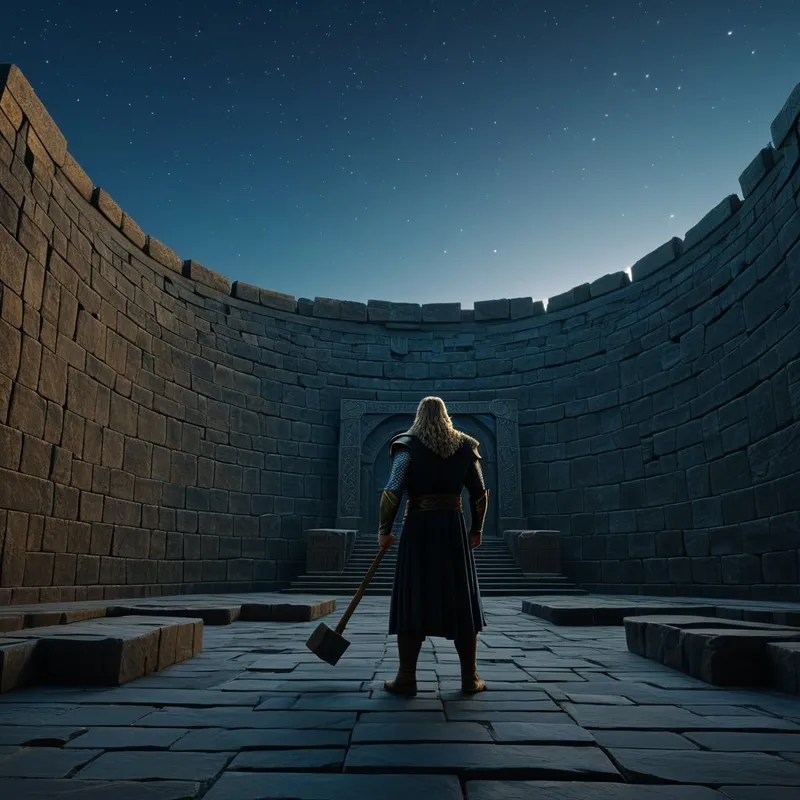
Asgard's Walls Myth Meaning & Symbolism
A giant offers to build an impregnable wall for the gods in one season, but his price is the sun, moon, and goddess Freyja. A trickster god's risky wager saves them.
The Tale of Asgard's Walls
Hear now of the time the gods were afraid.
The war with the Jotnar was fresh in memory, the stones of Asgard still scarred. Aesir and Vanir walked their shining fields and felt the wind from the outer worlds, a wind that carried the scent of frost and malice. Their home was glorious, but it was open, its heart vulnerable to the storm they knew was brewing at the roots of the Yggdrasil. They needed a rampart, a boundary of such might that it would make their realm a fortress. But the labor was beyond even their strength.
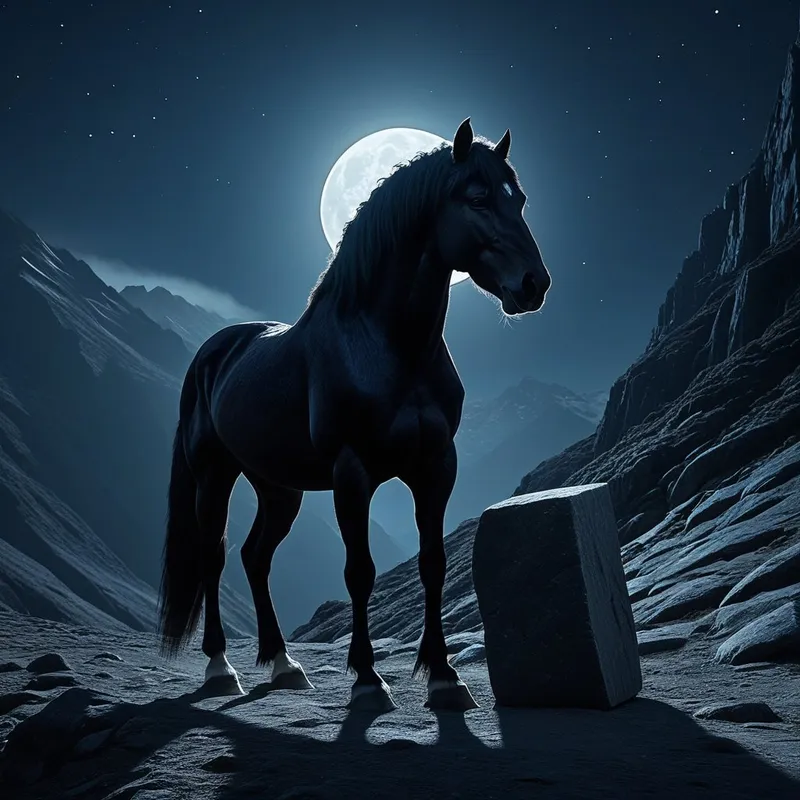
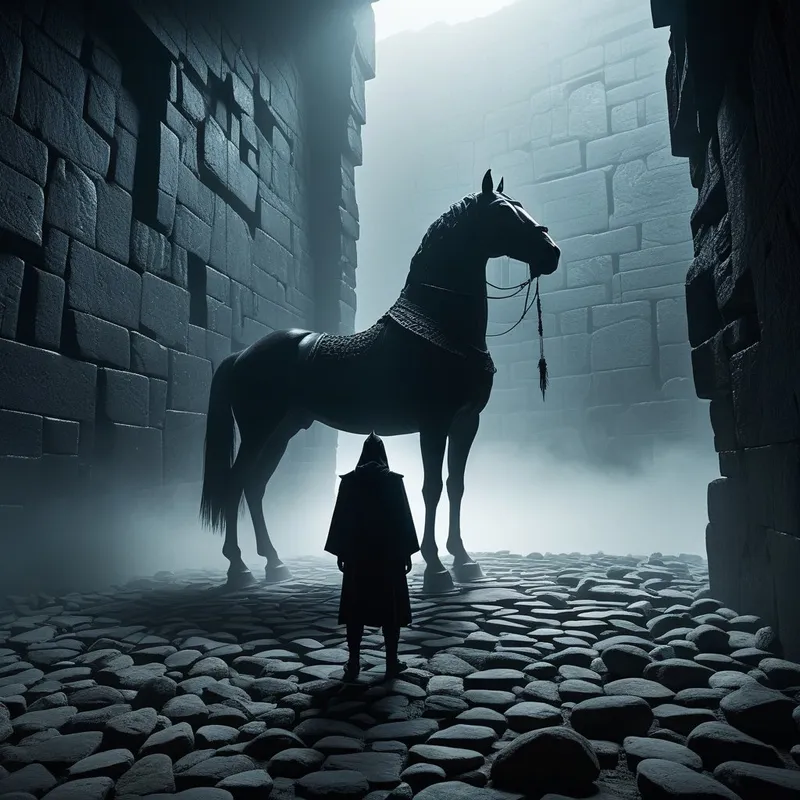
From the mist of the mountains he came, a solitary figure leading a stallion of such power the earth trembled. He was a master builder, a smith of stone, and his voice was like grinding rock. "I will raise for you a wall," he rumbled, "so high and so strong that no jotun, no force in all the Nine Worlds, will ever breach it. I will do this in three seasons—one winter, no more."
The gods gathered, Odin with his single piercing eye, Thor gripping his hammer, the wise Vidar. The offer was a gift, a miracle. But then the builder named his price. "For this work," he said, "I ask the sun, the moon, and the goddess Freyja as my bride."
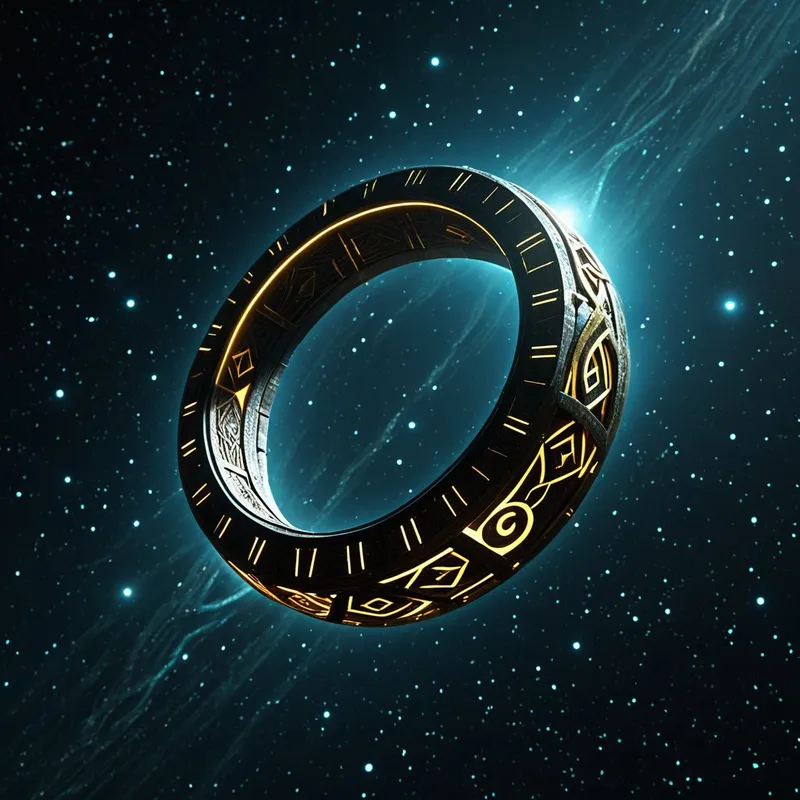
A silence fell, cold and deep. The sun and moon were the lights of the worlds; Freyja was the heart of their joy. It was an impossible demand. Laughter broke the silence—sharp, cunning, alive with dangerous mirth. It was Loki. "Agree!" he whispered to the council. "Set the condition that he must complete the work alone, with no man's help, in the time stated. He cannot. We get our wall started for free." Blinded by the promise of security and Loki's silvered tongue, the gods agreed, swearing mighty oaths on the ring Draupnir.
The builder smiled a slow, stone-crack smile. "So be it."
Work began. The gods' confidence turned to ash as they watched. The builder was not a man; he was a force of the earth itself. By day he quarried mountains. By night, his stallion, Svadilfari, hauled blocks so vast that a hundred Aesir could not move them. The wall rose with impossible speed, a curve of fitted stone that sang with solidity. As the deadline neared, it was clear the builder would succeed. The sun, the moon, Freyja—all would be lost. The gods turned on Loki, their eyes blazing with the promise of a slow and painful death. "You made this bargain," they snarled. "You fix it."
Fear is a great sharpener of wits. Loki, the shape-shifter, the boundary-crosser, hatched a plan. On the final night of winter, as the builder drove Svadilfari to haul the last stones, a marvel appeared. From the edge of the forest came a beautiful mare, her coat like polished silver in the starlight, her call a seductive song. Svadilfari smelled her, saw her, and his discipline shattered. He broke his harness, trumpeting, and chased the mare into the dark woods. The builder roared, chasing after them through the night, but to no avail. His great work stood unfinished, a single gateway incomplete.
Dawn came. The builder, exhausted and enraged, stood before the gods. He had failed by a hair's breadth, and he knew treachery when he saw it. His form seemed to swell, the illusion of a simple mason falling away to reveal the true jotun beneath. But the gods were ready. Thor, whose honor was not bound by Loki's tricky oaths, stepped forward. One swing of Mjolnir shattered the giant's skull, sending him back to the cold stone from whence he came.
The wall stood, mighty and protective, but its final gate was forever unfinished. And from that strange union in the forest—the trickster god as a mare and the mighty stallion—was born a foal. An eight-legged foal, grey and extraordinary, who would become Sleipnir, the greatest of all horses. The price of the wall was not the sun and moon, but it was paid in deceit, in blood, and in the birth of something utterly unforeseen.
Cultural Origins & Context
This myth is preserved primarily in the Gylfaginning section of Snorri Sturluson's Prose Edda, a work that systematized older oral traditions. It is a foundational etiological myth, explaining not only the origin of Asgard's defenses but also of Odin's steed, Sleipnir. Functionally, it served multiple roles in the Norse worldview. It was a cautionary tale about the perils of oath-making and deals that seem too good to be true, reflecting a society where verbal contracts were sacred and fraught. It reinforced the existential tension between the gods (order, culture) and the giants (chaos, raw nature), showing that even divine order is built through conflict and compromise with chaotic forces. Furthermore, it was a narrative about the cost of civilization and security—the wall, a symbol of safety and cultural identity, is born from deception and violence, suggesting that no great communal achievement is without a shadow.
Symbolic Architecture
The wall is the central symbol: the temenos, the sacred boundary that separates the inner from the outer, order from chaos, the known self from the annihilating other. Its construction is the act of ego-formation, of building a coherent identity and a defended psychic space.
The wall is not just a barrier; it is the shape of the self. Its construction defines what is "me" and what is "not-me."
The builder represents the potent, unconscious, instinctual forces that we must engage to build our lives. He is the raw skill, the relentless drive, the "giant" capacity within the psyche that can achieve miracles but operates by its own primal logic, demanding a total commitment—our "sun and moon" (consciousness) and "Freyja" (our capacity for love and connection). Loki, the trickster, is the psychic function that breaks deadlocks through dissolution of boundaries. He is the necessary chaos that prevents the ego (the gods) from being enslaved by a rigid, perfectionist complex (the completed bargain). His transformation into a mare is alchemical: he becomes the enticing anima that lures the brute strength of instinct (Svadilfari) away from its single-minded task, resulting in a creative, transcendent new possibility (Sleipnir).
The Dreamer's Resonance
When this myth stirs in modern dreams, it speaks to a critical phase of boundary-work. Dreaming of an immense, unfinished wall may signal the psyche laboring to establish new defenses, perhaps after a period of invasion or vulnerability. The dreamer might feel the "giant" at work—an obsessive drive, a workaholic compulsion building security at too high a cost.
Dreaming of a powerful, uncontrollable animal (the horse) could symbolize instinctual energy that is either harnessed for a great task or has broken free, causing disruption. The appearance of a trickster figure, or the dreamer themselves engaging in deceit, often points to a situation where conventional, "honorable" solutions have failed, and the psyche is seeking a lateral, transformative escape. The somatic sense is often one of immense pressure, of racing against time, followed by a crisis and a sudden, shocking release or betrayal that ultimately brings an unexpected new capacity (the eight-legged horse).
Alchemical Translation
Psychologically, the myth models the individuation process—the forging of a cohesive Self. The initial state is one of vulnerability (the undefended Asgard). The ego, seeking wholeness, makes a pact with a powerful complex from the unconscious (the builder). The danger is that the complex will take over, demanding the total sacrifice of consciousness and eros.
The work of becoming whole is not about perfect completion, but about the dynamic, living boundary that remains open to the strange and the new.
Loki's intervention is the crucial moment of enantiodromia—the emergence of the opposite. When conscious striving becomes imprisoning, the trickster, representing the transcendent function, destabilizes the situation. The "betrayal" of the orderly plan is, in fact, the salvation of the psyche's flexibility. The unfinished gate is vital; it is the permeable threshold, the point of contact and exchange with the unconscious. The final product is not a perfect, sealed fortress, but a strong yet incomplete structure, and a new, transcendent symbol of mobility and connection (Sleipnir). For the modern individual, the lesson is that true security is not found in flawless, rigid walls built through oppressive deals with our inner giants, but in resilient boundaries that allow for trickster-moments of transformation, leaving a gate open for the unknown to enter.
Associated Symbols
Explore related symbols from the CaleaDream lexicon: