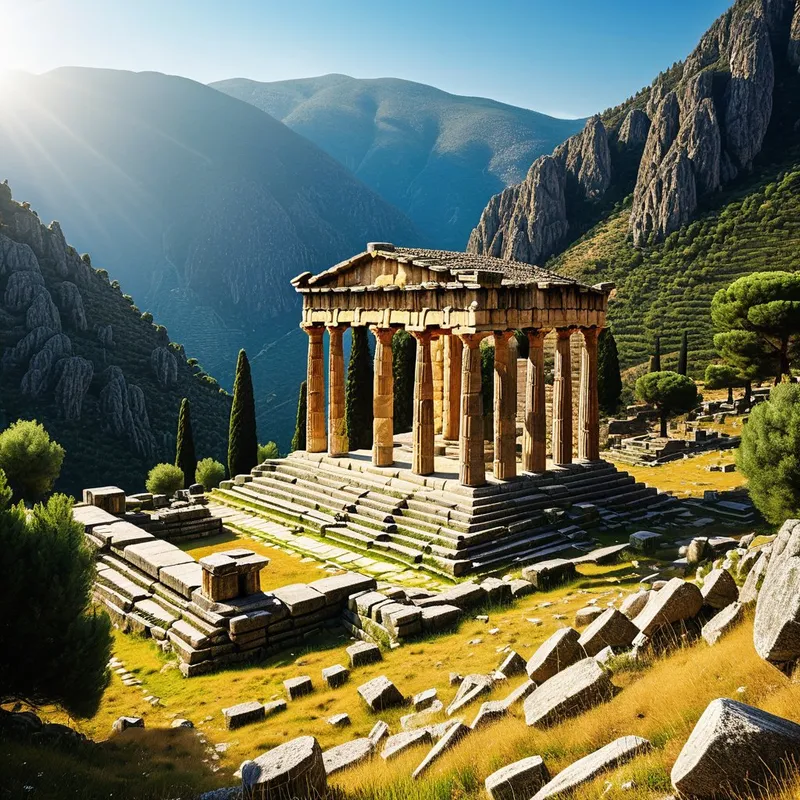
Apollo's Grove at Delphi Myth Meaning & Symbolism
The myth of Apollo slaying the serpent Python to claim the prophetic oracle at Delphi, establishing divine order over primal chaos.
The Tale of Apollo's Grove at Delphi
Listen, and hear of a place where the earth itself spoke. Before the gleaming temples, before the pilgrim roads, there was a wild and shuddering gorge on the slopes of Mount Parnassus. Here, in the deep shadow of the cliffs, a spring of pure, cold water—the Castalian Spring—bubbled from the rock. And here, in a cavern that breathed a strange, intoxicating vapor, an ancient power dwelt.
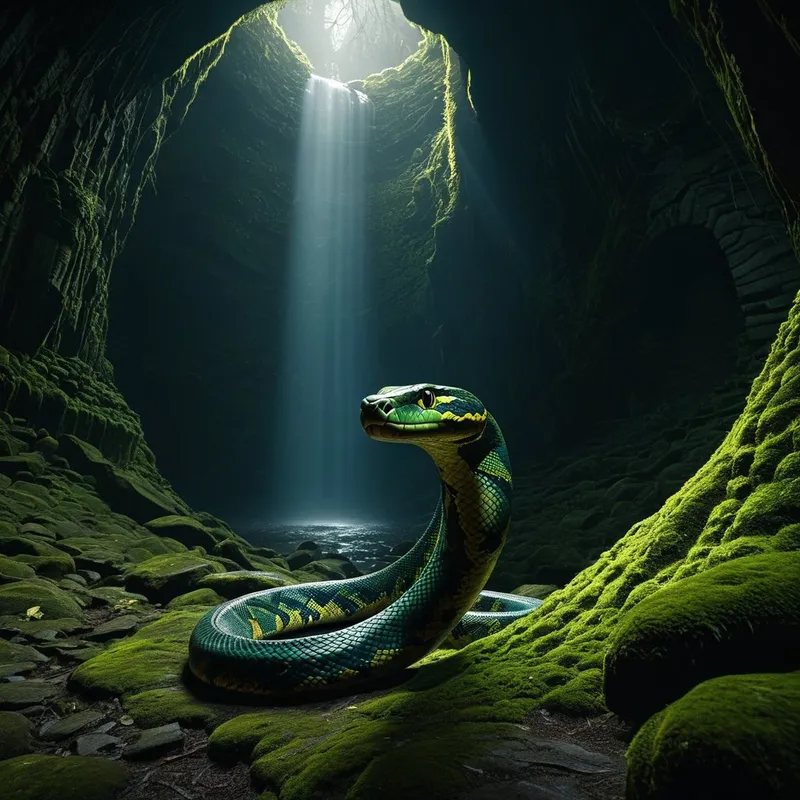
Her name was Gaia, the Earth Mother. From her dark womb, she placed her daughter, Themis, as the first prophetess of the place. Later, the role fell to a monstrous serpent, a child of the mud and the deep places: the great Python. Coiled around the sacred chasm, Python was the guardian of the mantic fissure, the voice of the raw, untamed earth. Its hiss was the sound of chaos, its presence a claim of primordial right.
Then came the light. From the east, driving a chariot of fire, came Apollo, the Far-Darter, son of Zeus. He was young, radiant, a god of reason, music, and piercing clarity. He sought a place to establish his own oracle, a seat of truth that would not be shrouded in the old, chthonic murk. His gaze fell upon the grove at Delphi. He saw the power there, but he saw it bound by the serpent’s form.
What followed was not a battle, but a purification. Apollo, standing on the sun-baked rock, drew back his golden bow. The arrow, a shaft of pure sunlight, flew true. It found the Python in its dark lair, piercing its scaled hide. The creature writhed, its death-throes shaking the mountain, before it lay still, its chaos subdued by celestial order. But Apollo, in that moment of victory, knew a stain of miasma—ritual pollution—for even a monster was a child of Gaia. To cleanse himself, he instituted the Pythian Games, turning an act of violence into one of sacred celebration.
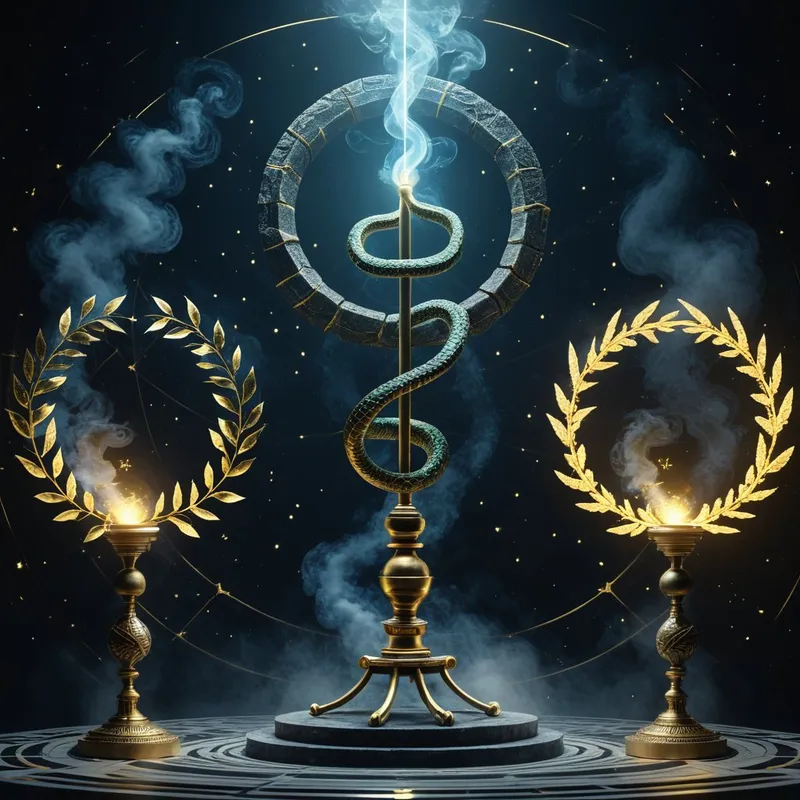
He took the tripod seat over the steaming chasm. He brought priests from Crete. He claimed the laurel tree, the daphne, as his sacred plant. And he chose a mortal woman, the Pythia, to be his vessel. She would sit on the tripod, breathe the sacred pneuma rising from the earth, chew laurel leaves, and speak in riddles—the raw voice of the earth now filtered through the divine mind of Apollo. The grove was his. Chaos was given a voice, but order now held the reins.
Cultural Origins & Context
This foundational myth was not merely a story of divine real estate. It was the charter myth for the most important pan-Hellenic sanctuary in the ancient world: the Omphalos of Delphi, the navel of the world. The tale was recited in hymns, like the famous Homeric Hymn to Apollo, performed by rhapsodes at the very site. It served a critical societal function: to explain and legitimize a profound historical and religious shift.
Archaeology suggests the site was indeed a place of Mycenaean and earlier earth-goddess worship. The myth of Apollo’s conquest poetically encodes the historical supplanting of older, chthonic, possibly matrifocal cults by the newer Olympian, patriarchal order of Zeus and his children. It was a narrative of cultural transition, making the new order feel destined, divine, and right. Every pilgrim who came to consult the oracle participated in this mythic reality, walking a path sanctified by the god’s victory, seeking clarity from a power that had been civilized, yet never fully tamed.
Symbolic Architecture
At its heart, this myth is about the confrontation between two fundamental principles of existence. Python represents the chthonic unconscious: the raw, instinctual, terrifying, and fertile wisdom of the body and the earth. It is the untamed psychic force, the shadowy depth from which intuition and madness both spring. Apollo represents the light of consciousness: the differentiating, ordering, rational, and artistic principle. He is the ego’s drive to understand, to name, to structure, and to create meaning from the formless.
The oracle only speaks truth when the light of consciousness seats itself respectfully above the dark, steaming fissure of the unconscious.
The killing of Python is not the eradication of the unconscious, but its necessary subjugation for the birth of a functional psyche. The ego (Apollo) must establish itself, must claim its "precinct," but in doing so, it incurs a debt. The "miasma" and the subsequent games signify the guilt and the need for ritual reconciliation with the power it has overcome. The resulting oracle—a conscious priestess channeling an unconscious vapor—becomes the perfect symbol of the integrated self: a dialogue between the two realms, where neither has absolute dominion.
The Dreamer's Resonance
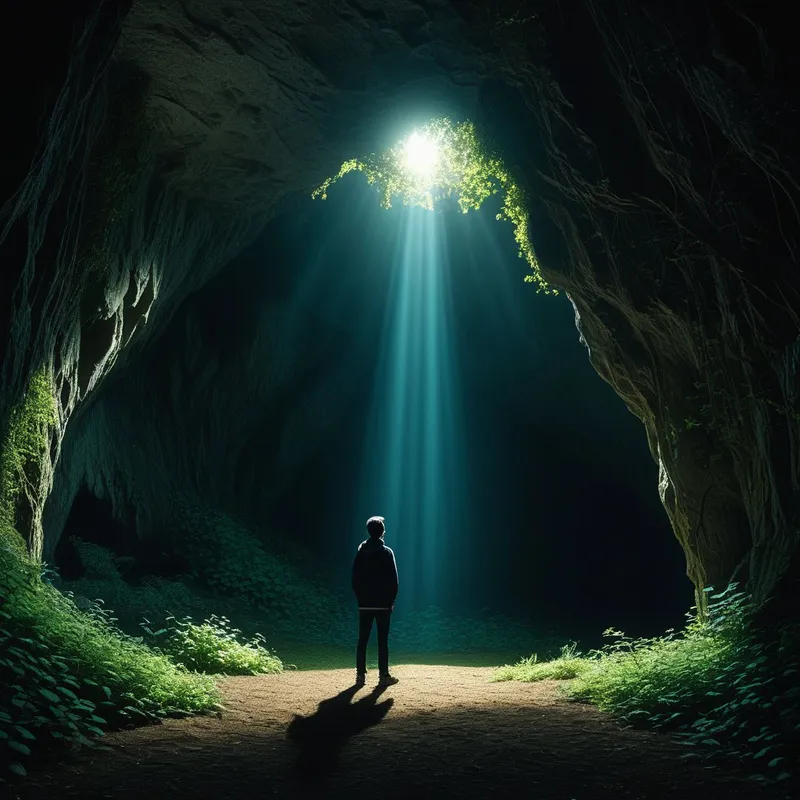
When this mythic pattern stirs in the modern dreamer, it often manifests as a confrontation with a "serpent" in a neglected, wild place—a basement, a forest, a deep ravine in a familiar landscape. The serpent may be terrifying, alluring, or simply massively present. The dreamer might feel compelled to face it, flee it, or, significantly, to find something valuable that it guards.
This dream signals a critical moment of psychic reorganization. The somatic feeling is often one of dread mixed with awe—the body recognizes a primal power. Psychologically, the "Python" is a complex of untamed energy: perhaps a raw talent, a repressed trauma, a burst of creative fury, or a chaotic emotional need that has been lurking in the shadows of one’s life. The dream marks the point where the conscious mind (the dreaming culture.") ego) can no longer ignore this force. It must engage. The act of facing it—whether in combat or in wary observation—is the beginning of Apollo’s journey: the ego preparing to claim its own authority and establish a new order within the inner world.
Alchemical Translation
The individuation process modeled here is the founding of the inner sanctuary. We all have a "Delphi" within—a deep, instinctual place of knowing that initially feels foreign and dangerous, guarded by our own psychic "Python" (our resistance, our shadow, our unintegrated instincts).
The first alchemical stage (nigredo) is the recognition of this chaotic, inner darkness. The second stage (albedo) is Apollo’s arrow: the piercing, clarifying insight that names the chaos, that defines the conflict. This is the moment of conscious decision to engage with one’s depths. The slaying itself is the separatio, the difficult but necessary act of differentiating the conscious self from the overwhelming, undifferentiated power of the unconscious.
The prize is not the death of the serpent, but the stewardship of the fissure from which it came.
The crucial transmutation follows: the establishment of the "oracle." This is the coniunctio oppositorum—the marriage of opposites. The dreamer must not stop at victory. They must, like Apollo, institute a practice—journaling, therapy, art, meditation—that sits "on the tripod" over that same psychic fissure. This practice becomes the modern Pythia, a disciplined vessel through which the raw, often confusing messages from the deep self (the pneuma) can be translated into the language of consciousness. The goal is not to silence the chthonic voice, but to build a sacred grove where it can be heard, interpreted, and integrated, bringing forth not chaos, but a profound, hard-won wisdom that guides one’s life. The grove, once claimed, becomes the center of one’s own world.
Associated Symbols
Explore related symbols from the CaleaDream lexicon: