Animal Skin Cloaks Myth Meaning & Symbolism
An ancient animist tale of a hunter who wears a sacred cloak, becoming the animal to learn its wisdom and restore balance between the human and wild worlds.
The Tale of Animal Skin Cloaks
Listen. The world was younger then, and the veil between the people and the other-than-human persons was thin as morning mist. In a time when hunger was a sharp-toothed guest in every lodge, there lived a hunter named Kaelan. He was skilled, his arrow true, but the game had grown scarce and wary. The people whispered that the spirits of the forest and plain were offended, that the old pact of respect had frayed.
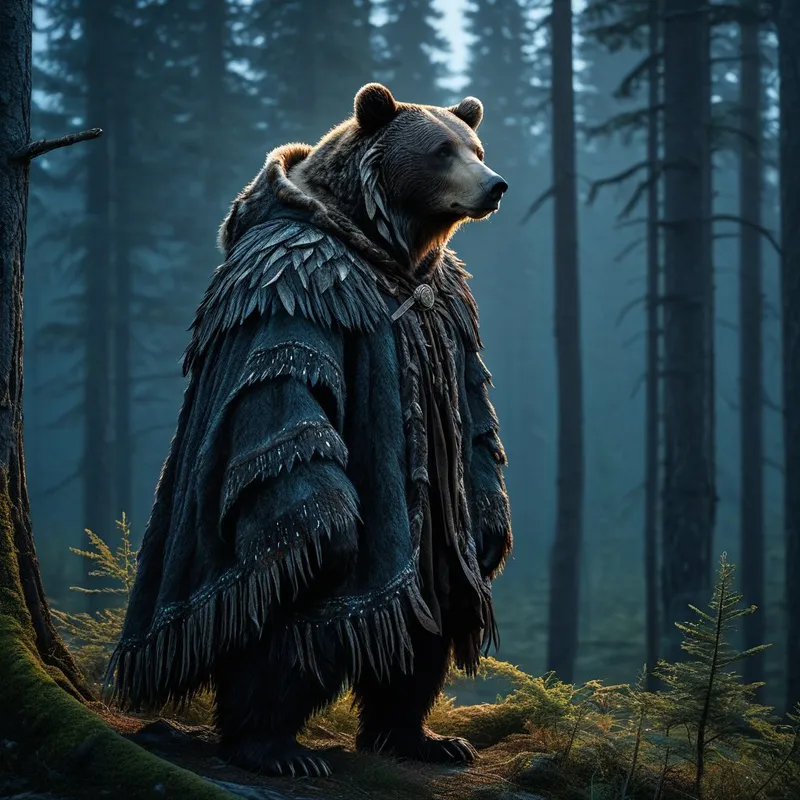
One bitter winter, when the snow lay deep and the silence of starvation was louder than any cry, Kaelan ventured farther than any had dared. For three days and nights, he tracked a great, solitary bear—not just an animal, but a grandfather of the deep woods. The chase was a silent prayer. Finally, in a clearing where the last light bled through the pines, he found the bear waiting for him, not with rage, but with a deep, knowing gaze.
“Little cousin,” the bear’s voice rumbled not in the air, but in Kaelan’s bones. “You hunt from need, not greed. This I see. But to take a life is to bind yourself to it. Are you prepared to carry me?”
Trembling, not with fear but with a profound awe, Kaelan nodded. The bear bowed its great head. The act was not one of violence, but of solemn ceremony. With tears freezing on his cheeks, Kaelan performed the sacred rites of gratitude, offering words of honor and promise to the bear’s departing spirit. He butchered the carcass with reverence, using every part for food and tool. But the hide he treated with special oils and smoked it over a fire of sacred woods.
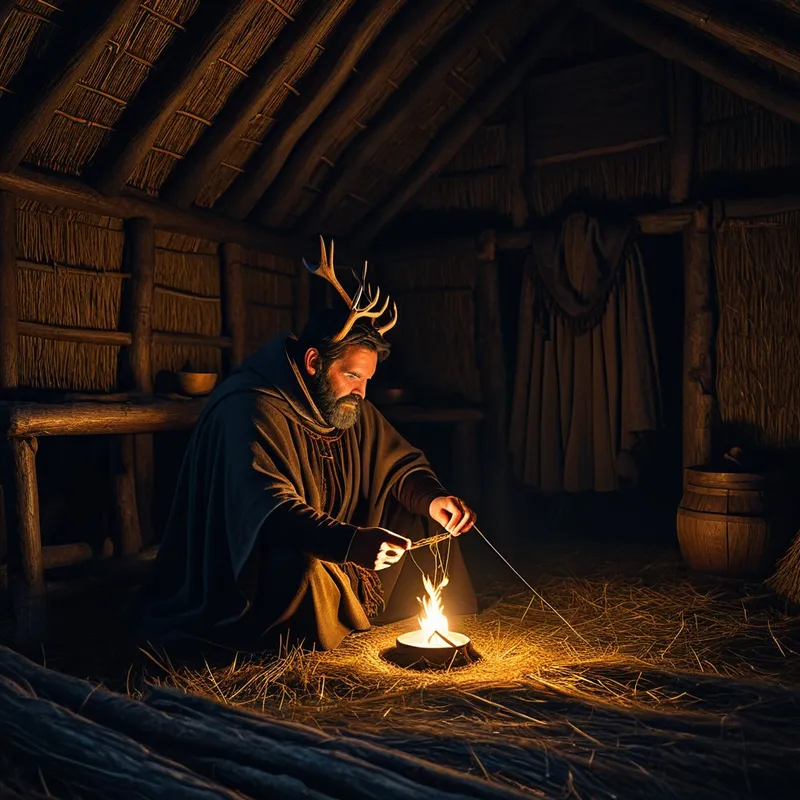
For seven nights, he worked by firelight, sewing the great pelt into a cloak. As he stitched, he sang the songs the bear’s spirit taught him in dreams. On the eighth morning, he donned the heavy garment. The world shifted. The scent of the pine was a thousand stories. The feel of the earth through his feet was a map. He was the bear’s strength, its patience, its knowledge of hidden roots and secret paths. Wearing the cloak, he led his people to game they could not see, to medicinal plants buried under snow. The balance returned.
But the cloak was not a disguise; it was a covenant. In wearing it, Kaelan carried the bear’s responsibilities. He protected the weak, defended the forest’s heart, and became a bridge between two worlds. He was no longer just a man who hunted. He was the man who remembered the bear.
Cultural Origins & Context
The motif of the animal skin cloak is not a single myth from one tribe, but a profound archetypal pattern woven through the oral traditions of countless animist cultures across the globe—from the Siberian taiga to the North American plains, from the Sami of Scandinavia to the First Nations of the Pacific Northwest. In animist worldview, everything is alive and ensouled: rocks, rivers, trees, and animals are all persons with whom one can have relationships.
This story was not mere entertainment. It was a foundational teaching, told by elders and shamans around communal fires. Its function was pedagogical and psychological. It taught the ethics of the hunt: that life is taken only from necessity, with gratitude, and with the commitment to use the gift fully. It explained the source of shamanic power, where the healer or seer dons the hide or mask of a spirit-animal to journey between worlds and gain knowledge. Societally, it reinforced the concept of ecological reciprocity and the idea that human identity is not separate from, but intimately intertwined with, the more-than-human community.
Symbolic Architecture
At its core, the cloak is the ultimate symbol of mediated transformation. It is not a spontaneous, magical shapeshift. It is a crafted, intentional, and hard-won bridge between states of being.
The cloak is the embodied contract between the human ego and the wild, instinctual Self. To wear it is to accept the terms of a deeper, more demanding reality.
The animal represents a specific complex of instinct, power, and wisdom inaccessible to the conscious, civilized mind. The bear is fortitude and introspection; the wolf is loyalty and predatory insight; the stag is sovereignty and connection to the spirit world. The hunt is the necessary confrontation with this raw, powerful aspect of nature—both externally and internally. It is the ego’s quest to secure a vital resource (food, power, knowledge), which requires facing the formidable, autonomous spirit of that resource.
The critical act is the ritual of gratitude and use. This transforms a act of taking (which could be psychically akin to repression or denial) into an act of integration. The careful crafting of the cloak symbolizes the psychological work of assimilating this powerful complex—not letting it dominate you (being consumed by the beast), but learning to wear its wisdom consciously and responsibly.
The Dreamer's Resonance
When this myth surfaces in modern dreams, it rarely appears as a literal bearskin. Instead, we might dream of finding a coat of unusual fur, trying on a mask that changes our face, or being given a heavy, ornate garment that feels both foreign and intimately familiar. The somatic feeling is often profound: the weight of the cloak, the texture against the skin, the slight shift in posture and perception.
This dream signals a process of instinctual reclamation. The dreamer is likely at a point where their overly adapted, civilized persona has left them feeling depleted, disconnected, or powerless. The psyche is presenting an opportunity—or a demand—to reconnect with a vital, animal-like energy they have neglected or disowned. The specific animal that appears (or the quality of the garment) is a direct message about the type of instinct needed: the resilience of the bear, the cunning of the fox, the vision of the eagle.
The struggle in the dream often revolves around daring to put it on. This is the fear of the regression, of “going primitive,” of being overwhelmed by passions or needs deemed unacceptable. The triumphant dream is one of wearing the cloak and finding not loss of self, but a more complete, grounded, and potent self.
Alchemical Translation
In the alchemy of individuation, the myth of the Animal Skin Cloak models the process of conscientious integration of the Shadow and the Anima/Animus. The animal spirit is a facet of the personal and collective unconscious—wild, potent, and often feared. The conscious ego (the hunter) must first acknowledge its need for this resource (the nigredo or confronting the shadow). The sacred hunt is the difficult, respectful engagement with this unconscious content.
The crafting of the cloak is the albedo, the whitening: the laborious, careful work of making the raw, unconscious material usable by the conscious mind. It requires patience, ritual (active imagination), and art.
Donning the cloak is the rubedo, the reddening or culmination. It represents the conscious ego willingly taking on the attributes of the integrated complex. One does not become the unconscious animal; one gains the capacity to call upon its wisdom while maintaining conscious responsibility. The healed shaman or the individuating person is thus a walking synthesis: a civilized human who carries the wild cloak, a conscious mind that speaks the language of instinct. They become the bridge, the living symbol of wholeness, able to navigate both the village and the forest, the world of reason and the realm of dream. The power is no longer out there in a feared other, but has been respectfully, ceremoniously woven into the very fabric of the self.
Associated Symbols
Explore related symbols from the CaleaDream lexicon: