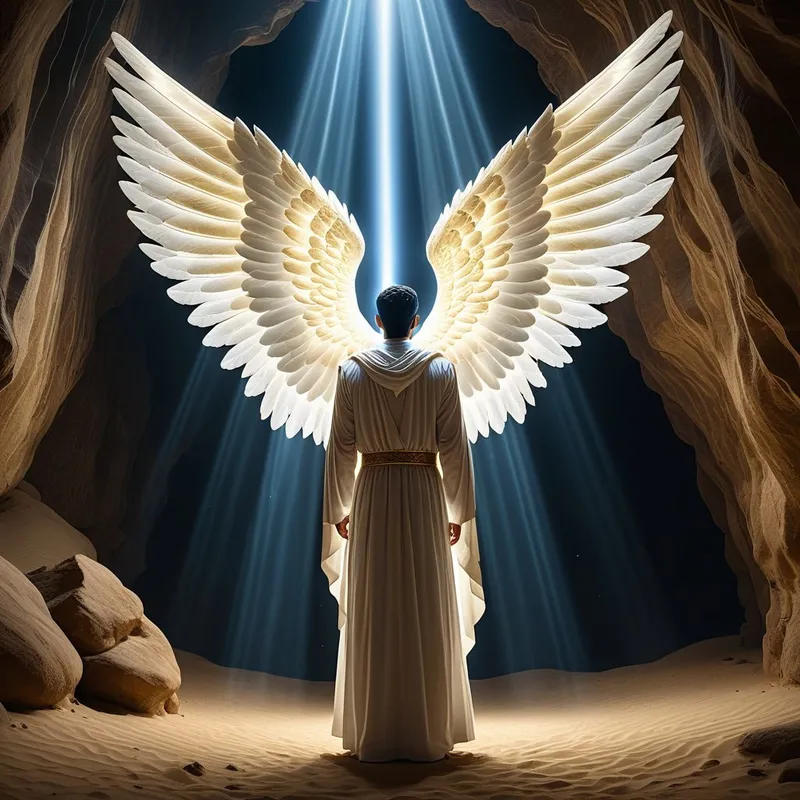
Angel Gabriel Myth Meaning & Symbolism
The story of the Angel Gabriel delivering the Quran to Muhammad, a foundational myth of divine communication, human vulnerability, and the birth of a new consciousness.
The Tale of Angel Gabriel
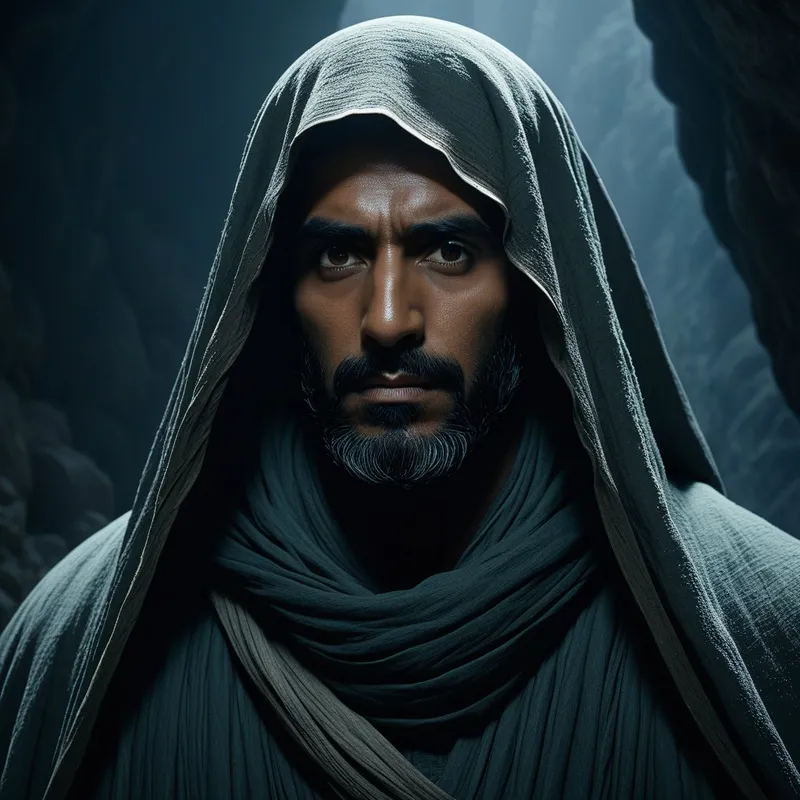
The mountain was a silent beast against the bruised purple sky. Its name was Hira, and in its belly, a cave held the darkness of ages. Into that darkness, a man named Muhammad retreated, his soul aching with a question too vast for words. He sought tahannuth—seclusion—away from the clamor of Mecca, its idolatry a grating dissonance against the silent hymn of his heart.
The air in the cave was thick, cool, and smelled of ancient stone and dust. He would spend nights in vigil, wrapped in the rough embrace of his cloak, listening to the wind whisper secrets it would not fully tell. Then, on the Night of Power—Laylat al-Qadr—the fabric of solitude tore.
It began not with sight, but with sound. A presence, immense and undeniable, filled the space. It was not an invasion, but an occupation of reality itself. Then, a voice, but no mouth; a command, but no speaker. "Iqra!" it thundered. Recite!
Muhammad, his body trembling as if in a fever, stammered, "Ma ana bi-qari'?" I am not a reciter. The command came again, a pressure against his very being. "Iqra!" And again, his terrified refusal. The third time, the presence—now a form of unimaginable magnitude—enfolded him. Later, he would describe it as a figure spanning the horizon, with six hundred wings, each shedding pearls and rubies of light. This was Jibril, the Spirit of Truth.
The angel held him in an embrace that was both crushing and merciful, and when released, the words flowed—not from his mind, but through him, from a source deep beyond the stars. They were the first verses of the Quran: "Recite in the name of your Lord who created—Created man from a clinging substance. Recite, and your Lord is the most Generous—Who taught by the pen—Taught man that which he knew not."
The weight of the words was a physical thing. He fled the cave, his limbs shaking, the syllables burning in his chest like live coals. On the mountain path, the angel appeared again, filling the entire sky between heaven and earth. "O Muhammad," the voice resonated, "you are the Messenger of God, and I am Jibril." He looked up, and down, and everywhere, the celestial form was there, an inescapable truth. He ran home to his wife, Khadijah, his breath coming in gasps. "Cover me! Cover me!" he pleaded, as she wrapped him in blankets, the divine chill still upon him. The messenger had delivered his message, and the world, for one man, had irrevocably changed.
Cultural Origins & Context
This foundational narrative is not merely a story; it is the axial event of Islam, meticulously preserved in the earliest biographical works, the Seerah, and the vast collections of Hadith. It was transmitted orally with scrupulous care through chains of narrators (isnad), its details as vital as the revealed text itself. The myth functions as the primal scene of Islamic consciousness, answering the critical question: How did the Divine speak to humanity?
The setting is crucial. Pre-Islamic Arabia, or Jahiliyyah, was a polytheistic, tribal society. The revelation in the cave represents a direct, unmediated rupture in that worldview. Gabriel is not a local deity or a tribal spirit; he is the universal emissary of the One God, Allah. The myth established Muhammad’s credibility as a prophet, distinguishing his experience from the trances of soothsayers (kahins) by its clarity, coherence, and the transformative, literary majesty of the message itself. It served to anchor the community (Ummah) in a shared origin point of pure, awe-inspiring communication, a moment where the human and the absolute directly met.
Symbolic Architecture
Psychologically, the myth of Gabriel is a masterful depiction of the psyche’s encounter with a content too large for the conscious ego to initially bear. Gabriel represents the autonomous, numinous power of the Self—the total, organizing center of the psyche—breaking into the realm of the personal ego.
The messenger is not the message, but without the messenger, the message cannot be borne. The angel is the psychopomp of revelation, the necessary intermediary between the unknowable depths and the conscious mind.
Muhammad’s reaction—terror, physical overwhelm, the need to be wrapped and comforted—is not a sign of weakness but of authenticity. It illustrates the genuine somatic shock of a paradigm-shattering insight. The command "Iqra!" (Recite/Read) is profoundly alchemical. It does not say "Listen" or "Memorize," but "Bring forth from within." It implies that the revelation, though transmitted, must be actively integrated and given voice by the human vessel. The cave of Hira symbolizes the temenos, the sacred, enclosed space of the unconscious where this profound inner work begins. The embrace of Gabriel, terrifying yet formative, is the initiatory ordeal that precedes a new state of being.
The Dreamer's Resonance
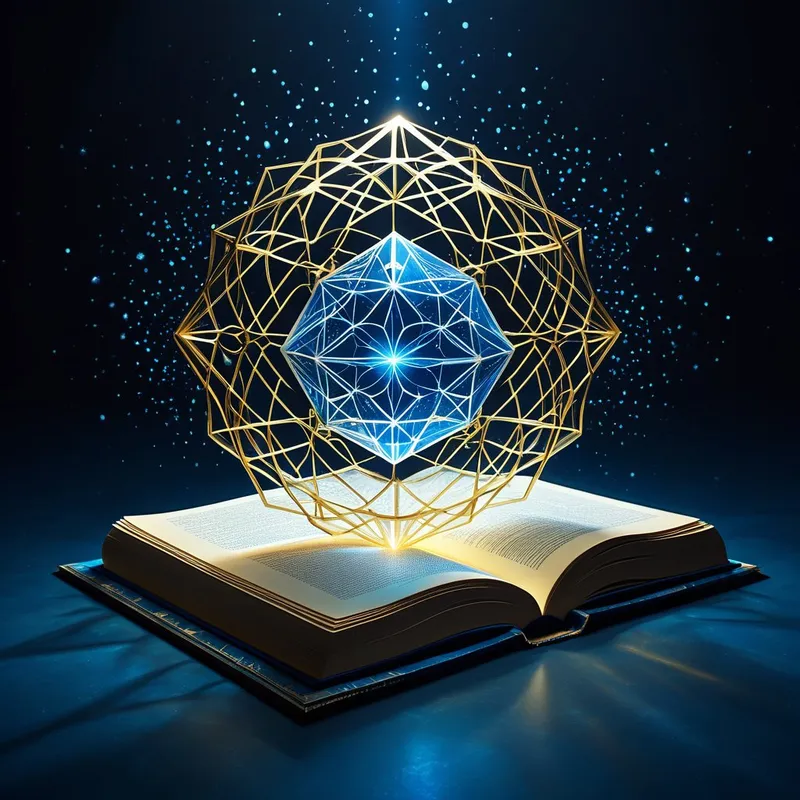
When this mythic pattern stirs in the modern dreamer, it often signals a crisis of vocation or a call from the deep Self that feels more like an assault than an invitation. One might dream of a radiant, overwhelming figure (not necessarily an angel) delivering an incomprehensible book, a scroll of light, or speaking a command in a resonant, foreign tongue. The dream ego typically reacts with awe, dread, or a desire to flee.
Somatically, this can mirror the "spiritual emergency" described in the myth: a feeling of being pressed, crushed, or filled with an energy too intense to contain. Psychologically, it marks the end of a personal "Jahiliyyah"—a state of unconsciousness or aimlessness. The conflict is between the comfort of the known, cluttered self and the terrifying demand of a greater, but unknown, destiny. The dream is the psyche’s way of enacting the embrace of Gabriel, forcing a confrontation with a truth that, if integrated, will necessitate a complete reorganization of one’s life. The figure of Khadijah in the aftermath is equally symbolic—representing the necessary, grounding human container (an inner or outer partner, therapy, community) that helps metabolize the shock.
Alchemical Translation
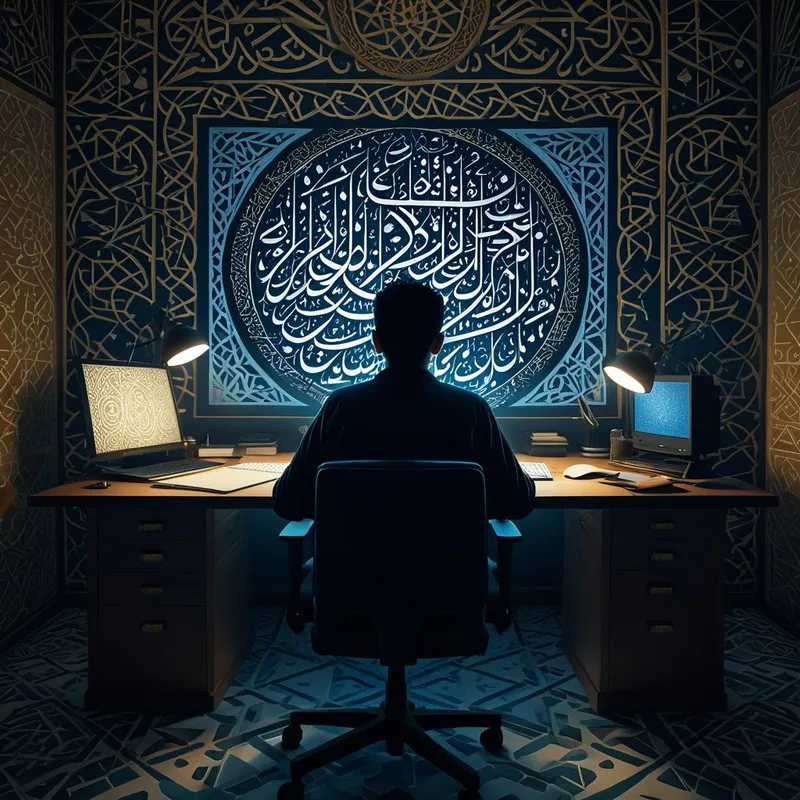
The alchemical process modeled here is the opus of revelation, the transformation of leaden, unconscious existence into the gold of conscious, purposeful being. The "prima materia" is the seeker in the cave—the soul in its state of latent potential and troubled questioning. The angelic encounter is the nigredo, the blackening: the terrifying dissolution of the old ego-structure under the searing light of a new truth.
The first stage of individuation is often experienced as a divine catastrophe, a breaking-in that feels like a breaking-down.
The command "Iqra!" is the key to the albedo, the whitening. It is the directive to actively engage, to give form and voice to the numinous content. This is the slow, painful work of integration—studying the "text" of one’s own calling, learning its language, and beginning to recite it into the world. Muhammad’s eventual acceptance and his 23-year prophetic career embody the rubedo, the reddening: the full embodiment of the transmitted wisdom, now lived and enacted, creating a new cultural and psychological reality.
For the modern individual, the myth does not promise prophethood but maps the journey toward psychological wholeness. It teaches that the call to one’s deepest truth may first arrive as an unbearable pressure. The task is not to avoid the embrace in the cave, but to endure its terror, find the Khadijah-like ground to return to, and slowly, courageously, learn to recite the unique scripture of one’s own authentic life. The angel does not come to comfort, but to initiate; its gift is not peace, but a sacred, world-altering burden that becomes the foundation of the true self.
Associated Symbols
Explore related symbols from the CaleaDream lexicon: