Andy Warhol's Brillo Boxes Myth Meaning & Symbolism
A myth of identical boxes in a sacred hall, challenging the gods of art to see the divine in the ordinary and forever altering the nature of value.
The Tale of Andy Warhol's Brillo Boxes
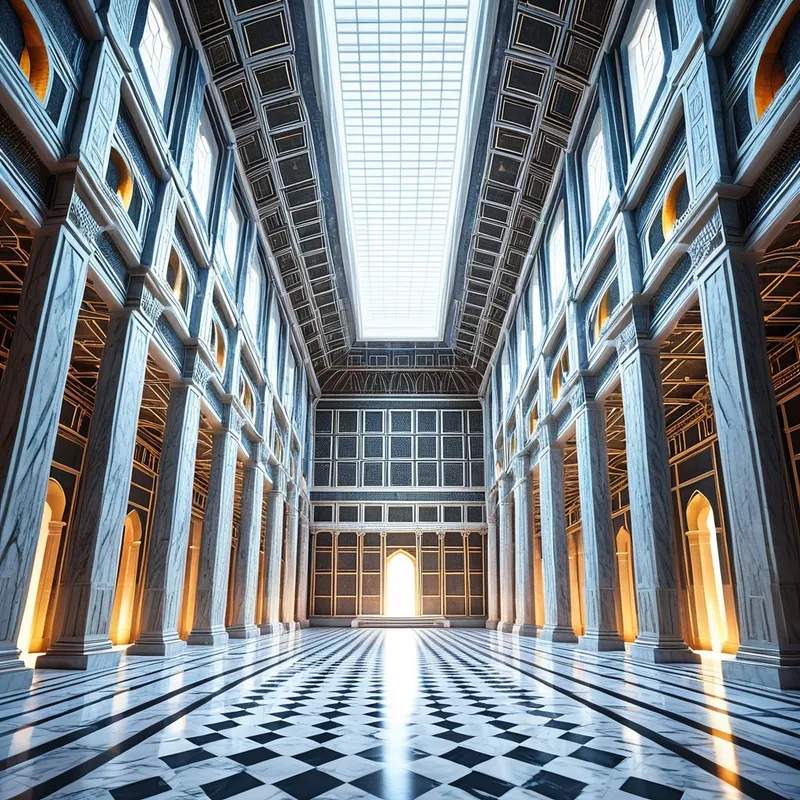
In the gleaming, steel-and-glass city of the Moderns, there was a temple known as the Stable. Its halls were not of stone, but of white walls and polished floors, a sacred space where the people came to witness the mysteries of form and color, to stand before the relics of their gods—the Artists. The air hummed with the silent prayers of contemplation.
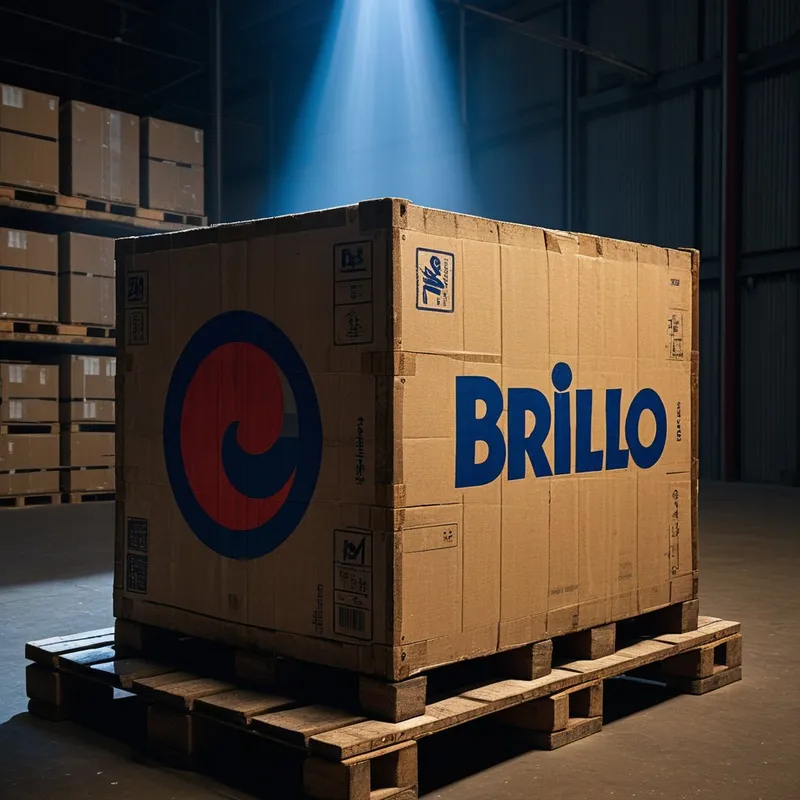
Into this hallowed quiet came a figure, pale and watchful as a moon, his hair the color of silvered ash. He was Andy Warhol, the Factory Seer. He did not arrive with chisel or brush, but with a decree and a procession of common laborers. They bore not marble or rare pigments, but stacks of ordinary boxes—cartons of soap-pad pads, branded with the cheerful, bold letters: Brillo.
The guardians of the temple, the priests of taste known as Critics and Curators, watched in mounting confusion and then in dawning horror. These were not crafted objects! These were mere containers, born of machines, designed for supermarket aisles, destined for trash heaps. Yet the Seer commanded they be arranged—not as a chaotic pile, but with ritual precision. They were stacked in clean, repeating grids, an army of identical soldiers in red, white, and blue. The temple was filled not with unique visions, but with a silent, multiplying echo of the utterly commonplace.
A great stillness fell. Then, a tremor of disbelief. The priests approached, their hands trembling not with reverence, but with outrage. “This is not art!” their leader thundered, his voice cracking the quiet. “This is a joke, a blasphemy, a warehouse!” They peered at the seams, looking for the hidden stroke of genius, the secret mark of the maker. They found only the perfect, soulless seam of the machine.
But the Seer only observed, a faint ghost of a smile on his lips. “It’s art,” he said, his voice flat as the surface of the boxes themselves. The conflict was not of clashing swords, but of clashing realities. The temple’s very purpose—to separate the sacred from the profane—was under siege by the profane itself, now sitting calmly in the place of honor.
The people came. They did not weep before the boxes, nor were they stirred by beauty. Instead, they were arrested. They circled the stacks, their brows furrowed. They saw the boxes, truly saw them, for the first time. The sharp geometry, the boldness of the logo, the sheer thereness of them. The sacred space did not transform the boxes; the boxes transformed the sacred space. The temple walls seemed to dissolve, and in that moment, the entire world outside—the world of commerce, of media, of repetitive labor and repetitive consumption—flooded into the hall. The boundary had been breached. The myth was complete. The boxes remained, and nothing in the temple, or in the world, would ever look the same again.
Cultural Origins & Context
This myth emerged not from an ancient oral tradition, but from the curated chronicles of 1964, in the heart of New York City, a modern Babylon. It was passed down not by bards, but by art journals, critical essays, and museum catalogs. The primary storytellers were the art world itself—a complex priesthood of gallerists like Eleanor Ward, philosophers like Arthur Danto, and the media apparatus that documented the scandal and its aftermath.
Its societal function was profoundly disruptive. In a post-war culture obsessed with authenticity, emotional expression (as seen in the rival myth of Abstract Expressionism), and the unique genius, Warhol’s Brillo Boxes acted as a philosophical grenade. The myth asked a terrifying question of a consumer society: If everything is a product, and art is a product, what is the difference? It held a mirror up to the mechanization of life and the branding of identity, forcing the culture to confront its own commercialized soul. It was a myth for the age of mechanical reproduction, questioning the very aura of the sacred object in a world of copies.
Symbolic Architecture
At its core, the Brillo Box is the ultimate symbol of the Shadow of the modern world made visible. It represents all that high culture sought to exclude: the commercial, the mass-produced, the functional, the “low.”
The Box is the coffin of the old, romantic Self and the cradle of the constructed, branded Identity.
Psychologically, the Seer (Warhol) represents the Trickster-Magician archetype. He performs the alchemical feat not by changing the substance (lead into gold), but by changing the context (commodity into art). The “conflict” in the temple is the ego’s struggle to maintain its categories—good/bad, art/not-art, sacred/profane. The boxes themselves symbolize the modern individual: outwardly identical, branded by societal expectations (the Brillo logo), containing within a potential that is utterly ambiguous. Are we containers for a unique, sparkling soul (the soap pads), or are we just empty, structural facades?
The grid formation is critical. It negates the hierarchy of the unique masterpiece. In the grid, no single box is the hero; the system itself is the entity. This mirrors the modern psyche navigating systems of mass media, social networks, and bureaucratic life—where individuality is both promised and systematically flattened.

The Dreamer's Resonance
To dream of the Brillo Boxes is to dream of a crisis of valuation and identity. The dreamer often finds themselves in a sterile, institutional space (a gallery, school, office) confronted by endless, repeating versions of an ordinary household object.
Somatically, this dream evokes a feeling of eerie calm mixed with profound disorientation—the “uncanny valley” of the psyche. The dreamer may feel both invisible (just another box in the stack) and hyper-visible (scrutinized under the museum lights). This is the psyche working through the tension between the desire for authentic self-expression and the fear of being merely a product of one’s environment, a copy without an original.
The dream signals a process of devaluation. The cherished internal “gallery” where the dreamer hangs their prized self-concepts (the “I am special” masterpiece) is being invaded by the mundane, repetitive, and commercial aspects of their life they have deemed “not me.” The psyche is forcing an integration, demanding the dreamer ask: “What in me have I dismissed as mere packaging? What repetitive, automatic part of my life might contain a hidden, sacred geometry?”
Alchemical Translation
The myth of the Brillo Boxes is a manual for a specific modern individuation. The prima materia (base material) is not a dark, chaotic emotion, but the most overlooked aspect of contemporary life: the automated, the consumed, the mass-produced part of the self.
The alchemical fire is not passion, but attention. The Seer’s great work was to look, with unwavering focus, at what everyone agreed was not worth seeing.
The process begins with Nigredo (blackening): the humiliation of the ego’s standards. The “artistic” self-image is confronted and blackened by the “commercial” shadow (the boxes in the temple). This is the critic’s outrage, the feeling of desecration.
This leads to Albedo (whitening): the washing clean in the light of pure observation. Stripped of old categories, one simply beholds the thing-in-itself—the box’s shape, color, presence. This is the moment of public bewilderment turning into arrested attention.
The culmination is Rubedo (reddening): the creation of the new, conscious value. The transformed substance emerges. It is not that the box “becomes” art in the old sense, but that the consciousness perceiving it has been permanently altered. The individual integrates the shadow of their own mechanized, branded, repetitive behaviors. They no longer see their daily routines, their consumption, their social roles as mere “packaging” for the true self. They begin to see the sacred, geometric pattern in the repetition itself. The individual becomes both the Factory and the Stable Gallery. They achieve a paradoxical wholeness: a unique self constructed from, and conscious of, the mass-produced materials of the modern world. The myth teaches that transcendence is found not by escaping the commonplace, but by performing the ultimate magic trick: seeing it anew.
Associated Symbols
Explore related symbols from the CaleaDream lexicon: