Aeolus and the winds Myth Meaning & Symbolism
The myth of Aeolus, who binds the winds in a cave, is a timeless story about the sacred responsibility of containing and releasing primal, chaotic energy.
The Tale of Aeolus and the winds
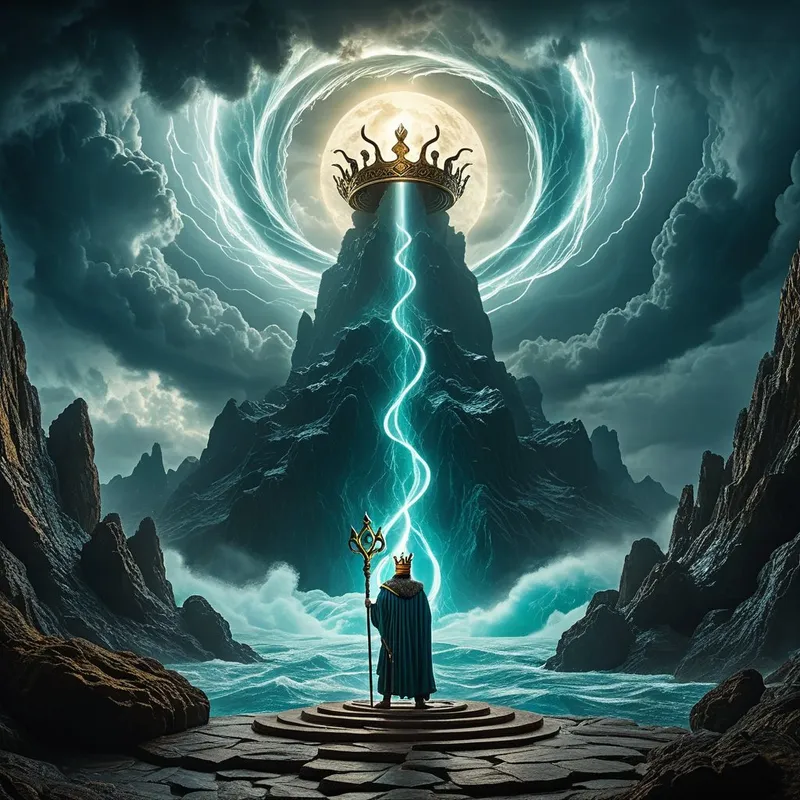
Listen, and hear the tale of the breath of the world, and the one appointed to hold its reins. Far beyond the known seas, where the horizon bleeds into the vault of heaven, lies a floating isle of sheer cliffs. This is Aeolia, and upon it dwells a king not born of mortal stock, but favored by the gods themselves: Aeolus, son of Hippotas.
To him, great Zeus granted a solemn and terrible duty. For the winds are not mere air; they are the untamed children of the Titans, wild spirits of rage and restlessness. The West Wind, Zephyrus, who carries the scent of flowers; the fierce North Wind, Boreas, who howls with the voice of ice; the dry East Wind, Eurus; and the wet South Wind, Notus—all chafe against the bonds of the world. Aeolus is their warden.
Deep within the heart of his island, he forged a cavern, a prison of living rock. With cunning and divine craft, he bound the winds within, not with chains of iron, but with his will and the authority of Olympus. He could loose them upon the world to churn the wine-dark sea into a fury of whitecaps, or to fill the sails of favored heroes. He could call them back, stuffing their roaring essence into the deep belly of a cavern, sealing the entrance with a groan of stone. There, in the echoing dark, they would seethe and whisper until he saw fit to release but a single, gentle breath to guide a ship home.
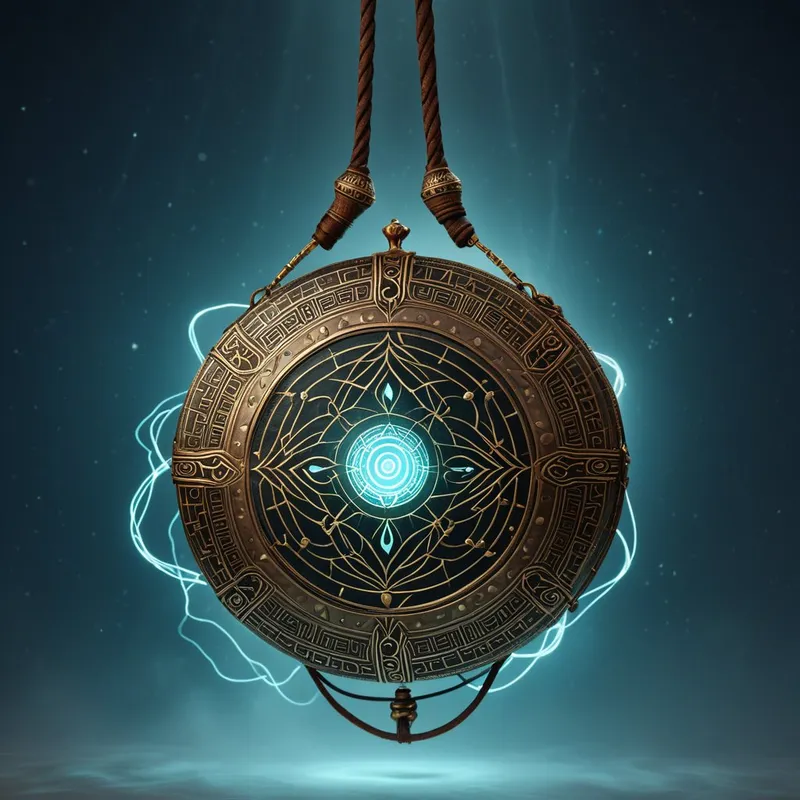
His most famous test came with the arrival of a weary, cunning king: Odysseus. After the horrors of war and monsters, Odysseus found sanctuary on Aeolia. For a month, Aeolus hosted him, and in that time, he listened to the tales of Troy and the longing for rocky Ithaca. Moved by the hero’s plight, Aeolus performed his greatest act of hospitality. He gathered all the winds—every contrary gale and storm—and forced them into a vast ox-hide bag, tying it tightly with a gleaming silver cord. Only the gentle West Wind, Zephyrus, he left free, to blow a steady, sure breath toward Ithaca.
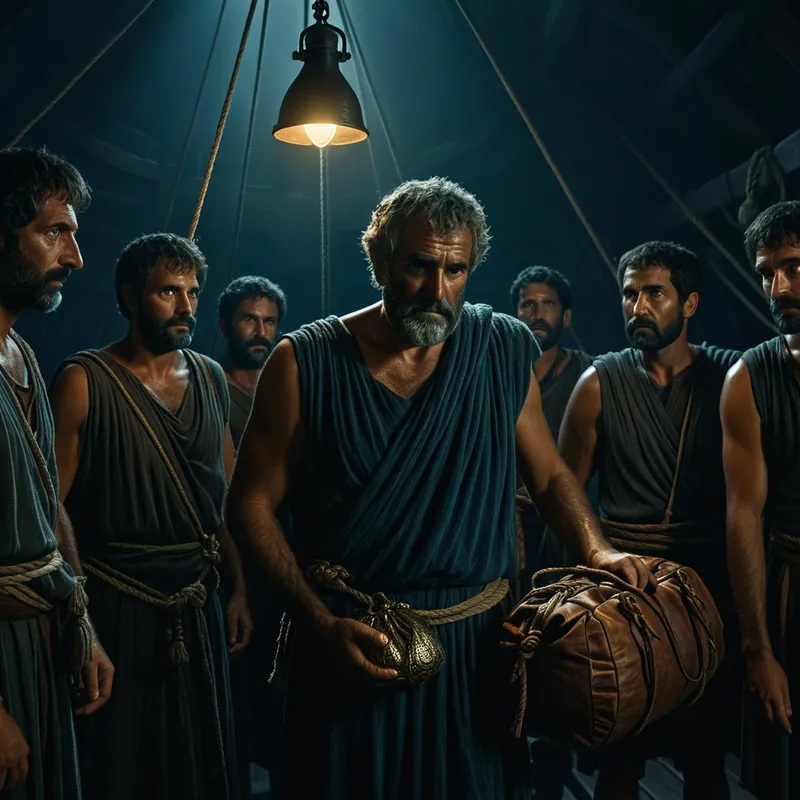
With hope singing in their hearts, Odysseus and his men sailed for nine days and nights, the homeland almost in sight. But exhaustion took the captain, and sleep claimed him. His crew, who had heard the bag sigh and bulge, whispered amongst themselves. Surely this was not wind, but gold and silver, a treasure their captain hoarded for himself. Greed, that old sailor’s curse, overcame them. As Odysseus slept, they crept to the bag and loosed the silver cord.
The sound was not of coins, but of the world tearing apart. A screaming hurricane erupted from the leather mouth. The captive winds, furious from their imprisonment, exploded outward in a cataclysm of chaos. In an instant, the careful order was undone. The ship was seized, spun, and driven back across the vast expanse it had just crossed, all the way to the cliffs of Aeolia. When a humiliated Odysseus begged once more for aid, Aeolus looked upon him not with pity, but with a god’s cold recognition of a broken trust. “Begone,” he declared, his voice the finality of a slamming door. “You who are hated by the blessed gods can receive no help from me.” The keeper had offered the gift of order, and mortals, in their folly, had chosen the storm.
Cultural Origins & Context
This myth reaches us primarily through the epic poetry of Homer, in the tenth book of the Odyssey. For the ancient Greeks, a seafaring people whose lives and livelihoods were utterly dependent on the caprice of the weather, the winds were potent, animate forces. They were deities to be propitiated. The myth of Aeolus served a profound societal function: it personified and rationalized the terrifying unpredictability of the natural world.
By giving the winds a king, a father, a home, and rules, the myth imposed a narrative of potential order upon chaos. It suggested that the storms that sank ships were not mere malice, but the result of a broken contract, a released constraint, or divine disfavor. Aeolus acts as a crucial intermediary between the chaotic primordial forces (the winds/Titans) and the ordered world of gods and men (Zeus/Olympus). The story was passed down by bards not just as an adventure, but as a cautionary tale about the sacred responsibility that comes with power—whether that power is over the elements, a community, or one’s own primal nature.
Symbolic Architecture
At its core, the myth is a masterful allegory for the psyche. Aeolia is not just an island; it is the fortified citadel of the conscious self. Aeolus, the appointed ruler, represents the ego’s necessary function: to contain, manage, and wisely direct the raw, unconscious energies of the personality.
The bag of winds is the most potent symbol of all: it is the fragile vessel of civilization, the conscious agreement, the promise, the logos that holds back the howling chaos of instinct, rage, passion, and unreason.
The winds themselves symbolize the archetypal, autonomous forces of the unconscious—the pleroma of emotions and drives that can either propel us forward (Zephyrus) or destroy us (the unleashed hurricane). The silver cord is the tension of conscious will and moral choice. Odysseus’s crew embodies the untamed, shadowy part of the psyche that, driven by greed (a primal instinct), sabotages the conscious plan for short-term gain, resulting in catastrophic regression.
The tragedy is not that the winds exist, but that the container failed. Aeolus’s final rejection underscores a psychological truth: once a fundamental trust in one’s ability to manage these forces is broken, the conscious ego (Aeolus) may refuse further engagement, leaving the individual (Odysseus) adrift in a self-created storm.
The Dreamer’s Resonance
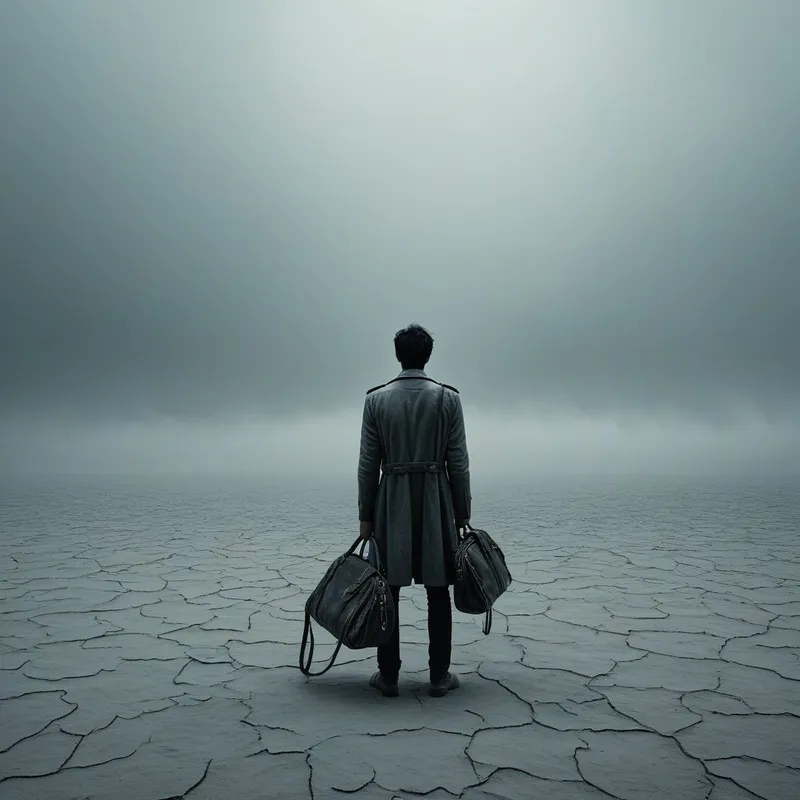
When this myth pattern stirs in the modern dreamer, it often manifests as a somatic experience of pressure and impending eruption. One might dream of a overstuffed closet, a bulging suitcase that won’t close, a boiler heating to dangerous levels, or, most directly, of holding a bag or box that strains and vibrates with a dangerous inner life.
The psychological process at work is one of containment failure. The dreamer is likely facing a situation where repressed emotions—anger, grief, long-suppressed desires—are threatening to break through the conscious barriers erected to hold them. The dream is a warning from the unconscious: the current strategy of suppression is at its limit. The “crew” in the dream (often represented by shadowy figures or a reckless aspect of the self) is acting out, seeking to release the pressure without understanding the consequences. The somatic feeling upon waking is often one of anxiety, tightness in the chest, or a sense of being overwhelmed by forces felt as both internal and external.
Alchemical Translation
The individuation process modeled here is the alchemical stage of coagulatio—the making solid, the creation of a stable vessel. The prima materia, the chaotic “winds” of our unexamined instincts and complexes, must first be acknowledged and gathered. Aeolus’s initial act of hospitality—listening to Odysseus’s tales—mirrors the ego listening to the contents of the unconscious.
The true work, however, is the crafting of the bag and the tying of the cord. This is the labor of building a resilient psyche: developing the ego strength (Aeolus as ruler) to hold contradictory emotions without being torn apart, to contain powerful impulses without acting them out destructively.
The goal is not to keep the winds bound forever, but to become the master who can release the appropriate wind at the appropriate time—to express anger cleanly, to channel passion creatively, to allow grief its space, all without unleashing the total hurricane.
The crew’s betrayal represents the inevitable shadow-work. We will be tempted to “open the bag”—to have the emotional outburst, to regress, to blame others (the gods) for our storms. The subsequent shipwreck and return to the starting point are not merely punishment, but a necessary part of the process. We must confront the consequences of our failed containment, face the rejected, ruler-like part of ourselves (Aeolus’s cold judgment), and begin the journey again, having learned the supreme value of the vessel itself. The ultimate triumph is to become both Odysseus and Aeolus—the journeying soul who has integrated the ruling principle, capable of carrying the winds of the soul wisely across the inner sea.
Associated Symbols
Explore related symbols from the CaleaDream lexicon: