Aeolus Myth Meaning & Symbolism
The story of the mortal king gifted stewardship of the tempests, a timeless allegory for the power and peril of controlling primal forces.
The Tale of Aeolus
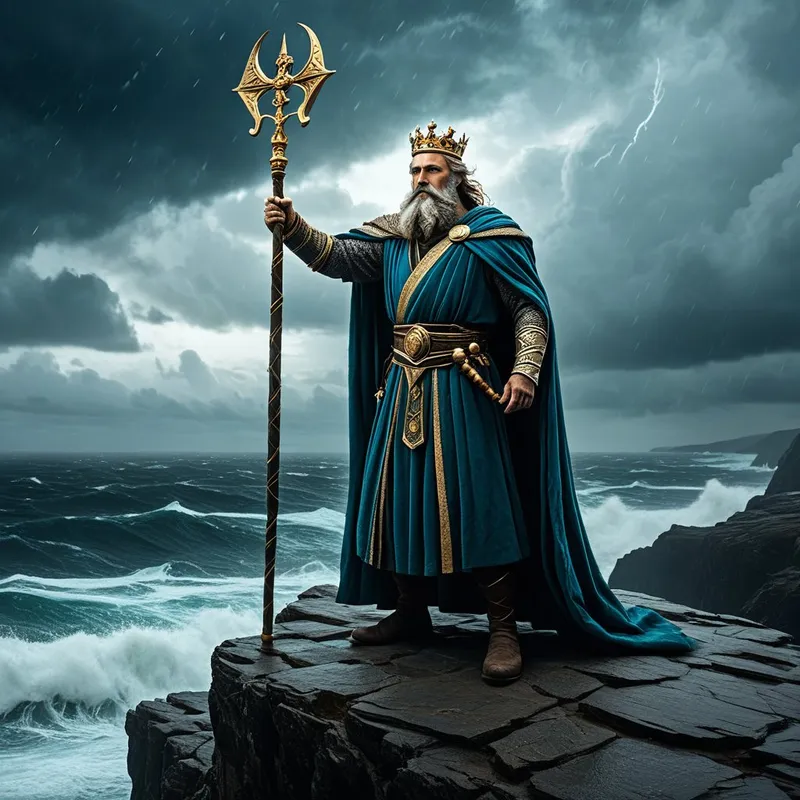
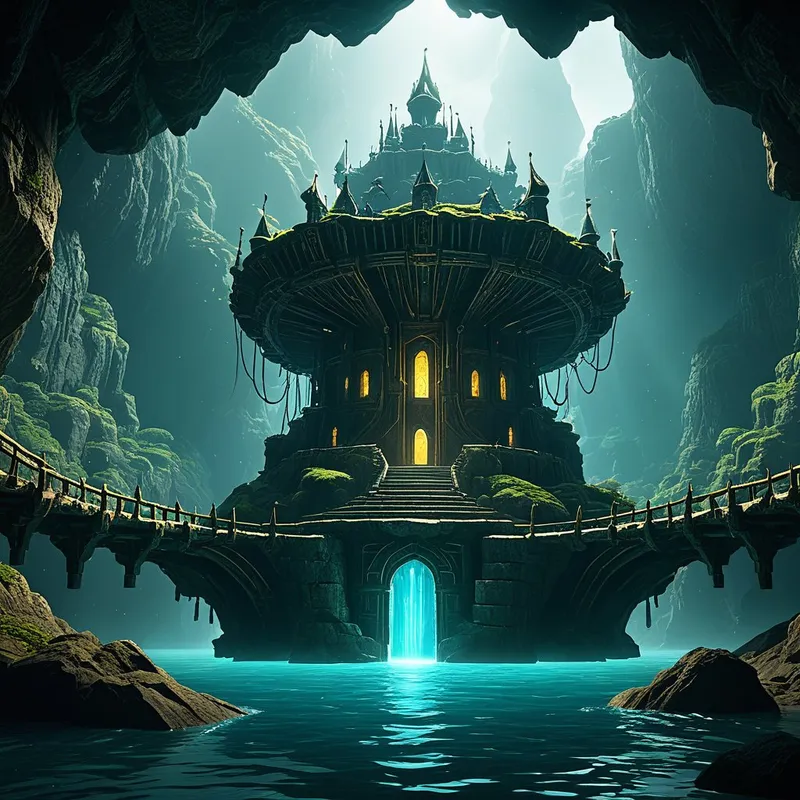
Hear now the tale of the master of the unseen, the lord of the breath of the world. In the wine-dark sea, far beyond the known routes of men, lies a floating isle of sheer cliffs. This is Aiolia, a fortress of stone suspended between the vault of heaven and the churning deep. Here dwells Aeolus, son of Hippotes, a man favored by the gods.
Zeus, the cloud-gatherer, looked upon this steadfast mortal and saw a spirit of order amidst chaos. To him was given a charge more perilous than any kingdom of earth: the stewardship of the Anemoi. In the deep heart of his island, a cavern was hewn from living rock and lined with echoing bronze. Within, the winds were imprisoned—not as mere air, but as living, roaring entities. Boreas howled with the voice of glaciers. Zephyrus sighed with the promise of spring. Eurus and Notus churned with the fury of desert and squall.
Aeolus walked the echoing halls, his hand upon the great, riveted door. His was the power to loose or bind. To sailors who honored the gods, he would offer a leather bag, stitched with seals of power, containing all winds but the gentle west. With this gift, they could sail swift as thought across the placid sea. But the law was absolute: the bag must remain sealed until the journey's end, lest the contained fury be unleashed.
Then came Odysseus, the man of twists and turns, battered by Poseidon's wrath. His ships, mere shells of wood, found refuge at Aiolia's stony shore. Aeolus, recognizing a fellow king touched by destiny, received him with a month of feasting. He listened to tales of Troy and the wide world, and in his heart, pity stirred. When the Ithacan prepared to depart, Aeolus presented the sacred bag, tied with a silver cord. "Guard this with your life," he warned, his voice grave as the deep sea. "It holds your safe passage home."
For nine days and nights, Odysseus's ship flew before Zephyrus's sweet breath, the shores of Ithaca rising like a dream on the horizon. Exhausted, the king slept. His men, their minds poisoned by greed, whispered that the bag held not winds, but gold—a treasure their leader hoarded. With envious hands, they untied the silver cord.
The roar that erupted was the sound of the world tearing. Boreas, Eurus, and Notus burst forth in a screaming vortex, a chaos of spray and splintering timber. The ship was seized, spun, and hurled back across the leagues it had won. When Odysseus, heart shattered, looked again upon the cliffs of Aiolia, he found no welcome. Aeolus stood at his threshold, his face a mask of divine wrath. "You who cannot command your own men," he thundered, "are cursed by the gods. I cannot help one so hated by the Olympians. Begone!" The gates of the floating isle slammed shut, leaving the hero adrift once more, with only the memory of a home almost won, and the terrible cost of a trust broken.
Cultural Origins & Context
The myth of Aeolus is woven into the epic tapestry of Homer's Odyssey, our primary source. It functioned as a powerful etiological tale for ancient Greek sailors and storytellers, explaining the sudden, violent, and unpredictable storms of the Mediterranean. Aeolus's floating island, Aiolia, exists on the liminal edge of the known world—a place of mythic geography where the laws of nature are subject to divine will and mortal stewardship.
The story was not part of a widespread cult with temples; rather, it was a narrative device of profound sophistication. Passed down by bards and later codified by poets like Homer, it served a societal function beyond mere explanation of weather. It explored the Hellenic concepts of xenia (sacred hospitality), the fragility of divine favor (kharis), and the catastrophic consequences of human folly (ate). Aeolus represents the ideal of the wise, responsible ruler entrusted with cosmic powers, while Odysseus's crew embodies the disruptive, envious force that undermines collective destiny. The tale reinforced the idea that order, whether in the cosmos or the ship of state, is a precarious construct, easily undone by a failure of discipline and trust.
Symbolic Architecture
At its core, the myth of Aeolus is a profound allegory of containment and the management of primal, chaotic forces. Aeolus himself is the archetype of the conscious ego, appointed by a higher authority (the Self, or the ruling principle of the psyche) to govern the unruly, instinctual energies of the unconscious—the winds.
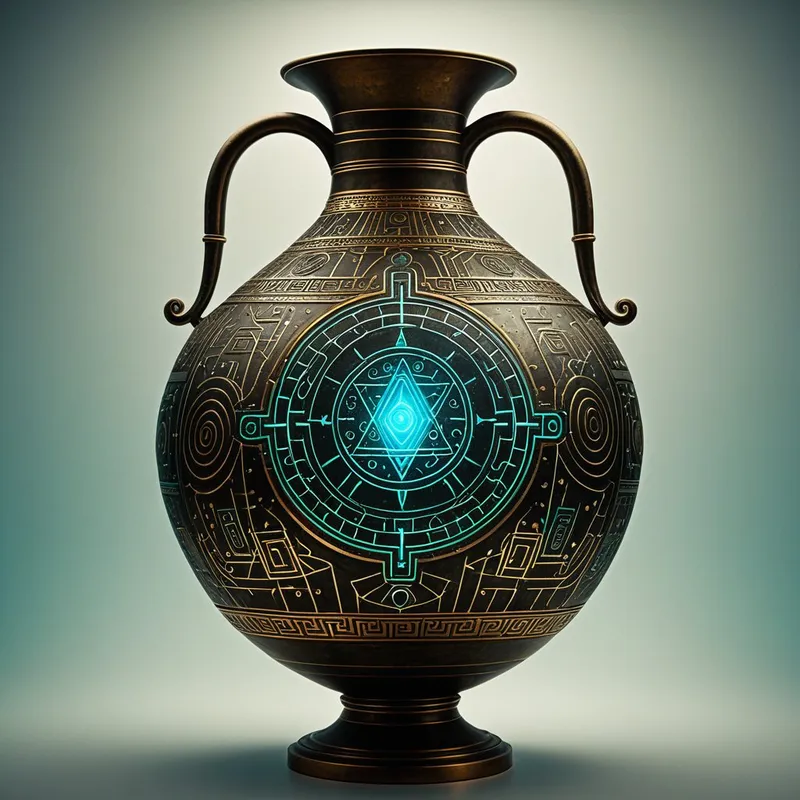
The bag of winds is the ultimate symbol of potential, a sealed unity holding all possibilities of movement and change, both creative and destructive.
The winds are not evil; they are necessary. Zephyrus enables progress, Boreas brings necessary change and cleansing, but uncontrolled, they become an annihilating storm. The island fortress is the bounded psyche, the conscious mind that must provide structure. The fatal error is not the possession of the bag, but the failure of vigilance and the projection of shadow—the crew believes the contained force is material treasure (gold), mistaking spiritual or psychic power for egoic possession. Their envy unleashes the very chaos they fear, blowing them away from their goal.
Aeolus's final, harsh rejection is crucial. It signifies that once a sacred trust with the deeper ordering principles of life is broken through negligence or the rebellion of lesser instincts, one cannot simply return to the beginning. The conscious ego must bear the consequences and continue the journey under far harsher conditions.
The Dreamer's Resonance
When this myth stirs in the modern unconscious, it often manifests in dreams of containment and catastrophic release. One might dream of a prized, sealed box they are commanded to protect; a room in their house holding a dangerous, living energy; or being given a vital responsibility they feel is beyond their capacity.
The somatic experience is one of pressure—a tightness in the chest, a feeling of being "wound up" or holding one's breath. Psychologically, the dreamer is at a point where they have been granted a form of self-regulation or authority (over their emotions, a project, a relationship) but are terrified of the forces they are holding back. The crew represents dissociated aspects of the self—inner critics, envious impulses, or childish demands—that sabotage long-term goals for short-term gratification. The dream is a warning from the psyche: the integrated self (Aeolus) has provided the means for safe passage, but the unintegrated shadows are plotting to open the bag.

Alchemical Translation
The individuation process modeled here is the arduous task of becoming the Aeolus of one's own soul. Initially, we are like Odysseus, subject to the storms of fate and the whims of the gods (complexes). The first alchemical stage is receiving the charge: recognizing that we have, within our own island-psyche, the capacity to contain and direct our primal energies. This is a grant of sovereignty from the Self.
The second stage is the binding of the winds: the conscious work of therapy, discipline, or art that identifies chaotic emotions (rage, lust, despair) and gives them a bounded space—the bronze cavern of reflection, the leather bag of mindful containment. This is not repression, but conscious custody.
The great work is not to eliminate the storm, but to learn the sacred art of the timely release—to call forth Zephyrus when movement is needed, and to restrain Notus when its heat would burn.
The crisis point is the betrayal by the crew: the inevitable moment when old patterns, addictions, or fears revolt against the new, responsible order. The unleashed storm is a necessary, if brutal, part of the process. It destroys the naive hope for an easy, guided passage to wholeness. Aeolus's closed gate signifies that after such a failure, one cannot go back to relying on external authority or simple solutions. The alchemist is cast adrift, forced to integrate the lesson at a deeper level. The ultimate goal is to internalize Aeolus so completely that the winds are no longer foreign prisoners, but acknowledged aspects of one's own breath and being, their power harnessed not by a bag, but by the unshakable authority of a unified self.
Associated Symbols
Explore related symbols from the CaleaDream lexicon:
- Blow
- Whirlwind Leaves
- Whirlwind of Emotion
- Whirlwind
- Weather Vane
- Gust
- Wind Chimes
- Windmill
- Dust Devil
- Wind of the Cosmos
- Whirlwind Cloud
- Gusty Wind
- Wind Chime
- Volatile Weather Changes
- Petal Whirlwind
- Whirlwind Adventure
- Cascading Chimes
- Kinetic Art Piece
- Whirlwind Canvas
- Whirring Fan
- Inflatable Toy
- Pinwheel
- Chimes
- Whirling Room
- Brisk autumn wind
- Wind Chime of Ideas
- Breezy Whirls
- Windy Shores
- Salty Breeze
- Wind Direction Indicator
- Gusty Gale
- Bamboo Windchime
- Cloud Resonance
- Air Currents
- Troposphere
- Humidity Shift
- Vector Fields
- Turbine
- Squall
- Anemometer
- Muggy
- Pleural