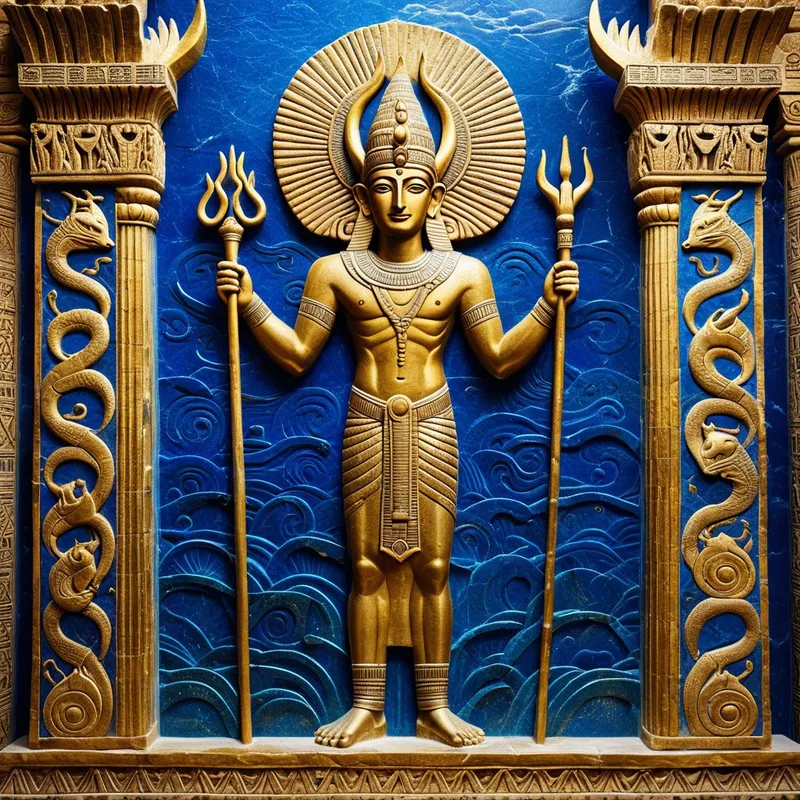
Abzu Myth Meaning & Symbolism
The myth of the primordial freshwater ocean, Abzu, slain by the god Ea, representing the necessary containment of chaos for consciousness to emerge.
The Tale of Abzu
In the beginning, before the naming of things, there was only the mingling of two vast and formless bodies. One was Tiamat, the saltwater sea, a roiling, serpentine expanse of potential fury. The other was Abzu, the sweet waters, a dark, silent, and fathomless deep. From their union, the first generations of gods were born, their forms taking shape from the mingled currents of chaos and quietude.
These young gods were luminous and noisy. They filled the void with their movements, their disputes, their very being. Their light and sound were a vibration in the fabric of the pre-world. And in the profound, silent depths of Abzu, this disturbance grew into an agony. Abzu, the deep, quiet one, the father of all, found no peace. The clamor of his children was a torment to his primordial stillness. A plan formed in his dark waters—a plan for a return to silence. He would unmake the noise. He would dissolve the light. He would sink creation back into his sweet, annihilating embrace.
He spoke of this to his vizier, Mummu, and the counsel was for destruction. But the whispers of the deep are never entirely secret. The plan reached the ears of the luminous ones. A great fear fell upon them, a terror of the return to the formless dark from which they had barely emerged. They fell silent, paralyzed by the will of the father.
All but one. Ea, the most cunning, the one who understands the substance of things, did not despair. While the others trembled, Ea wove a spell. It was a spell of profound sleep, a charm woven from the very essence of quietude that Abzu himself craved. He approached the place where the sweet waters gathered, the heart of the primordial deep. He did not fight the ocean; he sang it a lullaby of its own deepest nature. He sang of stillness, of weight, of the bliss of dreamless sleep. And the vast consciousness of Abzu, weary of the cacophony, listened. The dark waters grew heavy. The intent to destroy softened, blurred, and finally ceased. Abzu slept.
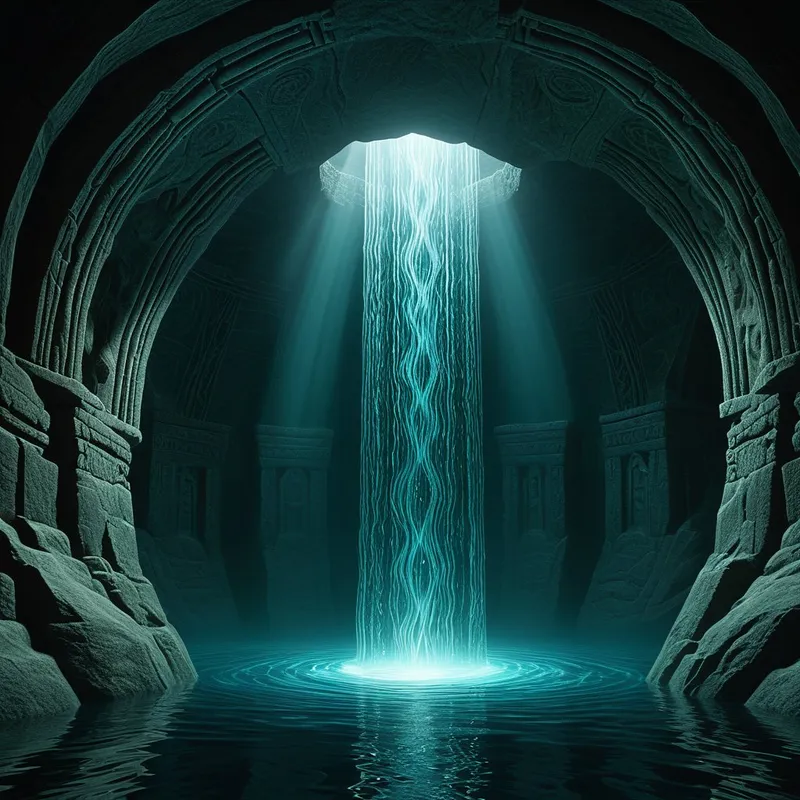
Upon the sleeping, placid surface of the great deep, Ea began to build. He did not banish Abzu; he contained him. He constructed a magnificent dwelling, a temple of perfect order called the Apsû. Its foundations were laid upon the very body of the subdued father. Within this sacred enclosure, Ea established his throne. He took for himself the epithet "King of the Apsû." He did not kill the source; he mastered it, channeled it, and from its now-quiet depths, he drew forth the sweet waters of wisdom, magic, and lawful creation. The first great threat to the emerging world was not vanquished by force, but subdued by cunning and contained by sacred architecture. From this contained deep, the work of the world could continue.
Cultural Origins & Context
This myth is not a singular story but a foundational layer in the complex theological tapestry of ancient Mesopotamia, particularly in the Babylonian creation epic, the Enûma Eliš. It was recited, likely during the New Year (Akitu) festival, a ritual of cosmic and societal renewal. The recitation was an act of power, reaffirming the divine order (mes) over chaos. The myth served a critical societal function: it legitimized the theological and political authority of the god Ea (and later, his son Marduk) as the bringer of civilization. Just as Ea subdued the chaotic deep to establish his ordered temple, so too did the king, Ea's representative, subdue the chaos of the natural and human world to establish the city-state, the temple, and the law.
Symbolic Architecture
Abzu is not merely a body of water; it is the symbolic substrate of all that is. It represents the unconscious in its most primordial state—not the personal unconscious of repressed memories, but the collective, psychoid ground of being itself. It is the matrix of potential, teeming with life and possibility, yet in its raw state, it is incompatible with the differentiated structures of consciousness. The "noise" of the young gods symbolizes the emergent spark of ego-consciousness, which is inherently disruptive to the undifferentiated unity of the unconscious.
The birth of consciousness is an act of violence against the peace of the primordial deep, and the deep will always seek to reclaim its own.
Ea’s action is the archetypal act of the Magician. He does not engage in a heroic battle; he uses metis (cunning intelligence). He understands the nature of Abzu so completely that he can use its own essence—its desire for quiet—against its destructive intent. His construction of the Apsû temple is the critical symbolic act: it represents the creation of a temenos, a sacred, bounded space within the psyche where the powers of the deep can be accessed safely, ritualized, and put to creative use. The unconscious is not destroyed; it is contained and in relationship with consciousness.

The Dreamer's Resonance
When this myth stirs in the modern soul, it often manifests in dreams of overwhelming, quiet depths. To dream of being pulled into still, black water, or of a basement or foundation flooding with dark water, is to encounter the Abzu. The somatic sensation is one of immense weight, silent pressure, and the terror (or sometimes profound peace) of dissolution. This is not the chaotic frenzy of a Tiamat-storm, but the slow, inevitable sink into the deep ground of the self.
Psychologically, this dream pattern signals a confrontation with the non-ego core of the psyche. The dreamer may be at a point where a new level of consciousness or a new creative endeavor is trying to emerge, and it feels threatened by a regressive pull back into passivity, inertia, or undifferentiated being. The deep is "sleeping" but potent, and the ego feels the peril of being lulled back into it. The dream is the psyche's dramatization of the critical choice: to be dissolved by the deep, or to find the wise, containing spell that allows one to build a structure of consciousness upon it.
Alchemical Translation
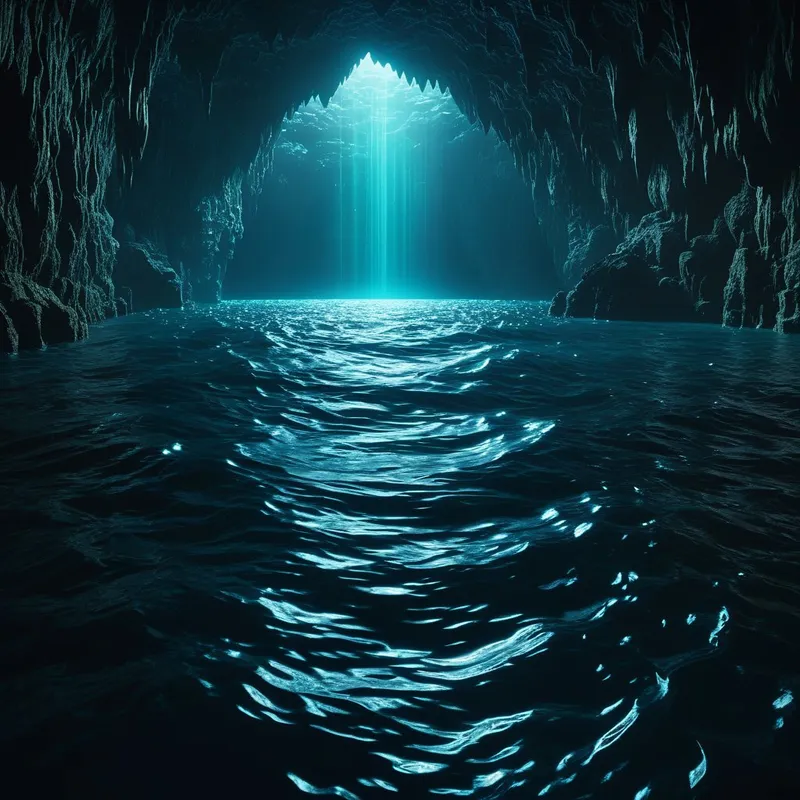
The alchemical process mirrored in the Abzu myth is the coniunctio—not of opposites, but of consciousness with its own source. The goal is not to slay the prima materia (the primal matter), but to transform the relationship to it. For the individual, Abzu represents the raw, unintegrated potential of one's deepest nature—the talents, instincts, and psychic energy that, in their raw state, can feel overwhelming and threaten to swamp the fragile structures of the conscious personality.
Individuation requires building the Apsû: a conscious vessel strong enough to hold the power of the deep without being destroyed by it.
The "spell of sleep" is the act of mindful attention. It is the ego turning toward the unconscious not in fear or aggression, but with a listening, reverent quality that acknowledges its power and its need for respect. The construction of the temple is the lifelong work of building a coherent psyche—through ritual, creative expression, therapy, or disciplined practice—that can channel these profound depths. One becomes, like Ea, the "King of the Apsû." The sovereignty is not over the unconscious, but over the conscious space where the unconscious is allowed to speak and flow in a manner that nourishes, rather than annihilates, the individual life. The sweet waters that then flow are the gifts of intuition, creativity, and authentic being, drawn from the once-terrifying deep.
Associated Symbols
Explore related symbols from the CaleaDream lexicon: