The Dream of Water: The Unconscious Speaks in Tides
The Somatic Echo
Before the image forms, the body knows. It is a pressure in the chest, a liquid weight behind the eyes, a coolness on the skin that isn’t there. It’s the feeling of being submerged in a silence that hums, of buoyancy and the threat of sinking held in perfect, trembling equilibrium. The breath becomes tidal—a shallow ebb and flow against an internal shore. This is the somatic prelude to water. It is the psyche preparing to communicate in its first and final language: the language of feeling, of depth, of the medium from which all life first crawled onto land, carrying the memory of the ocean in its blood and tears.
The Dreamer's Log
The dream is always the same: I am walking through the endless, fluorescent-lit corridors of a place that feels like a hospital, a library, and a server farm fused into one. The air is dry and hums with a low electrical frequency. I turn a corner, and there, spreading from beneath a closed metal door, is a perfect, still, and impossibly deep puddle of black water. It does not ripple. It holds the reflection of the ceiling lights not as points, but as long, drowning streaks of white. I know I must open the door. I know what is behind it will swallow the entire building.
The alchemical interpretation: A sealed chamber of frozen grief is developing a critical pressure, threatening to dissolve the sterile, rational structures of the waking self.

The False Lead
Water is not merely a symbol for “emotion” in a generic sense. To interpret a tidal wave as simply “feeling overwhelmed” or a calm sea as “peace” is to stay in the shallows, mistaking the surface tension for the abyss. The dream of water is not about the content of your feelings, but about the process of feeling itself—the structural integrity of your inner container, the salinity of your psychic tears, the pressure of what you have dammed versus what you allow to flow. A flood is not bad luck; it is a systemic failure of boundaries. A desert is not a dry spell; it is a conscious or unconscious embargo on the soul’s own liquidity.
Psychological Architecture
To work with water dreams is to engage in the most fundamental shadow work: the reclamation of the fluid self from the tyranny of the solid. Our conscious minds are architects of form—we build identities, routines, beliefs, walls. Water dreams are the psyche’s quality assurance, testing the permeability of those walls. The shadow here is all we have refused to feel, all the tears deemed too costly, the rage deemed too dangerous, the longing deemed too naive. It pools in the basement of the self, stagnating, or gathers force until it becomes a torrent that washes away the carefully arranged furniture of our persona.
The individuation process in the realm of water is one of controlled dissolution. It is not about building a stronger dam, but about learning to be a competent sailor, a respectful diver, a patient irrigator. It requires acknowledging that parts of you—the Orphan who learned to freeze, the Ruler who demands absolute control—are terrified of liquidity. They see flow as chaos. The work is to sit with these terrified parts at the water’s edge, not to throw them in, but to show them that the water is not separate from them. It is what they, and you, are mostly made of.
Mythic Resonance
Consider the Sumerian goddess Inanna’s Descent to the Underworld. To visit her sister Ereshkigal, Queen of the Great Below, Inanna must pass through seven gates, and at each, she is stripped of a piece of her regalia—her crown, her lapis beads, her royal robe. She arrives naked and bowed. This is not a journey of acquisition, but of divestment, of being dissolved to the core. The underworld is not a fiery hell but a cold, silent place—a psychic ocean floor. Inanna’s journey mirrors the water dream’s imperative: to descend into the unconscious, to be stripped of your surface identities, and to confront the raw, fluid essence of being that exists before and after form.
Or recall the Greek figure Narcissus, not as a simple tale of vanity, but as a tragic parable of mis-identified water. He falls in love not with the water, but with the solid, reflected image it holds. He tries to grasp a form, ignoring the medium that makes the reflection possible. He starves, gazing at a surface, never diving into the depth. The pool becomes his tomb. The myth warns us: to see water only as a mirror for the ego is to perish from spiritual thirst while surrounded by the very substance of life.
Symbolic Nodes
- Calm, Clear Water: Psychic transparency, emotional clarity, the flow of consciousness.
- Murky or Polluted Water: Unprocessed emotional material, contaminated feelings, obscured truth.
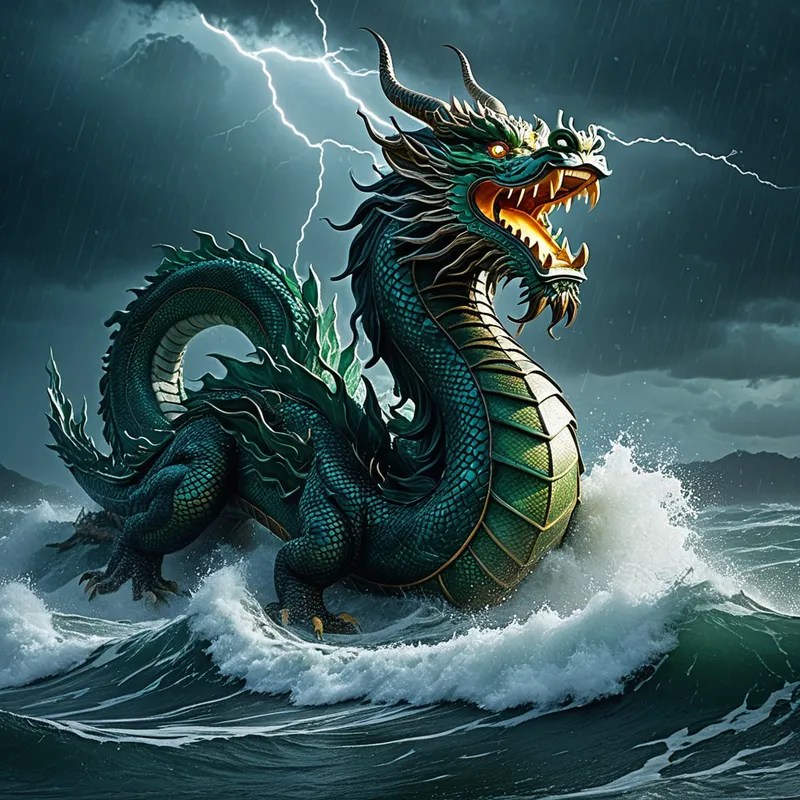
- Tidal Waves & Tsunamis: Overwhelming emotional release, the collapse of repressive barriers, unconscious contents breaking into consciousness.
- Still Pools/Black Water: The unconscious in its potential state, deep, unformed grief, the void, profound intuition.
- Drowning: Feeling consumed by feeling, a fear of being dissolved by the unconscious, loss of ego boundaries.
- Swimming with Ease: Emotional fluency, navigating the depths of the psyche with trust and skill.
- Faucets That Won’t Turn Off/Leaking Pipes: A loss of emotional control, feelings seeping out uncontrollably.
- Ice & Frozen Water: Frozen feelings, emotional numbness, a protective suspension of affect.
- Rain: Cleansing, blessing, the gentle descent of insight or melancholy from a higher (psychic) atmosphere.
- The Ocean: The totality of the unconscious, the primordial source, the vast unknown of the Self.
Archetypal Resonance
The Magician Archetype is the master of this realm. The Magician’s domain is the unseen substrate of reality, the hidden connections, the transformation of one state into another. This is the precise operation of water in the psyche: it is the alchemical solutio, the dissolving agent that breaks down rigid forms so they may be reconstituted. The somatic echo of water—that fluid pressure—is the Magician’s energy gathering, the prima materia becoming ready for change. The shadow of the Magician, the Manipulator or Illusionist, appears when we try to control these waters with force or deceit, building elaborate psychic dams or creating convincing mirages of dryness over a swamp. The true Magician does not command the water; they understand its laws, respect its power, and learn the art of shaping by first allowing themselves to be shaped. The alchemical potential here is the ultimate transmutation: turning the leaden weight of stagnant emotion into the flowing, mercurial wisdom of the embodied soul.
The Alchemical Process
The alchemy of water is the operation of Dissolution (Solutio). The intense psychological heat and pressure required is the courage to feel what you have spent a lifetime not feeling. It is the heat of shame as it thaws, the pressure of grief as it demands passage up the throat and out the eyes. The “vessel” is your own body-awareness, your capacity to hold sensation without shattering.
The process is not cathartic explosion—that is the vessel breaking. It is a slow, deliberate melting. You must sit in the company of your own interior ocean, listening to its tides. You must allow the salt water of your tears to corrode the rusted bolts on compartments you sealed long ago. This is terrifying to the ego, which equates dissolution with death. But in the alchemical view, solutio is the necessary prelude to coagulatio—re-forming. The terror of being dissolved by a wave is transformed into sovereignty when you realize you are not a statue on the shore to be knocked over, but rather, you are the water and the shore in dynamic, eternal conversation. Sovereignty is gained not by stopping the ocean, but by knowing you are the ocean’s own knowing.

The Integration Protocol
Question 1: Where in my waking life do I feel the most "dry" or emotionally arid? What small, sealed door might that puddle in the dream corridor be representing?
Question 2: If the water in my dream had a temperature, a taste, and a texture, what would they be? What does that tell me about the quality of the emotion it carries, beyond just its name?
Question 3: Which part of me is most afraid of this water? Is it a part that needs to be in control? A part that fears falling apart? Can I thank it for its protection, even as I begin to gently open the valve?
Action 1 (Somatic Anchoring): For one minute, upon waking or when feeling emotionally turbulent, place both hands over your lower abdomen. Breathe deeply, and imagine this space as an internal sea. With each inhale, feel it swell gently. With each exhale, feel it settle. Do not try to change the waves; simply be the witness to the tide.
Action 2 (Unstructured Writing): Set a timer for 10 minutes. Write from the perspective of the water in your dream. Let it speak. Use the prompt: "I am the water. I am not here to drown you. I am here to tell you that..." Do not edit, judge, or stop. Let the words flow like a current.
Action 3 (Ritual of Flow): Find a natural body of water—a stream, the sea, even a steady rain. Stand before it. Speak aloud (or whisper) one feeling you have been holding stagnant. Then, with intention, offer a small object (a stone, a leaf) to the water, watching it be carried away. This is a physical pact with the unconscious: I acknowledge what I have dammed, and I symbolically consent to the process of flow.
Final Validation
The dream of deep water is an encounter with the most ancient and formidable part of your being. To feel fear, disorientation, or a desire to flee back to dry land is not a failure of courage; it is the honest response of a creature of form meeting the formless. This difficulty is the measure of the transformation at hand. Yet, within that very terror lies your invitation. The water does not dream you to drown you. It dreams you to remind you of your origin, to cleanse the wounds you cannot reach, and to teach you that true strength is not found in resistance, but in the resilient, adaptable, and ultimately sovereign act of learning to float, to dive, and to flow.