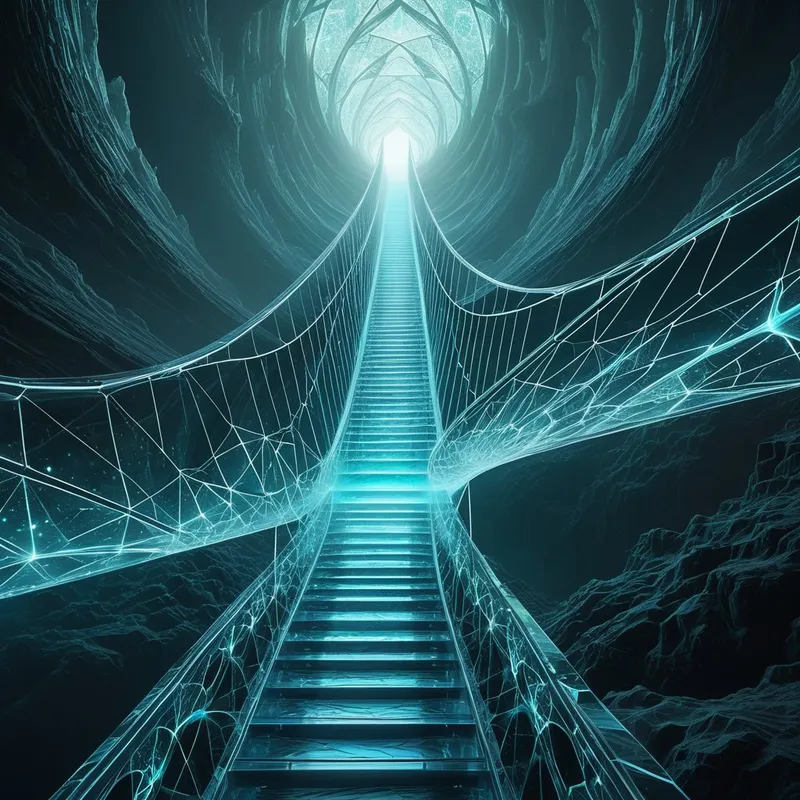
The Alchemy of the Threshold: Dreaming Through Transitions
The Somatic Echo
Before the dream images coalesce, the body knows. It is a hollowing in the solar plexus, a gravity well where certainty used to sit. It’s the vertigo of standing on a platform that is no longer solid, feeling the ground become liquid beneath your feet. The breath catches, not in panic, but in a suspended state—the inhale of what was, held too long, refusing to become the exhale of what will be. Muscles remember the shape of an old posture, an old life, and ache with the phantom limb of its absence. This is the somatic signature of transition: not pain, but the profound and unsettling unforming that must precede any new becoming. The psyche’s tectonic plates are shifting, and the body is the first seismograph to register the tremor.
The Dreamer's Log
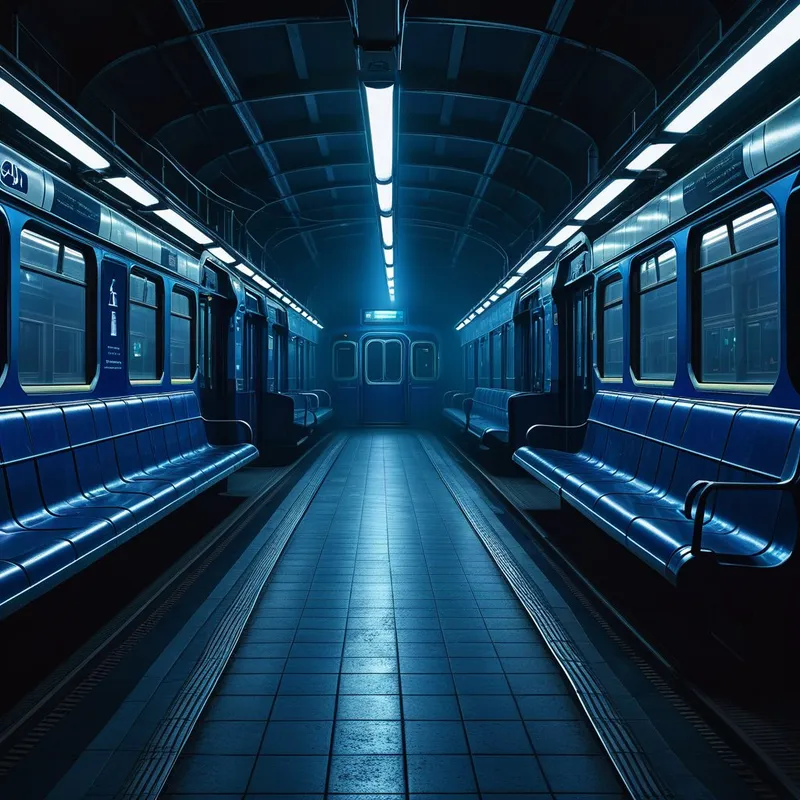
The station is always empty, lit by the sickly yellow of 3 AM. You know you have a ticket, but the destination is a smudge of ink. The train is waiting, doors open, a rectangle of perfect darkness. You must board, but your feet are bolted to the platform. The only sound is the hum of the tracks, a note so low it vibrates in your molars.
This dream is not about missing a train; it is the psyche’s stark portrait of the liminal self, suspended in the crucible between commitment and the void, where the old identity has been decommissioned but the new one has not yet arrived.
The False Lead
A transition is not a sequence of unfortunate events, nor is it merely "stress about change." To mistake it for bad luck is to personalise a cosmic process. The dream of transition is not cataloguing external chaos—the lost job, the ended relationship, the moved house. Those are its costumes. The core theme is the internal dismantling. It is the restructuring of the psychological architecture itself. A nightmare of pursuit is fear; a dream of a crumbling house you must leave is transition. The former reacts to a threat. The latter documents the necessary, terrifying demolition of a former sanctuary so a new foundation can be laid.
Psychological Architecture
This is the Shadow work of release. To transition is to consent to the death of a self you have lovingly constructed. The psyche, in its wisdom, does not just shatter this self. It dissolves it. You feel the parts of you that identified as the loyal employee, the devoted partner, the resident of that city, softening at the edges, losing cohesion. This is the essence of Individuation in motion: the conscious self must release its grip on a provisional identity to make room for a more complete one. It is a grief performed in the dark of the soul. You are not losing parts of yourself; you are witnessing the alchemical breakdown of their old compound forms into essential elements, which will later recombine under a new, more sovereign order. The pain is the heat of that dissolution.
Mythic Resonance
Consider Inanna’s descent. The Sumerian Queen of Heaven does not travel sideways; she goes down, level by level, stripped at each gate of her symbols of power—her crown, her lapis beads, her royal robe. She arrives in the underworld naked and bowed, only to be hung on a hook. This is not punishment, but the ultimate transition. To gain the wisdom of the underworld (the unconscious), she must surrender every layer of her known, ruling-world identity. Her story is the mythic blueprint for our dreams of empty stations and doorless rooms: the necessary, brutal un-becoming that is the only path to a resurrected, integrated wholeness. It is the firmware of transformation, written in the language of loss and return.
Symbolic Nodes
- Bridges, thresholds, doorways, empty stations: The liminal space itself.
- Vehicles in motion (trains, cars, boats) with unknown destinations: The mechanism of change, with its inherent lack of control.
- Crumbling or empty houses, abandoned rooms: The deconstruction of the old self-structure.
- Packing/unpacking suitcases, moving boxes: The active, often anxious, process of psychic reorganization.
- Changing clothes in public, losing garments: The vulnerability of identity shift.
- Tunnels, birth canals, descending elevators: The regression to a formative state for rebirth.
- Maps that are blank or show shifting terrain: The loss of old navigational certainty.
Archetypal Resonance
The energy humming at the core of the transition dream is that of The Magician Archetype. Not the Magician as master of external reality, but the Magician in its most profound, internal aspect: the Alchemist. This archetype governs the fundamental laws of transformation—the knowledge that to create gold, one must first have the courage to dissolve base matter in the prima materia. The somatic echo of vertigo and hollowing is the feeling of that dissolution beginning. The Magician’s power here is not manipulation, but a deep, terrifying faith in process. It holds the tension of the threshold, understanding that the void of the empty station is not an error, but the essential, fertile chaos from which new form is summoned. Its shadow—the Manipulator or Illusionist—appears when we try to bypass this void with false certainty or cling to the crumbling facades of our old selves.
The Alchemical Process
The alchemy of transition is Solve et Coagula—Dissolve and Coagulate. The first phase, Solve, is the psychological heat we resist. It is the pressure of staying present in the hollow feeling, in the dream of the empty house, without rushing to fill it. It is allowing the grief, the disorientation, the identity-vertigo to do its work. This heat breaks down the rigid compounds of your former self—the habits, self-concepts, and internal loyalties that have outlived their purpose. The terror is the solvent. The second phase, Coagula, cannot be forced; it emerges. It is the slow, often imperceptible, reorganization of those freed elements around a new, more authentic center of gravity. The dream of finding a new, simpler room in the back of the old house, or of the train door finally closing and moving smoothly into a landscape of dawn, signals this coagulation. Sovereignty is born from enduring the dissolution without fleeing, thereby earning the right to participate consciously in your own recombination.

The Integration Protocol
Question 1: In the dream’s liminal space (the station, the threshold, the empty room), what is the quality of the silence? Is it sterile and hollow, or is it pregnant and waiting? What does that tell you about your relationship to the ‘in-between’?
Question 2: What item, garment, or symbol did you not have to pack or leave behind in the dream? What part of your essence remains intact and non-negotiable amidst the change?
Question 3: If the vehicle or path in the dream had a consciousness, what would it know about your destination that your waking self does not yet permit itself to know?
Action 1 (The Liminal Anchor): For five minutes at dawn or dusk (the liminal hours), sit still. Do nothing but feel the weight of your body in the chair. Breathe into the hollow, vertiginous feeling without trying to change it. Your only task is to be the witness to the threshold.
Action 2 (Dream Cartography): Create an abstract drawing or painting of your transition dream. Do not illustrate the objects. Instead, use color, shape, and texture to map the emotional landscape. Where is the density? The emptiness? The tension? The potential flow? Let your hand move without narrative.
Action 3 (Ritual of Unpacking): Take a single, small box and label it "Provisional Identity." Into it, place physical tokens that represent roles, aspirations, or self-concepts you feel are currently dissolving or up for review (a business card, a photo, a symbolic object). Seal it. Put it away. Your task is not to open it, but to acknowledge its existence as a container for what is in flux, freeing your psyche from the need to hold it all in active memory.
Final Validation
It is right to feel unmoored. The disorientation is not a sign that you are failing the transition; it is the evidence that the transition is real, working at a depth that matters. You are not between stories; you are in the sacred, difficult, and creative void where the old story’s grammar is being rewritten. Trust the hollowing. The emptiness is not a deprivation, but the necessary clearance. It is the psyche’s brutal, loving method of making space. From this raw and honest ground, the first, true line of your new chapter—authentic, sovereign, and wholly yours—can finally be written.