
The Dream Theme of Tenacity: The Somatic Insistence
Tenacity arrives in the dreamscape not as an idea, but as a condition of the body. It is the deep, somatic echo of a truth the conscious mind has forgotten how to hold. Before the images form, you feel it: a low-grade hum in the jaw, a familiar ache in the shoulders—not the ache of burden, but of bearing. It is the clenched fist that does not know how to unclench, the spine that refuses the luxury of a full collapse. This is not aggression; it is a profound, cellular insistence. It is the body’s memory of a pattern so essential, so non-negotiable, that it has become structural. The psyche, in its wisdom, sends this sensation into the dream because the waking self has grown deaf to its quiet, relentless frequency. The dream must make it visible, must give this stubborn hum a landscape, a task, a seemingly impossible object to grip.
The Dreamer's Log
The dreamer finds themselves in the bowels of a derelict, cyber-alchemical archive. Rain seeps through a shattered crystal dome above, pooling on cold alloy floors. Their task: to keep a single, archaic server node from powering down. Its interface is in a dead language, its cables frayed. They have no tools, only their hands, pressing connections, holding wires in place, feeling the faint, vital pulse of data through their fingertips as the water drips, incessantly, onto the casing.
This is the alchemy of tenacity: the will, stripped of all grandiosity, reduced to the simple, maddening act of maintaining a connection against entropy’s constant whisper.

The False Lead
Do not mistake this for stubbornness. Stubbornness is a posture of the ego, a refusal to change direction born of fear or pride. The tenacity of the soul is different. It is not about refusing to move; it is about refusing to let something within you die. It is not the boulder you push uphill in defiance of gravity, but the root you are, cracking stone not out of anger, but because the directive to seek water is older than thought. A dream of tenacity is rarely about winning a battle in the outer world. It is about the internal system’s non-negotiable commitment to preserving a core pattern of being, even when that pattern seems obsolete, painful, or absurd to the waking mind.
Psychological Architecture: The Shadow of the Unyielding
Here lies the deep work. The tenacious pattern held in the body often guards a profound vulnerability. In the language of Internal Family Systems, it is a mighty Manager or a weary Firefighter, a part of the psyche that took on a rigid, enduring form to protect an Exile—a younger, wounded self that holds grief, terror, or unmet need. The dream of holding the wire, of turning the rusted wheel, of keeping the flame alive in the wind, is this protector’s saga. Its shadow is not in its dedication, but in its isolation. It has forgotten it is part of a system. It believes, with the fervor of a martyr, that if it stops for even a second, the entire inner world will dissolve. The individuation process here is not to break this tenacious part, but to witness it. To sit with the clenched jaw and ask, “What are you holding so tightly? And what precious thing are you afraid will be lost if you finally rest?” The transformation begins when this relentless guardian feels the compassionate attention of the waking Self, and can begin to transfer its burden from raw endurance into sovereign choice.
Mythic Resonance
We see this not in the hero who slays the dragon, but in the figure who holds the line. Think of Penelope at her loom in Homer’s Odyssey. Her tenacity is not expressed through journey or battle, but through a creative, repetitive act of unraveling and re-weaving. She maintains the integrity of her home and her vow against a rising tide of suitors and despair. Her loom is her server rack; her nightly unraveling is the act of holding the wire in place, preserving a space for a truth (Odysseus’s return) that all external evidence denies. Her myth tells us that tenacity is a creative, cyclical act of preservation, a way of bending time itself around a core fidelity. It is a feminine, receptive form of will that is often invisible to the epic gaze, yet is the very fabric that holds the story together.
Symbolic Nodes
- Unbreakable or Unusable Tools: A hammer that won’t shatter, a key that fits but won’t turn.
- Perpetual Motion Against Resistance: Turning a rusted valve, pushing a door against a constant wind, pedaling a bike with a bent wheel.
- The Single, Flickering Light Source: A candle in a draft, a dying console light, a lone bulb in a vast warehouse.
- Repetitive, Sisyphean Tasks: Stacking stones that tumble, copying fading text, digging a hole that refills with sand.
- Resilient, Isolated Organic Life: A tree growing from cliffside rock, a flower in a crack in pavement, moss on a forgotten monument.
Archetypal Resonance
The energy here resonates most deeply with The Orphan Archetype, specifically in its mature, realized form as the Survivor. The Shadow Orphan is the Victim, defined by what has been lost or done to it. The tenacious Survivor, however, is defined by what it has kept alive within itself despite everything. Its core energy is not naive hope (Innocent) nor battle-fueled triumph (Hero), but a gritty, realistic endurance. The somatic echo—the ache of bearing—is the Survivor’s embodied history. Its alchemical potential lies in its profound knowledge of the cost of things, of what truly matters when all else is stripped away. This archetype does not seek glory; it seeks continuity. It knows how to hold on, and in the alchemical vessel of the dream, it is teaching the dreamer what, at the deepest level, is worth holding onto.
The Alchemical Process: From Grit to Grain
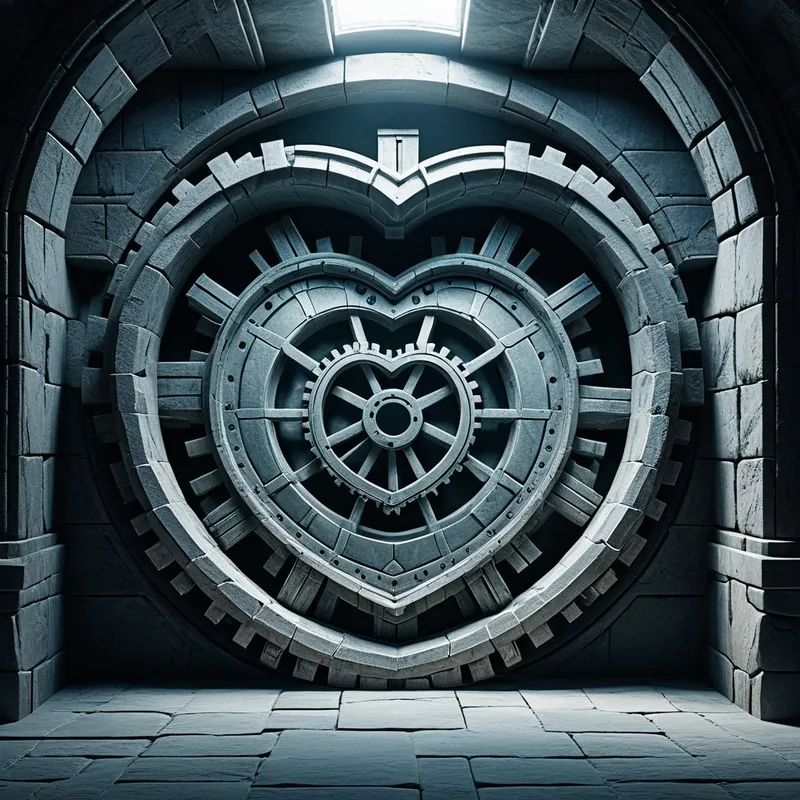
The transmutation of tenacity is not an explosion, but a crystallization. The intense psychological heat required is the heat of friction—the sustained, uncomfortable pressure of holding a contradiction. You must hold both the profound fatigue of the pattern and your respect for its original, protective purpose. The pressure is the weight of time, the feeling that “this has always been this way.” In this crucible of friction and duration, the raw material—the stubborn grit, the defensive rigidity—begins to change state. It is not dissolved, but re-ordered. The grit becomes a grain, a coherent structure. The tenacity that was once a desperate, unconscious clutch becomes a conscious, sovereign will. You are no longer compelled to hold the wire; you choose to, because you now understand what the wire carries. The energy transmutes from a burden borne into a purpose clarified. The fatigue becomes focus. The ache becomes authority.
The Integration Protocol
Question 1: In the dream, what was the single, simplest action I was repeating or the one object I was tasked with maintaining? What is the equivalent of that action or object in my waking life—not the grand struggle, but the core, repetitive act of preservation?
Question 2: If the tenacious energy in my dream were a protector in my inner system, what younger, more vulnerable part of me is it standing guard over? What is it afraid will happen if it stops?
Question 3: Where in my body do I feel the somatic echo of this tenacity when I recall the dream? If that sensation could speak, what one word would it repeat?
Action 1 (Somatic Unclenching): For three minutes, sit with the part of your body that holds the tension of tenacity. Do not try to relax it. Instead, place a warm hand over it and breathe into the sensation, as if your breath is acknowledging its work. Imagine the clenched energy softening just enough to become attentive, not collapsing.
Action 2 (Creative Unraveling): Take a single sheet of paper. Write the core statement of your tenacious dream (“I must keep the light on,” “I have to turn the wheel”). Now, with a pen, physically scribble over the words until they are a dense, black mass. Then, with a different colored pen, draw a single, clear line or shape emerging from that mass. This is not about creating art, but about enacting the transmutation from chaotic effort to clarified direction.
Action 3 (Ritual of Relinquished Control): Find a small, smooth stone. Hold it tightly in your dominant hand, feeling its solidity, projecting your “holding on” energy into it. Then, go to a natural body of water—a stream, the sea, even a steady rain gutter. Open your hand and place the stone at the water’s edge, where the waves or flow can just barely touch it. Leave it there. You are not throwing it away; you are transferring the act of holding from your will to the element of flow, allowing a larger force to now test and touch what you have guarded.
Final Validation
It is exhausting. To feel that deep, structural hum, that ancient insistence in your bones, is to carry a history that words cannot soothe. The dream does not send this to punish you, but because that tenacious part—your inner Survivor—is finally strong enough to be seen, and weary enough to need translation. Your fatigue is the evidence of its fidelity. The alchemy begins not by letting go, but by finally understanding what you hold, and why. From that understanding, the clenched fist can slowly, achingly, open. Not to release its treasure to the void, but to offer it to your own conscious gaze. In that offering, the relentless guardian becomes the wise steward, and the weight you bore becomes the ground you stand upon.