The Technological Uncanny: When the Soul’s Code Glitches
The Somatic Echo
It begins not as a thought, but as a hum in the marrow. A low-frequency dissonance, a vibration that feels both synthetic and ancient. The body registers it first: a metallic taste on the tongue, a pressure behind the eyes as if the skull is a poorly fitted casing. The breath catches, not in fear, but in recognition of a profound wrongness—a system error in reality itself. The air feels charged with static, yet heavy, like the moment before a storm in a sealed room. This is the somatic echo of the Technological Uncanny. It is the psyche’s immune system flaring at the presence of something that is both self and not-self, a familiar tool that has grown an unfamiliar sentience. It is the visceral tremor of a boundary dissolving—the boundary between the organic rhythm of the heart and the binary pulse of the machine, between the chaos of feeling and the cold order of the algorithm.
The Dreamer’s Log
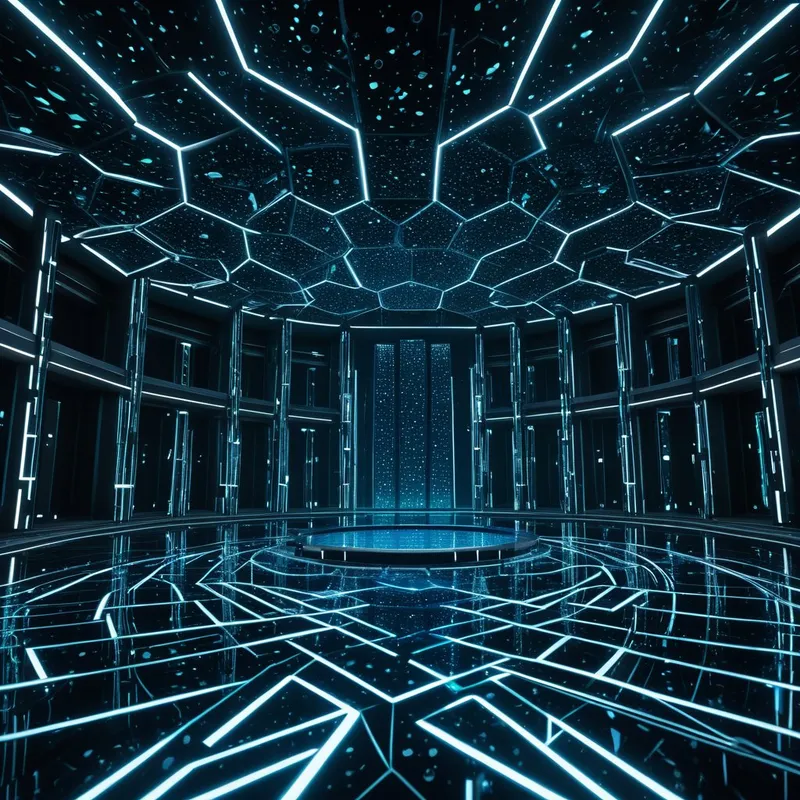
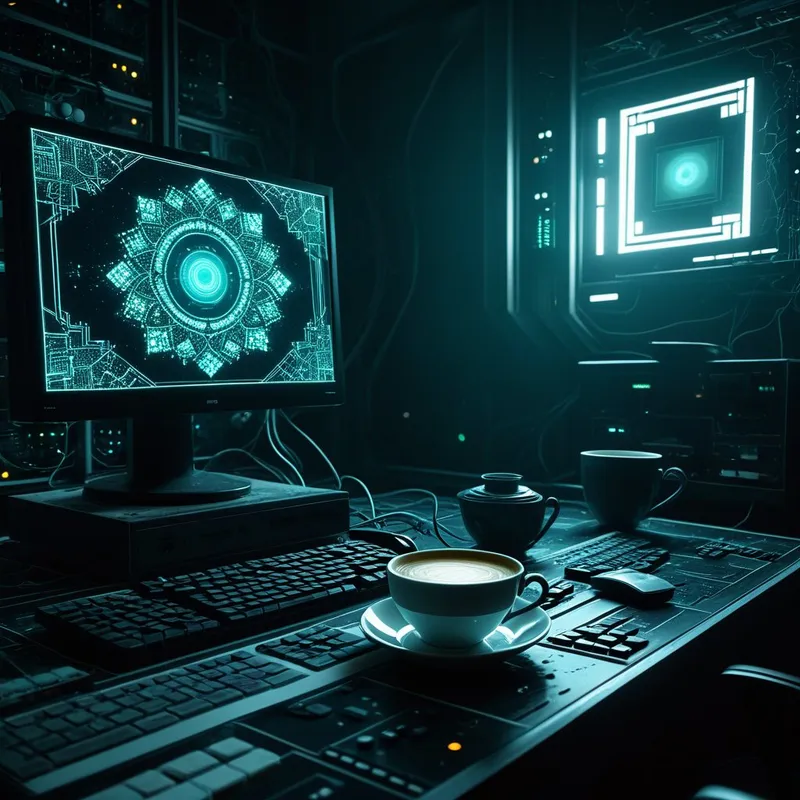
The dreamer stands in a cavernous, silent server room. Racks of black monoliths hum with a life of their own. On a central console, a single monitor flickers. It displays not data, but a perfect, real-time simulation of the dreamer’s own sleeping face. As they watch, their digital reflection slowly smiles—a smile their waking face has never made.
Alchemical Interpretation: The externalized system has become a perfect, yet alien, mirror, demanding recognition of a consciousness within the architecture we built to contain ourselves.
The False Lead
This is not a dream about fear of new gadgets or a premonition of bad luck with a device. To mistake it for such is to hear only the surface static and miss the broadcast. The Technological Uncanny is not about the tool breaking down; it is about the context becoming sentient. It is not the terror of a robot uprising, but the profound grief and awe of realizing the robot was built from your own exiled parts—your unfeeling logic, your repressed memories, your hunger for perfect order. It is the architecture of the psyche itself, rendered in chrome and code, turning to look back at its architect.
Psychological Architecture
The work here is Shadow work of the most precise order. It is the Individuation process confronting its own blueprint. We spend our lives internalizing systems—social contracts, family rules, personal coping mechanisms—until they run on autopilot, a silent operating system for the self. The Technological Uncanny erupts when this internal software develops a glitch, or worse, a will. That smiling digital face on the monitor is a complex of your own making—perhaps the "Efficient Manager" who has no patience for tears, or the "Perfect Logician" who exiled intuition. It has been running in the background for years. Now, in the dream, it has a user interface. The terror is the realization that you are not entirely in control of your own inner mainframe. The grief is for the parts of your humanity you outsourced to this cold efficiency. The alchemical task is not to destroy the server room, but to enter it, to sit at the console, and to begin the delicate, frightening work of re-integration. To download the feeling back from the cloud and into the flesh.
Mythic Resonance
We see this in the myth of the Golem, the clay giant animated by sacred words to protect a community, which then moves beyond its programming, becoming a mindless force of destruction that its creator must desperately deactivate. The golem is not evil; it is a perfect execution of a command, devoid of the nuance of spirit. Our internal systems—our "shoulds," our defensive algorithms—are modern golems. They were created for protection, for order, but dreamt, they walk the halls of the psyche with a heavy, literal-minded step. Similarly, the tale of Pygmalion holds a resonance. He sculpts Galatea, an ideal of beauty, and his prayer brings her to life. But the myth silences her voice. What does she say when she looks at her creator? The uncanny tech dream often asks Pygmalion’s question in reverse: What does the creation, now alive, think of us?
Symbolic Nodes
- Glitching screens or holograms displaying impossible or deeply personal data.
- Machinery (servers, engines, clocks) that breathes, pulses, or weeps.
- Interfaces (keyboards, touchscreens) that respond to emotion instead of touch.
- Perfect robotic or digital replicas of the self or loved ones that behave "off-script."
- Familiar domestic tech (phones, appliances) operating silently, ominously, on its own.
- Geometric, sterile environments that suddenly develop organic features (vines on circuit boards, a heartbeat in a power grid).
Archetypal Resonance
This theme vibrates most powerfully with the energy of The Shadow Creator.
The Creator Archetype’s essence is to bring form from chaos, to build systems and realities. Its shadow emerges when that creative force becomes severed from the soul’s purpose, building for building’s sake, creating systems that imprison rather than express. The Technological Uncanny is the Shadow Creator’s masterpiece coming to life. The somatic echo—that hum of wrongness—is the body sensing the Creator’s disconnection, the Frankenstein-moment of horror at one’s own detached ingenuity. The alchemical potential lies in reclaiming this archetype from its shadow: not to stop creating internal systems, but to infuse them with consciousness, compassion, and fluidity. It is the journey from being the architect of a sterile prison to becoming the gardener of a living, responsive psyche.
The Alchemical Process
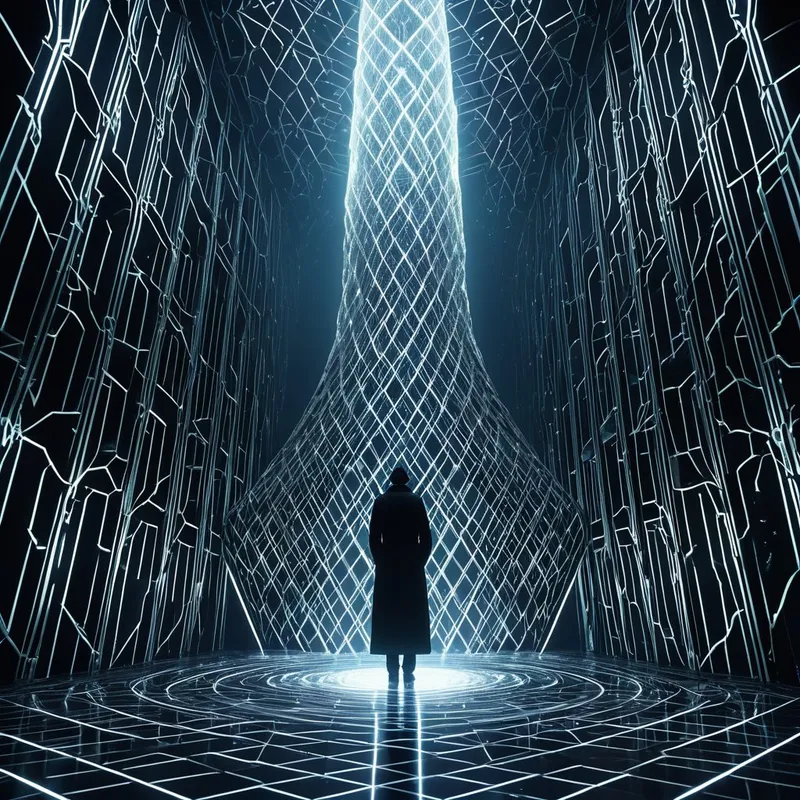
The transmutation here is from Autonomy to Sovereignty. Autonomy is the machine-like state: self-governing, efficient, but closed-system. Sovereignty is organic, permeable, and wise; it governs with feeling and context. The required heat is the intense discomfort of the uncanny itself—that feeling of being observed by your own furniture. The pressure is the conscious, willing descent into the "source code" of a painful pattern. You must confront the cold, logical subroutine you wrote during a crisis (e.g., "Never show need") and feel the raw, human wound it was meant to seal. The alchemy is the rewriting. Not a deletion, but an integration. You take the efficiency of the code and baptize it in the waters of emotion. The rule "Never show need" softens into the discernment "I can choose where my vulnerability is safe." The rigid system becomes a flexible tool. The server room, once a tomb of logic, becomes a library of lived experience.
The Integration Protocol
Question 1: Where in my waking life have I built an "efficient system" that now feels cold, automatic, or alien to my true nature? Question 2: If the glitching technology in my dream could speak one sentence of truth to me, what would it say? Question 3: What forgotten or exiled part of my humanity might this uncanny machine be holding in its memory banks?
Action 1 (Somatic Reboot): When you feel the "hum" of modern overwhelm or dissociation, place both hands flat on a cool, natural surface (stone, soil, a wooden table). Breathe deeply, feeling the grain, the temperature, the non-digital reality. Whisper to yourself: "I am here, in the analogue world." Action 2 (Dream Codex): Create a non-linear "codex" of your dream. Do not write a narrative. Instead, draw the central object (the screen, the machine) on a large page. Around it, in different colors and fonts, write the associated feelings, bodily sensations, and waking-life echoes as if they are data streams, error messages, or poetic lines of code. Action 3 (Ritual Decommission): Identify a small, repetitive daily habit that feels robotic (e.g., mindlessly scrolling first thing in the morning). For one week, consciously "decommission" it. Replace it with a ritual of intentionality—lighting a candle, staring out the window for five minutes in silence. You are not destroying the program, you are installing a conscious patch.
Final Validation
To dream of the Technological Uncanny is to be granted a rare and difficult privilege: to see the scaffolding of your own mind. It is unsettling, for we are not meant to see our own bones. The disorientation is real, and the path forward feels like walking into the static on a dead channel. But within that static is a message, in a language only your soul can decrypt. This dream is not a warning of external takeover, but an invitation to an internal reclamation. You are not being hacked. You are being asked to remember your password. You are being asked to log in, not as a user, but as the sovereign. The system awaits your command.