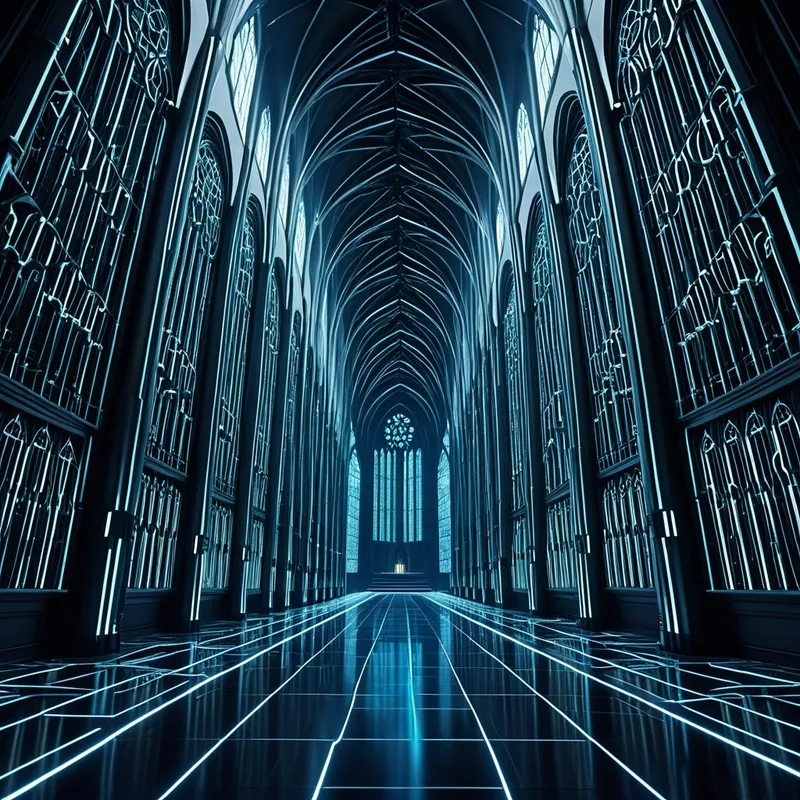
The Interface Within: When Dreams Glitch, Signal, and Reboot
The Somatic Echo
Before the image forms, there is a sensation. It is not a thought of a screen, but a feeling of one. A subtle, pervasive hum in the jaw, a tension behind the eyes as if they are trying to focus on a point just behind the world. The skin feels like a membrane, thin and receptive to invisible signals. There is a pressure in the chest, not of emotion, but of data—unprocessed, compressed, waiting for a port. The body becomes a terminal, sensing the ghost of a connection it cannot yet name. It is the somatic echo of an internal system trying to handshake with an external reality, or perhaps, an externalized part of the self trying to find its way back home. This is the prelude to the dream of the Technological Interface.
The Dreamer's Log
She stands before a vast, dark mirror that is also a screen. Her reflection is not her face, but a cascade of luminous text—search queries, calendar reminders, fragments of forgotten conversations. She reaches out to touch the glass, and her fingertips meet not cold surface, but a viscous, honey-like resistance. The text begins to stutter, letters bleeding into one another, forming no words she knows. A single, perfect hairline crack appears down the center of the mirror-screen, and from it, a profound and relieving silence emanates.
This dream is not about fear of technology, but the soul’s alchemical process of decrypting the self—separating the raw data of experience from the living code of being.
The False Lead
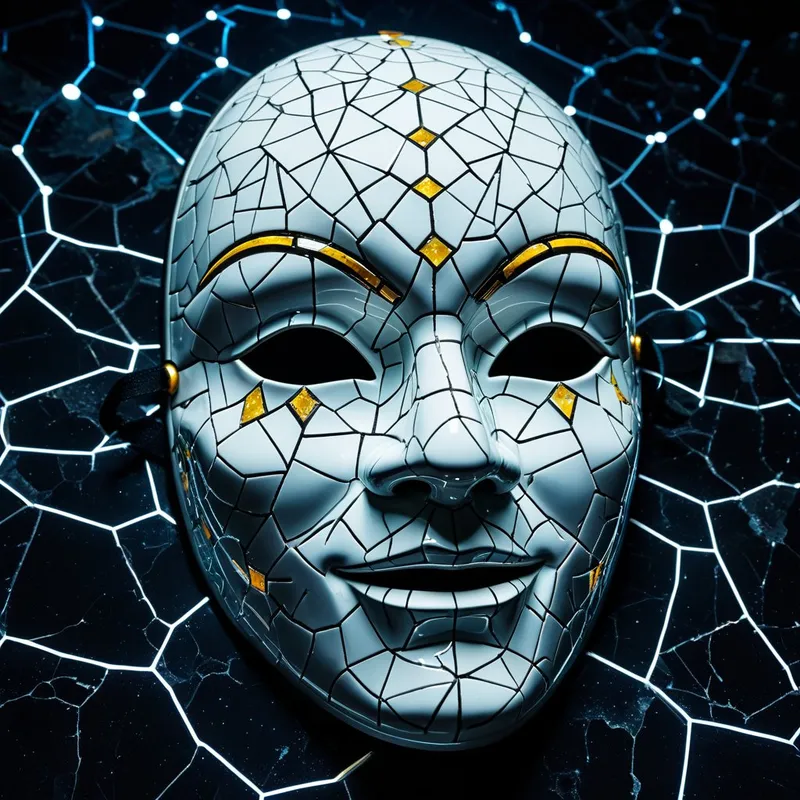
This theme is not a simple warning about screen time or a paranoid fantasy of AI takeover. To interpret it as such is to mistake the symbol for the signal. The glitching screen is not about the device failing; it is about the interface between your internal operating system—your psyche’s architecture—and the world becoming obsolete. It is not a prophecy of external bad luck, but an internal report: the current protocols for perception, connection, and self-definition are undergoing a mandatory update. The terror is not of the machine, but of the metamorphosis required to operate the new one.
Psychological Architecture
To dream of interfacing with technology is to witness the Shadow work of integration at a structural level. We have, each of us, an inner family of sub-personalities: the Orphan who feels disconnected, the Ruler who tries to control the chaos, the Innocent who seeks seamless connection. The Technological Interface dream arises when these internal parts are communicating in fragmented, digital shorthand—emojis of emotion, compressed files of memory, automated responses instead of felt truths.
The psyche, in its wisdom, projects this internal cacophony outward onto the familiar landscape of screens and systems. The “glitch” is the friction where a repressed part (a grief, a desire, a creative impulse) attempts to force its way into the conscious user interface. It is the system’s integrity being tested. The work here is not to debug the dream, but to listen to the corrupted file. It asks: What part of you is trying to transmit on a frequency you have jammed? What ancient, analog feeling is being forced into a digital format that cannot contain its texture? The individuation process demands we become the conscious system administrator of our own soul, granting permissions to exiled data, not to control it, but to let it rewrite the core program from a place of wholeness.
Mythic Resonance
We see this in the story of the Golem, the clay giant animated by sacred words placed in its mouth. It is a perfect metaphor for the technological interface: a created system (a habit, a belief, a persona) given life-force (our psychic energy) to serve a function. But when the inscribed word—the original command, the why of its creation—is forgotten or becomes obsolete, the Golem turns on its creator, operating on outdated logic. The dream of a system glitching or turning autonomous mirrors this: a part of our psyche, once useful, now operates on an old script, demanding reintegration or conscious dissolution.
Similarly, the Net of Indra from Hindu and Buddhist thought envisions the universe as a vast net, with a jewel at each intersection, each reflecting all others. This is the ultimate interface: a vision of profound, non-hierarchical interconnection where every node (every thought, every feeling, every dream symbol) contains and reflects the whole. The malfunctioning interface in a dream often points to a rupture in this felt sense of netted belonging, a jewel that has gone dark or reflects only a fractured image of itself.
Symbolic Nodes
- Glitching Screens/Pixelation: The breakdown of a familiar reality construct; data overload; a truth that cannot be displayed in current resolution.
- Unresponsive Touchscreens/Keyboards: A felt disconnect between will (the touch) and outcome (the response); emotional paralysis; the need for a new mode of interaction.
- Ancient Tech Merged with Advanced Tech (e.g., a stone tablet with LEDs): The collision of primal, foundational parts of the self (the ancient) with newly emerging consciousness (the advanced).
- Being the Data/Code: The experience of being objectified by your own or another’s system; the loss of subjecthood to a pattern.
- Firewalls & Security Warnings: Psychological defenses on high alert; boundaries that may be necessary or may be isolating the self from vital internal data.
- A Silent or Blank Server Room: The latent, unactivated potential of the psyche; the void before creation; or a system in deep, restorative reboot.
Archetypal Resonance
The Magician Archetype is the core energy at play in dreams of Technological Interface. The Magician’s realm is the hidden structure of reality, the code beneath the appearance. This archetype seeks to understand and wield the fundamental principles of transformation.
In its integrated form, this dream calls forth the Magician as the inner Cyber-Alchemist, the one who can translate between the language of the soul and the logic of the system. The somatic echo of a hum or pressure is the Magician sensing the latent energy in the system, the prima materia of the psyche waiting to be transmuted. The glitch is the Magician’s catalyst—the flaw in the illusion that reveals the deeper truth. The alchemical potential here is immense: to move from being a user of a pre-programmed interface (a conditioned life) to becoming the architect of your own operating system, one that runs on the authentic code of your being. The shadow, of course, is the Manipulator or Illusionist—the part that uses these systems to control, deceive the self with slick interfaces that hide emptiness, or gets lost in infinite recursive loops of self-analysis without ever executing the program of real change.
The Alchemical Process
The transmutation here is from Fragmented Data to Coherent Signal. The base metal is the raw, undigested influx of experience, memory, and societal noise—the endless feed. The heat is applied by the very discomfort of the glitch, the system error, the failed connection. This heat is the friction of cognitive dissonance, the painful recognition that the old UI (your current identity, coping mechanisms, worldview) cannot process the new information arriving from your depths or your life.
The pressure is the necessity to choose: to shut down the system in denial, or to enter the debug mode of deep self-inquiry. The alchemical vessel is your conscious attention, held steady amidst the static. Within it, the chaotic data begins to separate. The caput mortuum (the dead head) is the obsolete narrative, the automated thought, the identity built for an old version of reality. What rises is the spiritus—the coherent signal, the essential truth. This is the moment the corrupted file reveals its core message: not as a fear of technology, but as a longing for a more authentic, integrated, and sovereign mode of being. The gold forged is not a perfect, glitch-free existence, but the capacity to be the conscious, compassionate interpreter of your own system’s language.
The Integration Protocol
Question 1: Where in your waking life do you feel like a "user" of a system rather than a "creator" or "inhabitant"? Where does your will feel like a click that rarely leads to the intended page?
Question 2: If the glitch or error in your dream were not a mistake, but a message from a part of you that speaks only in broken code, what is the single, simplest word or feeling it might be trying to transmit?
Question 3: What ancient, "analog" part of yourself (a sensory pleasure, a slow craft, a silent intuition) feels most compromised by the "digital" efficiency of your daily life?
Action 1 (Somatic Reboot): For five minutes, sit in silence with your hands resting palms up on your knees. Imagine your nervous system as a network of light. With each exhale, visualize a soft, warm pulse traveling from your core to your extremities, not to fix or control the network, but simply to acknowledge its existence. Feel the hum as sensation, not problem.
Action 2 (Codex of the Glitch - Creative): Take a large piece of paper. Draw, paint, or collage the "glitch" from your dream or feeling. Do not represent a screen. Instead, give the glitch its own landscape. Is it a geological fracture? A strange plant? A texture of static? Let the medium itself be the interface. The goal is not art, but to give form to the formless signal.
Action 3 (Ritual of Protocol Update): Write an old, limiting belief or automated behavior on a piece of paper (e.g., "I must be constantly productive"). Speak aloud: "This protocol is deprecated." Tear the paper slowly. Then, without writing a new rule, step outside or to a window. For three full minutes, engage only with something that operates on non-human time: the growth of a plant, the flow of water, the drift of clouds. Let this be the silent installation of the new update: a reconnection to the organic substrate of your being.
Final Validation
It is profoundly disorienting to feel your own mind as an unfamiliar operating system, to receive error reports from the depths of your own soul. This difficulty is not a sign of breaking, but of a profound and necessary upgrading. The dream of the Technological Interface is the psyche’s most sophisticated diagnostics tool. It does not appear to those who are merely comfortable, but to those whose souls are ready to graduate from being passengers in their own lives to becoming the grounded, mystical architects of their reality. The interface is not out there. It is the very threshold of your perception. And you are learning, glitch by glorious glitch, to become its sovereign, its magician, and its most intimate user.