
Synesthesia: The Alchemy of Unified Perception
The Somatic Echo
It begins not as a thought, but as a pressure in the bones—a low hum behind the eyes that tastes of cold copper. The body knows this state before the mind can name it. It is the feeling of the world pressing in through all channels at once, a sensory overwhelm that is not chaotic but strangely coherent. The skin might prickle with the scent of rain; a memory might arrive not as an image, but as a specific weight in the palms. This is the somatic prelude to synesthetic dreaming: the psyche’s internal partitions growing thin, its bureaucratic divisions of sight, sound, touch, taste, and smell beginning to fail. It is the visceral signal that the old, segregated way of experiencing the self is dissolving. The body becomes a crucible where separate elements are brought into contact, awaiting the dream’s heat to fuse them into a new alloy of being.
The Dreamer's Log (Case Vignette)
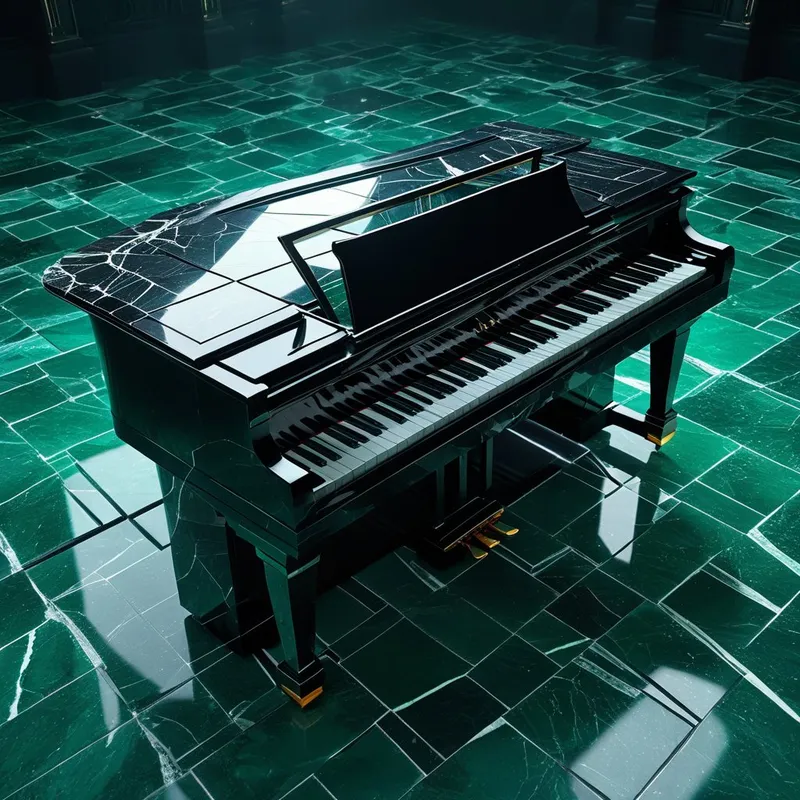
In the dream, I am in a silent, empty concert hall. I press a single piano key, but no sound emerges. Instead, a thick ribbon of emerald-green light, tasting sharply of iron and sea salt, pours from the instrument and pools on the floor, its warmth vibrating in my molars.
Alchemical Interpretation: The dreamer’s attempt to create isolated, auditory beauty (the note) is alchemically transmuted into a multi-sensory truth (light, taste, vibration), forcing an integration of artistic expression with visceral, bodily knowing.
The False Lead
This is not mere neurological curiosity or psychedelic flashback. To dismiss a synesthetic dream as a random firing of crossed wires is to miss its profound psychological summons. It is not a malfunction, but a re-functioning. The theme speaks not of confusion, but of a deliberate, if unsettling, convergence. It is the opposite of dissociation, where parts flee from each other; here, parts are compelled to meet, to blend, to recognize their fundamental kinship. The terror, if it comes, is not from chaos, but from the awe of a new and totalizing intimacy with one’s own experience.
Psychological Architecture
Synesthesia in dreams is the psyche’s architecture undergoing renovation. We are born into a world that teaches us to categorize: this is sight, that is sound; this is emotion, that is thought; this is the inner child, that is the inner critic. Our internal family systems live in separate rooms. The synesthetic dream is the moment the walls between those rooms become permeable, then transparent, then vanish altogether. The grief that is felt as a hollow in the chest suddenly has a color—a bruise-purple twilight. The forgotten lullaby doesn’t just return to memory, it returns as the scent of warm milk and the texture of worn flannel against the cheek.
This is deep Shadow work of the most intimate kind. It is not about confronting a monster in a dark corner, but about discovering that the monster’s roar is woven from the same fabric as your favorite symphony, that its breath carries the same spice as your joy. Individuation here is the process of accepting this unified field of perception. It is the move from being a committee of disparate senses and sub-personalities vying for control, to becoming a sovereign entity capable of holding the entire, shimmering spectrum at once. The psyche is not analyzing its components; it is experiencing their fundamental unity.
Mythic Resonance
We see this alchemical blending in the figure of the Hindu deity Shiva, the cosmic dancer within a ring of fire. His dance is the vibration that creates, sustains, and destroys the universe—a single action that is simultaneously sight (the dynamic pose), sound (the rhythm of the cosmos), and transformative power (the fire of dissolution and rebirth). He is the embodiment of unified forces, where what appears as separate—creation and destruction, beauty and terror—are revealed as different notes in the same chord.
Similarly, the Greek Muses were not merely inspirers of individual arts, but daughters of Memory (Mnemosyne), suggesting that true creativity arises when memory—the taste, touch, and sound of lived experience—flows into artistic expression without filter. To invoke a Muse was to invite a synesthetic storm, where the poet might see the music of the spheres and hear the colors of history.
Symbolic Nodes
- Musical Instruments producing light or taste: A violin bow drawing strands of honeyed light.
- Tasting a color or drinking a sound: Sipping from a glass filled with cobalt-blue silence.
- Textures that emit specific scents: A rough stone wall that radiates the perfume of gardenias.
- Words or numbers with inherent personalities and temperatures: The number seven feeling like a cool, silver friend.
- A room where the atmosphere has weight and flavor: An attic thick with the amber taste of forgotten afternoons.
Archetypal Resonance
The core energy of the synesthetic dream is the radical recombination of reality’s building blocks to reveal a hidden, more truthful whole. This is not the exploration of new lands, but the revelation of new dimensions within the familiar. It is the act of visionary re-creation.
The Magician Archetype is the master of this domain. The Magician’s power lies in perceiving and manipulating the unseen connections between things, transforming base perception into golden insight. The somatic echo of synesthesia—that pressure of imminent fusion—is the Magician sensing the latent potential in the raw materials of the senses. The alchemical potential is the ultimate act of Magician-ship: to stop seeing the self and the world as a collection of separate parts, and to begin experiencing it as a singular, resonant field of interwoven energies. The dream is the ritual space where this transmutation begins.
The Alchemical Process
The alchemy of synesthesia is Transmutation through Sensory Fusion. The prima materia, the leaden state, is our fragmented perception—a life lived in separate sensory silos, where emotion is divorced from body, sound from meaning, memory from sensation. The heat and pressure required are supplied by the dream’s own relentless, non-negotiable logic. It forces a confrontation with totality.
You cannot argue with a taste you see. You cannot rationalize a color you hear. The old cognitive frameworks, which rely on separation and hierarchy, crack under this pressure. The terror arises from this dissolution of the known world. The grief is for the loss of simple, categorized reality. But in the crucible of the dream, these separate elements—sight, sound, emotion, memory—are not destroyed. They are superheated until their boundaries melt, and they flow into a new, unified compound. The gold that results is sovereign perception: the ability to hold multiple, seemingly contradictory layers of experience simultaneously, without fragmentation. You become the conscious witness to your own rich, multi-channeled being.

The Integration Protocol
Question 1: In the dream, which two senses merged most powerfully? If that fusion were a metaphor for two parts of your waking life (e.g., work and creativity, logic and intuition, past and present), what would they be?
Question 2: Was the blended sensation beautiful, terrifying, neutral, or overwhelming? What does that emotional charge tell you about your readiness to integrate these parts of yourself?
Question 3: If the synesthetic experience from the dream could be preserved in one object in your waking world, what would that object be? Describe its properties.
Action 1 (Somatic Grounding): For one minute upon waking, do not open your eyes. Focus solely on the world of sound. Then, try to "feel" the shape, weight, and temperature of those sounds in your body. Do not visualize them. Just feel their somatic imprint.
Action 2 (Creative Transcription): Without thinking, use any medium—watercolors, pastels, clay, or unstructured writing—to express the dream not as a story, but as a sensory map. Let a color represent a sound, a texture represent an emotion, a scribble represent a taste. The goal is not art, but a direct translation of the fused state onto a page.
Action 3 (Ritual of Blending): Choose two activities you normally do separately and consciously blend them for a short period. Listen to a complex piece of music while tasting a dark chocolate, focusing solely on how the flavors change with the notes. Walk in nature while mentally assigning a color to each emotion that arises. This is a waking, gentle invocation of the dream's principle.
Final Validation
To dream in synesthesia is to be drafted into a profound and demanding curriculum of the soul. It can feel like a beautiful madness, a glorious breakdown of sanity’s neat fences. Do not fear the disorientation. It is the necessary chaos before a new, more holistic order. The psyche is not breaking; it is expanding, learning to perceive with its entire being. You are not losing your grip on reality. You are being invited to grasp a vaster, more intricate, and truer one—where every part of you, at last, can speak the same luminous, multi-sensory language.