
The Hidden Architecture of Belonging: Dreams of Social Connections
The Somatic Echo
Before the mind conjures a face or a scene, the body knows. It is a specific, hollow ache in the solar plexus—not the sharp pang of hunger, but the deep, resonant thrum of an empty chamber. It’s the phantom weight of a hand that isn’t there on your shoulder, the chill of a space beside you that should be warm. Conversely, it can be a clenching in the jaw, a tightening across the chest plate, a visceral recoil at the thought of another’s proximity. This is the somatic echo of the social dream: the body’s ancient, pre-verbal language of exile and invitation. It speaks of the fundamental human paradox—the terror of being consumed by the collective and the profound grief of being cast out from it. Your nervous system is the first cartographer, mapping the borders of your relational world long before you arrive at the dream’s party, its empty room, its crowded, silent street.
The Dreamer's Log (Case Vignette)
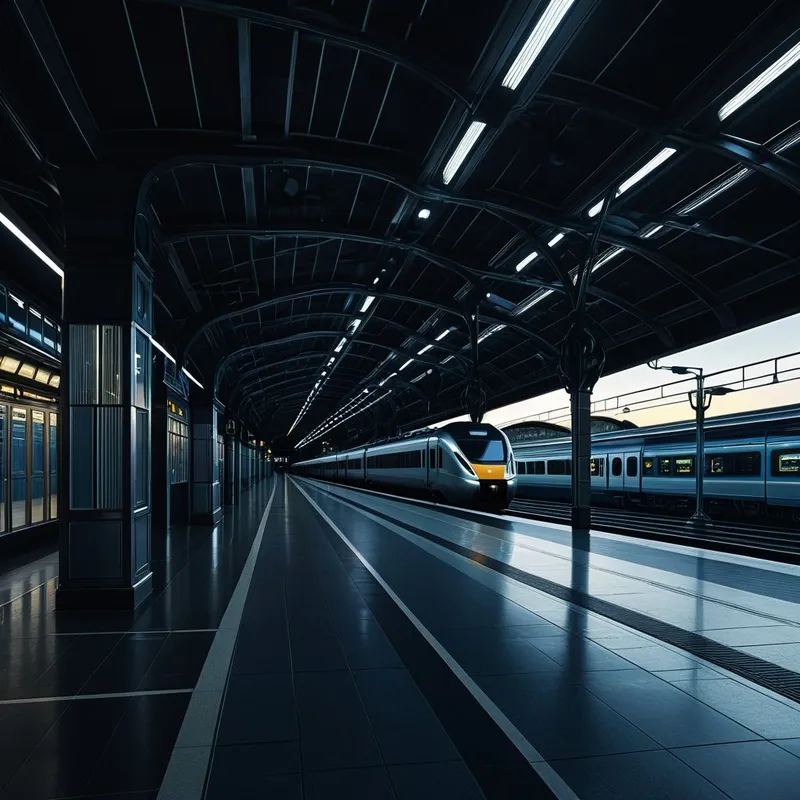
You are standing on an endless platform. A sleek, silent train arrives, its doors sighing open to reveal a car full of familiar faces—friends, old colleagues, family—all engaged in lively, intimate conversation. As you step forward to board, a transparent barrier, cool and smooth as glass, seals the doorway. They do not see you. The train departs, leaving you in a profound and echoing silence.
This is the alchemy of exile: the psyche presenting the unbearable truth of a perceived inner separation, not as a fact of the outer world, but as a structural condition of the soul, demanding recognition before it can be dissolved.
The False Lead
Do not mistake this theme for a simple prophecy of social strife or a literal forecast of loneliness. The dream is not reporting on the quality of your dinner party next Friday. It is conducting an internal audit. The aching platform is not about them leaving you; it is about the part of you that believes it must remain behind, the exiled fragment that has internalized the barrier as a permanent law. The dream of a suffocating crowd is rarely about the people; it is about the collapse of your internal boundaries, the shadow chorus of voices you have not yet claimed as your own, pressing in. To interpret it as mere “social anxiety” or “fear of rejection” is to stay on the literal platform. The dream invites you to board a different train entirely—one that travels inward, to the stations of the self where these exiles wait.
Psychological Architecture
Here lies the deep Shadow work. Our social landscape in dreams is a precise mirror of our internal family system. Every face, whether loved or threatening, represents an aspect of our own psyche in relationship. The critical parent at the dream’s dinner table is your own inner critic, projected. The forgotten friend is a discarded passion or talent. The beloved whose back is turned is often the love you withhold from yourself. Individuation in this realm is not about becoming a solitary island, but about reclaiming the entire population of your inner world. It is the arduous, glorious process of ending the civil war within. You meet the exiled orphan, comfort the terrified innocent, negotiate with the inner tyrant, and invite the silent sage to speak. As you do, the external dreamscape shifts. Crowds become choirs. Empty rooms become sanctuaries. The barrier on the train door becomes a threshold you built, and therefore, one you can choose to dismantle.
Mythic Resonance
We see this eternal process in the myth of the Homeric Odysseus, whose twenty-year journey is not merely a trip home, but a relentless pruning of his crew—his social connections. His men, representing unintegrated impulses (gluttony, hubris, short-sightedness), are lost one by one at each island of temptation. To reach Ithaka—the integrated Self—he must ultimately arrive alone, having internalized the lessons each lost connection represented. Similarly, the Buddhist parable of the Burning House speaks to this. The father (the Self) lures his children (the various aspects, the internal family) out of a doomed structure (the false, suffering ego) not with a lecture on architecture, but with the promise of specific, delightful chariots—tailored connections to their desires. The salvation is social, but its purpose is profound, singular liberation.
Symbolic Nodes
- Telephones & Devices that Don't Work: The breakdown of conscious, ego-mediated communication, forcing deeper, intuitive channels.
- Unrecognizable Faces in Familiar Places: The emergence of unknown or repressed parts of the self into your known world.
- Parties You Can't Enter / Rooms That Lock: The perceived inaccessibility of certain inner qualities (joy, belonging, confidence).
- Lost in a Crowd / Being Invisible: The feeling of the authentic self being drowned out by persona or the internalized voices of others.
- Bridges, Doors, Thresholds: The state of potential connection or the barriers to integration between psychic parts.
- Mirrors Showing a Different Reflection: The gap between your self-perception and a truer, often more complex, inner reality.
Archetypal Resonance
The most active archetype in the crucible of social connection dreams is The Orphan Archetype. Not merely its shadow expression of Victim, but the core Orphan in its potent, realist truth. This archetype resonates with the theme’s very foundation: the primal, somatic echo of separation and the subsequent quest for authentic belonging. The Orphan’s energy is that raw, gut-level knowing of being outside the glass, coupled with a pragmatic drive to survive and find its true kin. Its alchemical potential lies in its profound honesty. It refuses the false solace of the crowd. By fully feeling its exile, it initiates the search not for another family to adopt it, but for the scattered fragments of its own soul, thereby building belonging from the inside out. The dream’s social landscape is the Orphan’s map, and every encounter is a clue to where a piece of the self has been left behind.
The Alchemical Process
The transmutation here is from the Lead of Exile to the Gold of Sovereign Relating. The required heat is the intense, conscious endurance of that somatic echo—the hollow ache, the tightness—without immediately seeking to fill it with external noise or numbing distraction. This is the nigredo, the blackening. You must let the orphaned part weep. The pressure is the application of ruthless self-honesty: Which part of me feels unseen? What internal voice is playing the role of the rejecting crowd? What covenant have I broken with myself that manifests as this broken connection? As you hold this heat and pressure, the barrier begins to change state. It is no longer a wall keeping you out, but a membrane you are dissolving. The grief of not being invited transforms into the power to invite yourself in—to your own heart, your own counsel. The external connection, when it comes, is then no longer a desperate lifeline but a conscious, sovereign choice—a resonance between two integrated worlds, not a merger of two seeking to complete themselves.

The Integration Protocol
Question 1: In the dream, who was present and who was absent? If you could assign a single, core emotion or need to each person or group, what would it be? (e.g., The laughing crowd = a need for joy; The silent partner = a need for authentic communication).
Question 2: Where was the point of failure or disconnect in the dream? Was it a barrier you couldn't cross, a message that couldn't be sent, or a face you couldn't recognize? What is the literal, physical sensation in your body when you recall that moment of disconnection?
Question 3: If the entire dream scene were not an external event but an internal council meeting of your psyche, what agenda item was being avoided or what faction was being silenced?
Action 1 (Somatic Cartography): For one day, track the somatic echo in real-time. Without judgment, note the physical sensation (tight throat, open chest, hollow stomach) that arises just before you pick up your phone to scroll, send a message, or avoid an interaction. Simply note: "Before contact, the body felt X." This builds awareness of the impulse behind the connection.
Action 2 (Internal Family Portrait): Engage in unstructured, creative writing. Let your hand move without censorship. Write a letter from the "you" on that dream platform to the "you" inside the train. Then, write the reply. Do not aim for resolution. Aim for witnessing. Let the exiled and the seemingly-included parts speak to each other.
Action 3 (Ritual of Thresholds): Create a simple, physical ritual to honor an internal integration. Choose a doorway in your home. Before passing through, pause. Name an inner exile you are welcoming back ("I welcome my silenced creativity"). Step through. On the other side, speak a vow of internal belonging ("I belong to myself here"). This etches the new internal architecture onto your somatic memory.
Final Validation
The longing and the terror you feel in these dreams are not signs of weakness, but of a profound sensitivity to the true architecture of the human soul. It is a painful gift to feel the cracks in the facade of casual belonging, for it is the very pressure that forces the creation of a more authentic, enduring foundation. The dream does not show you that you are alone in the universe. It shows you the precise locations within your own universe where you have yet to claim your citizenship. The integration is not about assembling a perfect external network. It is about becoming the sovereign, compassionate ruler of your own inner kingdom, so that every connection you then choose becomes an act of diplomacy between two whole worlds, not a rescue mission between two fragments. The platform is not your destination. It is your launch site.