
The Dream of Scarring: From Rupture to Architecture
The Somatic Echo
Before the image forms, the body knows. It is a memory held in the tissue, a phantom topography. You feel it not as pain, but as a density—a ridge of silence where sensation once screamed. It is a seam in the self, a place where the continuity of your being was breached and then, imperfectly, rejoined. The mind may forget the event, but the soma keeps the ledger: a tightness in the chest that isn't breath, a coolness along the forearm that isn't air, a subtle pull in the shoulder that isn't weight. This is the somatic echo of scarring—the visceral proof that something happened here, and that you are, irrevocably, the one who remained after.
The Dreamer's Log
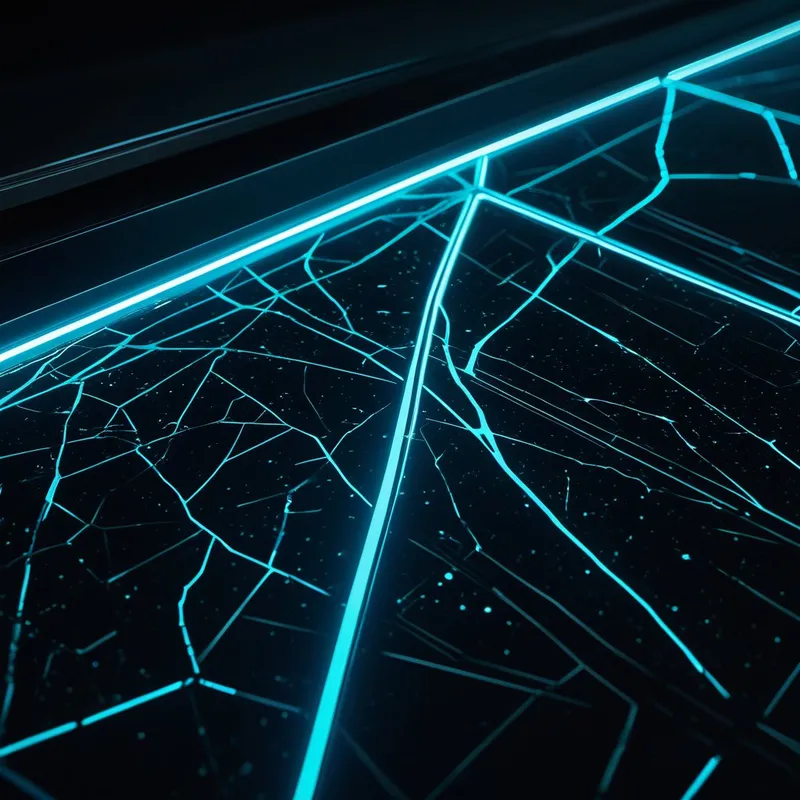
The dreamer stands before a vast, seamless wall of polished chrome, a perfect mirror to an empty room. With a tender, almost ritualistic pressure, they press a single fingertip to the surface. A hairline fracture spiders out from the point of contact, not shattering the wall, but etching into it. From within the fracture, a soft, gold light begins to thrum, a slow pulse that illuminates the entire sterile space with a warm, living rhythm.
This is the alchemy of the breach: the point of perceived damage becomes the sole source of illumination, transforming a sterile perfection into a vessel for inherent light.
The False Lead
Scarring is not a sign of ongoing failure or a badge of victimhood. To mistake it for such is to misread the entire text of the psyche. A scar is not the wound; it is the evidence that the wound closed. It is the body’s final, brilliant argument against dissolution. The dream of scarring, therefore, is not a nightmare of recurring damage, but a profound visitation from the part of you that engineered survival. It marks not where you were broken, but where you knit yourself back together with a new, tougher fiber. It is a record of the event, yes, but more importantly, it is the architecture of the aftermath.
Psychological Architecture
To work with the scar is to engage in the deepest Shadow work—not by exhuming the original injury, but by conferring sovereignty upon the protector that sealed it. In the language of internal family systems, a scar represents an exiled part of the self that was once overwhelmed, and a manager part that rushed in with the only solution it had: a swift, permanent closure. This manager, often unseen, is a fierce and brilliant artisan of psychic containment. Its method was cessation, its material was silence, and its creation is the scar.
The individuation process here is not about reopening the seam, but about finally acknowledging the artisan. It is to approach that ridge of density within and say, I see what you built here. I feel its strength. This validation begins to soften the exile’s terror and relieve the manager of its eternal, vigilant duty. The scar, once a symbol of frozen history, gradually becomes a landmark in a living psyche—a place of memory, not a prison of it. Its texture remains, but its meaning transmutes from "never again" to "I am here, still, because of this."
Mythic Resonance
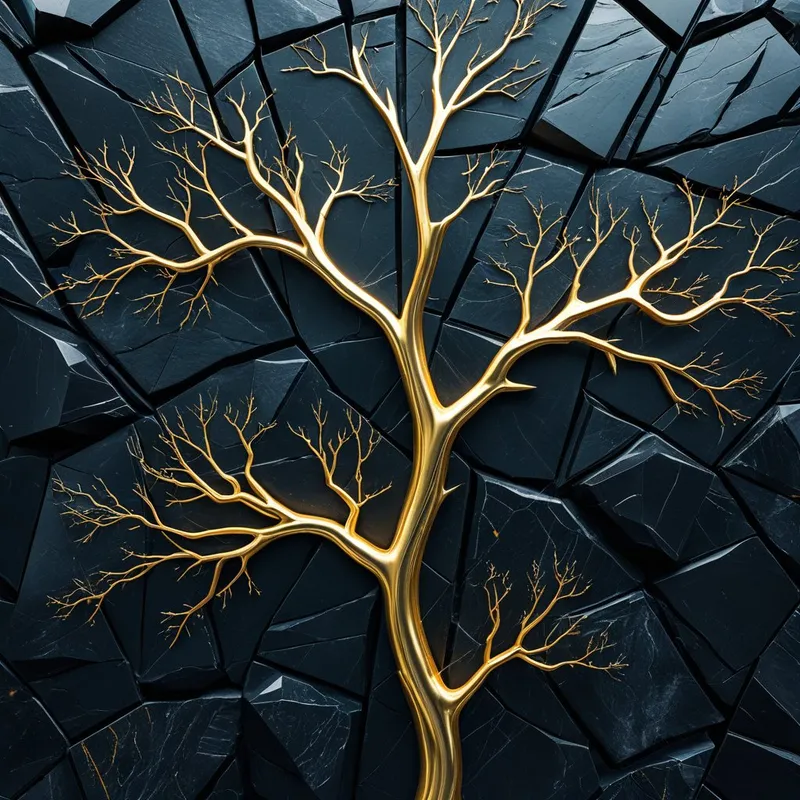
We see this eternal process in the myth of the Japanese art of Kintsugi, where broken pottery is repaired with lacquer mixed with powdered gold. The break is not hidden; it is illuminated, made the most beautiful part of the object’s history. The vessel is considered more valuable for having been broken and restored in this way. Similarly, in the Norse eddas, the god Tyr places his hand in the wolf Fenrir’s mouth as a pledge of good faith, knowing he will lose it. When the wolf is bound, Tyr’s hand is severed. He becomes the one-handed god, the god of law and justice precisely because he understood the cost of the pledge and paid it. His missing hand is not a weakness; it is the physical scar of a sovereign choice that maintains the cosmic order. Both myths teach us that the scar is the site where loss and law, rupture and repair, are fused into a new kind of integrity.
Symbolic Nodes
- Cracks in stone or glass: Not leading to shattering, but holding light.
- Grafted trees or hybrid plants: Where two different lives fuse into one resilient being.
- Sutures, staples, or metallic seams: Visible evidence of a deliberate, technical act of repair.
- Brands or ritual tattoos: Marks chosen or endured that redefine identity.
- A mended tool or weapon: An object whose breakage has been integrated, making it uniquely "known."
- A landscape with a deep, healed fissure: A canyon, a fault line—a geographic feature born of cataclysm, now stable and defining the terrain.
Archetypal Resonance
The theme of scarring resonates most powerfully with The Creator Archetype, specifically in its shadow aspect as the Mad Scientist or Ruthless Architect. This is not the Creator in its joyful, generative flow, but the Creator under duress, forced to innovate with terrible materials—trauma, shock, survival. This Shadow Creator does not build for beauty, but for permanence; its art is fortification. The scar is its masterpiece: a functional, if brutal, solution to existential rupture. The somatic echo is the feeling of this archetype’s work—the strange, dense "otherness" of the scar tissue. The alchemical potential lies in inviting this fierce, isolated architect out of the shadows and into the council of the self, where its genius for durable structure can be honored and integrated, transforming its creations from walls of last resort into pillars of acknowledged strength.
The Alchemical Process
The transmutation of scarring requires the heat of conscious, compassionate attention—the very thing the original wound may have lacked. The pressure is the willingness to hold two opposing truths in the same space: the truth of the devastating rupture, and the truth of the miraculous survival. This is the solve et coagula of the soul: to gently dissolve the story of "brokenness" that surrounds the scar, and to reconstitute it as a story of "architecture."
You must apply the heat of your non-judgmental awareness to the sealed site. This is not an interrogation, but a vigil. Under this sustained warmth, the scar begins to release its frozen narrative. The grief of what was lost and the terror of that moment may surface. This is the alchemical nigredo, the blackening. But as you hold steady, a shift occurs. The narrative changes from what was done to you, to what you did. You see the incredible, instinctive act of psychic self-surgery. The scar is revealed as evidence of your own life force’s stubborn, creative will. The albedo, the whitening, is this revelation. The gold of citrinitas is the new meaning you weave into the old seam, and the rubedo, the reddening, is the scar’s full integration as a source of earned wisdom and unshakeable resilience.
The Integration Protocol
Question 1: If the scar in your dream could speak, not about the wound that caused it, but about the act of sealing it, what would it say about its purpose? What was it designed to contain or protect?
Question 2: Where in your waking life do you feel the somatic echo of this scar—not as pain, but as a presence, a density, or a silent boundary?
Question 3: How has this scar, as a piece of your internal architecture, secretly shaped your strengths? What qualities do you possess that might be direct results of this foundational repair?
Action 1 (Somatic Mapping): In a quiet space, gently place your hand over the area of your body that corresponds to the dream scar’s location. Breathe into that space for five minutes. Do not seek a story; simply feel the temperature, the texture, the quality of energy there. Acknowledge it as a part of your landscape.
Action 2 (Unstructured Writing): Set a timer for 10 minutes. Write a letter from the scar to you. Let it describe itself not as damage, but as a structure. What is it made of? What is its function? What does it see from its vantage point? Do not edit or judge the writing.
Action 3 (Ritual of Illumination): Find a small, smooth stone or piece of wood. With a gold marker, paint a single, deliberate line or crack onto its surface. Keep this object on your desk or altar. Let it serve as a tangible reminder that the places of repair are not flaws, but illuminated seams—the unique topography of a soul that has remade itself.
Final Validation
The appearance of scarring in your dreams is an encounter with a profound and solemn truth: you have been shaped by forces that left a permanent record. To turn away from this is to reject a chapter of your own genesis. This is difficult, for it asks you to make peace with a change you did not choose. Yet within that very difficulty lies the empowerment. The scar is proof of your psyche’s innate, creative will to cohere. It is the signature of your life force on the contract of survival. By meeting it not with shame, but with the reverence due to a master builder, you reclaim its narrative. You move from being the one who was marked, to being the one who holds the map. And the map, etched with lines of survival, always shows the way home to a more integrated, more sovereign self.