
The Architecture of Meaning: Decoding Dreams of Rituals
The Somatic Echo
Before the mind can name it, the body knows the ritual is beginning. It is a specific gravity, a thickening of the air in the dream-space. The breath slows, becomes measured. A hush falls not just on the scene, but within the musculature—a held tension in the shoulders, a grounding in the soles of the feet. There is a pull toward a center, a focal point, that feels both ancient and utterly precise. This is not anxiety’s frantic flutter, but the profound, somatic recognition of a threshold. The body becomes the temple, and the ritual is the ceremony it is compelled to enact. You feel the weight of intention before you see the symbols, the deep, cellular memory of pattern and sequence activating like dormant code.
The Dreamer's Log
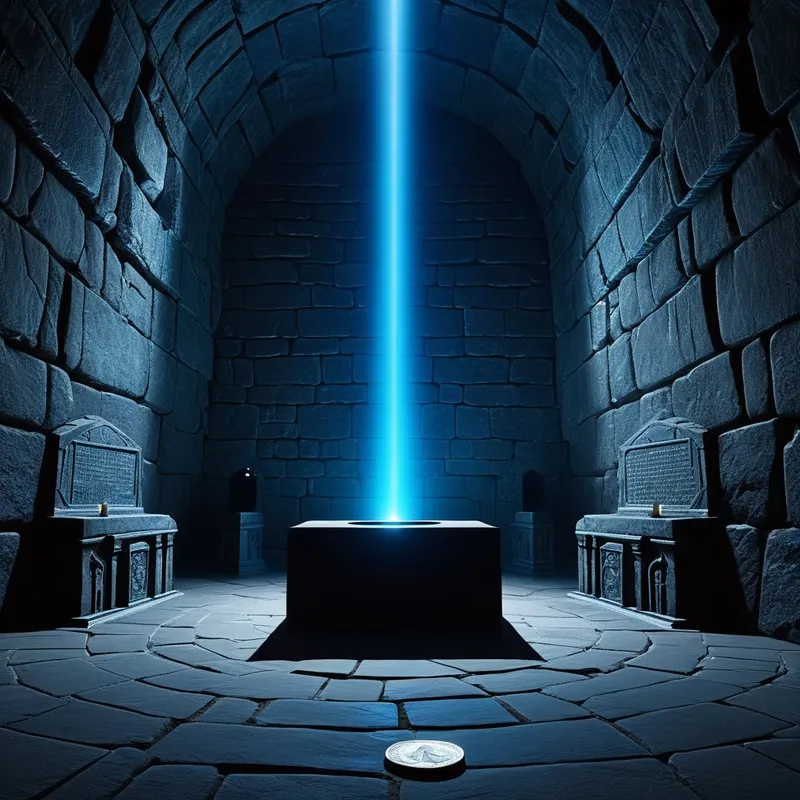
I am in a vast, subterranean library, but the books are blocks of smooth, dark stone. A figure I cannot see directs me to a specific plinth. My task is not to read, but to place a single, perfectly round silver coin into a depression on its surface. As the coin settles with a resonant click, the entire wall of stone books begins to glow with a soft, internal blue light, and I feel a wave of cool certainty wash through me.
This is the psyche performing a precise operation: the conscious offering of a valued token (the coin of current identity or effort) to activate a deeper, structural wisdom (the illuminated archive).
The False Lead
A dream of ritual is not a portent of superstition or a warning to avoid bad luck. It is not the mind merely replaying the day’s trivial habits. The danger in misinterpretation lies in dismissing it as meaningless repetition or, conversely, in taking its symbols too literally, seeking a one-to-one correspondence in waking life. The ritual dream is not about the external action it depicts, but about the internal architecture it reveals. It signals a shift in the foundational processes of the self, not a recipe for manipulating fate. To see it as fortune-telling is to miss the profound, self-referential surgery the psyche is undertaking.
Psychological Architecture
When a ritual appears in the dreamscape, the psyche is engaged in shadow work of the most structural kind. It is attempting to integrate a new pattern of being, to sanctify a change that has already occurred at a subterranean level but has not yet been acknowledged by the conscious ego. Think of it as the installation of new psychic firmware. The old operating system—a cluster of beliefs, coping mechanisms, and self-concepts—has become incompatible with the soul’s data. The ritual is the secure, symbolic protocol for the transfer of authority.
This is the core of Individuation in motion. The conscious mind (the dreamer performing the ritual) is being guided to voluntarily participate in its own update. The objects, the sequence, the sacred space—all are elements of a living metaphor. To light a candle in a dream is to commit to illuminating a specific inner shadow. To pour water is to initiate an emotional cleansing of an internal system. The terror or awe felt is the resistance of the old identity, the “orphaned” parts of the self that fear dissolution, sensing their role in the internal family is about to be reconfigured. The ritual provides the container for that death and rebirth, making it manageable, meaningful, and whole.
Mythic Resonance
This process echoes in the myth of Inanna’s Descent. The Sumerian goddess does not simply walk into the underworld; she is ritually stripped at each of its seven gates. Her crown, her lapis beads, her royal robes—each is removed in a prescribed order. This is not mere defeat; it is a necessary, sequential deconstruction of her worldly identity to achieve a transformative encounter with her shadow sister, Ereshkigal. The ritualized stripping is the architecture that makes the unbearable dissolution possible. Similarly, in the alchemical tradition, the Opus was never a single event but a rigorous series of stages—nigredo, albedo, citrinitas, rubedo—each a ritualized phase of breakdown and purification required to produce the gold of the integrated self. The dream ritual is your personal, psychic version of these gates and stages.
Symbolic Nodes
- Altars, Plinths, Focal Points: The designated center of transformation, the interface between the mundane and the sacred.
- Specific, Symbolic Objects (Coins, Keys, Cups, Blades): Concentrated packets of meaning or psychic energy requiring conscious placement or use.
- Repetitive, Precise Actions (Walking a labyrinth, pouring libations, arranging stones): The embodiment of a new neural or emotional pathway being carved.
- Prescribed Sequences or Orders: The psyche’s logic revealed, the non-negotiable steps of internal change.
- Robed or Featureless Guides/Officiants: The autonomous, archetypal intelligence of the unconscious directing the ceremony.
- Vestments or Masks: The temporary identities or roles required to safely navigate the transition.
Archetypal Resonance
The energy at the heart of the ritual dream is that of The Magician Archetype. The Magician is the archetype of transformation, the knower of the hidden laws of the universe, and the ritual is its native language. The somatic echo—the focused gravity, the charged stillness—is the Magician’s concentrated will gathering energy. The ritual itself is the Magician’s technology for causing change in accordance with that will, not in the outer world, but in the inner landscape of the self. The alchemical potential here is immense: to move from the Shadow Magician—who manipulates illusions and forces to maintain a fragile ego-structure—to the integrated Magician who, through sincere ritual, aligns personal consciousness with deeper, universal patterns to enact authentic metamorphosis.
The Alchemical Process
The alchemical transmutation here is called Sacramental Re-sequencing. The “prima materia” is the raw, often chaotic, emotional and psychic material of a life transition or crisis—the grief, the terror, the confusion. The “heat and pressure” are generated by the ritual container itself. The very act of engaging in the dream ritual, with its demand for precise attention and symbolic action, applies intense focus to this raw material.
This focused pressure does not burn away the emotion, but re-contextualizes it. Grief is no longer a free-floating storm; it becomes the sacred water for the libation. Terror is no longer a paralyzing force; it becomes the charged air in the temple, the respect for the power of the threshold. The ritual sequence provides a scaffold, allowing these powerful energies to be broken down from overwhelming wholes into manageable, meaningful components. They are then reassembled—re-sequenced—into a new psychic compound: sovereignty. The sovereign self is one who has consciously participated in the ceremonies of their own becoming, who understands their inner processes not as random suffering, but as a sacred technology with a logic and a purpose.
The Integration Protocol
Question 1: What in my waking life feels like it is in a state of “between”—no longer the old, not yet the new—and what small, deliberate action could sanctify this liminal space?
Question 2: If the main object or action from the ritual dream was a concentrated symbol for a part of my own energy or identity, what is that part? What was I being asked to “do” with it?
Question 3: Where in my life am I performing empty, unconscious rituals (habits of thought, reaction, or behavior) that need to be either infused with conscious meaning or respectfully dissolved?
Action 1 (Somatic Anchoring): Upon waking, before the mind interprets, return to the body’s memory of the dream. Stand or sit, and slowly, physically mime the primary ritual action from the dream (e.g., the placing of the coin, the pouring of water). Do not analyze; simply feel the gesture in your muscles and bones for 60 seconds. This grounds the symbolic in the corporeal.
Action 2 (Symbolic Transcription): Create a non-linear map of the ritual. On a large sheet of paper, draw, collage, or write fragments representing each element (the space, the objects, the sequence, the feeling). Use no words if possible, only images, textures, and abstract shapes. Let the relationships between the elements reveal themselves visually, bypassing the logical mind to speak directly to the pattern-recognizing unconscious.
Action 3 (Micro-Ceremony): In your waking world, design and perform a tiny, physical ritual that echoes the dream’s intention. If the dream was about cleansing, deliberately wash a single stone in a running tap. If it was about offering, leave a piece of fruit at the base of a significant tree. Keep it simple, private, and utterly sincere. This completes the circuit, bringing the archetypal pattern into embodied reality.
Final Validation
To dream of rituals is to be entrusted with a profound and demanding truth: that the deepest changes within you are not accidents, but ceremonies. They are orchestrated by a wisdom within that seeks not to frighten, but to formally invite you across a threshold. The difficulty, the solemn gravity you feel, is the appropriate response to the sacredness of the occasion. You are not losing your mind; you are being shown its innate, ceremonial architecture. By engaging with these dreams not as puzzles to be solved, but as rites to be felt and integrated, you move from a passive participant in your own transformation to its conscious, sovereign officiant. The ritual is always for you. You are both the priest and the temple, the offering and the divine recipient.