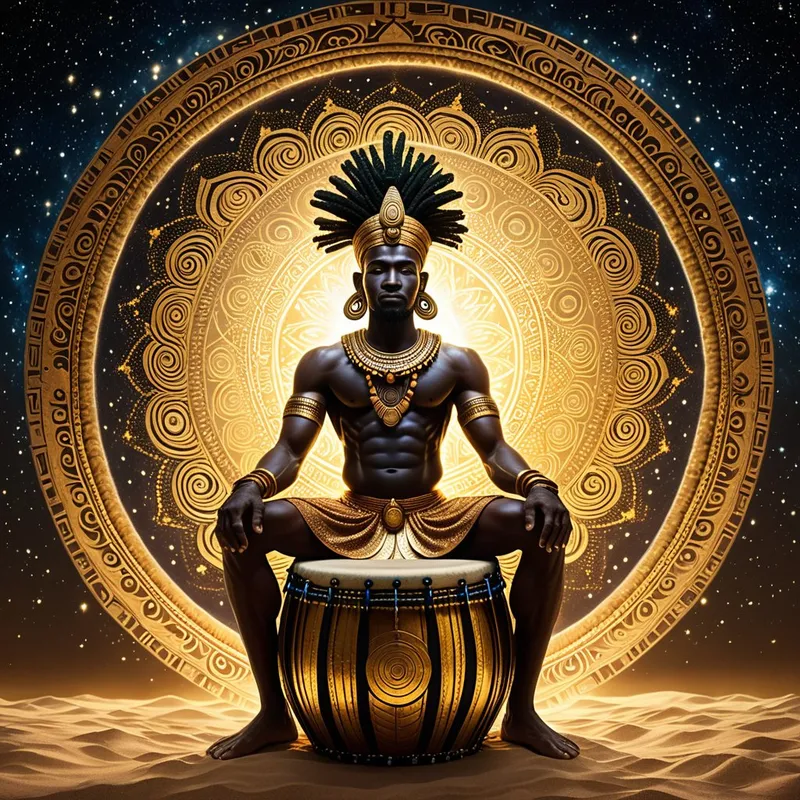
The Dream of Rhythm: The Somatic Blueprint of Psyche
The Somatic Echo
Before it is a sound, it is a tremor. Before it is a pattern, it is a pressure. The dream of rhythm announces itself not in the ear, but in the gut—a deep, internal thrum that is either a cradle or a cage. It is the felt sense of your own systems in motion: the syncopated double-beat of anxiety in the chest, the slow, tidal drag of depression in the limbs, or the humming, electric coherence of flow. This is the body’s pre-linguistic log. It is the pulse of the internal family, each part—the frantic orphan, the rigid ruler, the exiled rebel—beating its own desperate tempo. To dream of rhythm is to be handed the stethoscope of your own soul. You are not listening to music; you are listening to the music of you, the compound rhythm of all your selves trying to find, or fleeing from, a common time.
The Dreamer's Log
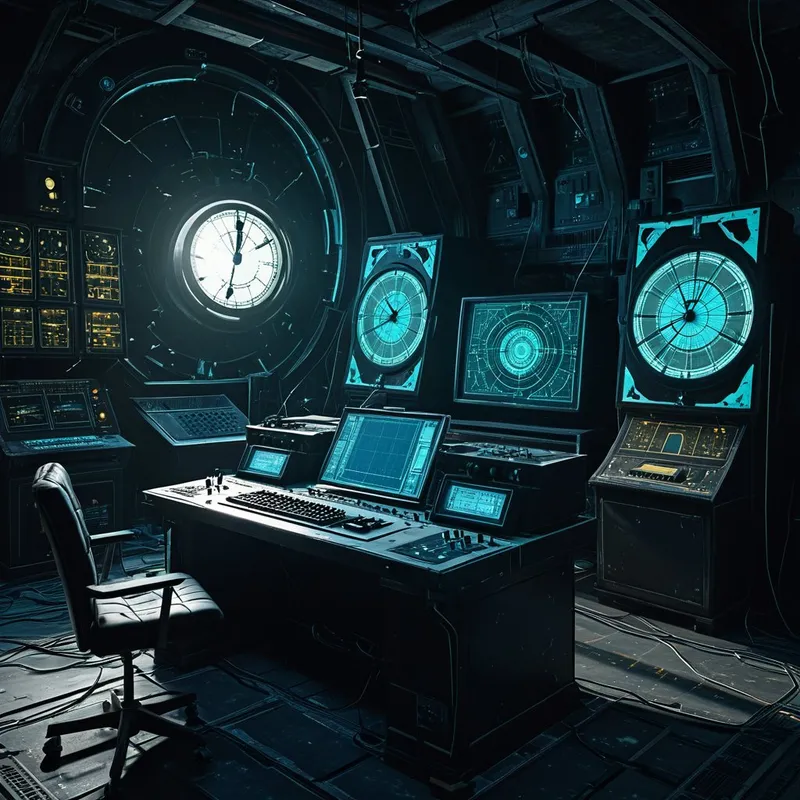
The control room is dark, lit only by the frantic, arrhythmic pulse of a dozen monitors. Each screen displays a vital sign of a different, fragmented system—one heartbeat, one respiratory rate, one neural wave—all scrolling out of phase. My hands move over the console, trying to sync them into a single, coherent waveform, but the master metronome is broken, its pendulum swinging in jagged, unpredictable lurches.
In the alchemical vessel of the dream, the broken metronome is the conscious ego’s failed attempt to impose order, while the body’s true, disparate rhythms demand not control, but deep listening and reconciliation.
The False Lead
This is not a dream about finding a better planner, optimizing your schedule, or getting “in sync” with external demands. That is the shadow’s trap—the belief that rhythm is something to be imposed from the outside, a metric of productivity. The dream of a disrupted rhythm is not about poor time management; it is about a profound dislocation from your own deep time, the innate, organic tempo of your becoming. It is the difference between marching to a drumbeat you cannot hear and discovering you are the drum.
Psychological Architecture
The architecture here is one of synchronization. The psyche is not a monolith; it is a parliament of selves, each with its own history, trauma, and need. The Orphan part beats a staccato rhythm of alertness, a survival tempo. The Ruler insists on a rigid, martial cadence of control. The exiled Lover may hold a slow, mournful dirge of forgotten longing. The dream of arrhythmia is the experience of this internal cacophony—a civil war of tempos. The work, then, is shadow work of the most somatic kind: to sit in the council chamber of your own body and listen, without judgment, to each distinct rhythm. Individuation is not the victory of one tempo over others, but the alchemical creation of a polyrhythm—a complex, layered, and sovereign time signature that can hold dissonance within a greater, moving harmony. It is the move from a fractured I to an integrated We within.
Mythic Resonance
We see this in the myth of Osiris, dismembered by Set, his body parts scattered along the Nile. Isis must gather each fragment—not to reassemble a rigid statue, but to re-animate a living god. Each piece had its own rhythm, its own silence. The reconstitution was not a return to a prior, static form, but the creation of a new, sacred rhythm for the underworld, a pulse for the realm of the dead that makes renewal possible. Similarly, the Norse god Heimdallr is born of nine mothers, a being composed of nine different energies or tones. He is the watchman who hears the grass grow and the wool on the sheep—the ultimate listener to the polyrhythm of the world itself. His resonance is not a single note, but the capacity to hold the entire symphony.
Symbolic Nodes
- A stuck or wildly swinging metronome or pendulum.
- A heartbeat monitor displaying flatlines, spikes, or erratic waves.
- Drums being played solo or in conflict with other instruments.
- A clock with melting hands, racing hands, or no hands at all.
- Tapping, knocking, or dripping sounds with no visible source.
- Dancing that is either perfectly in sync or disastrously out of step.
- The rhythmic crash of waves, either soothing or threatening.
- A pulsing light in a dark space.
Archetypal Resonance
The Magician Archetype is the master of rhythm. Not the Shadow Magician who manipulates and imposes false sequences, but the true Alchemist-Visionary who understands that reality is constructed from vibration and interval. The somatic echo of rhythm is the Magician’s raw material—the primal pulse before it is shaped into form. This archetype resonates because its core operation is transmutation through timing: knowing precisely when to apply heat (pressure) and when to allow cooling (rest), when to stir the vessel (conscious effort) and when to let it settle (unconscious integration). The Magician’s power lies in aligning personal rhythm with archetypal law, turning the arrhythmia of trauma into the resonant frequency of wholeness.
The Alchemical Process
The alchemy of rhythm is the work of the crucible of attention. The base metal is the chaotic, fearful clamor of disparate internal parts. The heat is applied not through force, but through sustained, non-judgmental focus on the discomfort of the dissonance itself. You must feel the panic of the orphan’s quickening pulse and the deadening weight of the depressed part’s slow drag, simultaneously, without choosing one over the other. The pressure is to hold this contradiction in awareness until a third thing emerges—not a compromise, but a new rhythm that contains the truth of both. The terror is of falling apart into permanent noise. The grief is for the simple, naive beat you think you’ve lost. The transmutation occurs when you realize the sovereign self is not the conductor of this orchestra, but the space in which the entire composition occurs—the silent witness that allows the cacophony to gradually, organically, find its own emergent and intelligent order.
The Integration Protocol
Question 1: Where in my waking life do I feel a visceral, somatic dissonance—a sense of being rushed when I need to be slow, or of dragging when I need to be alert? What part of me is beating that drum?
Question 2: If my current internal rhythm had a texture, a color, and a sound, what would they be? What rhythm does my deepest, quietest self long for?
Question 3: Which one of my internal “parts” or voices is most afraid of changing the rhythm? What is it protecting me from?
Action 1 (Grounding Pulse): For three minutes, sit in silence. Place one hand on your heart, one on your abdomen. Do not try to change your breath. Simply feel the two rhythms—cardiac and respiratory. Notice where they sync and where they diverge. Your only task is to be the observer of the duet.
Action 2 (Unstructured Rhythm Map): With a large piece of paper and markers, let your hand move without intention. Don’t draw objects. Let lines, dots, swirls, and strokes emerge based purely on your internal felt sense. Let a frantic part make frantic marks, a heavy part make slow, dark smudges. This is a visual transcript of your internal polyrhythm.
Action 3 (Ritual of Resonance): Find a place with a natural rhythm—a shoreline, a park with wind in the trees, even a busy café. Sit and listen until you can distinguish at least three different rhythmic layers (e.g., waves, bird calls, distant traffic). Breathe, and imagine your internal system not aligning to one, but finding its own unique frequency that can coexist within the whole soundscape, neither dominating nor being drowned out.
Final Validation
It is profoundly difficult to sit in the heart of your own dissonance, to feel the truth that parts of you are at war over the very tempo of your existence. This is not a small thing. It is the work of re-founding a life. Yet within that arrhythmia lies an incredible truth: you are not broken, you are complex. You are not out of time; you are a multitude of times seeking a unified field. The power lies not in silencing the weaker beats, but in granting each its dignity, until from the chorus, your own undeniable, unshakeable, and sovereign rhythm is born. You are not finding the beat. You are learning, bone by bone, to trust that you are the beat.