
The Rhythm of Life: The Somatic Pulse of the Psyche
The Somatic Echo
Before it is a thought, it is a tremor. Before it is a story, it is a pulse. The Rhythm of Life announces itself not in the mind’s theater but in the body’s silent, subterranean chambers. It is the skipped beat before a moment of dread, the frantic flutter preceding a leap of faith, the deep, tidal drag of a grief not yet named. It is the visceral sense of being off-tempo—a feeling that your internal metronome is set to a measure no one else can hear, or worse, has fallen utterly silent. You feel it in the clenched jaw that grinds through the night, the restless leg that taps a staccato of unnamed anxiety, the breath that hitches and forgets its own natural flow. This is the somatic ground from which the dream of rhythm grows: a primal, pre-verbal knowing that the tempo of your being is in negotiation, or perhaps in revolt.
The Dreamer's Log
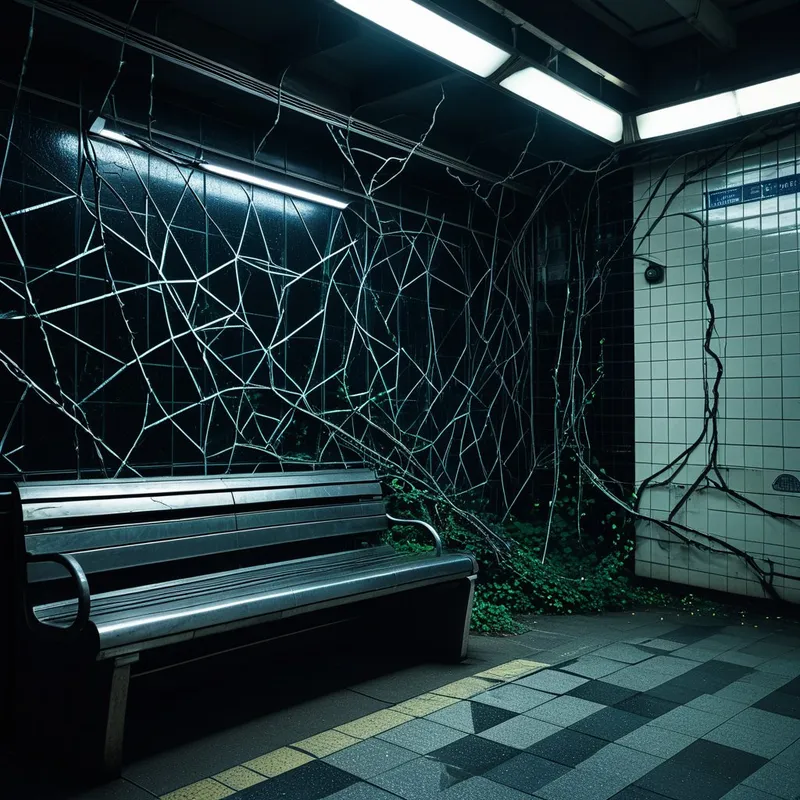
The dream is set in an abandoned subway station, all cracked ceramic tiles and the smell of wet concrete. A single, antique metronome sits on a dusty bench, its pendulum swinging in a frantic, irregular staccato. From the dark tunnel comes a deep, resonant, and perfectly steady heartbeat—the thrum of the city itself—creating a dissonant duet of chaos and order that vibrates in my bones.
This is the psyche presenting the core dilemma: the fragile, conscious attempt to keep time (the metronome) is arrhythmic and isolated, while the vast, unconscious life force (the city’s heartbeat) pulses with a sovereign rhythm just out of reach.
The False Lead
This theme is not about mere scheduling or “finding a better routine.” It is not the superficial frustration of a busy calendar. To mistake the Rhythm of Life for simple time management is to confuse the ocean’s tide with the splashing of a child’s bucket. The dissonance you feel is far deeper; it is a structural misalignment between the persona’s performed cadence and the soul’s innate tempo. It is the grief of a life lived in the wrong time signature, not just the wrong hour.
Psychological Architecture
The work here is Shadow work of the most fundamental kind: the reclamation of your organic pulse from the tyranny of imposed rhythms. We internalize tempos from everywhere—the frantic pace of productivity, the sluggish drag of expectation, the syncopated beat of familial trauma. These become internal “parts,” in the language of Internal Family Systems: the Taskmaster who whips the tempo ever faster, the Procrastinator who grinds all momentum to a halt, the People-Pleaser who constantly adjusts its beat to match whoever is nearby. The individuation process asks you to step back from this orchestra of conflicting parts and become the conductor—not by forcing a new rhythm, but by listening for the one that has been there all along, beneath the noise. It is the slow, often terrifying, act of disentangling your heartbeat from the rhythms you were given, and learning to trust the one you were born with.
Mythic Resonance
Consider the story of Orpheus, whose music could harmonize the very forces of nature and soothe the underworld itself. His rhythm was a sacred technology of connection and order. His ultimate failure—the arrhythmic doubt that made him glance back—was a break in the tempo of faith, a syncopation that cost him everything. His myth speaks to the power of a soul-aligned rhythm and the fragility of maintaining it in the face of shadow. Similarly, many creation myths begin not with an image, but with a sound or a vibration—a primal rhythm that structures chaos into cosmos. Your dream echoes this universal firmware: you are participating in the ongoing creation, or dissonant disruption, of your own world.
Symbolic Nodes
- Metronomes, Pendulums, Clocks (especially broken or speeding): The conscious mind’s attempt to impose or measure tempo.
- Heartbeats, Drums, Pulsing Lights: The direct expression of the innate, often unconscious, life rhythm.
- Dancing, Marching, Running (especially if forced or stumbling): The embodied relationship to rhythm.
- Tides, Breathing, Swinging: Natural, organic rhythms of the larger body (earth, self).
- Stuttering Engines, Skipping Records, Static: Interference, disruption, and loss of flow.
- Conductors, Drummers, Dancers (other figures): Aspects of the self that manage or express rhythm.
Archetypal Resonance
The core energy here is that of The Magician Archetype. The Magician’s realm is the hidden structure of reality, the underlying principles and rhythms that make transformation possible. The Shadow Magician appears as the manipulator of tempo—the part that speeds us up to avoid feeling, or slows us down to avoid living, creating illusions of control through frantic busyness or paralyzed withdrawal. The somatic echo of a disrupted rhythm is the Shadow Magician’s spell of disconnection. The alchemical potential lies in claiming the Magician’s true power: to perceive the fundamental rhythm of your own system and, through will and alignment, transmute dissonance into harmony, not by force, but by resonant attunement. You move from manipulating time to embodying timing.
The Alchemical Process
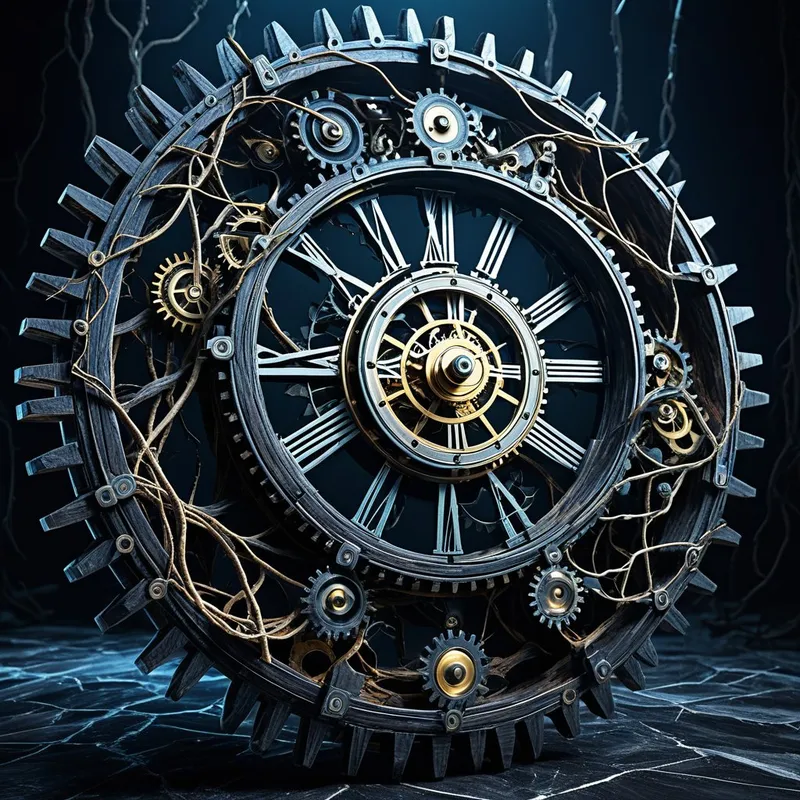
The alchemical vessel for this theme is the body itself, and the required heat is the conscious, sustained attention to your own dissonance. It is the pressure of staying present with the anxiety of the skipped beat, the grief of the forced march, the anger of the stalled rhythm. The prima materia is the raw experience of being out of sync. The fire is applied by asking, in each moment of tension: “Whose rhythm am I dancing to?” The transmutation occurs not through adding a new element, but through a subtraction—the burning away of foreign tempos. It is a psychological dissolution (solve) of the rigid, adopted cadence, followed by a coagulation (coagula) around the authentic, often slower and more deliberate, pulse that remains. The gold forged is sovereignty over your own time—the emergence of a rhythm that is resilient because it is true, flexible because it is alive.
The Integration Protocol
Question 1: In the quietest moment of your day, if you listen beneath the thoughts, what is the dominant emotional tempo you feel? Is it frantic, sluggish, steady, or something else?
Question 2: When you feel most “in flow” or authentically yourself, what metaphorical rhythm does that state have? (e.g., a slow river, a steady drum, a gentle sway).
Question 3: Where in your life are you performing a rhythm to meet an external expectation, and what part of you believes it must maintain that performance to survive?
Action 1 (Somatic Attunement): For one minute, three times a day, place a hand over your heart. Do not try to change your breath. Simply feel its actual rhythm—the hitches, the pauses, the depth. Your only task is to witness it without judgment, as a geologist observes a seismic drum.
Action 2 (Creative Tempo-Mapping): With non-dominant hand, draw a continuous, abstract line on a large piece of paper. Let the line’s speed, pressure, and flow be dictated solely by your internal state. Do not plan an image. Afterwards, live with the drawing. What rhythms do you see in the line? Where does it race, clot, or glide?
Action 3 (Ritual of Resonance): Choose one small, routine act (making morning coffee, walking to your door, stretching). For one week, perform it not with efficiency, but with a deliberate, slightly slower tempo you choose. Feel the space between actions. This is a conscious implantation of your chosen rhythm into the soil of the everyday.
Final Validation
The dissonance you feel is real. It is the painful, grating evidence that you are alive enough to sense the difference between a borrowed life and your own. That friction is not your failure; it is your sensitivity. Honor the grief of the years spent marching to another’s drum. Then, begin the patient, revolutionary act of listening for your own beat. It has never stopped. It was only waiting for the noise to die down so you could hear it again, and this time, choose to dance.