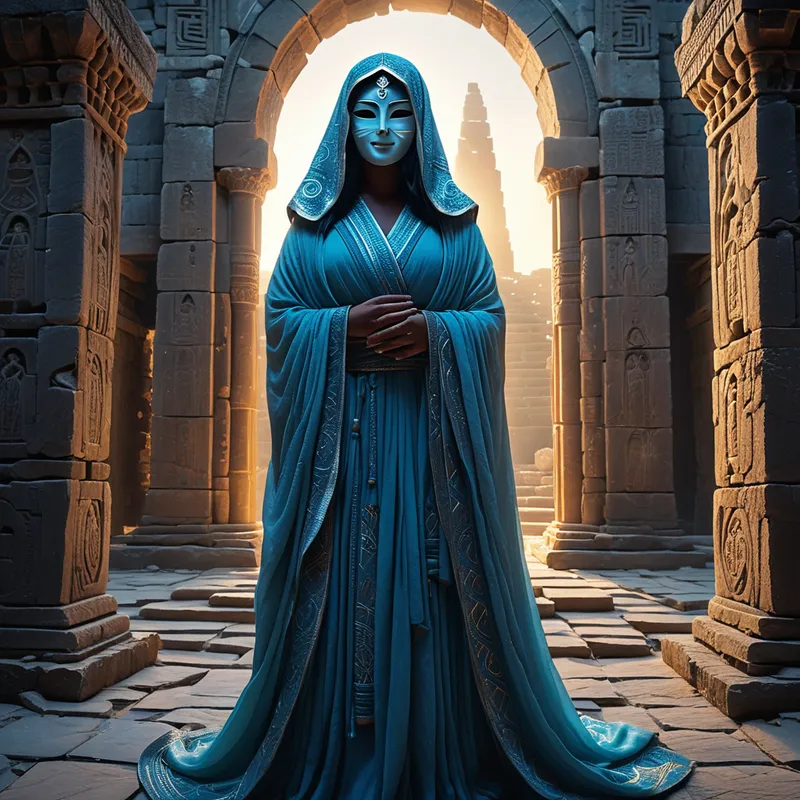
The Somatic Echo
It begins not as a thought, but as a gravity. A deep, magnetic pull in the solar plexus, a warmth behind the sternum that feels like a forgotten sun. The breath catches, not in panic, but in a kind of recognition—a somatic memory of a wholeness you cannot consciously name. There is a sweetness to the ache, a longing so precise it feels like a key turning in a lock you didn't know was there. This is the body remembering a configuration of the self that the conscious mind has long since filed away. It is the echo of a completed circuit, the ghost sensation of a hand in yours, a laughter shared in a room that exists now only in the architecture of your nerves. Before the dream images form, the body is already preparing the altar.
The Dreamer's Log (Case Vignette)
The dreamer stands on an empty, rain-slicked train platform at night. The destination board flickers with names of cities that don't exist. From the fog, a single, silent train glides in. The doors open to reveal not passengers, but a version of the dreamer at age sixteen, holding a suitcase. They simply look at each other, and the younger self places the suitcase at the older one's feet before the train dissolves into mist.
Alchemical Interpretation: The psyche is delivering a cargo of abandoned potential and unprocessed adolescence, offering it back to the adult self for integration, not for correction.

The False Lead
A dream of reunion is not a literal instruction to call your ex or track down your childhood best friend. That is the ego’s literal-minded hijacking of a far more profound signal. It is not mere nostalgia, the sentimental longing for a past that never truly was. Nor is it a sign of failure or regression, as if life has looped back on itself. To mistake the symbolic for the literal is to stand at the post office, waiting for a letter addressed to your soul, and demanding the mail carrier hand over the sorting machine instead. The reunion is internal. The other figures on that dream stage are emissaries from your own interior—exiled emotions, disowned talents, or silenced voices you once had to leave behind in order to survive.
Psychological Architecture
This is the deep work of Shadow reclamation and Individuation. We fracture to survive. The sensitive child learns to bury their tears to avoid ridicule, and that buried sadness becomes a lost fragment. The rebellious teen learns to conform for safety, and that stifled fire becomes a ghost in the system. These are not mistakes, but brilliant, adaptive strategies that once saved us. But the psyche’s drive toward wholeness is relentless. A dream of reunion announces that the crisis that necessitated the exile has passed. The internal climate has changed. It is now safe—or necessary—to welcome that lost part home.
This is not a gentle merger. It is a negotiation with a sovereign entity that has been living independently in your psychic basement, growing strange and powerful in its isolation. To integrate the lost artist means to make room for impractical beauty amidst your spreadsheets. To welcome back the wounded child means to feel, at forty, the raw grief you couldn’t afford at eight. The architecture of your current identity must expand, its walls made permeable, to house these returning citizens. It is a restructuring of the self from a kingdom with forbidden provinces into a federation of acknowledged states.
Mythic Resonance
We see this eternal process in the myth of Demeter and Persephone. The reunion of mother and daughter is not just a family story; it is the allegory of the conscious self (Demeter, the realm of the known and cultivated) reuniting with the soul that has journeyed into the underworld (Persephone, the realm of shadow, death, and deep experience). Persephone returns changed, carrying the pomegranate seeds—the knowledge of the depths. Their reunion does not erase the journey; it transforms the nature of the world itself, instituting the seasons. So it is with us: the part of you that descended into depression, grief, or radical transformation returns to your conscious life, and you are forever altered. The reunion creates a new, cyclical rhythm within.
Symbolic Nodes
Common images serving as portals for this theme include: trains, ships, or buses arriving or departing; forgotten rooms in a familiar house; meeting a younger or older version of oneself; discovering a lost letter, key, or photograph; gatherings of people from different eras of your life in one neutral space (like an airport or a vast hall); and bridges, especially ones that are half-constructed or illuminated in fog.
Archetypal Resonance
The most active archetype in the theme of reunion is The Orphan Archetype. Not in its Shadow aspect of perpetual victimhood, but in its core essence as the Realist and the Survivor. The Orphan knows what it is to be cast out, to adapt, and to long for home. The somatic echo of reunion—that deep, gravitational pull—is the Orphan’s internal homing signal, activated when the external wilderness has been navigated and the time to return approaches. This archetype provides the gritty, grounded courage needed for the reunion, refusing sentimental fantasy and insisting on the real, often messy, work of recognition and reintegration. Its alchemical potential lies in its hard-won wisdom: it transforms the experience of exile into the authority of the one who can now reclaim and redefine what "home" truly means within the self.
The Alchemical Process
The alchemical transmutation here is Reunio, the sacred reunion of the separata—the separated things. The base material is the grief of fragmentation itself, the silent sorrow of a self living in pieces. The furnace is the intense, vulnerable space of the dream and the conscious attention you bring to it. The heat is applied through the act of suspended judgment: you must behold the returning fragment—the angry teen, the weeping child, the arrogant genius—not as a problem to be solved, but as a dignitary from your own interior to be received.
The pressure is the discomfort of expansion. Your current identity, like a well-fitted garment, will resist the new bulk and shape of this added material. The old stories you tell about yourself ("I am not an emotional person," "I am not creative") will crack under the pressure of this new evidence. The transmutation occurs when the energy previously used to exile (through denial, minimization, or fear) is redirected to host. The grief of loss becomes the profound sovereignty of reclamation. You are no longer a ruler of a partitioned land, but the steward of a reconciled whole.

The Integration Protocol
Question 1: Who, or what part of you, was arriving in the dream? Describe its energy, its age, and what it carried in its hands.
Question 2: What specific adaptation or survival strategy did this exiled part embody that you needed in the past, but perhaps have outgrown as a sole mode of being?
Question 3: If this returning part were to take up residence in your daily life now, what one current habit or belief would it most gently challenge or disrupt?
Action 1 (The Empty Chair): In a private space, set two chairs facing each other. Sit in one and speak, aloud, to the dream figure in the empty chair. Then, physically switch chairs and respond as that figure. Do not script it; let the dialogue emerge. This externalizes the internal meeting.
Action 2 (Suitcase Inventory): Create a non-verbal representation of the "cargo" from the dream. Using collage, drawing, or a collection of physical objects, assemble what was in that lost suitcase, letter, or room. Don't think in symbols; think in textures, colors, and shapes. What does the substance of the past feel like?
Action 3 (Threshold Marking): Perform a simple, physical ritual to mark the integration. This could be lighting a candle for the returned part each morning for a week, planting something with the intention that it represents this new growth, or rearranging a shelf in your home to literally "make space." The action should be small, concrete, and felt in the body.
Final Validation
To dream of reunion is to be entrusted with a delicate and formidable task. It means your psyche believes you are strong enough now to hold contradictions, to host ghosts, to metabolize the past into present vitality. It is not a sign that you are broken, but a profound signal that you are ready to become more complete than you have ever allowed yourself to be. The longing is the map. The ache is the invitation. Welcome them home.