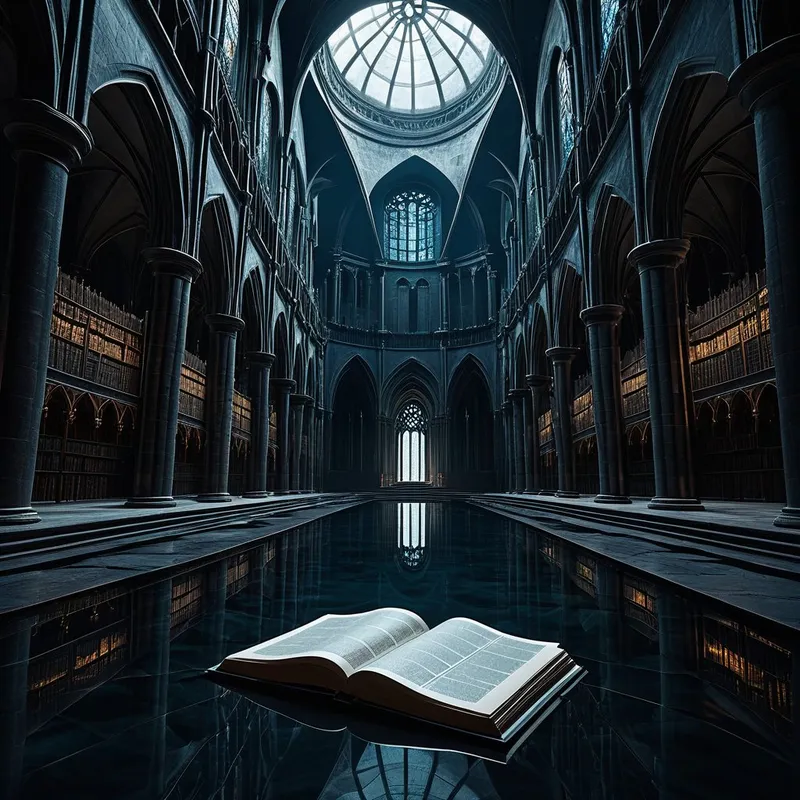
The Dream Theme of Residue
It begins not as a thought, but as a texture. A film on the skin of the soul. You wake with a sense of having brushed against something sticky, something that clings in the spaces between your atoms. It’s the taste of old copper on the tongue, the scent of ozone after a storm that never arrived. This is the somatic echo of Residue—the visceral knowing that something has been left behind, not as a forgotten object, but as a forgotten version of yourself. It is the emotional and psychic sediment of choices unmade, words unspoken, and lives unlived. It settles in the joints as a subtle stiffness, a resistance to the morning’s new light, because part of you is still back there, in the dark room of a discarded possibility, gathering dust.
The Dreamer's Log
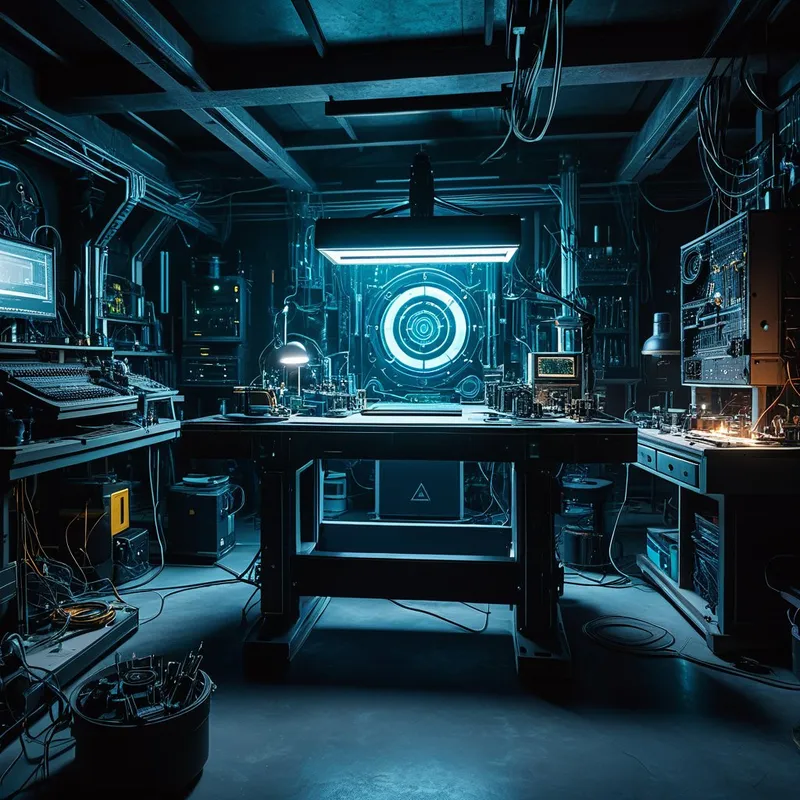
I am in a workshop of impossible scale. My task is to repair a delicate, crystalline device that hums with a fractured song. But my hands are covered in a fine, iridescent dust that refuses to be wiped away. Every time I touch the device, the dust transfers, clouding its inner light. The more I try to clean my hands, the more the dust seems to generate from my own skin.
This is the alchemy of acknowledgment: the "dust" is not a contaminant to be removed, but the raw, powdered material of your own unattended history, waiting to be consciously blended into the whole.
The False Lead
Residue is not mere "bad luck" or a psychic stain of past mistakes. To mistake it for simple guilt or regret is to commit a profound error of perception. It is not the event itself that lingers, but the potential energy of the self that was required to meet that event and never fully arrived. It is the ghost of a capacity—for love, for rage, for creation, for boundary—that you did not expend. The grief is not for what you did, but for the part of you that remained dormant, unused, and now whispers from the attic of your psyche. This is not about cleansing a sin; it is about reclaiming a legacy.
Psychological Architecture
The work of Residue is the archaeology of the self. It demands we descend into the personal underworld not to dig up buried trauma, but to map the contours of the empty spaces. These are the chambers you built but never inhabited, the wings of your internal mansion sealed off because you believed you were not the kind of person who could live there. Perhaps it is the residue of a kindness you withheld, now a gritty film over your heart. Or the residue of a necessary fury you swallowed, now a leaden weight in your gut. In the framework of Internal Family Systems, these are not "exiles" in pain, but "fossils" of potential—protector parts that formed around a void, not a wound. Their job was not to manage pain, but to manage the eerie silence of a self not yet expressed.
Individuation here is not about adding more to the person you are, but about reclaiming the volume of the person you were always meant to occupy. It is a process of psychic reintegration, where you patiently invite the dusty, unused aspects of your being in from the cold. The shadow work is subtle: you are not battling a monster, you are learning the language of a ghost. You are listening for the echo of your own unlived life in the hollows of your present choices.
Mythic Resonance
We see this in the Greek myth of Ariadne. Theseus, the hero, uses her thread to navigate the Labyrinth, slays the Minotaur, and then... abandons her on the island of Naxos. The myth often races to her "rescue" by Dionysus. But pause in that moment of abandonment. The residue is not in the monster's death, but in the unraveled thread left behind—the cleverness, the trust, the partnership that Theseus used and then discarded as mere tool. Ariadne’s story is one of profound residue: the psychic material of a betrayed alliance that becomes the substrate for her apotheosis. The thread itself, the residue of her ingenuity, is the true conductor of transformation. Our personal labyrinths are often littered with such threads, gleaming faintly in the dark, waiting to be followed back to the version of us who knew the way out.
Symbolic Nodes
- Dust, Ash, or Fine Powder: The primary substance of unattended memory and dormant potential.
- Sticky Substances: Sap, tar, glue—the residue of entangled relationships or unresolved attachments.
- Tarnished or Clouded Surfaces: Mirrors, windows, crystals that cannot clearly reflect, symbolizing a self-concept obscured by past selves.
- Abandoned Workshops or Laboratories: Spaces of creation left in mid-process.
- Faded Text: Unreadable books, peeling labels, vanishing ink—the residue of unintegrated knowledge or unspoken truths.
- Resonant Echoes: Sounds that repeat in an empty space, the auditory residue of unfinished conversations.
Archetypal Resonance
The most active archetype in the theme of Residue is The Magician Archetype, specifically in its shadow aspect. The Shadow Magician is the manipulator of unseen forces for fragmented, self-serving ends, the hoarder of half-understood truths. This resonates perfectly with Residue's core energy: we have all, at times, played the Shadow Magician with our own potential. We have taken the raw material of our emotions, insights, and capacities and, instead of transmuting them into wholeness, we have left them in half-finished states—manipulating our own narrative to avoid the full power they contain. The somatic echo of stickiness and weight is the body's report on this fragmented alchemy. The alchemical potential lies in the archetype's true nature: to move from being a manipulator of fragments to becoming a visionary of integration, transforming the very dust of abandonment into the foundation of a more complete self.
The Alchemical Process
The transmutation of Residue requires the heat of conscious acknowledgment and the pressure of non-judgmental containment. This is not the violent fire of purification, but the steady, low heat of a crucible that holds without consuming. The process begins with the terrifying act of ceasing to wipe the dust away. You must sit, hands open, and observe the substance of your unlived life. The grief that arises is not for lost time, but for the disowned self. The alchemical "solve et coagula"—dissolve and coagulate—here means to allow the hardened, dusty fragments of potential to dissolve in the waters of your compassionate attention. Only then can they re-coagulate into a new, more complex form within you. The pressure is the sustained willingness to feel the emptiness those residues once filled, to let the ghost of your unused courage, your unspoken love, your unchanneled rage, finally speak. In this vessel, the residue ceases to be a contaminant. It becomes the pigment for a new painting, the alloy that strengthens the metal of your spirit. The sovereignty gained is not over others, but over your own entirety—you become the ruler of a kingdom whose borders now include all its forgotten territories.

The Integration Protocol
Question 1: Where in my body do I feel a sense of "hollowness" or "static" that doesn't seem to be about present-moment pain, but more like an echo chamber for something that never happened?
Question 2: What is one recurring choice I avoid (in love, work, or self-expression) because I have already decided "I'm not the kind of person who does that"? What residue of that unmade self lingers in my life?
Question 3: If the dust or residue in my dream were the powdered form of a specific quality (e.g., courage, tenderness, authority), what quality might it be, and what would it want to build if it were reintegrated?
Action 1 (The Grounding Inventory): For one week, keep a small notebook by your bed. Upon waking, before you move or check any device, note the single most persistent physical sensation (e.g., tight jaw, heavy chest, tingling hands). Don't analyze it. Just name it. This builds somatic awareness of where residue accumulates.
Action 2 (The Unfinished Letter): Choose one person, living or dead, including a past version of yourself. Write them a letter with the sole purpose of articulating a single, unexpressed sentence you carry. It could be a sentence of thanks, of anger, of apology, or of truth. Do not send it. Burn it, bury it, or seal it away with the conscious ritual of releasing the residue of that unsaid thing from your psychic ecosystem.
Action 3 (The Dust Painting): On a large sheet of paper, make a thick, messy background with charcoal, graphite, or actual dirt/coffee grounds to represent the "residue." Then, using ink, paint, or bright pastels, begin to draw or write into and over this dark field. Let the integrated self emerge from the residue, not in spite of it. The act is a direct metaphor for the alchemical process.
Final Validation
The weight you feel is real. The stickiness is not a flaw in your being, but evidence of your depth—proof that your psyche does not easily discard the raw material of your becoming. This theme is arduous because it asks you to love the forgotten parts of yourself back into existence, to dignify the dust. Remember: a cathedral is not defiled by the dust of its own stones. That dust is the memory of its architecture, the potential for its repair. Your residue is the same. It is not what's left after you fall apart. It is the sacred substance from which you will, consciously now, choose to rebuild.