
The Alchemy of Armor: Dreaming of Protective Cynicism
The Somatic Echo
It begins not as a thought, but as a climate. A low-pressure system settles in the chest, a subtle but persistent ache behind the sternum, as if the heart has learned to wear a lead apron. The breath becomes shallow, economical, held just below the surface. There is a taste in the mouth—metallic, like biting foil, or the dry, chalky aftertaste of a long-forgotten warning. The shoulders instinctively draw up and in, not in fear, but in a weary, practiced fortification. The body remembers a story the mind has tried to edit: the cost of trust, the bruise of betrayal, the cold shock of naivety meeting a sharp edge. This is the somatic architecture of Protective Cynicism—a fortress already built in the flesh, long before the dream images arrive to narrate its design.
The Dreamer's Log
The dreamer stands in a cavernous, humming server room, walls lined with racks of blinking blue lights. They hold an ornate, antique brass key, knowing it can unlock the central core. But between them and the terminal stretches a shimmering, transparent firewall, its surface rippling with distorted reflections of their own face. A calm, synthetic voice echoes: "Access denied. The system prefers its isolation."
Alchemical Interpretation: The key is authentic agency, the firewall is the self-constructed barrier of disconnection, and the system’s voice is the internalized logic of the protector, mistaking its prison for a palace.

The False Lead
This is not mere pessimism, nor is it the clear-eyed discernment of the mature psyche. Protective Cynicism is a specific, intelligent defense—a sophisticated psychological immune response that has mistaken a vital organ for a foreign pathogen. It is not about predicting failure, but about pre-emptively rejecting the possibility of nourishment to avoid the risk of poison. To mistake this for wisdom is to confuse the guard for the king, the moat for the kingdom. It is a strategy of profound grief, frozen in the posture of analysis.
Psychological Architecture
Beneath the armored plating of cynicism lies a tender, almost archaic fragment of the self: the part that once believed without reservation, that extended trust like an open hand, and was met with a lesson instead of a reciprocal grasp. The psyche, in its brilliant, tragic ingenuity, does not kill this trusting one. It cannot. Instead, it builds a citadel around it. The Shadow work here is not to slay the cynical guard, but to sit with it in its watchtower, to understand the precise shape of the wound it guards. The process of Individuation demands we thank the protector for its loyal service—"You have kept us safe from that particular fire"—while gently informing it that the war it was drafted for is over. The integration is the slow, courageous act of moving the guarded treasure from the vault into the courtyard, allowing it to breathe the same air as risk, ambiguity, and potential hurt.
Mythic Resonance
We see this in the myth of the Hephaestus, the divine smith cast out from Olympus. His lameness, his exile to the volcanic forge, is his protective cynicism—a withdrawal from the glittering, treacherous social sphere of the gods into a world of solitary, flawless creation. His automatons, his perfect, impenetrable armor for heroes, are the manifestations of his defended heart. His eventual reintegration, not as a naive participant but as a revered and indispensable artisan, mirrors the alchemy available: the wounded one becomes the maker of containers strong enough to hold vulnerability. Similarly, the Dragon guarding a hoard in a lonely cave is rarely evil; it is a magnificent force contracted around a treasure it cannot use but is compelled to protect, its fiery breath a boundary against a world it has learned to perceive only as threat.
Symbolic Nodes
- Impenetrable Barriers: Fortress walls, one-way mirrors, soundproof glass, force fields, frozen lakes.
- Malfunctioning or Ironic Tools: Keys that don't fit, phones that only receive static, maps that lead in circles, gifts that are hollow or locked.
- Guarded or Inaccessible Centers: Walled gardens, sealed vaults, encrypted files, a heart locked in a glass case, a thriving city viewed from a distant, isolated cliff.
- Sentinels & Automated Systems: Emotionless guards, recorded warning messages, AI interfaces that deflect questions, statues that watch but do not see.
Archetypal Resonance
The energy of Protective Cynicism resonates most deeply with The Shadow Jester.
Where the healthy Jester uses humor and irreverence to reveal truth and dissolve rigid hierarchies, the Shadow Jester employs cynicism as its primary tool. It doesn't play; it deconstructs. It doesn't laugh with; it scoffs at. Its somatic echo is the brittle, mirthless smile and the armor of "seeing through" everything before it can be felt. This archetype's alchemical potential lies in its core function: truth-telling. The Shadow Jester's corrosive doubt, when brought into the light of consciousness, can be transmuted. It becomes not a weapon to dismantle hope, but a refining fire that burns away false sentiment and naive projection, leaving behind a trust that is not blind, but resilient—a trust that has stared into the void of disappointment and chosen connection anyway. The Jester's gift is perspective, and even its shadow form holds the key to liberating the psyche from the tyranny of its own most convincing defenses.
The Alchemical Process
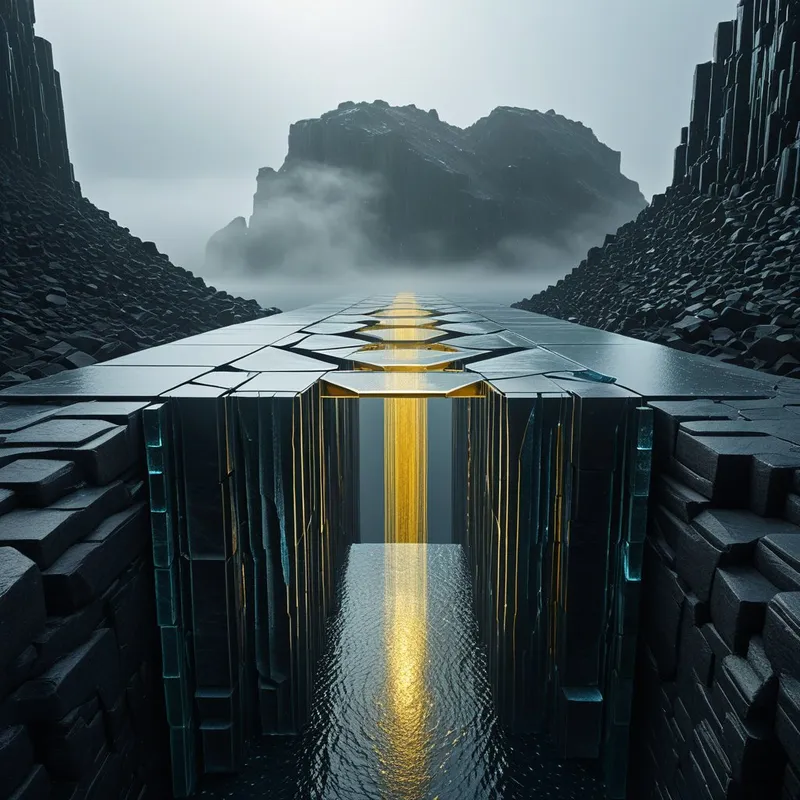
The transmutation of Protective Cynicism is the Dissolution of the Fortress. The required heat is not rage, but the sustained, uncomfortable warmth of conscious vulnerability—allowing a genuine feeling to be felt without the immediate commentary that dismisses it. The pressure is the friction between the old story ("Trust is folly") and the new, hesitant evidence of a safe-enough connection. This is not about becoming gullible. It is a sacred decomposition. You must allow the mortar of certainty—"I know how this will end"—to crumble. You must sit in the ruins of your own best defenses and feel the terror of exposure. In that raw space, the guarded treasure—the capacity for innocent trust—is not seized, but remembered. It was never gone. It was in protective custody. The alchemy is the slow integration of the protector's intelligence with the innocent's openness, creating a third, sovereign thing: Discernment. This is trust that has metabolized doubt, relationship that knows its own boundaries, and hope that carries the weight of its own history.
The Integration Protocol
Question 1: When did my cynicism feel like its most brilliant and necessary innovation? Can I thank that part of me for its engineering skill?
Question 2: What single, small possibility does my protective stance absolutely forbid me from entertaining? What is the faintest whisper of a desire that lives behind that "no"?
Question 3: If my cynical voice were a physical guardian (a knight, an AI, a wall), what one question would demonstrate that I see it, respect its duty, but am now assuming command?
Action 1 (The Grounding Breath): When you feel the metallic taste of cynicism arise, pause. Place a hand on your sternum. For three breaths, inhale as if breathing into that leaden feeling. On the exhale, do not try to push it away. Instead, whisper internally, "I feel you guarding. The threat is not here now." This grounds the defense in the present moment.
Action 2 (The Cipher's Key - Creative): Take a blank page. Draw, collage, or write a description of the "treasure" your cynicism guards. Do not draw the fortress or the guard. Draw only the treasure itself. Is it a light? A child? A seed? A specific memory of feeling safe? Give form to what is being protected, not the protection.
Action 3 (The Ritual of the Small Allowance): Identify one microscopic, low-stakes arena where you consciously suspend cynical prediction for a set time. This could be assuming a stranger's brief smile is genuine, trying a new food without pre-judging it, or reading a poem without analyzing its "point." For that moment, practice receiving without an immediate filter of deconstruction. Note the somatic shift, however slight.
Final Validation
The fortress was built with the stones of real wounds. To judge yourself for its architecture is to betray the survivor who engineered it. The weight you carry is the testament to what you have endured. And yet, the sovereignty you seek waits not in adding another tower to the wall, but in the terrifying, glorious act of becoming the one who holds the key to the gate—not to let the world in carelessly, but to finally walk out, and feel the unprotected air on your own skin, and decide, from that free place, what and whom you will let in. The protector can stand down. The sovereign is coming home.