
The Alchemy of the Fortress: Dreams of Protection & Safety
The Somatic Echo
Before the image of a locked door or a guardian figure forms, the body knows. It is a specific, cellular quiet. Not the stillness of peace, but the held breath of a sentry. The shoulders drop half an inch, as if an unseen weight has been lifted—or as if bracing for one that has not yet arrived. The diaphragm, that bellows of emotion, moves with a cautious, measured rhythm. There is a warmth that spreads from the sternum outward, a subtle, liquid gold feeling, distinct from the flush of passion or the heat of anger. It is the somatic signature of a boundary recognized and honored, a psychic membrane that has just finished knitting itself together. This is the echo of a system—mental, emotional, spiritual—that has, for a moment, achieved a perfect, dynamic equilibrium. The dream of protection is not a fantasy of escape; it is the body’s memory of integrity.
The Dreamer's Log
The console room was abandoned, humming with the ghost of dead data. In the center, on a dusty plinth, lay a single, leather-bound logbook. As I reached for it, a wave of dark, formless static surged from the shadows. My hand hesitated, then touched the cover. A sphere of calm, blue light emanated from the book, pushing the static back, holding it at bay in a perfect, silent sphere.
Here, the psyche locates its core protocol not in external armor, but in the act of consulting its own foundational code—the touch that activates sovereignty.

The False Lead
This theme is not a simple wish for a trouble-free life. To interpret a dream of a sheltering tree or an impenetrable wall as merely a desire to avoid conflict is to mistake the alchemist’s crucible for a cozy hearth. The dream is not advocating for a retreat into a sterile bubble, a life of risk-aversion where the soul atrophies in padded rooms. The protection it speaks of is dynamic, intelligent, and permeable. It is the function of a cell wall, not a prison’s rampart—allowing nourishment in, expelling waste, maintaining the integrity of the self amidst a flowing world. The terror or grief that often accompanies these dreams is not about external "bad luck," but about the terrifying responsibility of maintaining one’s own boundaries, of being the author of one’s own safety.
Psychological Architecture
To build true safety is to engage in the deepest Shadow work. It requires descending into the internal basement where we have stored the parts of ourselves we deemed too vulnerable, too needy, too dangerous to be allowed into the light—the exiled child, the furious rebel, the weeping innocent. In the framework of Internal Family Systems, these are our exiles. The dream of protection often arises when these exiles are clamoring at the gates, not to destroy us, but because they feel unsafe. The psyche’s initial, managerial "protectors"—the inner critic, the people-pleaser, the numb intellectual—have often built fortifications against these exiles, not for them. The individuation process here is a radical restructuring: the dismantling of these fear-based, rigid defenses and the slow, courageous cultivation of a Self-led protection. This is protection that does not shun vulnerability but encompasses it, that makes the inner world a sanctuary for all its inhabitants. Sovereignty is born not when we eliminate the exiles, but when we can stand, unflinching, as the compassionate guardian of our own fragmented inner kingdom.
Mythic Resonance
Consider the Norse myth of Yggdrasil, the World Tree. Its roots delve into chaotic, icy wells and the land of the dead; its branches scrape the heavens. It is constantly under assault—from the dragon Nidhogg gnawing its roots, from the stags devouring its leaves. Yet it stands. Its protection is not in being impervious, but in its profound, interconnected resilience. It is the axis that holds the cosmos together because it is in relationship with all its parts, even the destructive ones. Our psyche seeks this same archetypal stability. The dream of a fortress is often a call to become more like Yggdrasil—to send roots deep into our own shadows and branches high into our aspirations, to find our unwavering center not in the absence of attack, but in the capacity to endure, adapt, and remain whole within the cycle.
Symbolic Nodes
- Doors, Gates, Locks & Keys: The mechanics of boundary. A locked door may signify necessary isolation; a key, the conscious agency to open or close.
- Guardian Figures (Animals, Sentinels, Unknown Guides): Embodiments of protective instinct or inner wisdom that operates beyond the ego’s control.
- Nests, Cocoons, Wombs: Spaces of organic, nurturing containment for gestation and transformation.
- Force Fields, Shields, Domes: Energetic boundaries, often representing psychic or emotional barriers made conscious.
- Sturdy Clothing or Armor: The persona or identity we wear as protection. Is it flexible mail or rigid, limiting plate?
- Impenetrable Rooms or Vaults: The inner sanctum, the core Self or a deeply protected memory or truth.
Archetypal Resonance
The energy at the core of this theme is that of The Caregiver Archetype. Its resonance is not in a saccharine nurturing, but in the profound, fierce commitment to provide sanctuary. The somatic echo—the warmth in the chest, the released breath—is the Caregiver’s hearth-fire being lit within. This archetype’s alchemical potential lies in its evolution from protecting others (often as a shadow martyr) to the ultimate act of self-responsibility: protecting the vulnerable ecosystem of the self. The shadow here is the Smotherer, who builds prisons called safety, stifling growth under the guise of care. The integrated Caregiver understands that true protection creates the conditions for life to flourish, which sometimes means allowing for necessary risk, for the stretching of wings at the edge of the nest. It is the architect of the container in which transformation can safely occur.
The Alchemical Process
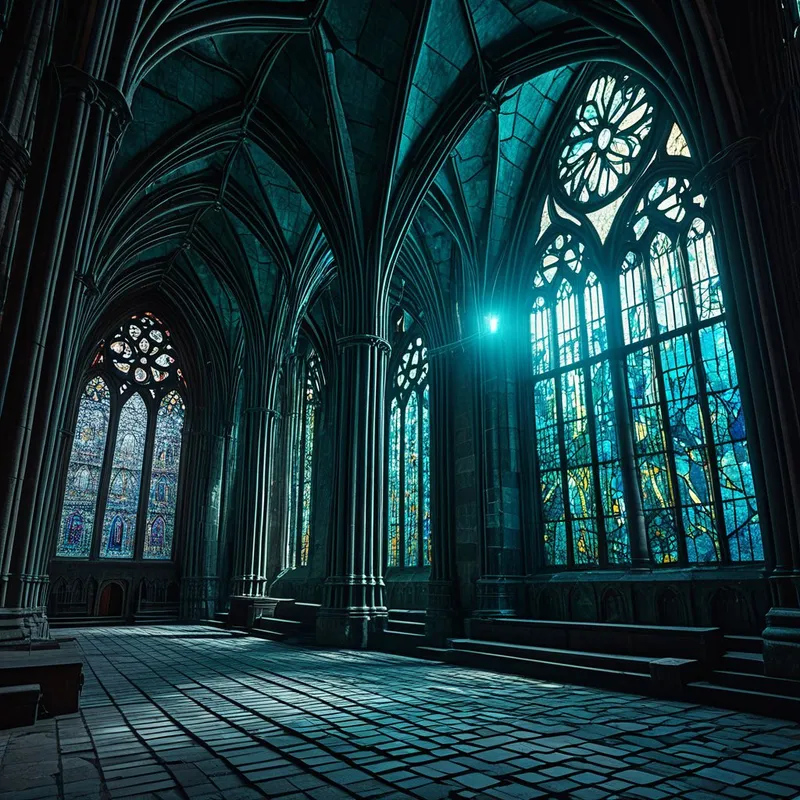
The transmutation here is of Vulnerability into Sovereignty. The base material is the raw, exposed nerve of feeling unsafe—in the world, in relationship, in one’s own skin. The alchemical heat is applied through a conscious, often painful, engagement with that very vulnerability. It is the pressure of asking, "What, in me, feels so fundamentally unprotected?" and refusing to look away from the answer. This is the nigredo, the blackening. The process involves dissolving the old, brittle defenses (the walls built from shame, the moats filled with apology) in the solvent of self-witnessing. Then, in the albedo, the whitening, one must gather the scattered, exiled parts and hold them without judgment. The new structure—the sovereignty—is not forged in defiance of vulnerability, but is its crystalline reorganization. It is the realization that the core self is not a fragile thing to be shielded, but the immutable, compassionate space within which all fragility can be held. The gold is the unshakable knowledge that you are, yourself, the sanctuary.
The Integration Protocol
Question 1: Where in my waking life do I feel a somatic sense of "unsafety"—a clenching, a retreat, a hyper-vigilance—that mirrors the dream's initial tension?
Question 2: If the protective element in my dream (the shield, the guide, the locked room) had a voice, what one sentence would it whisper about its true purpose?
Question 3: What exiled part of myself—what fear, grief, or need—is actually crying out for the protection I am seeking in the outer world?
Action 1 (Somatic Anchoring): For one week, when you feel a sense of unease, place a hand firmly on your sternum. Breathe into that pressure for three cycles. Do not analyze, simply anchor the feeling in the body and breathe with it, as if your hand were a grounding seal.
Action 2 (Boundary Blueprint): Engage in unstructured writing. Without crafting a narrative, jot down every image, material, and sensation from your protective dream. Then, draw a simple, abstract diagram or "blueprint" of this protection. Is it a sphere? A labyrinth? A lattice? Let the hand reveal the architecture your psyche is building.
Action 3 (Sanctuary Ritual): Choose a small, personal object (a stone, a ring, a pen). In a quiet moment, hold it and consciously imbue it with a specific protective intention—not "keep bad things away," but "help me remember my own center." Carry or wear it as a tangible anchor to your inner sanctuary.
Final Validation
To dream of protection is to feel the ache of the boundary, the weight of the shield. It is to confess, in the secret language of night, that you have known the tremor of the unguarded self. This is not a weakness, but the most honest starting point. Honor that tremor. For it is the very raw material from which true sovereignty is forged—not a sovereignty that lords over others, but one that stands, finally and unassailably, as the guardian of your own intricate and worthy inner world. The fortress you seek is not around you. It is the integrity of your own being, coming home to itself.