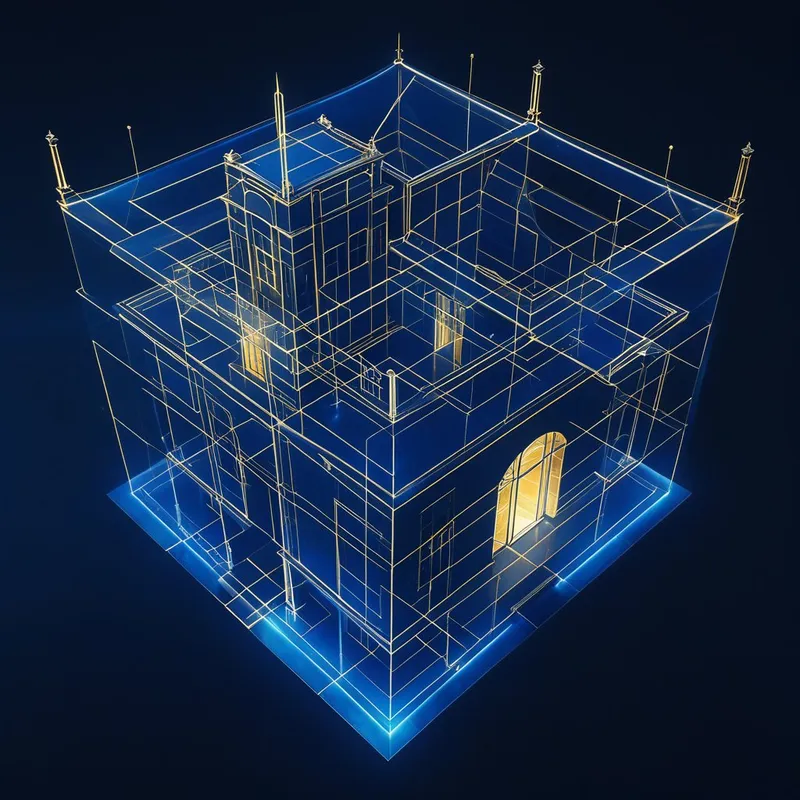
The Blueprint in the Bones: The Dream Theme of Planning
The Somatic Echo
Before the mind conjures a list, a map, or a timeline, the body knows the dream of planning. It is not the calm of a settled decision, but the low-voltage hum of potential energy seeking a circuit. It is a tension in the solar plexus—a knot of anticipation and dread, as if your internal organs are rehearsing a future event they have not yet been told. The jaw may clench, not in anger, but in the silent, grinding work of holding a shape that has not yet fully formed. There is a restlessness in the hands, a phantom need to grasp a tool, a pen, a steering wheel that is not there. This is the somatic echo of the psyche attempting to give form to the formless, to channel the chaos of possibility into a single, navigable stream. It is the architecture of the soul under construction, and the body is the first site to feel the tremors.
The Dreamer's Log
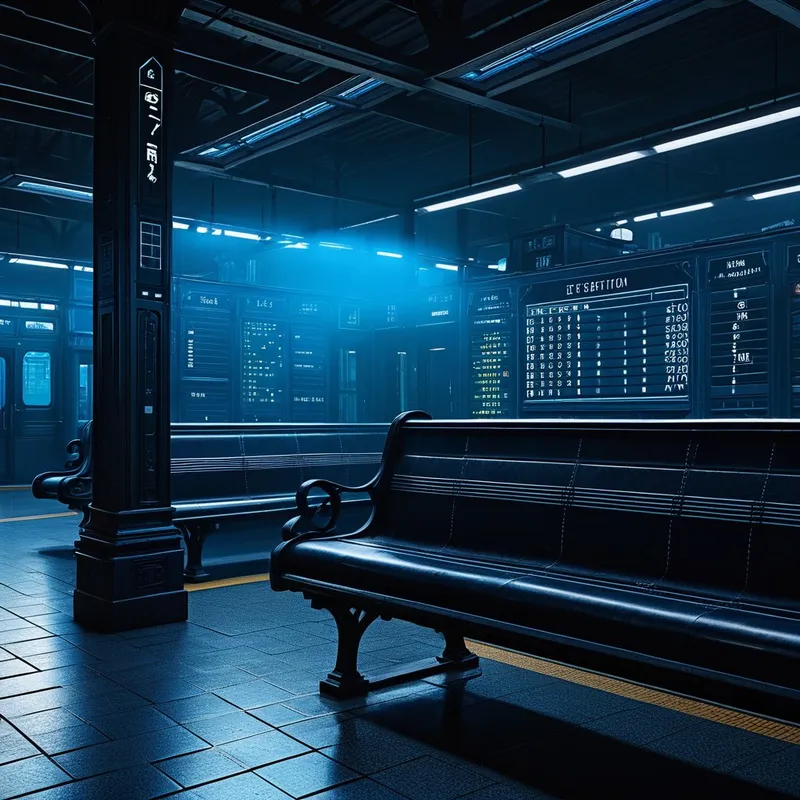
The station was vast and empty, a cathedral of polished obsidian and echoing footsteps. I stood before a departure board that flickered with symbols I could not read. My only possession was a leather-bound notebook, its pages dense with intricate, urgent diagrams for a journey I had no memory of beginning. The train was always just about to arrive, its sound a distant promise in the tunnels, but the platform remained desolate.
This dream is an alchemical portrait of the Self preparing for a profound transition it intellectually resists, clinging to the blueprint (the notebook) while refusing to board the vehicle of change.
The False Lead
A dream of planning is not a simple rehearsal for a job interview or a vacation. It is not the mind’s mundane to-do list spilling into sleep. To mistake it for such is to confuse the architect’s foundational blueprint with a grocery list. The terror here is not of forgetting an appointment, but of confronting the awesome responsibility of authorship over your own becoming. The grief is not for a missed opportunity, but for the version of yourself you must consciously decide to leave behind. This theme speaks to structural shifts, not logistical hiccups. It is the difference between worrying about packing for a trip and realizing you must design the very vessel that will carry you across an unknown sea.
Psychological Architecture
At its depth, the planning dream is Shadow work of the highest order. It is the ego, our internal manager, being forced to consult with the unruly parliament of the unconscious. You are not planning a party; you are planning a coup, or a coronation, or a careful demolition. The “plan” is the conscious mind’s attempt to impose order on the Individuation process—the psyche’s innate drive toward wholeness. This often manifests as a conflict between parts. The inner Orphan, terrified of being lost, demands a foolproof map. The inner Ruler wants a clear chain of command and a five-year forecast. Meanwhile, the Rebel in the shadows scoffs at the very notion of a plan, and the Explorer yearns only for the first step into the blank space on the chart.
The work here is to sit in the council chamber of your own being and listen. The plan that emerges from a true planning dream is not a rigid itinerary, but a living agreement—a dynamic structure flexible enough to hold your contradictions, strong enough to bear the weight of your longing. It is about moving from being a passive tenant in the house of your personality to becoming its active, conscious architect.
Mythic Resonance
We see this eternal process in the myth of Daedalus, the master craftsman. Imprisoned with his son Icarus in the Labyrinth—a structure he himself designed—Daedalus does not merely wish to escape. He plans. He studies the patterns of birds, gathers feathers, and devises a framework of wax and thread. His plan is an act of sublime creativity born of absolute constraint. It is a blueprint for transcendence that must account for material limits (the wax) and human folly (his son’s hubris). The plan itself becomes a new kind of labyrinth, one of air and aspiration. It shows us that planning, at its mythic core, is the human spirit using the materials of its own imprisonment to design wings.
Symbolic Nodes
- Maps, Blueprints, & Schematics: The direct image of seeking structure and direction.
- Empty Stations/Airports: Transitional spaces where the plan (the journey) has been made, but the action (the departure) is pending or obstructed.
- Clocks & Timers with Missing/Unreadable Faces: The pressure of time divorced from measurable sequence, speaking to kairos (opportune time) rather than chronos (clock time).
- Unfinished Buildings or Interiors: The psyche under construction; the raw framework of a new Self.
- Packing or Unpacking Suitcases: Assessing what internal qualities (baggage) to carry into the next phase of life.
Archetypal Resonance
The energy most active in the planning dream is that of The Creator Archetype.
The Creator’s essence is to bring order from chaos, to imagine a form and then impose it upon the void. Its somatic echo is that focused tension in the hands and mind, the hum of potential seeking manifestation. In the planning dream, this archetype is not painting a canvas but drafting the very laws of a new internal reality. Its shadow—the Mad Scientist or Self-Centered Creator—appears when the plan becomes an obsessive, rigid doctrine, a blueprint more beloved than the living being it is meant to house. The alchemical potential lies in the Creator’s courage to hold the blank page, to tolerate the chaos long enough for a true, organic form to emerge from within it, rather than forcing a prefabricated structure upon the soul's unique terrain.
The Alchemical Process
The alchemical stage for Planning is Coagulatio—the process of condensation, of giving solid form to what was once volatile spirit or emotion. The raw material is the nebulous longing, the unnamed anxiety, the swarm of possibilities. The heat and pressure required are the intense, often uncomfortable, acts of choice and commitment. You must apply the fire of your will to say, "This direction, not that one. This value, not that distraction." This is the crucible: to hold your life as malleable material and decide, consciously, what shape it will take.
The terror is the fear of choosing wrong, of building a prison instead of a palace. The grief is for all the unchosen paths, the selves you will not become. The transmutation occurs when you realize the plan is not a final edifice, but a scaffold. Its purpose is not to confine, but to allow the construction of something capable of standing on its own. Sovereignty is born when you internalize that you are both the architect and the material, and that you possess the right—and the responsibility—to revise the blueprint as you grow.

The Integration Protocol
Question 1: Where in my waking life do I feel the same somatic echo—that tense hum of potential—that I felt in the dream? What future is my body already preparing for that my mind hasn't yet acknowledged?
Question 2: If the plan in my dream is a blueprint for an internal structure, what is it meant to house? A new capacity for love? A stronger boundary? A forgotten creativity?
Question 3: Which part of me is the most anxious planner, and which part is the most resistant to the plan? What does each part truly need to feel safe in this process of change?
Action 1 (Somatic Blueprinting): For five minutes, sit quietly and place your hands on your solar plexus. Don’t seek a mental plan. Instead, breathe into the sensation there. Ask, "What shape wants to form?" Let any image, word, or gesture arise without judgment. This grounds the planning energy in the body’s wisdom.
Action 2 (Unstructured Cartography): Take a large piece of paper. In the center, place a word or image representing the "territory" of your current life transition. Now, without planning the drawing, let your hand create an abstract map around it. Use lines, shapes, and colors to denote obstacles, resources, and unknown zones. This externalizes the internal planning process in a non-linear, creative form.
Action 3 (Ritual of the Provisional Foundation): Find a small stone. Hold it and state aloud one single, firm commitment you are making to yourself for the next phase (e.g., "I commit to listening to my fatigue"). This is the first "cornerstone" of your new internal structure. Place the stone somewhere significant—on your desk, a windowsill, in a garden. Let it be a tangible, humble anchor for the vast architecture to come.
Final Validation
It is exhausting to be the architect of your own soul. The weight of the blueprint, the fear of faulty engineering, the grief for the simpler, un-designed life—all of this is real and valid. This dream theme arrives not to burden you with more homework, but to honor the profound creative crisis you are in. You are not lost because you are planning; you are planning because you are being called to build a more authentic home for your spirit. Trust the tension. It is the sound of your own potential, gathering itself into a form that can, at last, step into the world.