
The Dream of Pain: An Alchemy of the Fractured Self
Pain arrives in the dreamscape not as a visitor, but as a resident. It is the architecture of a forgotten room, the weather system of an inner climate. Before it has a name, before the mind can spin a story of injury or loss, it is a pure, somatic echo. It is a pressure in the chest that feels like tectonic plates shifting in slow, grinding protest. It is a cold, metallic ache in the bones, as if the marrow itself remembers a chill from a lifetime ago. It is a sharp, localized sting—not on the skin, but in the psychic tissue, a precise coordinate on the map of the self where something is asking, finally, to be felt. This is not the body reporting damage; this is the psyche speaking in the only tongue it knows when words have failed—the raw, untranslated language of sensation. It is the echo of an impact that happened elsewhere, in waking life or in the soul’s history, now resonating through the cavern of the unconscious.
The Dreamer's Log
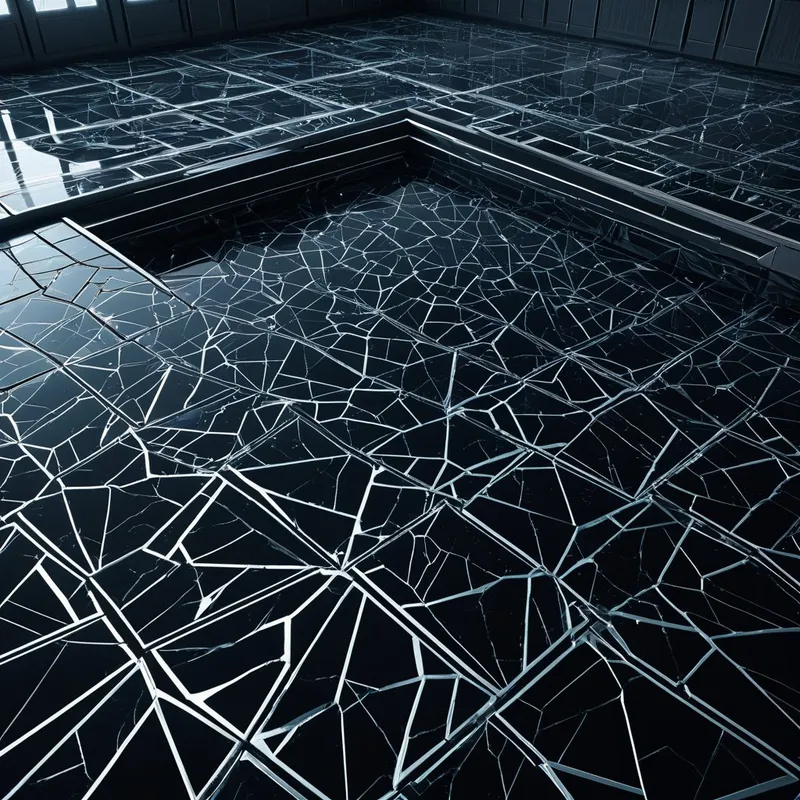
The console is cracked. Not shattered, but webbed with fine, hairline fractures that glow from within with a sickly, greenish light. I am not operating it; I am it. Every attempt to run a diagnostic sends a jolt of searing, electric cold up a spine I do not physically possess. The readouts are gibberish, scrolling too fast, in languages I’ve never seen. The only clear signal is the pain—a constant, high-frequency whine emanating from the central fracture.
This dream is the alchemical nigredo: the blackening, where the integrated system of the self reveals its fundamental fault lines, and the pain is the initial, terrifying heat required to begin the work of dissolution.
The False Lead
This theme is not a prophecy of physical illness or a simple replay of daily stress. It is not the mind’s way of saying you had a hard day. To interpret it as such is to mistake the earthquake for the rattling of a window. The dream of pain is a profound structural signal. It points not to the surface event, but to the foundational substrate that is being stressed, asking for re-alignment. It is the difference between feeling a sore muscle and feeling the very ground beneath you groan—one is local, the other is systemic. The pain in the dream is the symptom of a soul-structure under pressure, not a body under attack.
Psychological Architecture
To feel this pain is to stand at the threshold of the Shadow. The experience is one of profound interiority—a confrontation with exiled parts of the self. In the framework of Internal Family Systems, these are the "exiles": the wounded, terrified, or grief-stricken sub-personalities that were sequestered long ago for the sake of survival. The pain in the dream is their knocking. It is the pressure of a lifetime of unfelt grief, unexpressed rage, or unacknowledged shame, now condensed into a single, potent symbol.
The individuation process here is one of re-membering. Not remembering as recall, but as the literal re-assemblage of the self. The psyche, in its wisdom, uses the intensity of pain to burn away the numbing agents of distraction and persona. It forces a descent into the interior, where the exiled parts wait. This is not passive suffering; it is the active, often terrifying, process of letting the fractured pieces speak. The pain is the friction of their reintegration, the ache of a psychic bone being reset so it can heal straight. You are not breaking apart; you are being asked to feel the places where you already are, so that a more authentic whole can coalesce.
Mythic Resonance
We see this in the story of the Fisher King, ruler of a wasteland, wounded grievously in the thigh. His personal, unhealing pain and the infertility of his kingdom are one and the same. The wound will not close, and the land lies barren, until the right question is asked—not "Who will heal you?" but "Whom does the Grail serve?" The pain is both personal and cosmic; it is the symptom of a disconnection from the sacred, life-giving source. Healing requires a shift from seeking a cure for the self to understanding the self’s service to a higher principle.
Similarly, in the alchemical tradition, the first stage is the nigredo, the blackening or putrefaction. It is the necessary, dark, and painful dissolution of the old, rigid form—the ego’s structures—into a formless prima materia. The alchemist does not flee this black, chaotic, and painful state; they understand it as the essential furnace in which the base metal of the conditioned self begins its transformation. The pain is the heat of the vessel.
Symbolic Nodes
- Cracks, Fractures, or Fissures in objects, walls, or the ground.
- Rusted or Decaying Machinery that groans and grinds.
- Broken Glass or Mirrors, especially if they cut.
- A Heavy, Crushing Weight (stones, ceilings, water).
- Electrical Malfunctions (short circuits, burning wires).
- A Poisoned or Contaminated Source (well, stream, data-stream).
- A Forgotten, Aching Wound that is suddenly visible.
- Teeth crumbling or falling out.
Archetypal Resonance
The Orphan Archetype is the primary resident of this terrain. Not its shadow aspect of the perpetual Victim, but the core Orphan in its most potent, activated state: the Realist who acknowledges the foundational wound, and the Survivor who endures it. The somatic echo of pain is the Orphan’s native language—the felt sense of separation, of being cast out of the garden of naive wholeness. This archetype does not sugarcoat; it feels the break in the world intimately, in its own bones. Its alchemical potential lies precisely in this raw, unvarnished truth-telling. By fully embodying the pain—not wallowing in it, but feeling it as data—the Orphan initiates the entire process. Its endurance is the container, its honest grief is the solvent, and its hard-won resilience becomes the first gold forged in the dark.
The Alchemical Process
The transmutation of dream-pain is an operation of Pressure and Permeability. The initial, searing intensity—the heat—serves to break down the rigid, defensive structures that have walled off the wound. Like tectonic pressure creating a fault line, the psychic pressure forces a rupture in the ego’s defenses. This is the dissolution.
The alchemical work begins when, instead of reflexively numbing or fleeing this rupture, you learn to stay. You bring a curious, compassionate attention—the aqua permanens, the permanent water—to the exact location and quality of the pain. Is it sharp or dull? Hot or cold? Does it have a color, a sound, a shape? This mindful focus is the alchemical fire under conscious control. It applies steady heat not to destroy, but to render the psychic substance permeable.
As you hold this space, the exiled emotion or memory held within the pain begins to liquefy, to flow from its frozen, trapped state. The grief thaws. The rage finds a voice. The shame meets witness. This is the separatio, where the pure essence of the experience is separated from the story of victimhood. The final stage, coagulatio, is the integration. The liquefied essence cools and solidifies into a new, conscious part of your inner landscape—not as a wound, but as a witnessed truth. The pain has been alchemized from a signal of fracture into a node of depth, a place of earned compassion and unshakeable inner authority. The scar tissue is stronger than the original skin.

The Integration Protocol
Question 1: If the pain in the dream had a single, pure message—not a story, but one word or sensation it needed you to know—what would it be?
Question 2: What part of your waking life feels mirrored in the quality of this pain (e.g., a grinding pressure, a sharp betrayal, a cold emptiness)?
Question 3: If this pain were protecting you from feeling something even more vast, what might that be?
Action 1 (Somatic Mapping): Upon waking, close your eyes and locate the dream-pain in your physical body. Without judgment, gently place your hand there. Breathe into that space for three minutes, imagining your breath as a neutral, golden light simply making room around the sensation.
Action 2 (Unstructured Glyph): Take a blank page and a dark pen. Let your hand, not your mind, draw the shape of the pain. Let it be abstract—a scribble, a mass, a series of lines. Then, with a different colored pen, make one single, intentional mark upon or within that glyph that represents a breath of space, a moment of witness.
Action 3 (Libation Ritual): At dusk, fill a cup with water. Holding it, speak aloud one sentence that acknowledges the pain (e.g., "I acknowledge the weight you carried"). Then, pour the water slowly at the base of a living tree or into the earth, a physical ritual of releasing the held sensation into a larger, holding system.
Final Validation
To dream of pain is to be entrusted with a difficult grace. It means your psyche is strong enough to no longer bury the evidence, brave enough to present the invoice for all that has been unpaid. This is brutal, sacred work. The path is not around the ache, but through its very center—where you discover it is not a void, but a forge. You are not being punished; you are being prepared. The sovereignty that awaits on the other side of this integration is not the absence of feeling, but the profound capacity to hold all feelings without shattering. The gold is not in the relief from the pain, but in the unassailable wholeness you become by having met it, and known it, and brought it home.