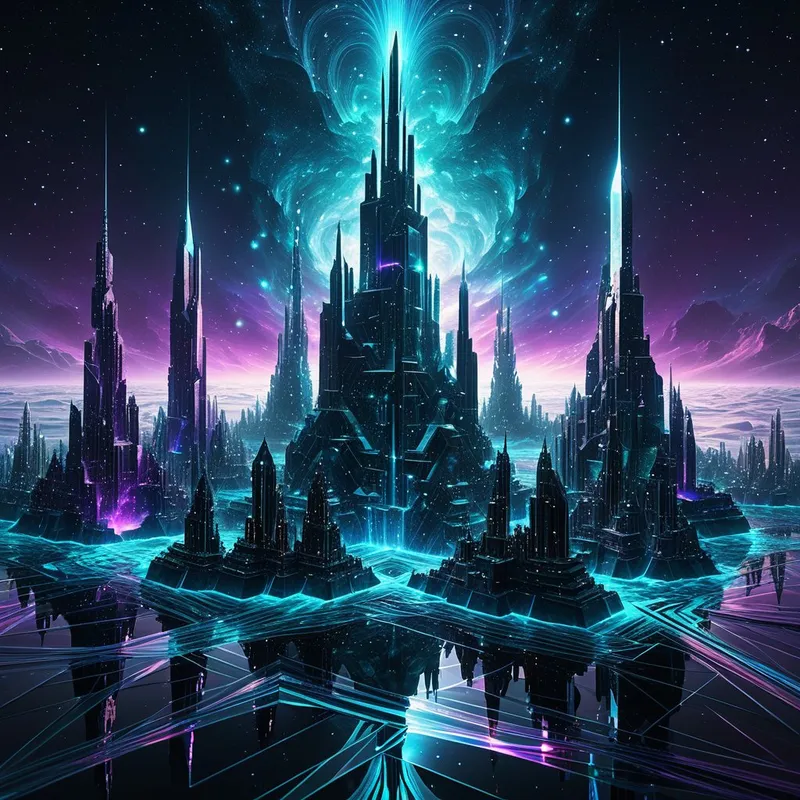
The Somatic Echo
Before the image forms, the body knows. It is a tremor in the foundation. A tightness in the jaw that speaks of a world held together by sheer will, a rigidity in the spine that is less a pillar and more a prison bar. Then, the counter-tremor: a flutter in the solar plexus, a liquid heat in the belly—the dread and thrill of the coming unspooling. This is the somatic prelude to dreams of Order and Chaos. It is the felt sense of a system—be it a belief, a relationship, an identity—reaching its tensile limit. The order is not peaceful; it is brittle, maintained by a silent, exhausting effort. The chaos is not mere mess; it is a potent, fecund pressure from below, the psyche’s own molten core demanding a new shape. You feel it as a simultaneous clenching and dissolving, the terror of the known prison and the vertigo of the unknown key.
The Dreamer's Log
The dreamer stands in a cavernous, silent server farm, aisles of black racks humming with a cold, blue light. Their task is simple: find the one corrupted file. But as they search, they notice the flawless, polished floor is beginning to ripple like water. From the ceiling, single drops of thick, black ink begin to fall, each one striking the floor with a sound like a cracking bone, spreading not into a stain, but into intricate, living fractals that crawl up the server racks, overwriting the clean lines with wild, beautiful, and utterly illegible script.
The psyche, having built a fortress of logic and control, now invites the essential ink of the unconscious to rewrite its source code.
The False Lead
This theme is not about mere disorganization or a streak of bad luck. To mistake it for such is to pathologize a sacred process. The chaos here is not the clutter of a busy desk, but the necessary demolition of an outdated internal architecture. The order is not the benign routine of a healthy life, but the suffocating rigidity of a life built on someone else’s blueprint or a self constructed in trauma. The dream is not reporting a problem to be solved with a better planner; it is initiating a revolution of the soul. The conflict is not between neatness and mess, but between a consciousness that believes it must govern everything and the deeper Self that knows governance must sometimes be dissolved for creation to occur.
Psychological Architecture
Here, the Shadow work is the reconciliation of two exiled inner families. One family is the Tyrant-Administrators, who believe safety lies in total predictability. They are the internalized voices that say, “If you just control this, map that, anticipate everything, you will not get hurt.” Their shadow is a cold, airless perfection. The opposing family is the Chaos-Daimons, who represent repressed vitality, spontaneity, wild emotion, and creative fury. They have been locked in the basement for being “too much,” and their pounding on the door feels like a threat to survival itself.
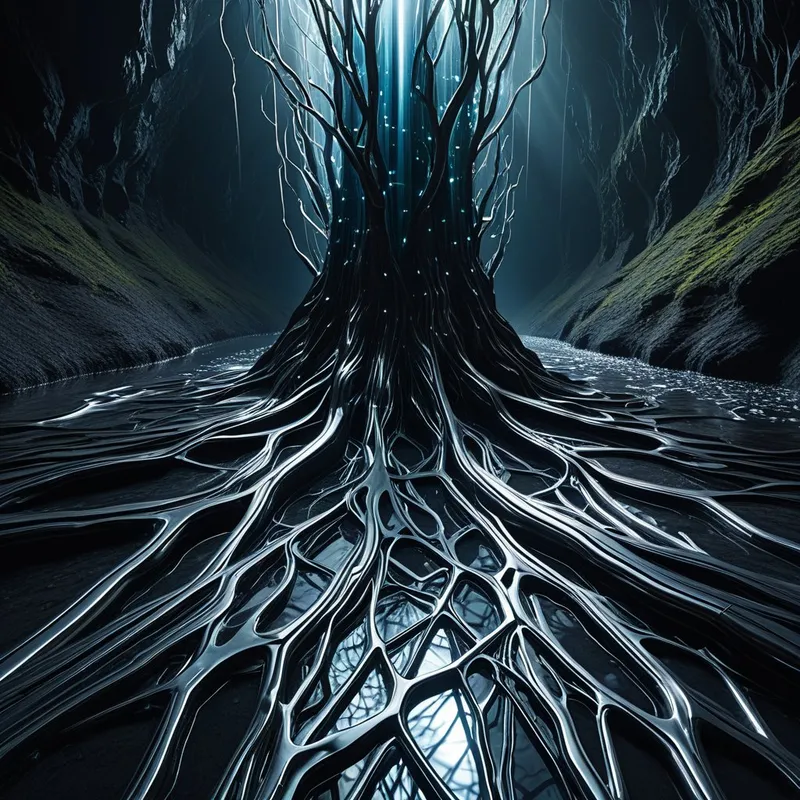
The individuation process at play is the terrifying, glorious birth of the Sovereign. This is not the Ruler who dominates, but the one who can hold the tension of the opposites. It is the self that can design a ritual (order) while being open to the spirit that moves through it (chaos). It is the psyche learning to build structures that are permeable, adaptive, and alive—less like a fortress, more like a breathing, growing tree. The process feels like dying because a part of you is: the part that believed it was the fortress.
Mythic Resonance
We see this in the Norse myth of Yggdrasil, the World Tree. Its roots are gnawed by the dragon Nidhogg (chaos, decay), while its branches hold the ordered realms of gods and men. The tree does not defeat the dragon; it contains it. The chaos is a necessary, if destructive, force within the system of the whole. Similarly, the Egyptian god Thoth, scribe of the gods, brought the ordering principle of language and law (the Word) out of the primordial, chaotic waters of Nun. The myth shows that true order is not imposed upon chaos from the outside, but is born from it, as an island emerges from the sea. Our dreams re-enact this primordial drama: the old island is eroding so a new, more expansive one can form.
Symbolic Nodes
- Collapsing Buildings/Bridges: The failure of personal psychological structures.
- Wild, Overgrown Gardens overtaking Neat Lawns: Instinctual life reclaiming repressed space.
- Malfunctioning or Sentient Technology: The logical mind’s systems being hijacked by the irrational.
- Ink Spills, Floods, Melting Ice: The formless (unconscious) breaching the world of form.
- A Perfect Grid or Map being Torn or Rewritten: The conscious worldview undergoing revision by a greater authority.
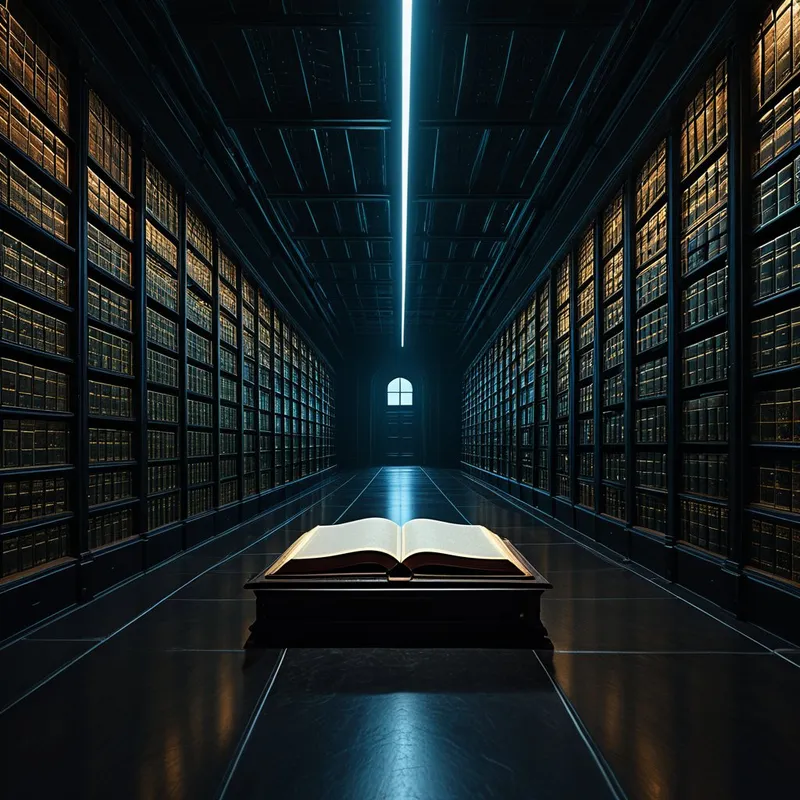
- A Still, Silent Library that suddenly becomes a Forest: The transmutation of archived knowledge (dead order) into living wisdom (organic chaos).
Archetypal Resonance
The core energy of this theme resonates most powerfully with The Magician Archetype, specifically in its shadow dance between the Magician and the Shadow Magician.
The Magician’s essence is transformation—understanding the hidden principles of reality to enact change. In the Order & Chaos dream, the Magician energy is the nascent power to hold the tension between structure and flow, to see the code within the storm. Its shadow, the Manipulator/Illusionist, is the terrified part that tries to force order through control, creating a brittle, lifeless illusion of stability (the sterile server farm) or, in its opposite pole, conjures chaos as a destructive weapon to avoid the responsibility of true creation. The somatic echo of brittle jaw versus liquid belly is the Magician at war with itself. The alchemical potential lies in the Magician remembering its true power: not to dominate reality with a willful spell, but to midwife the new form that is seeking to emerge from the collision of these two great forces. It learns the ultimate magic: to let the system break, and to trust itself to speak the new word that will organize the pieces into a higher, more resilient harmony.
The Alchemical Process
The alchemical vessel for this work is the human nervous system itself, and the fire is the unbearable anxiety of the in-between. The prima materia is the rigid, outgrown identity. The process begins with Calcination: the old structures are burned by the heat of crisis, failure, or profound disorientation—the feeling that nothing works as it should anymore. This ash then enters Dissolution, represented by the chaotic floodwaters of the dream; all boundaries melt, leaving only a confused, fertile soup of potential. Here, in the nigredo, the blackest night, the terror is total. The alchemical key is to not flee. One must Coagulate not by rebuilding the old wall, but by finding the new, living pattern within the soup. This is not an act of will, but of perception—a listening for the faint, new frequency. The pressure transforms grief for the lost order into the profound sovereignty of one who knows they can survive, and even court, the creative void. The gold produced is Adaptive Integrity: a self that is coherent yet fluid, principled yet responsive, able to design and to dismantle with equal grace.
The Integration Protocol
Question 1: Where in my waking life is my order brittle? What small, rigid system (a habit, a belief about how things "must" be) is maintained not by joy or vitality, but by a quiet, constant fear of what would happen if I stopped?
Question 2: If the chaotic element in my dream were not a threat, but a messenger, what is it trying to tell me? What quality, emotion, or part of myself have I exiled that is now demanding entry?
Question 3: Can I identify a recent, subtle "ink drop" in my life—an unexpected emotion, a mistake that opened a new door, a sudden irrational urge—that I tried to clean up, but might have been the beginning of a necessary rewrite?
Action 1 (Grounding in the Flux): For five minutes, sit still and focus on your breath. Instead of seeking calm, notice the inherent chaos within the order: the slight variations in each inhale and exhale, the tiny muscle tremors, the flicker of thoughts. Practice perceiving yourself not as a static being, but as a stable pattern sustained within a constant, minor flux.
Action 2 (Chaotic Transcription): Take a page of very structured text—a legal document, a technical manual. Rewrite it by hand, but allow yourself to deliberately make "mistakes": spill a little coffee on it, write in the margins, let your handwriting change size and style, doodle over the words. Do not create a "piece of art." Simply perform the act of imposing a personal, chaotic process onto a symbol of impersonal order.
Action 3 (Ritual of the Permeable Boundary): Design a simple, personal ritual for the start or end of your day. It must have a clear structure (e.g., light a candle, speak three intentions). Then, build in one element of pure unpredictability: pull a random word from a book to meditate on, choose your closing gesture spontaneously, go outside and let the first sound you hear be the ritual's closing note. The practice is in honoring both the frame and the spirit that moves within it.
Final Validation
It is terrifying. To feel the ground you so carefully tiled begin to liquefy is to confront a primordial fear. The mind, that brilliant architect, will scream that this is failure, that you are coming undone. You are. But you are not unmaking. You are being remade. The chaos is not your enemy; it is the raw, unformed material of your next becoming. The order you will eventually find on the other side of this will not be a cage you built from fear, but a home you grow from wisdom—a structure with windows open to the wild wind, rooted deep enough to dance in the storm. Trust the dissolution. The sovereignty awaiting you is worth the flood.