
The Alchemy of Optimism: From Somatic Echo to Sovereign Vision
The Somatic Echo
Before it is a thought, optimism is a sensation. It is not the giddy, frantic energy of forced cheer, but a deep, resonant hum in the marrow. It feels like the subtle, tectonic shift of bedrock settling into a more stable configuration. There is a warmth behind the sternum, not a burning fire, but the steady, retained heat of a sun-warmed stone at dusk. The breath finds a lower register, as if the diaphragm has remembered a forgotten capacity for expansion. This is the body’s pre-cognitive recognition of potential—not a guarantee of outcome, but a visceral acknowledgment of a fundamental openness in the system. It is the somatic echo of a door you did not know was there, swinging silently on its hinges in the dark.
The Dreamer's Log (Case Vignette)
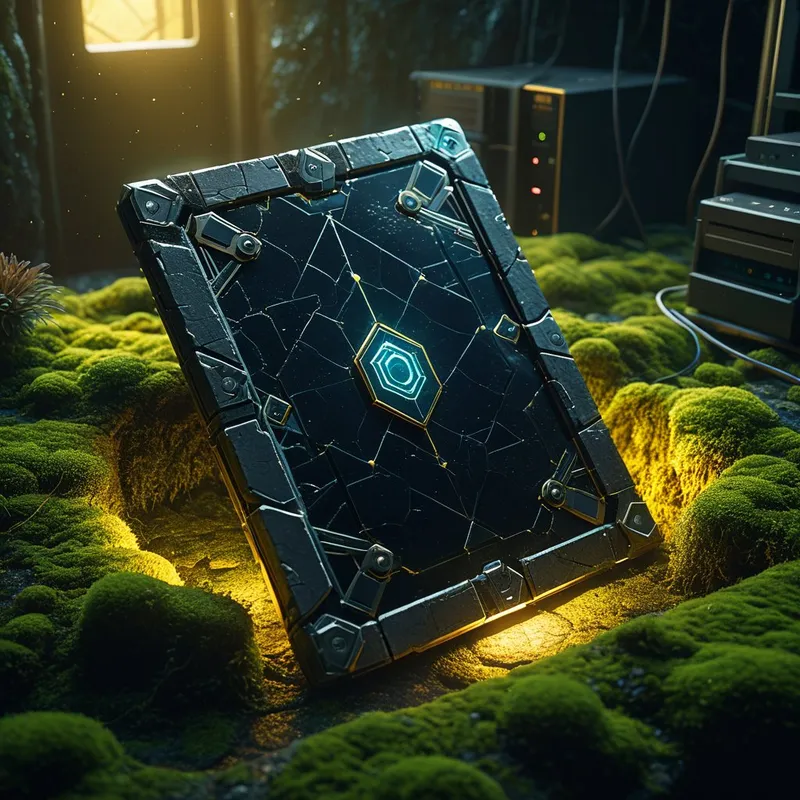
I stood in the ruins of a library, everything ash-grey and crumbling. In my hands was a heavy tablet of obsidian, cold and dead. As my thumb brushed a deep crack in its surface, a liquid, golden light began to seep from the fracture, warm and alive, pooling in my palm.
This dream is not about repairing the library, but about discovering that the source of illumination was always held within the very artifact of perceived ruin.
The False Lead
This theme is not the brittle veneer of "positive thinking," the conscious insistence that everything is fine when the somatic truth whispers otherwise. That is the shadow of optimism—a spiritual bypass dressed in bright colors, a refusal to acknowledge the weight of the ash-grey library. True optimism, in its profound dream-form, does not ignore the fracture; it is precisely born from the acknowledgment of the crack. It is the alchemical difference between painting a crumbling wall and discovering that the wall itself contains a latent, luminous ore. The false lead is the belief that optimism means the absence of shadow. The truth is that it is a particular kind of vision that can perceive light through the shadow.
Psychological Architecture
The architecture of this optimism is built in the sub-basement of the psyche, where the Internal Family Systems of the soul negotiate. Here, the exiled parts—the Orphan who knows loss, the Realist who catalogs evidence—are not silenced but convened. The optimism dream represents a council where these exiles are finally heard, not to be cheered up, but to have their testimony integrated. Their grief, their data, becomes the foundation. This is the Shadow work: to sit in the ruined library with the cold tablet and not flee. The individuation process is the patient, somatic attention to that object of despair until your touch—your conscious, embodied presence—triggers the latent reaction. The light was always there, in chemical marriage with the stone, awaiting the catalyst of a non-rejecting awareness. You become the philosopher's stone to your own darkness.
Mythic Resonance
This is the secret at the heart of Pandora’s jar. The myth is often truncated to a lesson about unleashed evils and a trapped "hope." But consider the architecture: after every terror and grief had flown into the world, what remained at the bottom was Elpis—often translated as "hope," but closer to "anticipation," a forward-leaning expectation. It was not released; it remained in the vessel. True optimism is not a force you scatter into the world to combat its woes; it is the foundational substance you discover at the very core of the container after you have fully witnessed its contents. It is the final, integral part, the base of the vessel itself. Similarly, in the alchemical Nigredo, the first stage is not despair for its own sake, but the necessary blackening, the dissolution of all certainty into a uniform darkness—the prerequisite state from which any new light can genuinely, organically emerge.
Symbolic Nodes
- Cracks in Dark Objects: Fractures in stone, glass, or earth emitting light.
- Unexpected Warmth: A cold surface (metal, stone) that feels warm to the touch.
- Dawn Before Sunrise: The sky lightening from within, while the sun remains below the horizon.
- Resilient Small Life: A single flower growing through pavement, moss on a forgotten surface.
- A Sealed Container with Internal Luminescence: A jar, chest, or room that glows from within its sealed confines.
- A Forgotten or Hidden Switch: A lever or button, covered in dust, that powers up a dormant system.
Archetypal Resonance
The energy at the core of this theme is that of The Innocent Archetype—not its shadow form of naive denial, but its mature, alchemized expression. The Innocent does not believe the world is harmless; it knows the world contains harm, but operates from a somatic faith in a fundamental benevolence of being, a trust in the process itself. This resonates perfectly with the somatic echo of deep warmth and expansion, a bodily faith that precedes evidence. Its alchemical potential lies in its ability to withstand the Nigredo—the crushing pressure of reality—not by ignoring it, but by holding a paradoxical space: a clear-eyed perception of the crack alongside a cellular openness to the light within it. The mature Innocent is the part of us that can touch the cold, fractured tablet and wait, without agenda, for the warmth to answer.
The Alchemical Process
The transmutation here is from passive wish to active vision. The base material is the leaden weight of circumstantial evidence, the collected data of all that is broken or grey. The alchemical fire is the intense, sustained pressure of non-avoidance—the heat generated by refusing to look away from the fracture, and refusing to paste a happy thought over it. This heat cooks the material. In that vessel, under that pressure, a separation occurs. The gross matter of "how things are" sinks, and a vapor rises: the subtle perception of "how things could be," not as fantasy, but as a latent pattern already embedded in the structure of reality, waiting for recognition. The condensation of this vapor onto the cooled walls of your awareness is the gold: a vision that is resilient because it was born of, and includes, the very substance it transcended. You don't get rid of the lead; you discover its hidden property of transmutability.
The Integration Protocol
Question 1: In your waking life, where do you feel the "cold tablet"—the object, situation, or memory that feels inert and heavy? Can you describe its weight and temperature in your body, without immediately trying to change it?
Question 2: Recall a moment, however fleeting, of unexpected warmth or light emerging from a difficult place. What was the quality of your attention in that moment? Were you forcing, or were you receiving?
Question 3: If the optimism you seek is not a blanket statement about the world, but a specific, luminous pattern waiting to be recognized within your current "ruins," what might that pattern be? What is its shape, its texture, its frequency?
Action 1 (Somatic Cartography): For one week, practice locating the somatic echo. Twice daily, pause for 60 seconds. Scan your body. Ignore thoughts of "good" or "bad." Simply find the area that feels most like a "sun-warmed stone at dusk"—a place of retained, quiet warmth. Place a hand there and breathe into that space, mapping its borders.
Action 2 (Crack Illumination - Creative): Take the "cold tablet" from Question 1. Draw it, sculpt it from clay, or write a dense paragraph describing only its physical properties. Then, with a different colored medium, illustrate or describe in detail the exact pattern of light you imagine seeping from its fracture. Do not draw the whole object healed; draw only the light in relation to the specific crack.
Action 3 (Dawn Vigil Ritual): Rise once, in the week before dawn. Go outside or sit by a window. Do not wait for the sun. Instead, watch the sky lighten from within itself. Track the subtle shift from inky black to deep blue, to indigo, to grey. Note how the light emerges from the fabric of the darkness itself. Carry that observation into your day as a living metaphor.
Final Validation
To feel the weight of the world is not a failure of optimism; it is its necessary raw material. The despair, the cynicism, the catalog of ruins—these are not your enemies. They are the credible witnesses whose testimony must be entered into the record before the court can adjourn. The profound optimism that visits in dreams does not dismiss this council. It is the verdict that arrives after all evidence has been heard: a quiet, somatic knowing that the story is not over, that the vessel still contains its base, and that your touch—your conscious, enduring presence—is the catalyst it has been waiting for. The light was always there. Your task is not to create it, but to become the kind of space where it can finally, fearlessly, reveal itself.