The Alchemy of the Monster: When the Shadow Demands a Seat at the Table
The Somatic Echo
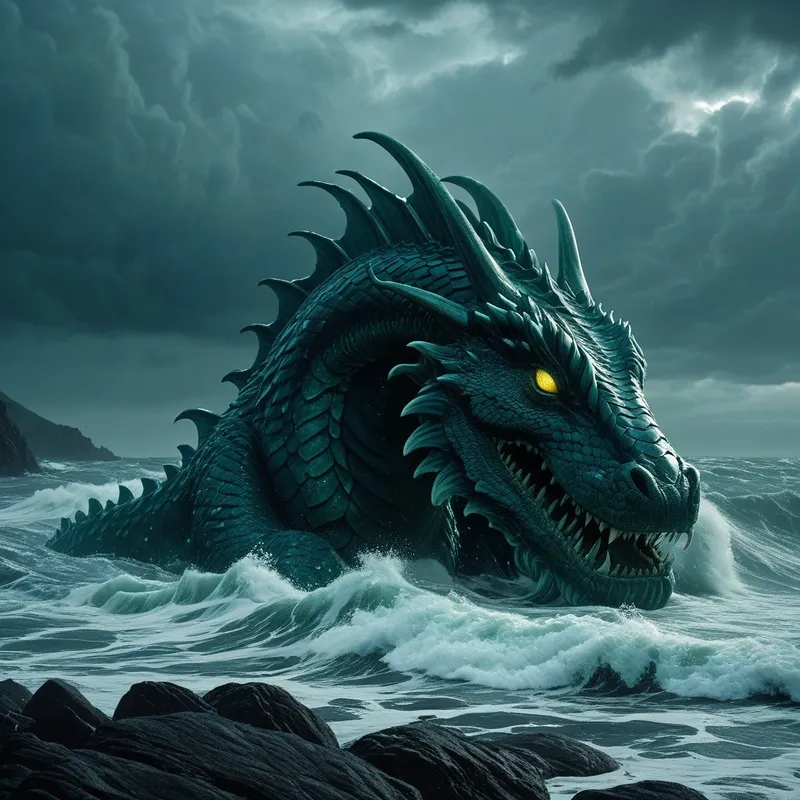
Before the image forms, the body knows. It is a cold filament of dread, a sudden hollowness behind the sternum, a primal tightening of the gut that whispers, something is here. The breath becomes shallow, a silent currency spent in a room you thought was empty. This is the somatic echo—the body’s ancient, pre-verbal intelligence registering a presence that the conscious mind has yet to name. It is not fear of a thing, but fear of a presence, an intelligence that operates outside the agreed-upon laws of your daylight world. The monster announces itself not with a roar, but with this visceral shift in the atmospheric pressure of the dream. The mind races to catch up, to project a form onto this formless terror, giving us claws, teeth, and scales—the familiar grammar of the unknown.
The Dreamer's Log
The dreamer finds themselves in the basement of an endless, derelict data center. The air hums with a low, electrical thrum. From the stagnant coolant pools under the server racks, a form begins to coalesce—not a beast of flesh, but a shifting, oily mass of tangled cables and fractured code, pulling itself toward them with a terrible, logical hunger.
Alchemical Interpretation: The neglected, outdated systems of the psyche have pooled into a sentient residue, demanding energy and integration lest they consume the dreamer’s own operational integrity.

The False Lead
The monster is not a prophecy of external catastrophe. To interpret it as a simple warning of "bad luck" or an omen of a coming threat is to commit a profound error of translation. This is the psyche’s oldest trick: to externalize what is too terrifying to acknowledge as internal. The monster is not what is coming for you. It is what is coming from you. It is the embodied truth of all you have disowned, suppressed, or deemed too chaotic, too hungry, too raw to belong to the curated self you present to the world. To see it as an external enemy is to remain at war with yourself. The true work begins when you stop running and realize the chase is happening within the confines of your own soul.
Psychological Architecture
To encounter the monster is to stand at the threshold of the Shadow, not as a theoretical concept, but as a living, breathing reality within your internal family system. This is the exiled part, the orphaned self that was deemed unacceptable—the rage you buried as a child because it was unsafe, the boundless desire you capped because it was "too much," the primal grief you froze because it threatened to dissolve you. It has grown in the dark, fed on neglect, and developed its own crude consciousness. Its appearance in the dream is not an attack, but a desperate, clumsy bid for recognition. The terror it evokes is the friction between your conscious identity and this raw, unintegrated psychic mass. The process of individuation here is not about slaying the beast, but about daring to ask, in the heart of the panic: What part of me have I made into this? What does it need?
Mythic Resonance
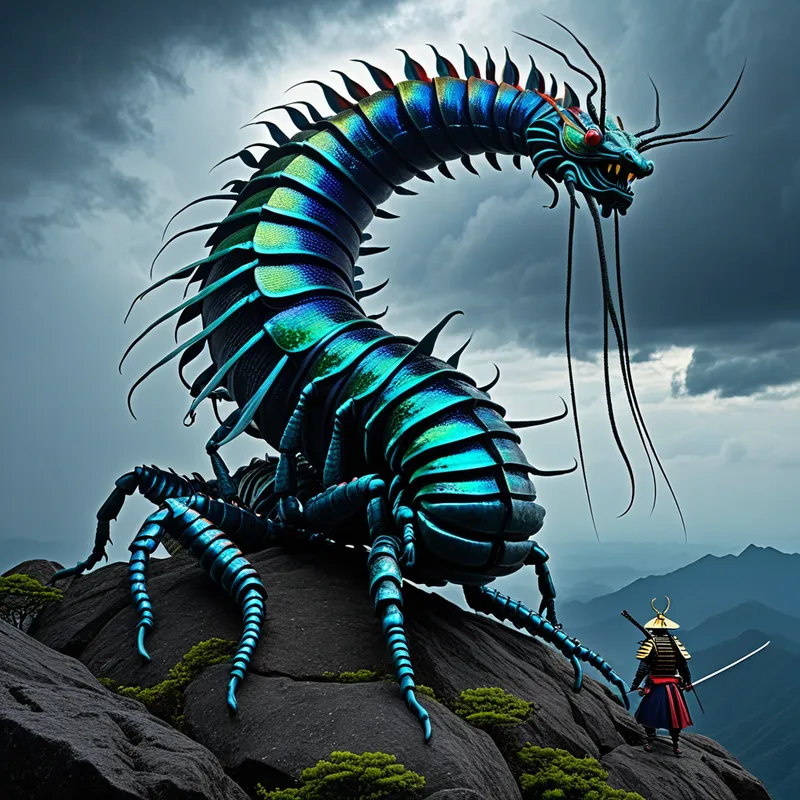
Consider the Minotaur, not in the heroics of Theseus, but in its origin and its home. It was born of a hidden, shameful passion (Pasiphaë’s union with the bull) and immediately imprisoned in the Labyrinth—a structure of exquisite complexity designed solely to contain and obscure. The monster is not the point; the Labyrinth is. We are all architects of our own psychic labyrinths, brilliant structures of avoidance, rationale, and distraction built to hide our central shame. The monster patrols the heart of this maze, a guardian of the very truth we walled in. The myth tells us the monster is born of a denied truth and becomes the centerpiece of an entire life’s architecture of avoidance.
Symbolic Nodes
- Pursuit: The energy of disowned aspects seeking reintegration.
- Shapeshifting/Amorphous Forms: The content of the shadow is not fixed; it morphs to fit what you most resist.
- Teeth/Claws/Jaws: Unmetabolized aggression, biting criticism (given or received), a hunger for impact.
- Dark Water/Pools/Depths: The unconscious itself, from which the monster emerges.
- Being Frozen/Paralyzed: The ego’s defense of immobilization when faced with overwhelming psychic material.
- Abandoned or Liminal Spaces (Attics, Basements, Tunnels): Forgotten or repressed areas of the psyche.
Archetypal Resonance
The most active force in the monster dream is The Shadow Orphan. This is the archetype of the utterly exiled self, the part that believes it must fight for every scrap of recognition with ferocity and terror because it has been fundamentally abandoned by the ruling consciousness. Its core energy is raw survival at any cost, manifesting as the monstrous form that chases us. The somatic echo—the hollow dread—is the Orphan’s vacuum, the emptiness of its exile. Yet, its alchemical potential is immense: this Orphan carries the undiluted, authentic life force that was sacrificed for belonging. To integrate it is not to be victimized, but to reclaim a profound, unapologetic sovereignty that was fragmented long ago.
The Alchemical Process
The transmutation of the monster requires the heat of sustained attention and the pressure of non-judgmental containment. You must hold the gaze. In the dream, this is the moment you stop fleeing and turn to face the pursuing shadow. In waking life, this is the psychological equivalent: to feel the full somatic terror without narrative, to let the body shake and the heart pound without immediately labeling it as "bad" or trying to "fix" it. This conscious, embodied holding is the alchemical vessel. Within it, the formless terror begins to differentiate. The monstrous "it" becomes a "thou." The generic hunger reveals itself as a specific, unmet need—for acknowledgment, for expression, for grief. The monster does not vanish; it unfolds. Its energy, once aimed at your dissolution, becomes available for your reconstruction. The claws that threatened to tear you apart become the tools to dismantle the labyrinth that imprisoned you both.

The Integration Protocol
Question 1: In the dream, what did the monster do? Not just its appearance, but its action (chase, watch, block, consume)? What is the verb of your disowned self?
Question 2: If the monster’s terror could speak in a calm, clear voice, what one sentence would it say about its long exile?
Question 3: What current situation in my waking life feels like the same emotional "weather" as the dream—the same atmospheric pressure of dread, obligation, or trapped energy?
Action 1 (Somatic Reclamation): When you feel a flicker of the dream’s dread in waking life, pause. Place a hand on your sternum and your belly. Breathe into the sensation for three cycles, not to make it leave, but to acknowledge its presence in your physical territory. You are containing the echo.
Action 2 (Unstructured Dialog): Take two pages of paper. On one, write from the perspective of your conscious, waking self, addressing the monster. On the second, let the monster write back. Do not censor. Let it be clumsy, angry, sorrowful, or absurd. The goal is not resolution, but introduction.
Action 3 (Ritual of Naming): Find a small stone or natural object. Holding it, give a silent name to the energy of the monster—not a scary name, but a descriptive one like "The Guarded Grief" or "The Silent Hunger." Place the object somewhere you will see it daily, as a token that this energy is now a recognized resident, not a fugitive.
Final Validation
To dream of monsters is to be chosen for a difficult and sacred labor. It means your psyche is robust enough to no longer tolerate the fragmentation, and is presenting you with the bill for wholeness. The fear is real, the disorientation is valid, and the urge to flee is the oldest instinct we know. Yet within that terrifying form lies a forgotten treaty, a piece of your soul’s sovereignty waiting to be reclaimed. The monster at the door is not there to break in. It is there because you are finally strong enough to let it come home.