
The Archaeology of the Self: Dreaming Memory & History
The Somatic Echo
It begins not as a thought, but as a geography of feeling. A weight in the chest that is not stone, but sediment—layer upon layer of unspoken moments compressed into a dull, permanent ache. A tightness in the jaw that holds the shape of words you never said. A phantom chill along the spine, the body’s ledger recording a draft from a door left open years ago. This is the somatic echo: the past living not as narrative, but as terrain. The mind may forget, but the body is a meticulous archivist, its cells humming with the frequency of every encounter, every fracture, every silent vow. To dream of memory and history is to feel this internal landscape shift, to hear the ground groan as something long buried seeks the surface. It is the visceral prelude to an excavation.
The Dreamer's Log
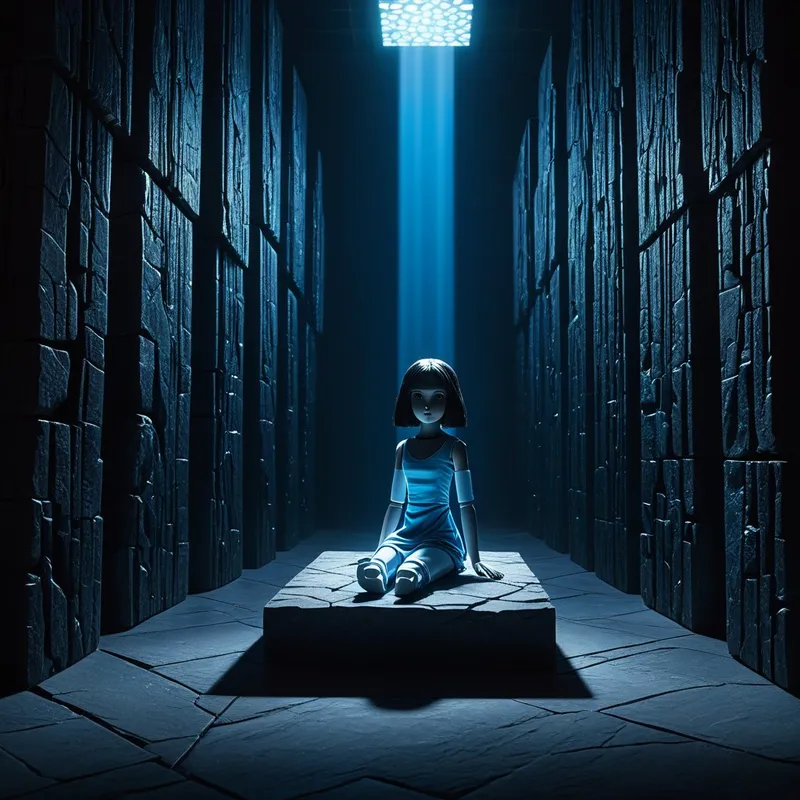
I am in a vast, silent server farm, but the servers are polished black monoliths. I am tasked with deleting obsolete files to free up space. I select a folder labeled “Childhood Summers.” As I hover over ‘delete,’ a porcelain doll’s face flickers on every screen, its painted eyes filling with dark liquid that begins to drip onto the data-center floor.
The dream is an alchemical directive: you cannot free space by merely deleting the record; you must first retrieve the feeling trapped within the artifact.
The False Lead
This theme is not a simple replay of nostalgia or trauma. It is not the mind passively rewinding a tape. That is mere recollection, often a distraction. The dream of true memory-work is active, architectural. It is the psyche not reviewing blueprints, but discovering that the foundation of the house you live in is built upon another, older house—and that the ghosts in the basement are the exiled laborers who built the first one. The false lead is to mistake the haunting for the history itself. The grief is not the point; it is the signal. The terror is not the truth; it is the pressure required to forge it.
Psychological Architecture
Here, Shadow work is less about battling monsters and more about conducting a census of the forgotten citizens within your own republic. Each repressed memory, each glossed-over humiliation, each unprocessed joy becomes a disenfranchised part of the self. They do not vanish; they form internal family systems of exiles, managers, and firefighters, operating in the political underground of your psyche. To individuate is to reintegrate this parliament of ghosts. It is to sit in the chamber of your own heart and recognize the delegate from the year of your father’s silence, the ambassador from the season of your first betrayal. It is to grant them a voice, not to let them rule, but to understand their claims on your present territory. This is the restructuring: moving from a fractured state, governed by secret exiles, to a sovereign one, informed by a reconciled history.
Mythic Resonance
We see this in the story of Ariadne, who does not merely give Theseus a thread to navigate the Minotaur’s labyrinth. She gives him the means to retrace his steps, to not become another lost fragment in the archive of bones. The thread is the promise of return, the integrity of personal history against the devouring, anonymous maze. Similarly, in the Egyptian weighing of the heart against the feather of Ma’at, it is not the sins that are judged, but the record of a life—the heart, containing every memory and deed, must be light enough to proceed. The afterlife begins with an audit of the soul’s accumulated substance. Our dreams are this private, nightly audit.
Symbolic Nodes
- Abandoned Buildings/Ruins: The architecture of a former self, a relationship, or an era.
- Filing Cabinets, Archives, Servers: The cognitive systems of storage and categorization, often overwhelmed or corrupted.
- Faded Photographs & Film: Memories losing resolution, begging for re-development or conscious release.
- Grandparents or Ancestral Figures: The living connection to personal and genetic history, often as guides or silent witnesses.
- Dust, Cobwebs, Mold: The patina of neglect on unchosen memories.
- Floodwaters: The overwhelming return of the repressed, emotional content breaching containment.
Archetypal Resonance
The Magician Archetype is the prime mover in this theme. Not as a wizard casting spells, but as the internal alchemist whose crucible is the totality of your lived experience. The somatic echo is the raw prima materia—the dense, leaden feeling in the gut. The Magician’s task is to apply the heat of conscious attention to this material, to separate the essential truth from the dross of narrative, and to transmute grief into meaning, trauma into template. Its shadow, the Manipulator, is what keeps us trapped in old stories, using selective memory as a weapon against our own growth. The active Magician understands that to re-member is to literally put the scattered parts of the self back together, performing the only magic that matters: the creation of a coherent identity from the fragments of time.
The Alchemical Process
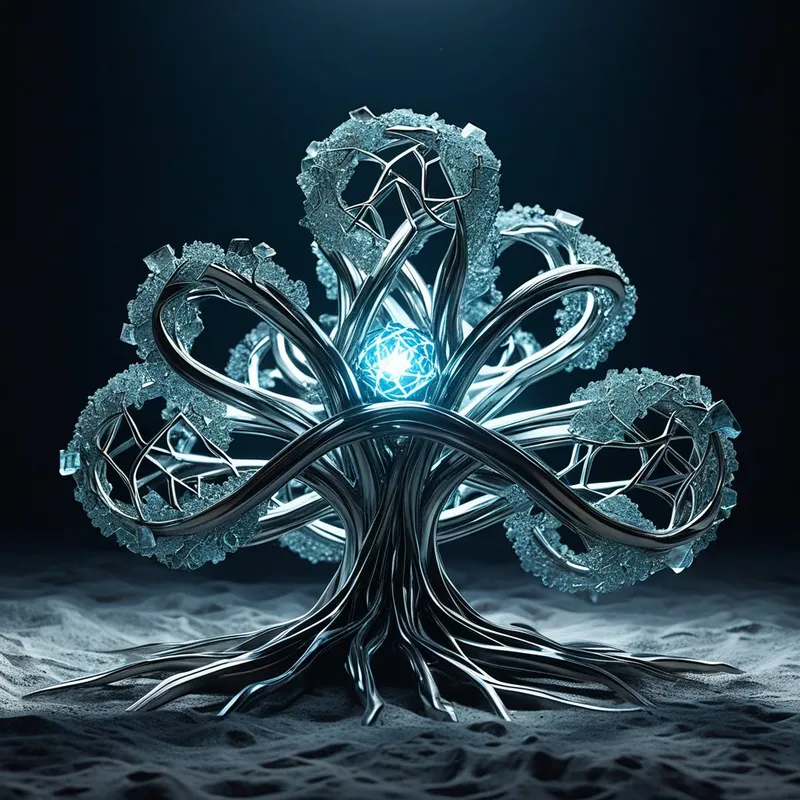
The transmutation here is Reclamation. The base metal is the burden of the past—the shame, the longing, the unresolved anger that sits like cold, heavy ore in the soul’s cellar. The heat is the unbearable, patient focus of turning toward that material. Not to relive it, but to re-perceive it. This is the nigredo, the blackening: facing the rot in the archives. The pressure is the conscious choice to hold two opposing truths at once: “I was hurt” and “I am not only that hurt.” “They failed me” and “I am not defined by that failure.” In this liminal space, the old, crystalline structure of the story dissolves. The albedo, the whitening, is the emergence of the pattern from the chaos—the realization that the memory is not a verdict, but a data point in the long experiment of you. The gold is sovereignty: the past becomes a library you curate, not a prison you inhabit.
The Integration Protocol
Question 1: When you feel the somatic echo of a memory (the weight, the tightness), if it had a purpose—a message it has been trying to deliver for years—what would that message be?
Question 2: Which part of your history feels like a “closed file” to you? If you imagined that file as a room, what one object is left inside, waiting to be retrieved?
Question 3: If your life’s history is a substance, is it currently acting as a foundation, a scaffold, or an anchor? What would need to shift for it to become the other two?
Action 1 (Somatic Cartography): The next time a memory-surface brings a physical sensation, place your hand gently on that part of your body. Breathe into the space beneath your hand for one minute. Do not analyze; simply acknowledge the sensation as a landmark. This grounds the echo in the present.
Action 2 (Unsent Archive): Take a single sheet of paper. Without narrative, write only the potent, fragmented sense-impressions of a charged memory: a color, a smell, a texture, a sound. Then, on the back, using your non-dominant hand, draw the emotional shape of that memory. Let it be abstract. Burn or safely shred the paper. This creatively expresses and releases the coded data.
Action 3 (Ritual of Re-context): Find a small object that belongs to an earlier era of your life. Sit with it. Instead of recalling the story you’ve always told about it, ask it: “What part of me made you necessary?” Then, physically move the object to a new location in your living space. This simple, outward ritual signals to the psyche that the past can be integrated, not enshrined.
Final Validation
This work is arduous because you are not reviewing notes; you are rebuilding the library from a fire that no one else saw. The weight you carry is real—it is the mass of unlived moments, unsung songs, and unmourned endings. To feel its burden is a testament to your depth, not your damage. And within that very weight lies the counterweight: the latent power to choose which histories will fortify you and which you will finally, compassionately, lay to rest. Your memory is not your jailer. In the dreamspace, it has always been, and will always be, your most faithful architect.