
The Living Architecture: Dreams of Memory & Ancestry
The Somatic Echo
It begins not as a thought, but as a texture. A weight in the marrow that is not yours, a cadence in the heartbeat that feels borrowed. It is the taste of iron on the tongue when no blood has been drawn, the scent of ozone and old paper in a room with neither. This is the somatic echo—the body’s library, older than language, humming with the resonance of lives you never consciously knew. Before the mind can formulate an image of a grandparent or a homeland, the nervous system plays the record: a posture of resilience that feels like stone, a flinch of fear that arrives like a ghost wind. You are not remembering a story; you are inhabiting an echo chamber built from the choices, traumas, and triumphs of your lineage. The dream is the architect’s rendering, making visible the invisible load-bearing walls within your psyche.
The Dreamer's Log
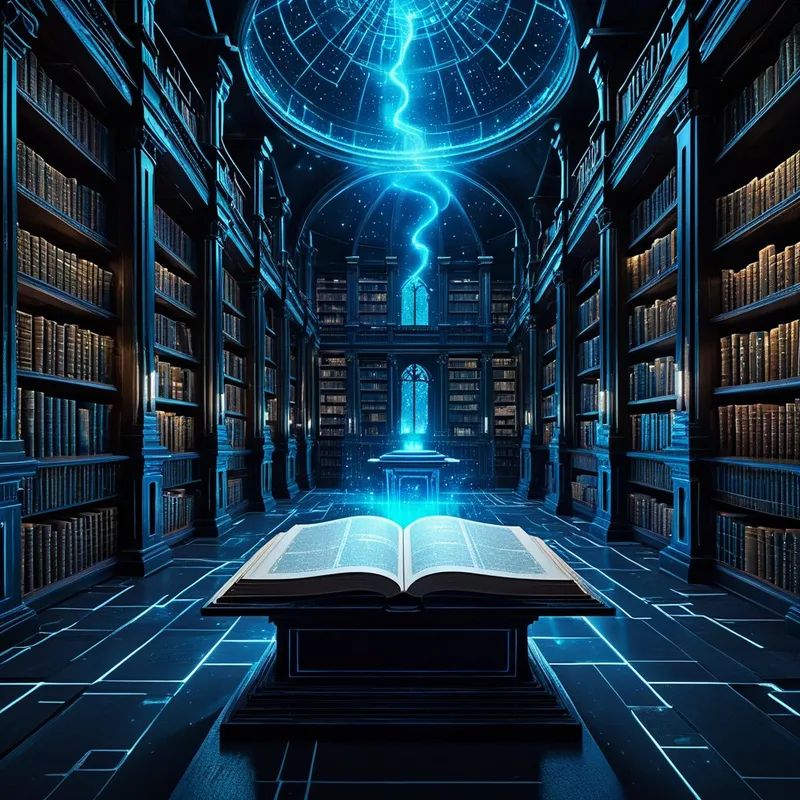
I am in a library of impossible scale, its shelves carved from black basalt. I am not looking for a book; I am following the sound of my own breath, which echoes as if down a long corridor. On a central plinth, a single volume lies open. Its pages are not paper, but pools of dark water, and when I look into them, I see not my reflection, but the silhouette of a tree whose roots are tangled with broken chains. A profound silence presses in, not empty, but full.
Alchemical Interpretation: The dreamer is being shown that their personal consciousness (the breath) is navigating the inherited structure (the library) to confront a core, fluid memory (the book of water) where liberation (the tree) is still bound to ancestral constraint (the chains).
The False Lead
This theme is not mere nostalgia, nor is it a call to genealogical research for its own sake. The dream is not saying, “Find your great-grandfather’s name.” It is whispering, “Feel the way his unspoken grief shaped the family’s capacity for joy.” It is not about blaming the past, but about metabolizing its unprocessed residue. To mistake this for simple historical curiosity is to stand in the archive reading labels, never feeling the weight of the books. The terror or longing in these dreams is not a sign of being haunted, but of being inhabited—and the work is one of conscious cohabitation, not exorcism.
Psychological Architecture
Here, Shadow work is archaeology of the internal family system. You are not one self, but a council. Seated at this table are the orphaned child of a war your grandparents fled, the rigid ruler who enforced survival through control, the silent caregiver who swallowed sorrow to keep peace. Individuation in this realm is the arduous, compassionate process of calling the roll. It is recognizing that your unexplained anxiety in crowds may be the exiled fear of an ancestor who knew persecution. Your relentless drive may be the unlived ambition of a forebear whose dreams were deferred. The process is to meet these fragments not as ghosts, but as frozen parts of your own potential, awaiting the warmth of your acknowledgment to thaw and integrate. You are building a coherent self by granting asylum to these internal refugees.
Mythic Resonance
Consider the story of Ariadne, who gave Theseus the thread to navigate the Labyrinth. The Minotaur at the center is often seen as a personal monster, but what if the Labyrinth itself is the inherited, convoluted architecture of familial memory? The thread is not just courage, but the fragile, continuous line of conscious attention—the breath in the dream library—that allows you to traverse the maze of ancestral patterns without becoming lost in them. You must go in, confront the hybrid beast of mingled trauma and strength, and find your way back out, transforming the maze from a prison into a mapped territory.
Symbolic Nodes
- Ancient Books, Scrolls, or Encrypted Data: The inherited narrative, the "source code" of family myths and secrets.
- Attics, Basements, or Forgotten Rooms: The psyche's storage for repressed or unprocessed familial material.
- Roots, Trees, or Mycelial Networks: The living, connective system of lineage, often showing health or blight.
- Heirlooms, Jewelry, or Broken Pottery: Tangible carriers of emotional legacy, contracts of love or burden.
- Photographs or Portraits That Change: The fluid, interpretive nature of memory and the masks of ancestors.
- Speaking in a Forgotten Language: Accessing pre-verbal, somatic knowledge from the lineage.
Archetypal Resonance
The Magician Archetype is the active force here, specifically in its aspect as the Alchemist. The somatic echo is the raw, prima materia—the leaden weight of inherited fate. The Magician’s task is not to deny this heavy material, but to recognize it as the essential ingredient for transformation. This archetype understands that the library of basalt and the book of dark water are not obstacles, but the very texts and laboratories of the self. Its shadow, the Manipulator, would use this knowledge to blame, justify, or weave illusions of victimhood. The true Magician, however, engages in the ultimate act of sovereignty: taking the deterministic-seeming patterns of ancestry and, through the heat of conscious awareness, transmuting them into the gold of chosen identity. The echo becomes a note in a chord you are now composing.
The Alchemical Process
The alchemy of memory and ancestry is a process of sacred distillation. The intense psychological heat required is the sustained, non-judgmental attention you bring to the somatic echo. It is the pressure of feeling the old grief fully, without rushing to fix it or blame its source. In this vessel of your awareness, the solidified "facts" of the past—the story of "how our family is"—begin to liquefy. Grief, fear, and loyalty are separated from their historical anchors. This is the nigredo, the blackening, where it feels like everything is dissolving. Then, in the albedo, the whitening, you see the pure patterns: not "Grandfather was cruel," but "This family carries unmetabolized rage." Finally, the rubedo, the reddening, is the integration: you take that pattern of rage and consciously choose to channel its energy into protective boundaries or passionate creation, rather than unconscious repetition. The terror of being a puppet to the past is transmuted into the profound sovereignty of becoming the conscious weaver of its threads.

The Integration Protocol
Question 1: When you feel that somatic echo—the weight, the taste, the cadence—what is the first emotion that arises? Is it fear, sadness, pride, or a confusing blend? Follow that emotion as if it were a character. What does it want to tell you?
Question 2: Which "room" in your internal family system feels most forbidden or dangerous to enter? What is stored there, and what unspoken law has kept the door locked?
Question 3: If your ancestry were a substance (e.g., granite, river water, ironwood, ash), what would it be? Now, if you were the alchemist, what would you choose to create from that specific material?
Action 1 (Somatic Mapping): For one week, keep a small notebook. When you notice a strong, seemingly disproportionate emotional or physical reaction, briefly note it. At week's end, don't analyze; instead, feel for a common texture or sensation among them. This is mapping the echo's frequency.
Action 2 (Unsent Letter): Engage in a creative, unstructured writing session. Address a letter to an ancestral presence—known or unknown, a specific person or a vague "you." Do not send it. Write from the body, not the mind. Use the language of the senses: "I taste the salt you swallowed. I feel the knot you tied in your stomach." Burn or bury the letter as a ritual of release and acknowledgment.
Action 3 (Ritual of Re-context): Find a small object that symbolizes an inherited burden (a stone for heaviness, a scrap of chain for binding). Place it outside, and over the course of a moon cycle, periodically place near it something that represents your conscious choice (a flower for beauty, a feather for freedom, a written word for a new narrative). Observe how your relationship to the original object subtly changes as it is re-contextualized.
Final Validation
To dream of memory and ancestry is to feel the profound and often terrifying truth that you were never a blank slate. It is to confront the beautiful and burdensome fact of your inheritance. This work is not for the faint of heart; it requires the courage to listen to whispers in your own blood and the fortitude to hold contradictions. Yet, within that very difficulty lies the path to a sovereignty unlike any other. You are not erasing the past, but finally becoming its conscious author. The echo does not vanish; it becomes part of your voice, richer, deeper, and wholly your own. You are not leaving the labyrinth behind. You are learning to dwell in it as its sovereign, thread in hand, turning its winding passages into the halls of your own, uniquely integrated palace.