
The Alchemy of Memory: When Dreams Reforge the Past
The Somatic Echo
It begins not as a thought, but as a texture. A sudden, weightless drop in the stomach, as if the floor of the present has given way. The air thickens, tasting of ozone and old paper. There is a pressure behind the eyes, a familiar ache in the jaw you didn’t know you were clenching. This is the somatic echo—the body remembering what the conscious mind has filed away. It is the ghost-limb sensation of an emotional truth, a neural pathway firing long after the event has passed. You feel haunted not by a specter, but by the architecture of a feeling, the blueprint of a wound or a joy that shaped the foundation of who you are. Before the images come, the body is already a resonant chamber, humming with the frequency of a time that is not now, yet is impossibly, undeniably here.
The Dreamer's Log
I am standing in the server room of my mind. Rows of monolithic, obsidian data-stacks hum with a cold light. I approach one labeled with a year. The access panel is my childhood front door. I enter, but the house is empty, a perfect shell. Then, the walls begin to weep liquid gold, and from the ceiling, a single, pristine memory-crystal grows—a moment of pure, uncomplicated peace I had sworn was lost. I catch it as it falls, and it dissolves into light in my hands.
This is not nostalgia, but reclamation. The dream reveals the psyche actively decrypting and integrating a lost fragment of its own wholeness, moving from archival storage to embodied truth.

The False Lead
A dream of memory is not a simple replay, a DVD skipped back to a favorite or traumatic scene. To interpret it as a literal message from the past is the first and most seductive error. The psyche is not a historian; it is an alchemist. The memory presented is the prima materia—the raw, chaotic substance—not the lesson itself. The terror of a forgotten humiliation or the warmth of a lost comfort is not the dream’s purpose, but its fuel. The false lead is to get lost in the content, to re-litigate the old event or drown in sentiment. The true work lies in the context the dream provides: why this memory, in this symbolic form, now? The dream uses the past as a language to speak about a current process of integration or fragmentation.
Psychological Architecture
This is the shadow work of the curator and the archivist. Within us exists an entire internal family of memory-keepers: the Loyal Soldier who hoards grievances as armor, the Sentimentalist who preserves joy in amber, fearing its evaporation, and the Censor, who blackens out whole wings of the personal library. To dream of memories is to witness these parts in conflict or collaboration. The process of individuation here is the move from being a tenant of your history to becoming its sovereign architect. It is the agonizing, liberating realization that the memory is not the truth, but one version of it, and you now hold the pen to annotate the margin. You are not healing the child in the memory; you are healing the relationship between your present awareness and that inner child. The foundation of the self is not the events, but the meaning you are now, courageously, choosing to forge from them.
Mythic Resonance
We see this in the story of Ariadne and the Labyrinth. The labyrinth is not just a prison for the Minotaur; it is the twisting, recursive architecture of a traumatic past (the shame of Pasiphaë’s union, the violence of the Minotaur’s birth). Theseus, the heroic ego, wishes only to slay the beast and escape. But Ariadne provides the spool of thread—the thread of consciousness, of connected memory. The victory is not in the killing, but in the retracing, the ability to follow the thread back through the convoluted pathways, integrating the journey, and finding a way out that isn’t mere flight, but understanding. The memory-dream is that thread, glowing in the dark of the subconscious, waiting for us to pick it up and trace its path back to a center we are now strong enough to face.
Symbolic Nodes
- Old Houses & Rooms: The architecture of the self; unexplored rooms are unlived potentials or buried memories.
- Photographs & Films that Change: The malleability of personal narrative; memories being actively edited or reinterpreted.
- Forgotten Objects Rediscovered: Lost aspects of the self or latent talents seeking reintegration.
- Data Storage (Servers, Books, Libraries): The cognitive structure of memory; accessing, corrupting, or downloading files of the self.
- Meeting Younger Selves: Direct confrontation with past stages of development; an opportunity for healing or warning.
- Repetitive Loops of Past Events: The psyche's attempt to "solve" an unresolved emotional equation; a stuck process seeking new data.
Archetypal Resonance
The most active force in the memory-dream is The Magician Archetype. The Magician’s domain is the transformation of reality through the power of consciousness and unseen laws. In the somatic echo, we feel the raw, unshaped energy of the past—the Magician’s base elements. The dream itself is the alchemical laboratory. The Magician does not merely recall; it transmutes. It takes the leaden weight of a fixed, painful narrative and seeks to turn it into the gold of wisdom, or takes the fleeting vapor of a lost joy and crystallizes it into a permanent touchstone of the soul. Its shadow—the Manipulator or Illusionist—is the risk here: the part that falsifies memories to comfort or condemn, that gets lost in glamours of a perfect past or nightmares of an unchangeable one. The alchemical potential lies in wielding the Magician’s true power: to change the meaning, and thus change the substance, of the past’s impact on the present.
The Alchemical Process
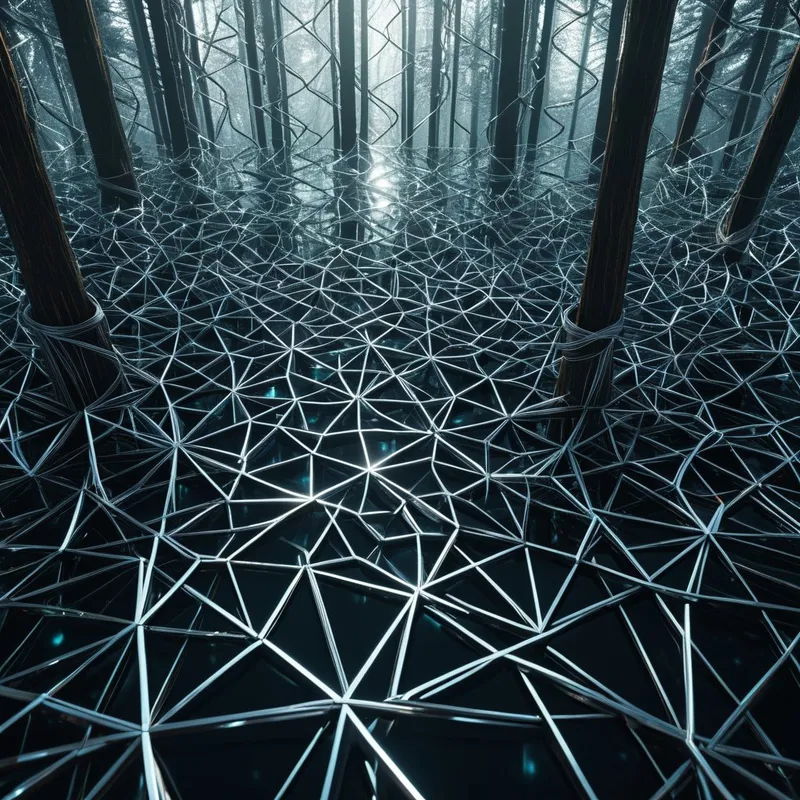
The transmutation of memory is an act of psychic recrystallization. The intense heat and pressure required are the dual forces of unflinching witness and compassionate re-contextualization. First, the memory must be summoned in its raw, often painful, form—this is the solve, the dissolving of the ego’s protective narrative. You must feel the old shame, the old longing, the old rage, not as a story, but as a somatic fact. This is the heat. Then, under the pressure of present-day awareness, you introduce the new element: the question, "What does this part of me need now that it didn’t get then?" or "What strength was forged in this fire that I now possess?" This is the coagula, the re-forming. The memory does not disappear; its molecular structure changes. It shifts from a passive, haunting recording to an active, integrated artifact of your becoming. The grief becomes dignity. The terror becomes resilience. The loss becomes a map to what you truly value.
The Integration Protocol
Question 1: When the memory-feeling arises in the dream, where do I feel it most vividly in my body now, as I recall it? Is it a knot, a hollow, a vibration, a temperature?
Question 2: If this memory were a character in my internal family, what is its role? Is it a protector, a wounded child, a prophet, a saboteur? What is it trying to tell the rest of the system?
Question 3: What single word or quality (e.g., "safety," "agency," "belonging") was absent in the original memory that, if I could infuse it into the scene now, would fundamentally alter its emotional color?
Action 1 (Somatic Anchoring): When a potent memory-dream lingers, sit quietly. Place a hand on the body area where the echo resonates. Breathe into that space. Do not analyze the story; simply acknowledge the sensation. Whisper, "This is a place where history is stored. I am here now." This grounds the process in the present moment.
Action 2 (Memory Re-scripting): Take the central image from your dream. Write the "scene" in the third person. Then, write a new ending or intervention. Introduce a symbol of what was needed—a shield, a key, a blanket, a guide. Describe the memory-character receiving it. This is not denial, but active authorship.
Action 3 (The Reliquary Ritual): Find a small object—a stone, a piece of metal, a seed. Hold it and pour your intention into it: let it represent the new quality (from Question 3) you wish to integrate. Place it in a specific location in your home—a shelf, a windowsill. This creates a physical, external anchor for the internal transmutation.
Final Validation
The work with memory-dreams is among the most intimate and demanding. It requires you to be both the archaeologist and the artifact, the wound and the healer. To feel the pull of the past is not a weakness, but a sign of a psyche deep in its own renovation, sifting through the rubble and the treasures of its foundation. It is hard because it matters. You are not being dragged backward. You are being summoned to the forge. The memories that glow in the dark of your dreams are not chains; they are the unrefined ore of your sovereignty. Hold them in the new light of who you have become, and watch as they finally, slowly, change their shape.