The Alchemy of What Remains: Dreams of Legacy and Mortality
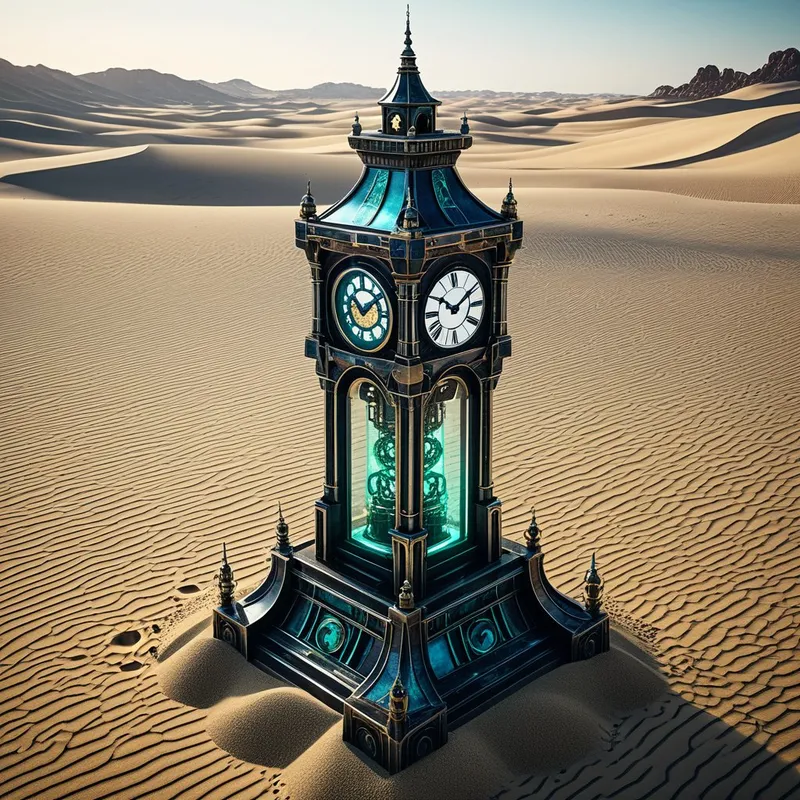
It begins not as a thought, but as a weight. A hollowing in the solar plexus, a sudden chill in the marrow that has nothing to do with the temperature of the room. It is the somatic echo of a truth the body knows long before the mind can articulate it: you are temporary. This is not the sharp, immediate fear of a threat, but the slow, tectonic pressure of a timeline. It feels like standing at the edge of a vast, silent library you will never have time to read, or feeling the hourglass sand shift deep within your own foundations. The breath catches. The world seems to hold its own breath. This is the visceral ground from which dreams of legacy and mortality grow—a profound confrontation with the architecture of your being and the question of what, if anything, will remain when the central tenant is gone.
The Dreamer's Log
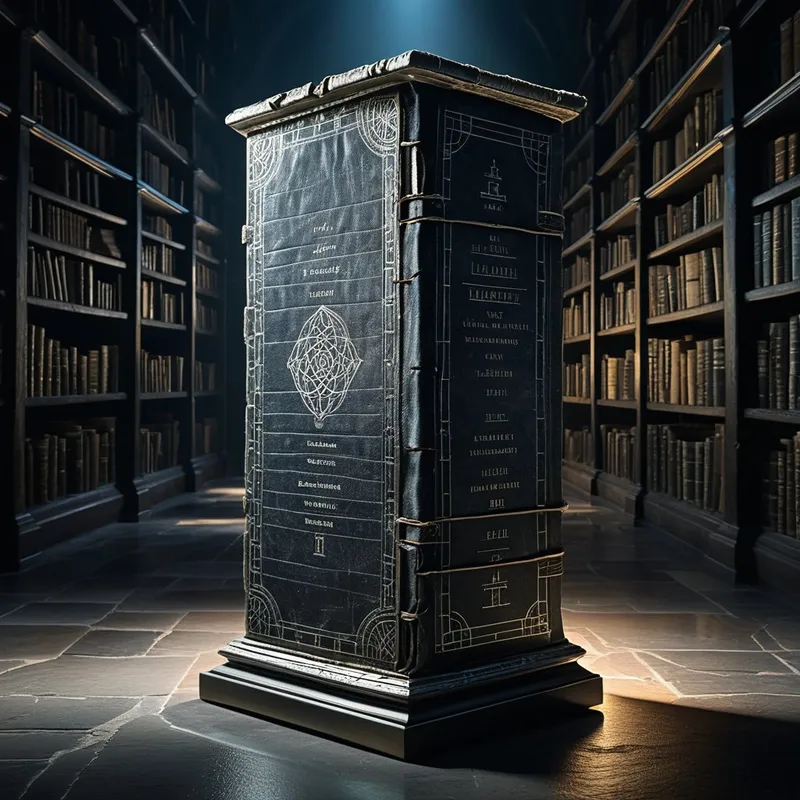
I am in an endless archive, a library that stretches into darkness. The shelves are impossibly high, filled with books bound in materials I don’t recognize—some like skin, some like stone. I am searching for the volume with my name, but the ladders are broken, and the titles are in fading ink. A deep, resonant hum fills the air, the sound of time itself settling. I know, with a certainty that bypasses logic, that if I don’t find my book before the hum stops, I will cease to have ever existed at all.
This dream is not a morbid prophecy but an alchemical summons: the psyche is demanding an audit of the self, challenging the dreamer to author their own volume in the library of their soul before they are defined only by the empty space on the shelf.
The False Lead
This theme is not about a simple fear of death or a superstitious premonition. It is not the psyche’s way of predicting an end date. To mistake it for such is to remain in the shallow waters of superstition, missing the profound depth of the invitation. Nor is it merely about worldly achievement or the narcissistic desire for fame. The dream is not asking, “Will you be remembered?” but something far more radical: “What is the irreducible essence of your being that seeks to express itself, and what will you do with the terrifying, beautiful fact of your finitude?” It is a call to structural integrity, not public relations.
Psychological Architecture
When this theme surfaces, the psyche has initiated its most profound shadow work: the integration of the Self as Process over the Self as Permanent Object. Our ego, that necessary manager of daily life, constructs itself as a fixed entity—a statue meant to endure. Dreams of legacy and mortality begin to dissolve the mortar of that statue. This is the core of individuation here: to willingly participate in your own dissolution and reconstitution. You are asked to meet the parts of you that cling to legacy as a shield against oblivion—the Inner Martyr who sacrifices the present for a future memory, the Shadow Ruler who tries to control the narrative of a life not yet fully lived. The work is to sit in the liminal space between the person you have built and the essence that is doing the building, and to hold both as true. It is to become, simultaneously, the architect, the blueprint, and the eventual ruin of your own cathedral.
Mythic Resonance
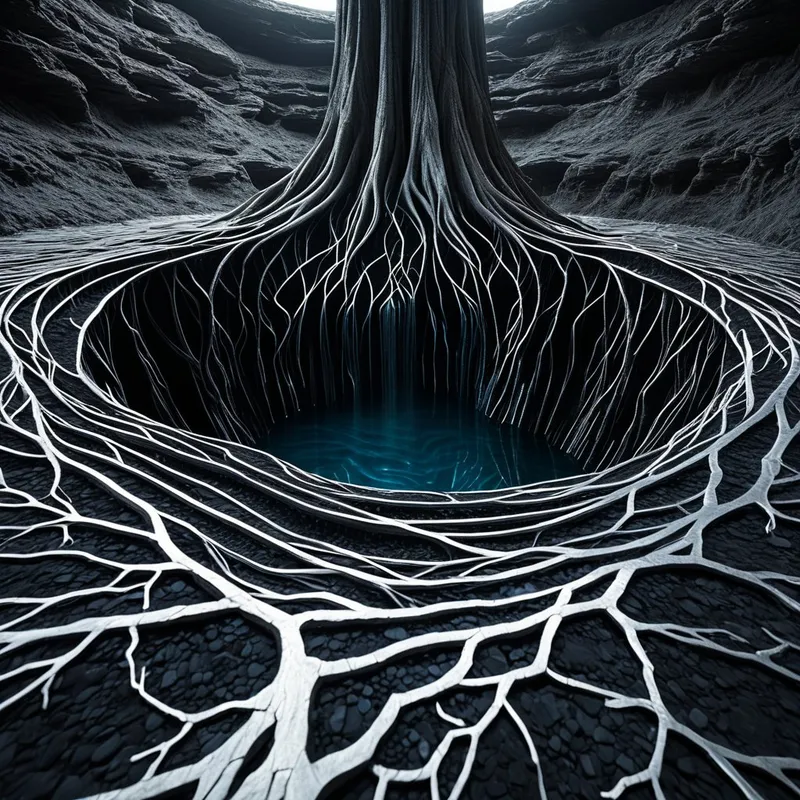
We see this eternal process in the myth of the Phoenix, but often misunderstand its lesson. It is not simply about rebirth after destruction. The alchemy is in the necessity of the immolation. The Phoenix does not cling to its current form, fearing the fire; it generates the sacred heat from within, knowing its current incarnation is both beautiful and insufficient, that its most profound legacy is the cycle of transformation itself. Its ashes are not an end, but the fertile ground for a new mode of being. Similarly, the Norse myth of Yggdrasil, the World Tree, speaks to this theme. The tree is constantly under threat—nibbled by stags, decaying at its root—yet it persists, not as a static monument, but as a living, suffering, sustaining process. Its legacy is its ongoing act of holding the worlds together, not its permanence.
Symbolic Nodes
- Ancient Books, Scrolls, or Sealed Tomes: The unintegrated or unwritten chapters of the self.
- Empty Rooms, Halls, or Vast Archives: The perceived emptiness of one’s impact or the overwhelming scope of time.
- Heirlooms, Rings, or Broken Keepsakes: The transmission (or fracture) of lineage, both familial and psychic.
- Watching One’s Own Funeral or Memorial: A dissociation to witness the self as a completed story, prompting a re-evaluation of the current narrative.
- Building or Repairing a Foundation: The active, often arduous work of constructing a life of meaning from the ground up.
- A Fading Light or a Dying Star: The confrontation with entropy and the finite nature of one’s personal energy.
Archetypal Resonance
The core energy here resonates most powerfully with The Creator Archetype. This is not the shadow Creator, obsessed with a singular, permanent masterpiece for personal glory. This is the Creator in its most profound aspect: the impulse to bring form out of chaos, meaning out of the void, knowing full well that all forms are temporary. The somatic echo—the hollow urgency—is the Creator’s divine discontent, the restless energy that demands expression before the medium (a lifetime) is spent. Its alchemical potential lies in its ability to transmute the raw grief of mortality into the fierce, loving act of creation—not to defy death, but to collaborate with it, making of a limited life a specific, irreplaceable kind of beauty. The legacy it seeks is not in the monument, but in the quality of the gesture itself.
The Alchemical Process
The transmutation here is from terror of the end to sovereignty in the process. The required heat is the unbearable, sustained confrontation with your own existential limits. The pressure is the weight of choice within those limits. The prima materia—the base lead—is the ego’s identification with a permanent, lasting self. The fire is the conscious acceptance of your own temporariness. In this crucible, a profound separation occurs: the part of you that will end (the persona, the biography) from the part of you that is the act of creating (the conscious awareness, the essential Self). The gold that emerges is not immortality, but sovereignty: the liberated capacity to choose, love, build, and connect because time is limited, not in spite of it. You stop building a fortress to withstand eternity and start cultivating a garden that is exquisite precisely because it is seasonal.
The Integration Protocol
Question 1: If you knew your name would be utterly forgotten in three generations, what current pursuit would lose all meaning, and what would suddenly become unbearably precious?
Question 2: Which chapter of your life feels like it was written by someone else—by expectations, trauma, or default—and what is the one true sentence you would write to begin rewriting it?
Question 3: Imagine your consciousness as a unique kind of light. Not the source of the light, but the specific quality of its lens or prism. How would you describe the particular color, pattern, or warmth it casts, simply by being what it is?
Action 1 (The Temporal Anchor): For one week, perform a daily five-minute ritual. Sit quietly and feel the weight of your body in the chair, the breath moving through you. Acknowledge, without drama, "This body, this breath, is temporary." Then, immediately choose one small, tangible action to take that feels inherently meaningful—making a cup of tea with full attention, writing a genuine line in a journal, really listening to someone. Bridge the void with a deliberate act of presence.
Action 2 (The Unbound Chronicle): Take a large piece of paper or a blank document. Set a timer for 20 minutes. Write, draw, or map your life not as a linear timeline of achievements, but as an ecosystem. What are the recurring weather patterns (moods)? What are the native species (core traits, loves)? What are the hidden springs (sources of renewal)? What has decomposed to fertilize new growth? This is not your resume; this is the geology of your soul.
Action 3 (The Living Artifact): Create or designate a physical object as a "Living Heirloom." It could be a stone you inscribe, a pot you plant with a perennial herb, a blank book you begin. Its rule is this: it must be something you interact with and alter now—watering the plant, adding to the book—with no concern for who might receive it later. You are not creating a relic for the future; you are practicing legacy as a present-tense verb, embedding your current care into a form.
Final Validation
To wrestle with this theme is to touch the raw nerve of human consciousness. It is exhausting, terrifying, and can feel isolating. This is not a sign of failure, but of depth. You are not morbid; you are alive enough to feel the contours of your own aliveness against the backdrop of its limit. The very ache you feel is evidence of your capacity for meaning. The dream does not come to annihilate you, but to initiate you into a more honest, more vibrant, and ultimately more sovereign relationship with the breathtakingly brief and brilliant flash that is your life. The work is not to outrun the ending, but to become so utterly present within the story that its final punctuation feels, not like a theft, but like a necessary part of the sentence’s beauty.