
Intellectual Property: The Psyche’s Sovereign Claim
The Somatic Echo
Before the mind can articulate the concept of theft, the body knows the violation. It is a cold, hollow sensation behind the sternum, a cavity where a secret warmth once hummed. It’s the sudden, sickening lurch in the gut when you witness your unspoken thought parroted by another, or the tight, metallic taste of fear when you must defend a boundary that feels both utterly essential and impossibly fragile. This is the somatic echo of intellectual property in the dreamscape: not the anger of a physical theft, but the profound grief of an existential leakage. It is the feeling of your inner sanctum—the quiet workshop where your most authentic impulses are forged—being breached, its blueprints photocopied, its prototypes reverse-engineered. The body registers this not as loss, but as a fundamental questioning of origin. Where do I end, and where does the world begin? The tension lives in the jaw, clenched to hold in a shout; in the shoulders, hunched to protect the fragile spine of a nascent idea. It is the physiology of a creator who has forgotten they are also the creation, guarding a treasure they fear they do not fully own.
The Dreamer’s Log
I am in a stark, white archive. My life’s work—diaries, sketches, half-formed melodies—is filed in transparent cases. A faceless administrator approaches, scans a barcode on a case containing a poem I wrote at sixteen, and declares, “This is now public domain. The emotional patent expired.” I watch as the ink of the words bleeds out, becoming a generic grey smudge on the page.
Alchemical Interpretation: The dream stages the terror of the inner child’s creations being declared communal property, forcing a confrontation between the vulnerable act of expression and the psyche’s need for protective structure.
The False Lead
This theme is not about literal plagiarism or professional rivalry, though it may wear those costumes. To interpret it as mere anxiety about credit or success is to mistake the symphony for a single note. The dream is not reporting a crime in the external world; it is sounding an alarm about an internal colonization. It is not about your idea being stolen from you, but about a part of you being stolen from yourself—the disowned inspiration, the suppressed voice, the creative impulse you have licensed out to the expectations of others or buried under the bureaucracy of your own doubt. The grief here is for the self-betrayal that precedes any external theft.
Psychological Architecture
Beneath the dream of the stolen patent or the plagiarized manuscript lies the deep Shadow work of Individuation. This is the process of claiming psychic sovereignty—drawing a boundary around the contents of your own consciousness and saying, “This is mine to shape, to share, or to keep.” The shadow here is often a legion of internalized voices: the critic who says your ideas are trivial, the martyr who says they must be sacrificed for another’s need, the imposter who insists they were never truly yours to begin with. To dream of intellectual property is to witness these internal factions in a civil war over the soul’s creative capital.
The architecture of this conflict is one of internal family systems at war. The Orphan part feels its raw, authentic experiences are exploited. The Rebel wants to smash all copyright and declare everything free, leading to a dissolution of self. The Shadow Ruler seeks to lock everything down in a vault of perfection, never to be seen. The work is not to defeat one and crown another, but to convene an inner council. Individuation occurs when the Creator, the true sovereign of this inner realm, steps forward not to hoard or to spill, but to consciously curate. It learns to distinguish between the raw ore of personal experience (which must be mined and owned) and the shared language of archetypes (the communal human firmware). The terror is in the mixing of the two; the liberation is in learning the difference.
Mythic Resonance
We see this eternal drama in the myth of Prometheus, who stole fire from the gods to give to humanity. He is the ultimate figure of intellectual property conflict: is the divine spark (inspiration, technology, consciousness) the sole property of the Olympian order, or does it belong to the one who dares to grasp and disseminate it? His eternal punishment is the cost of violating a celestial copyright, a warning of the agony that can accompany the act of bringing a protected idea into the public realm of flesh and consequence. Similarly, the tale of Midas is not merely about greed, but about a fatal error in intellectual property: he wished for a proprietary process (the golden touch) without understanding the underlying open-source code of life (the need to eat, to touch, to love). His wish, granted without a license to the full system, turned his world into a patented, sterile prison.
Symbolic Nodes
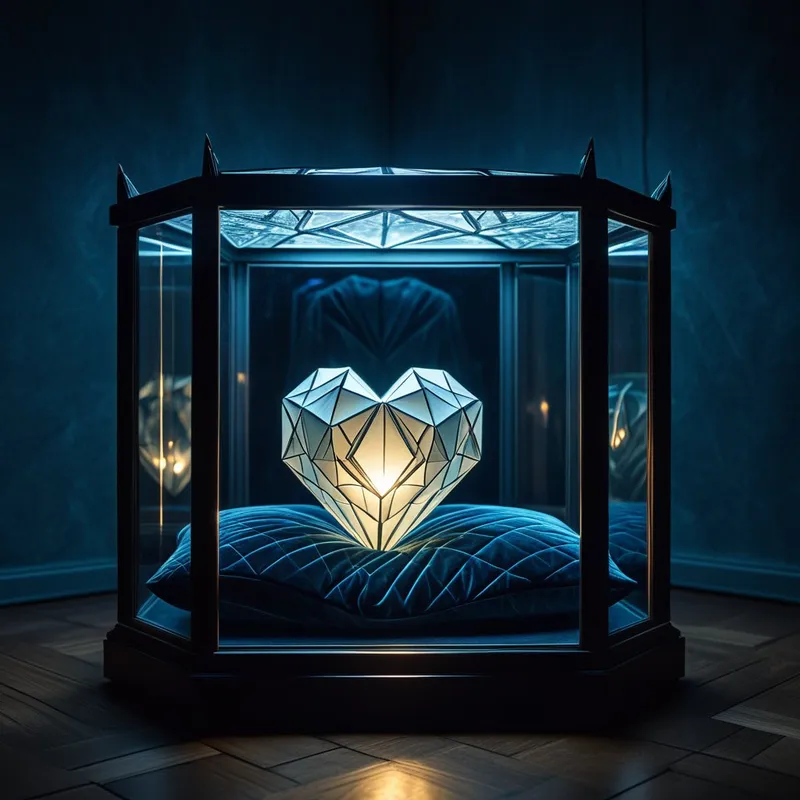
- Locked Rooms, Safes, Glass Cases: The psyche’s vaults for protected content.
- Forged Signatures, Faded Ink: Questions of authenticity and eroding ownership.
- Blueprints, Schematics, Source Code: The underlying structures of identity.
- Blank Patents, Expired Copyrights: The fear of ideas becoming void or communal.
- Mirrors that Reflect Someone Else: The horror of losing your unique perspective.
- Repossession Notices, Eviction Papers: The ego being served papers by deeper, disowned parts of the Self.
Archetypal Resonance
The core energy of this theme resonates most powerfully with The Creator Archetype, specifically its shadow aspect. The Shadow Creator is the architect who becomes a paranoid patent clerk, the artist who confuses ownership with identity. Its somatic echo is that clenched, hollow protectiveness; its core fear is that without absolute control over its creations, its very self will dissolve. This archetype in shadow believes it must possess its inspirations to be real. The alchemical potential lies in the Creator’s maturation: moving from the child’s cry of “That’s mine!” to the sovereign’s conscious act of generation and release. The healed Creator understands that true ownership is not about locking the idea away, but about having the authority to choose its fate—to develop it, to share it with specific licenses of trust, or to let it return to the psyche’s raw material. The power shifts from defensive hoarding to generative sovereignty.
The Alchemical Process
The transmutation here is from Paranoid Hoarder to Generative Sovereign. The prima materia is the sticky, toxic grief of perceived theft and the brittle fear of exposure. The alchemical fire is applied through a ruthless, compassionate inquiry: What part of my own experience have I disowned, making it feel “stolen” when I see it elsewhere? The pressure is the sustained tension of holding two truths: the absolute uniqueness of your inner world, and the universal, archetypal nature of its forms. The heat is the shame of admitting your own plagiarism—from yourself. You have copied the desires of your parents, the beliefs of your tribe, the aesthetics of your culture, and filed them internally under “Original Thought.”
The transmutation occurs when you consciously dissolve that internal copyright office. You stop prosecuting external “thieves” and instead begin the painstaking audit of your own psychic holdings. You reclaim the projections, you give proper attribution to the inner voices you’ve borrowed from, and you finally patent—not the idea—but the process: your unique, irreplicable way of perceiving, combining, and expressing the raw data of existence. The gold produced is not a single protected idea, but an unshakeable sense of creative authority. You become the patent office, not just a petitioner before it.
The Integration Protocol
Question 1: Where in my waking life do I feel a subtle, hollow pang when someone expresses an idea, style, or passion that resonates deeply with me? Is it admiration, or is it the echo of something I have shelved within myself?
Question 2: What internal “idea” or potential self have I placed under a glass case of perfectionism, fear, or “not yet,” treating it as intellectual property to be protected rather than as life to be lived?
Question 3: If my sense of self were a library, which sections are open to the public, which are restricted, and which have I locked away and lost the key to? Who decided these classifications?
Action 1 (Somatic Reclamation): For one week, practice placing a hand over your heart or solar plexus whenever you have a genuine, original impulse—a thought, a feeling, a desire to create or speak. Do not act on it immediately. Just feel its presence in the body and silently acknowledge, “This originates here. This is my current jurisdiction.”
Action 2 (Creative Audit - Unstructured Writing): Set a timer for 20 minutes. Write without stopping, beginning with the sentence: “The ideas I have left uncopyrighted within myself are…” Let it flow. Do not edit or judge. Burn or shred the pages afterward. The act is not to preserve the content, but to experience the flow of un-patented self.
Action 3 (Ritual of Release & Claim): Find two small objects: one a “seed” (a pebble, a seed pod), the other a “vessel” (a small bowl, a locket). In a quiet moment, hold the seed and name one inspiration, influence, or borrowed belief you are consciously releasing from your “original work” file. Place it in the vessel. Then, hold the vessel and name one unique pattern, perspective, or synthesis that is authentically yours—your proprietary process. Let the vessel now represent not what you contain, but your capacity to shape and hold.
Final Validation
It is a profound and lonely terror to feel the core of your originality—the very signature of your soul—being blurred, copied, or declared not yours. That grief is real, and it is a signpost pointing not outward to a thief, but inward to a forgotten frontier of your own being. The dream of intellectual property is the psyche’s urgent memo: sovereignty is not given, it is claimed. You are not plagiarizing the world; you are in the lifelong, glorious process of writing your own source code. The integration is the moment you realize you are not just the idea on the page, but the hand that holds the pen, the mind that forms the thought, and the vast, silent library from which all inspiration is ultimately borrowed and uniquely arranged. The patent, once sought from the world, is discovered to have been your birthright all along.