
The Alchemy of Illusion & Reality: Dissolving the False Foundation
The Somatic Echo
It begins not with a thought, but with a tremor in the gut. A low-grade hum of wrongness, a subtle vertigo that whispers the ground beneath your feet is not as solid as it appears. This is the somatic echo of Illusion & Reality—a visceral dissonance. You might feel a tightness in the chest, a phantom pressure, as if the story you’ve been telling yourself is a suit of armor two sizes too small. The breath becomes shallow, held captive by an unseen narrative. It’s the body’s ancient intelligence sounding the alarm long before the conscious mind can articulate the problem: the map you are using no longer corresponds to the territory of your life. The world feels both hyper-real and utterly fake, a stage set where you’ve forgotten your lines, yet everyone else seems to be performing from a script you cannot see.
The Dreamer's Log
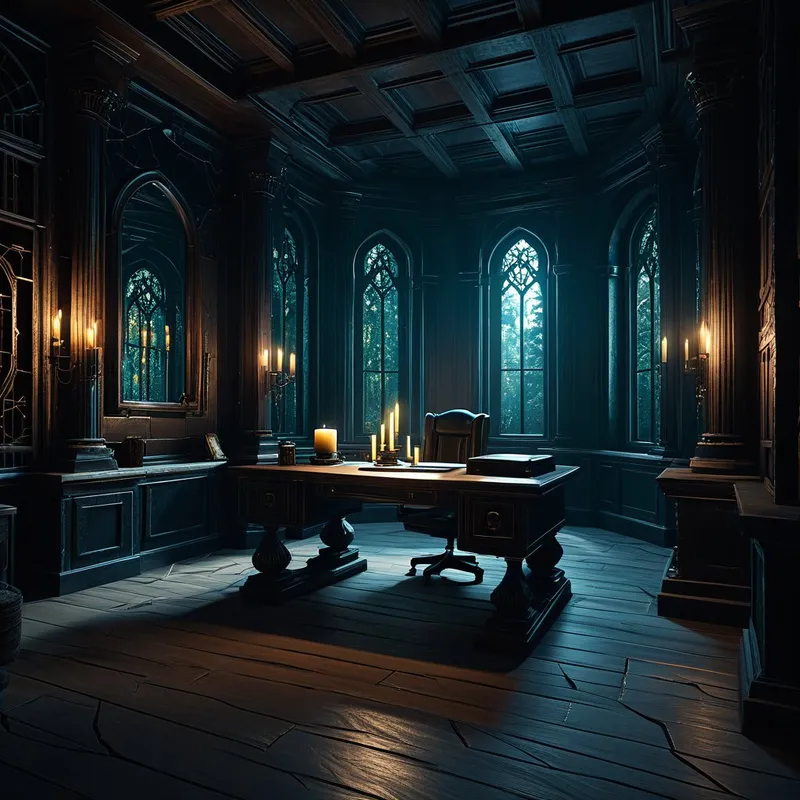
The dreamer stands in a cavernous, forgotten server room, the air buzzing with the static of dormant machines. On a lone wooden desk, amidst the technological decay, sits a single, flickering candle and a cracked obsidian mirror. Leaning in, the dreamer does not see their own reflection, but a view of their childhood backyard in perfect, vibrant summer daylight—a scene of profound peace utterly alien to the cold room they physically inhabit.
This is the psyche’s direct intervention: presenting the authentic, buried reality (the sunlit yard) within the framework of a constructed, false self (the dead server room). The alchemical task is not to fix the server room, but to step through the mirror.
The False Lead
This theme is not about mere deception by others or a run of “bad luck.” It is not the superficial disappointment of a promise broken. To mistake it for such is to remain in the illusion. The core tension of Illusion & Reality is an internal structural one. It is the confrontation between the persona’s carefully curated fortress—built from societal expectations, outdated traumas, and borrowed beliefs—and the soul’s whispering truth. The grief here is not for a lost object, but for a lost self; the terror is not of an external monster, but of the existential void that might appear when the familiar, yet false, walls come down.
Psychological Architecture
Here, Shadow work is not about battling dark figures in a basement, but about auditing the very blueprints of your identity. Which parts of you—which Internal Family members—are the loyal guards of this illusory reality? The Orphan part that insists the world is unsafe, building higher walls? The People-Pleaser, a sub-system of the Caregiver, that paints a smile over authentic need? The process of individuation in this realm is a deliberate, often painful, deconstruction. You must become both the wrecking ball and the architect. You feel the profound loneliness of the exile who first questions the tribe’s sacred story. This is the death of a worldview, a psychological apoptosis where cells of belief that no longer serve the whole organism are programmed to dissolve. The new reality is not built from new lies, but from the courageous acknowledgment of what has always, silently, been true.
Mythic Resonance
We see this eternal process in the story of the Buddha under the Bodhi tree. Mara, the personification of illusion, does not attack with armies of demons, but with projections of desire, fear, and societal duty—the very constructs of the Buddha’s former princely reality. The Buddha’s victory is not a violent conquest, but an unwavering touch of the earth, a grounding into a reality more fundamental than Mara’s glittering, persuasive illusions. Similarly, in the tale of Theseus in the Labyrinth, the maze is the constructed illusion of inescapable complexity and terror. The thread from Ariadne is not a tool for battle, but a somatic tether to a reality outside the system of confusion—the simple, linear truth that guides him through the non-linear deception.
Symbolic Nodes
- Mirrors (cracked, distorted, or showing alternate scenes): The psyche’s interface for reality-checking.
- Mazes & Labyrinths: The convoluted architecture of a false belief system.
- Stage Sets, Facades, and Movie Screens: The feeling of life as a performance.
- Melted or Shifting Architecture: The destabilization of internal structures.
- Data Streams, Code, or Glitches: The underlying program of the personality revealing its bugs.
- Forged Documents or False Gold: The intuitive recognition of inauthenticity.
Archetypal Resonance
The energy at the core of navigating Illusion & Reality is that of The Magician Archetype. Not its shadow counterpart, the Manipulator or Illusionist, who uses smoke and mirrors to deceive others, but the true Magician, the Alchemist who works to transmute base perception into golden awareness. This archetype resonates perfectly with the theme’s somatic echo—that uncanny sense that reality is malleable—and channels it into conscious purpose. The Magician understands that the “real world” is constructed by perception and belief. Their power lies in holding the tension between the illusion (the seen) and the potential reality (the unseen), applying the “heat” of focused attention and the “pressure” of deep inquiry to facilitate a fundamental transformation. They are the archetypal force that dares to rewrite the program, not from ego, but from a dialogue with the deeper source.
The Alchemical Process
The alchemical stage here is Solutio—dissolution. This is not a gentle melting, but the terrifying yet necessary submersion of the solid, crystallized ego into the aqua permanens, the corrosive waters of the unconscious truth. The heat is the friction of cognitive dissonance, the unbearable pressure of holding two contradictory realities: the one you’ve lived and the one you sense is truer. The grief is for the self that must die; the terror is of the formless void that precedes rebirth. Transmutation occurs when you stop fighting the dissolution and instead consent to it. You allow the false narrative to be washed away. In that surrender, a new sovereignty is born—not a sovereignty of control over externals, but of unshakeable authority over your internal reality. You are no longer a prisoner of the illusion, but the conscious creator of your perspective.

The Integration Protocol
Question 1: Where in my life do I feel a persistent, low-grade sense of "performing" or "following a script" that is not my own? What ancient fear holds that script in place?
Question 2: If the reality I have been navigating is, in part, an illusion, what one, solid, undeniable truth can I touch right now—in my body, in this room—to serve as my "Ariadne's thread"?
Question 3: What small, authentic desire have I been dismissing or painting over because it does not fit the portrait of the self I present to the world?
Action 1 (Somatic Grounding): For three minutes, stand barefoot. Feel the pressure of the floor. With each exhale, imagine the story of "who you are supposed to be" draining down through your feet into the earth. With each inhale, draw up only the simple sensation of support. Do not rebuild the story; just inhabit the neutral ground.
Action 2 (Mirror Writing): Take two pages. On the first, write a concise statement of a core belief you hold about your life (e.g., "I must be strong for everyone"). On the second, without judgment, write the direct opposite ("It is safe for me to be vulnerable"). Sit with the tension between them. Then, on a third page, let a third, more nuanced truth emerge from the space between the two opposites.
Action 3 (Ritual of Release): Find a small object that symbolically represents an illusion you are ready to release—a old business card from a false persona, a trinket from a story you've outgrown. Go to a natural body of water (or use a bowl). Thank the object for its past service, then submerge it or set it afloat. Do not watch it drift away. Turn and walk back to your life without looking back.
Final Validation
To walk the line between illusion and reality is one of the most disorienting and courageous journeys the psyche can undertake. It is lonely, frightening work to question the very fabric of your perceived world. This discomfort is not a sign you are broken, but a sign you are alive, and that your soul is pressing against the confines of an outgrown shell. The integration of this theme does not grant you a life free of mystery, but a self that is no longer a mystery to itself. You exchange the brittle certainty of the illusion for the fluid, creative sovereignty of a reality you can authentically inhabit—a reality where you are, at last, both the witness and the wonder.