The Somatic Echo of Hunger
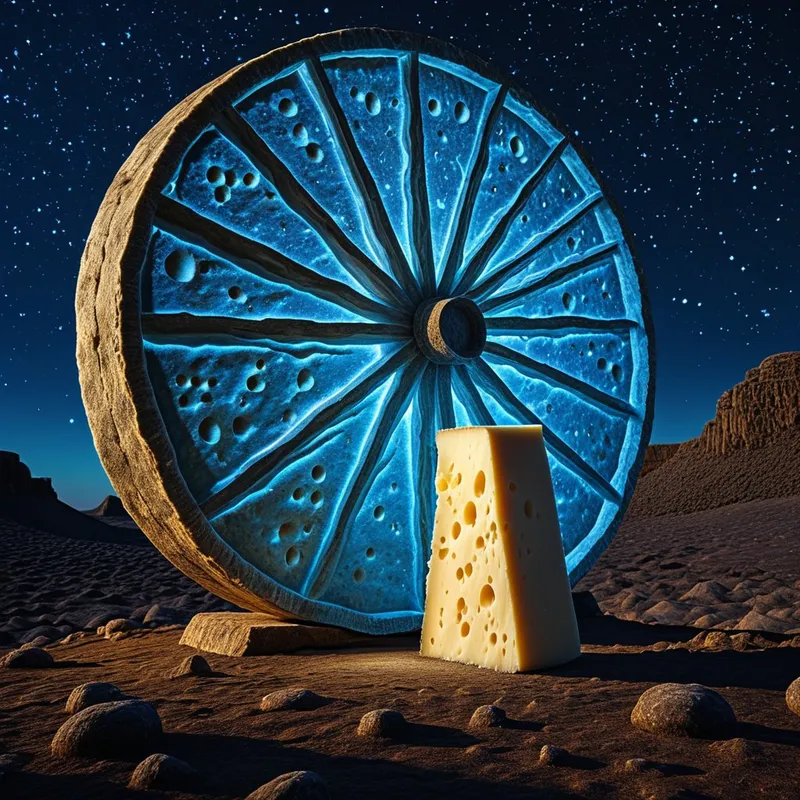
It begins not as a thought, but as a hollow. A low, resonant frequency in the gut, a gnawing vacuum that pulls inward. This is the body’s first, most honest language: a sensation of absence so profound it feels architectural, as if a supporting column in your internal world has been quietly removed. It’s a gravity well of need, drawing everything toward its center—attention, energy, peace. Before the mind names it loneliness, creative starvation, or spiritual thirst, the soma knows it as pure, unmediated hunger. It is the echo of a space waiting to be filled, not with matter, but with meaning.
The Dreamer's Log
She stands in the kitchen of a familiar, yet sterile, apartment. The refrigerator is full, but every container holds only dust or brittle, colorless light. She opens cabinets to find shelves stretching into impossible darkness, empty. Through the window, a feast of neon and laughter glows in the city below, but the glass is impermeable. The hunger is a cold, sharp stone in her chest.
This is the alchemy of the false feast: the dream exposes a world of apparent abundance that offers no nourishment, revealing a soul starving for authentic connection amidst the noise of life.

The False Lead
Do not mistake this hunger for simple ambition or a bad day. It is not the transient desire for a meal, a promotion, or a fleeting comfort. The common misinterpretation is to literalize the symbol, to treat the symptom and not the wound. You may try to satiate it with consumption—of food, of information, of experiences, of approval—and find the hollow only widens. This dream is not about acquiring more; it is about recognizing that what you have been feeding on lacks essential nutrients for the soul. It is a structural signal, not a circumstantial complaint.
Psychological Architecture
To feel this hunger is to stand at the threshold of your own shadow pantry. Within the psyche’s internal family, a part of you—often the Orphan or the Innocent—is holding an empty bowl. This is the part that learned to accept substitutes: praise for purpose, busyness for vitality, company for communion. The Shadow Work here is to stop shoving metaphorical bread into this bowl and to have the courage to ask, “What are you truly hungry for?” The answer is never a thing, but a quality of being: to be seen, to create without judgment, to belong deeply, to matter. The individuation process demands you become the one who can finally provide that quality, to cook the meal of your own authenticity from raw, often forgotten, ingredients. You must learn to feed that inner family not with scraps from the external world’s table, but with sustenance forged in your own internal kitchen.
Mythic Resonance
We see this eternal ache in the myth of the Fisher King, ruler of a land that mirrors his own inner wound—a barren wasteland where nothing grows, and the very water of life is inaccessible. The kingdom starves because the king is starving, pierced by a grief he cannot address. The hunger of the land is the somatic echo of his disconnected soul. Similarly, the goddess Demeter’s grief-stricken hunger strike, which plunges the world into winter, is not mere maternal despair. It is the archetypal protest of the life-giving principle when its core connection—here, to her daughter Persephone, symbolizing the soul’s cyclical depth—is severed. The world grows cold and barren when the essential nourishment of meaning is lost.
Symbolic Nodes
- Empty plates, full but inedible feasts, locked pantries, barren supermarkets.
- Watching others eat while you cannot, or eating but feeling no satisfaction.
- Searching endlessly for a specific, elusive food.
- Teeth falling out (inability to "chew" or process nourishment from life).
- A gnawing animal or a hollow in your own torso.
Archetypal Resonance
This theme resonates most powerfully with The Orphan Archetype. The Orphan’s core experience is one of primal lack, of feeling uncared-for and disconnected from a nourishing source. The somatic echo of hunger is the Orphan’s native language—the gut-level memory of need. Its shadow expression is the perpetual Victim, who believes the empty bowl is their permanent identity, waiting for a rescue that never comes. Yet, in its alchemical potential, the Orphan’s hunger is the most honest compass. It forces the difficult, grounding question: “What do I need to survive, and then to thrive?” By acknowledging this hunger not as a curse but as a truthful signal, you begin the journey from waiting at life’s empty table to building your own hearth. The integrated Orphan becomes the ultimate Survivor, not by never feeling hungry, but by learning to reliably nourish themselves from within.
The Alchemical Process
The transmutation of hunger is a furnace of conscious lack. The base metal is the raw, grieving ache of emptiness. The heat is applied by staying with the hollow, resisting the reflexive urge to fill it with the first available substitute. This is the nigredo, the blackening—sitting in the dark kitchen of the soul and feeling the full, terrifying depth of the need. The pressure comes from asking, relentlessly, “For what, specifically, does this ache?” not “How can I make it stop?” The alchemical secret is that the void itself is the catalyst. Within its vacuum lies a potent truth: you would not feel this hunger if you did not already contain, in seed form, the capacity to provide its satisfaction. The emptiness shapes the vessel for what is to come. By enduring its tension without fleeing, you allow the psychic substance to dissolve and re-coagulate around a new center: not a desperate reach outward, but a generative source inward. The gold forged is Sovereign Nourishment—the ability to identify, create, and provide the specific quality of experience your soul requires to feel truly fed.

The Integration Protocol
Question 1: If this hunger in my dream could speak in one sentence, what truth about my waking life would it whisper, without blame or story?
Question 2: What is one form of "junk food" I consistently consume (emotionally, mentally, relationally) to numb this feeling, and what authentic nutrient does it poorly mimic?
Question 3: Imagine the feeling of being completely, deeply nourished. What are three sensations in my body that would indicate that state is present?
Action 1 (The Empty Bowl Meditation): Sit quietly with a single, empty bowl before you. For five minutes, simply look at it. Do not imagine filling it. Observe the sensations in your body that arise—the impulses, the anxiety, the stories. The practice is to witness the hunger without acting upon it, training the muscle of containing the void.
Action 2 (Nourishment Mapping - Creative Expression): Create a simple, intuitive diagram of your life. Draw a central sun labeled "My Core." Around it, sketch planets or orbits representing key areas (Work, Relationships, Creativity, Spirit, etc.). Using color, texture, or symbols, mark each orbit to show its current state: rich and fertile, depleted, or offering empty calories. This is not analysis; it is a visual echo of your internal ecosystem.
Action 3 (The Ritual of Specificity): Identify one small, specific thing your soul is genuinely hungry for this week. It must be concrete and non-substitutable (e.g., not "relaxation," but "20 minutes of silence with the morning light on my skin"; not "connection," but "a conversation where I speak a vulnerable truth without editing"). Commit to providing it for yourself, as a sacred appointment, and note the qualitative shift in the inner atmosphere afterward.
Final Validation
This hunger is a brutal and honest teacher. To feel it is to be confronted with the cost of living on autopilot, of consuming the menu placed before you without asking if it contains what you need to live, not just exist. It is profoundly difficult because it points to a responsibility no one else can fulfill. Yet, within that very difficulty lies your emancipation. This gnawing void is not proof of your brokenness, but evidence of your soul’s intact, demanding vitality. It is the call to stop scavenging in the kingdom of the Fisher King and to pick up the tools—your attention, your creativity, your courage—to begin cultivating your own sacred, nourishing ground. The first harvest is always for the one who dared to feel the hunger and, instead of begging for bread, learned to till the soil.