The Unseen Architecture: Dreaming of Hidden Aspects
The Somatic Echo
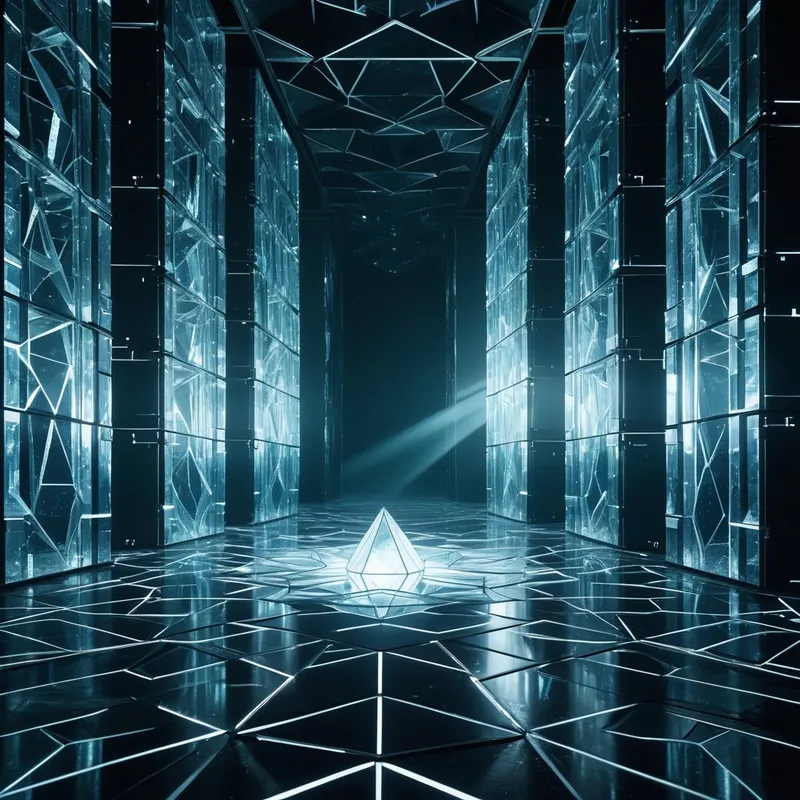
It begins not as a thought, but as a pressure. A density in the chest, a low hum in the bones, a sense of something adjacent. You feel the weight of an unseen room in a house you know by heart. It is the somatic echo of a psychic architecture you’ve built around a sealed chamber. The body knows the contours of what the mind has walled off—the grief deemed too sharp, the rage too hot, the talent too daunting, the love too vast. This echo is not anxiety’s frantic flutter, but the deep, tectonic groan of a structure settling, of a foundation preparing to reveal a fault line that is also a vein of gold. You carry this hidden geography in your posture, in the breath you unconsciously hold. It is the feeling of being haunted by a part of yourself that is very much alive, waiting in the wings of your own consciousness.
The Dreamer's Log (Case Vignette)
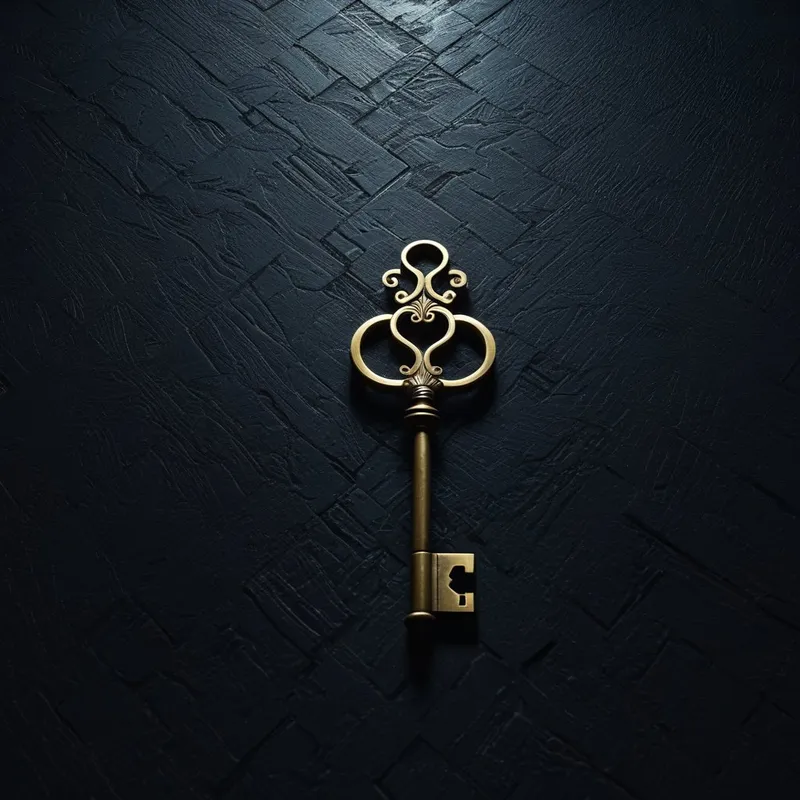
I am in my apartment, but it feels unfamiliar. I know, with absolute certainty, that there is a secret room here. I run my hands over the smooth, white walls, pressing, searching for a seam. Frustration mounts until I look down and see a small, ornate brass key on the floor. The moment I pick it up, I know the room has always been behind the largest wall. I wake before I turn the lock.
The alchemical interpretation: The dream is not about finding something new, but accepting the invitation to consciously acknowledge a long-sequestered aspect of the self, whose existence you have always sensed but refused to formally address.
The False Lead
This theme is not about discovering external secrets, conspiracies, or hidden messages from the universe. It is not a sign of mere forgetfulness or “bad luck” obscuring your path. To misinterpret this call as a scavenger hunt for clues out there is to bypass the profound internal pilgrimage. The hidden aspect is not a lost object but a disowned subject; not a piece of information, but a living, breathing part of your own psyche that has been exiled for its perceived danger, vulnerability, or power. The dream is not pointing to a mystery to be solved, but to a relationship to be restored.
Psychological Architecture
The process here is the core of Shadow work, framed not as battling darkness but as reclaiming exiled light. Our psyche, in its wisdom and its fear, compartmentalizes. It constructs elegant, well-lit rooms of identity—the Professional, the Partner, the Parent—and in doing so, it often designates other parts to a basement, a locked attic. These hidden aspects are not necessarily “bad”; they are often the parts deemed too intense, too raw, too creative, too needy, or too powerful for the daily self to manage. They are the orphaned emotions, the banished talents, the silenced truths. Individuation, in this context, is the courageous, often disorienting act of blue-printing your own internal architecture. It is feeling along the walls of your known self for the hidden door, not to let something out, but to finally invite something in. The goal is not a tidy, unified self, but a sovereign, integrated psyche—a council of all your parts, where the once-hidden members have a seat at the table.
Mythic Resonance
This universal firmware runs through the story of Psyche herself. Her great task, set by Aphrodite, is to sort a massive pile of mixed seeds—a seemingly impossible chore that represents the chaos of the unexamined, hidden aspects of the soul. She does not accomplish this through brute force, but by surrendering to help (in the form of ants), symbolizing the need for the unconscious, instinctual self to assist the conscious ego in ordering the psyche. Later, forbidden to look upon her divine lover, Eros, she must ultimately disobey and shine a light on the hidden center of her life, facing the terror and ecstasy of true seeing. The myth is not about keeping secrets, but about the necessary, terrifying, and ultimately redeeming act of bringing the hidden into the light of consciousness.
Symbolic Nodes
- Hidden Rooms, Secret Doors, False Walls: The architecture of the psyche itself, its compartments and barriers.
- Locked Boxes, Sealed Containers, Vaults: Aspects of the self that are protected, repressed, or preserved.
- Keys (especially found or given): The emergent insight, readiness, or external catalyst that grants access.
- Basements, Attics, Sub-basements: The lower (instinctual, foundational) and higher (spiritual, idealistic) hidden realms of the self.
- Veiled or Blurred Figures: The hidden aspect itself, not yet fully formed or seen.
- Forgotten Objects in Familiar Places: The known-yet-unknown, the memory of the exiled part.
Archetypal Resonance
The Magician Archetype is the prime mover in this theme. The Magician’s domain is the hidden structure of reality, the unseen forces and latent potentials. When we dream of hidden aspects, the Magician is active, not as a manipulator of external events, but as the internal alchemist seeking the prima materia within our own shadow. The somatic echo—that pressure of adjacent potential—is the Magician’s energy gathering, sensing the raw, unformed power behind the wall. The entire process is a Magician’s operation: discovering the secret name (true nature) of the exiled part, performing the ritual (conscious attention) to summon it, and transmuting the lead of fear into the gold of integrated wholeness. The shadow of the Magician—the Illusionist—is what built the false wall in the first place, using sleight of mind to make a part of the self “disappear.”
The Alchemical Process
The transmutation here is Reunion. The prima materia is the exiled self-fragment, often experienced as a knot of grief, shame, or frozen power. The furnace is the unbearable tension between knowing and not-knowing, between the somatic echo and the mind’s refusal. The heat is applied through sustained, non-judgmental attention—the act of sitting in the discomfort of the hidden, of feeling the outline of the absence. This is the solve: the dissolving of the psychic mortar that sealed the chamber. Pressure comes from life itself, in the form of recurring patterns, triggered reactions, and a growing sense of inauthenticity that forces a confrontation. The coagula—the reconstitution—is not an explosion, but an integration. It is the slow, deliberate act of listening to the exiled part, hearing its story, its fear, its desire, and allowing it to gradually inform your conscious life. The terror of exposure becomes the profound relief of acknowledgment; the grief of abandonment becomes the deep, quiet joy of homecoming.

The Integration Protocol
Question 1: In your waking life, where do you feel the most persistent sense of "pressure" or "density"—not as anxiety, but as a silent, adjacent presence? Describe its texture and location in your body.
Question 2: If the hidden aspect in your dream could speak one sentence to your conscious, daily self, what would it say? Don't censor; let the first thought arise.
Question 3: What quality, talent, or emotion did you express freely as a child that you now consider "impractical," "too much," or "inappropriate"? How is its absence felt?
Action 1 (Somatic Cartography): For one week, when you feel the somatic echo (the pressure, hum, or density), stop. Place your hand on that part of your body. Breathe into that space for three cycles. Do not analyze, just acknowledge its presence with the simple, internal phrase: "I feel you there."
Action 2 (Unstructured Dialog): Set a timer for 10 minutes. With pen and paper, begin a letter addressed to "The One in the Room." Write from your conscious self. Then, switch hands or simply shift perspective, and let "The One in the Room" write back. Let it be messy, illogical, emotional. The goal is expression, not resolution.
Action 3 (Threshold Ritual): Identify a physical threshold in your home—a doorway, a cabinet, a specific tile. Designate it as a symbolic "door" to the hidden aspect. Once a day, for a moment, place your palm flat against it. State quietly: "What is within me is also before me." This ritualizes the act of acknowledgment, moving it from thought to embodied symbol.
Final Validation
To encounter the hidden aspects of yourself is to stand at the edge of your own known world. It is deeply unsettling, for it calls into question the map you have relied upon. This difficulty is not a sign of failure, but of fidelity—your psyche is faithful to the truth of your wholeness, even when your conscious mind resists. The courage required is not the courage of a warrior charging into battle, but of a sovereign quietly opening a long-sealed door to a forgotten wing of their own palace. The integration of what was hidden does not shatter you; it completes the architecture of your soul, turning the echo into a clear, resonant note in the symphony of who you are.