
The Alchemy of the Cracked Vessel: Dreams of Healing & Recovery
Healing, in the dreamscape, is never a simple return. It is not the nostalgic wish for an unscarred past. To dream of healing is to receive a somatic blueprint for a profound and irreversible transmutation. The psyche is not applying a bandage; it is conducting an alchemical operation on the very substance of your being, where the base material of pain, grief, or fracture is the prima materia for a new sovereignty.
The Somatic Echo
Before an image forms, the body knows. This theme announces itself not as a thought, but as a quality of atmosphere within the dream-body. It is a deep, cellular hum—a vibration that is both ache and potential. You might feel a strange warmth in a place that was once numb, a subtle pull at the site of an old, psychic scar, as if the tissue of memory itself is being gently stretched to accommodate a new growth. It is the sensation of a long-held tension beginning, molecule by molecule, to remember it can also be flow. There is often a profound fatigue here, but it is the fatigue of a deep excavation, not of depletion. The body, in its infinite wisdom, is whispering: The work is underway beneath the surface. The center is reorganizing.
The Dreamer's Log
In the dream, I am in a derelict greenhouse. The glass is grimy, the air stale. In the center, on a cracked concrete slab, sits a single terracotta pot holding a desiccated, thorny stem. I have no water. Feeling a dull despair, I place my hands on the dry soil. A heat radiates from my palms, not burning, but deep and resonant. The parched earth darkens, and from the dead stem, a single, waxy green leaf unfurls, glowing with its own soft, internal light.
Alchemical Interpretation: The dreamer’s own latent life-force, long dormant and perceived as useless despair, becomes the catalytic heat that initiates transmutation, proving the source of healing is not an external remedy, but a reconnection with an internal, forgotten power.
The False Lead
This theme is not about the eradication of pain or the fantasy of a life without scars. It is not spiritual bypassing, where you “rise above” the wound without having fully descended into its truth. A dream of healing is not a promise that the external circumstances of your suffering will magically reverse. It is not a divine guarantee of restored relationships, cured illnesses, or erased trauma. To misinterpret it as such is to miss its radical call. This dream is about the reorganization of the self around the truth of the experience. It is the shift from “I am broken” to “I contain the fracture, and it has become a lens, a conduit, a unique and integral part of my architecture.”
Psychological Architecture
The architecture here is one of shadow integration and deep interior diplomacy. This is the work of the Internal Family Systems, where exiled parts—the terrified child, the furious adolescent, the betrayed lover—are not healed from a distance by a managerial “Self,” but are invited back into the system with witness and compassion. The healing dream is the council chamber where these exiles present their testimony. The crumbling wall in the dream is not just a symbol of damage; it is the rigid boundary of a former identity, now softening. The overgrown garden is not a mess to be cleared, but a lush, chaotic ecosystem where suppressed life runs wild, demanding to be recognized as part of the whole. Individuation here is the process of ceasing to war with your own history, of allowing the fragments to exist not as enemies, but as constituents of a more complex and resilient sovereignty.
Mythic Resonance
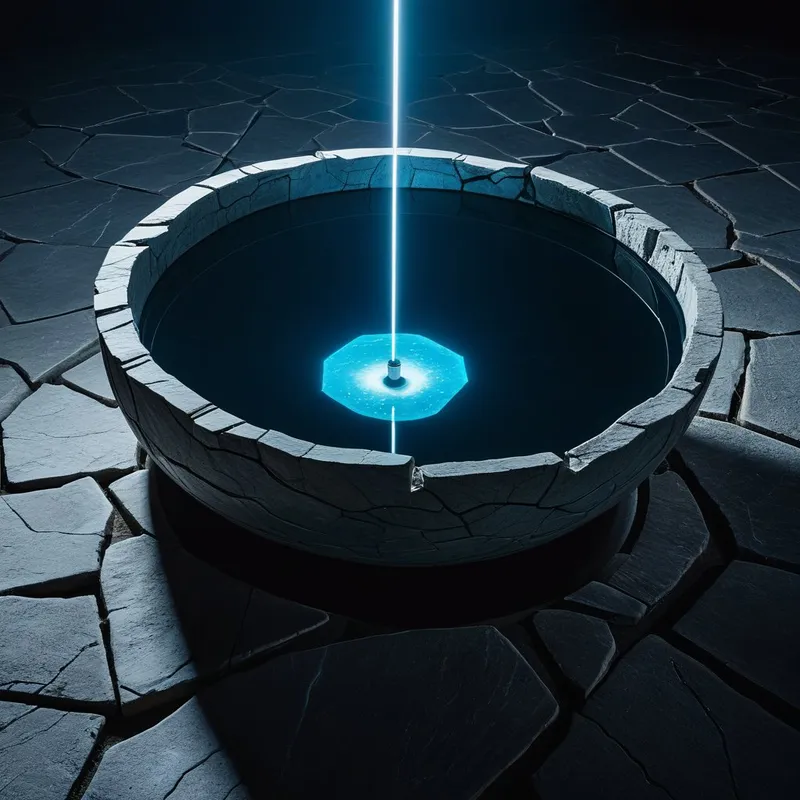
We see this not in the hero who escapes the underworld unscathed, but in the figure of the Wounded Healer, epitomized by Chiron. The centaur, struck by a poisoned arrow, bears a wound that cannot be cured by his own vast knowledge of medicine. His immortality becomes a prison for his pain. His healing—his release—comes only when he surrenders his immortality, transforming his incurable wound into the source of his profound empathy and his ultimate sacrifice for the liberation of another. The healing is in the transmutation of the wound’s meaning, not its removal. Similarly, the Japanese art of Kintsugi is not myth but praxis: the broken pottery is repaired with lacquer mixed with gold, silver, or platinum. The fracture lines are not hidden; they are illuminated, made the most luminous feature of the object. The piece is considered more beautiful, more valuable, for having been broken and consciously restored. The break and the repair become part of its history, its identity.
Symbolic Nodes
- Mending Fabrics/Knitting Bones: The hands-on, patient work of weaving separate threads into a new whole.
- Slow-Growing Plants/Vines: Organic, persistent life asserting itself through cracks, symbolizing time-based, natural recovery.
- Gentle, Penetrating Light (Dawn, Single Sunbeam): Illumination that reveals without scorching, representing conscious awareness applied with compassion.
- Deep, Still Pools Cleansing Themselves: The self-regulating, purifying function of the unconscious.
- Architectural Repair (Buttresses, New Foundations): The restructuring of the psyche’s foundational beliefs and supports.
- Receiving or Giving a Simple, Essential Gift (A Cup of Water, A Blanket): The exchange of basic, non-transactional care between parts of the self.
Archetypal Resonance
The core energy of healing and recovery resonates most powerfully with The Caregiver Archetype. Yet, this is not its shadow manifestation of Martyrdom or Smothering—which seeks to heal others to fill a void in the self. This is the Caregiver turned inward, performing the ultimate act of sovereignty: becoming the compassionate witness and nurturer to one’s own wounded parts. The somatic echo of deep, cellular warmth is the Caregiver’s nurturing hand applied to the inner world. Its alchemical potential lies in this precise inversion; by learning to hold space for one’s own pain with the same tenderness one might offer another, the base metal of suffering is transmuted into the gold of integrated self-worth. The healing dream is the Caregiver’s sanctuary, built not for others, but within.
The Alchemical Process
The alchemy of healing is the Solve et Coagula—dissolve and coagulate—applied to the structures of the self. The Solve is the often terrifying dissolution: the old identity as “the wounded one,” the familiar stories of victimhood, even the attachment to the pain itself, must soften and break apart. This is the necessary heat—the pressure of grief fully felt, the anger fully acknowledged, the truth fully seen. It feels like annihilation. Then, the Coagula: not a reassembly of the old form, but a precipitation of a new one around a different center. The new center is not the wound, but the conscious relationship to the wound. The grief becomes depth. The anger becomes boundaried strength. The fracture becomes a unique pattern of light. The pressure is the unbearable tension between holding on and letting go, and the catalyst is always compassionate awareness.
The Integration Protocol
Question 1: In the dream, where did the sense of "life" or "repair" emanate from? An external object, an internal sensation, or a silent space between things?
Question 2: If the wounded part of you in the dream could speak its deepest need—not a wish for the past to change, but a need for how it wants to be held now—what would it say?
Question 3: What old, familiar "story of my damage" is this dream inviting me to gently retire, not through force, but through simple lack of interest?
Action 1 (Somatic Anchoring): For one minute each day, place a hand gently on the part of your physical body that corresponds to the dream's wound or healing sensation. Don't analyze. Just feel the warmth, weight, and presence of your own touch. Breathe into that space.
Action 2 (Unstructured Scripting): Take a blank page. Let the voice of the "broken" object or place from your dream (the cracked pot, the crumbling room, the withered plant) write a letter. Don't censor. Let it describe its experience in its own raw terms. Then, write a brief, compassionate response from the part of you that provided the healing element (the warm hands, the clean water, the light).
Action 3 (Ritual of Illuminated Fracture): Find a small, discarded object that feels "broken" (a stone, a piece of wood, a fragment of pottery). Spend time quietly holding it. Then, using a metallic paint pen (gold, silver, copper), carefully trace its cracks, fissures, or broken edges. Place it where you will see it, not as a symbol of damage, but as a testament to conscious, luminous repair.
Final Validation
This path is not for the faint of heart. It asks you to turn toward the very thing you most wished to flee, to find a home in the center of the disorientation. The difficulty is real, and the fatigue is a testament to the depth of the work, not a sign of failure. Remember: the dream of healing arrives not when you are weak, but when your system is finally strong enough to begin its own profound reorganization. You are not being repaired. You are being remade. The gold is not coming to fill the cracks; it is being secreted from them, a luminous testimony written in the very language of your breaking.