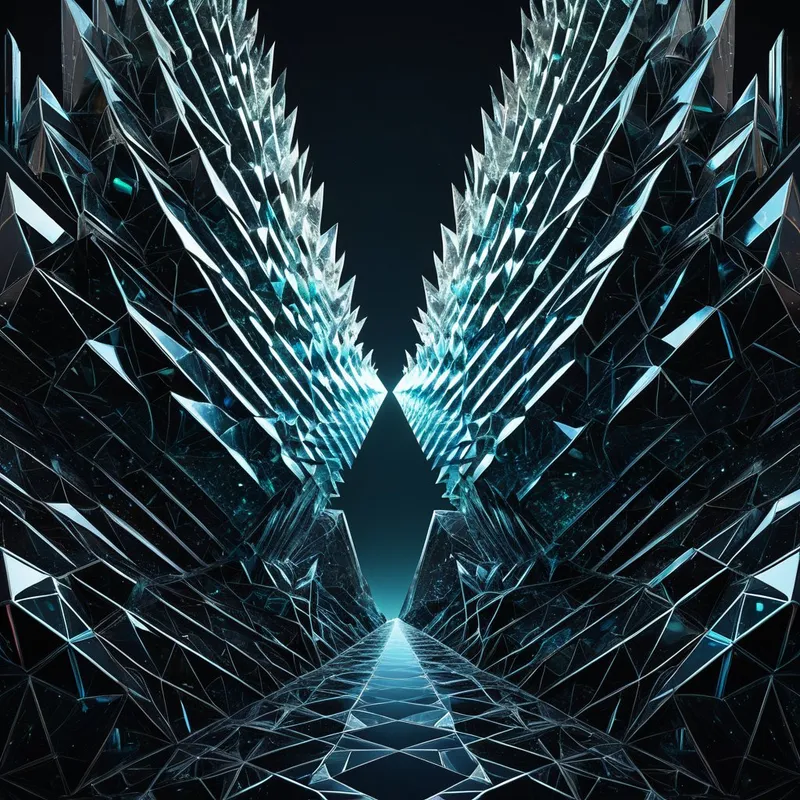
The Dream of Harmony/Dissonance: The Psyche's Crucible
The Somatic Echo
Before the image forms, before the story begins, the body knows. It is a vibration that is not a sound, a pressure that is not a touch. It is the hum of a perfectly tuned engine and the grating screech of metal on stone, existing in the same space. You feel it in the hollow of the sternum—a tight, anticipatory pull, as if your ribs are tuning forks waiting to be struck. Your breath catches, not in fear, but in a suspended state between resonance and rupture. The jaw may clench, not with anger, but with the effort of holding two contradictory truths in the mouth at once. This is the somatic echo of Harmony/Dissonance: the visceral, pre-cognitive experience of your internal systems seeking alignment while simultaneously revealing their fractures. It is the feeling of being both the orchestra and the discordant note, the architect and the crumbling foundation.
The Dreamer's Log (Case Vignette)
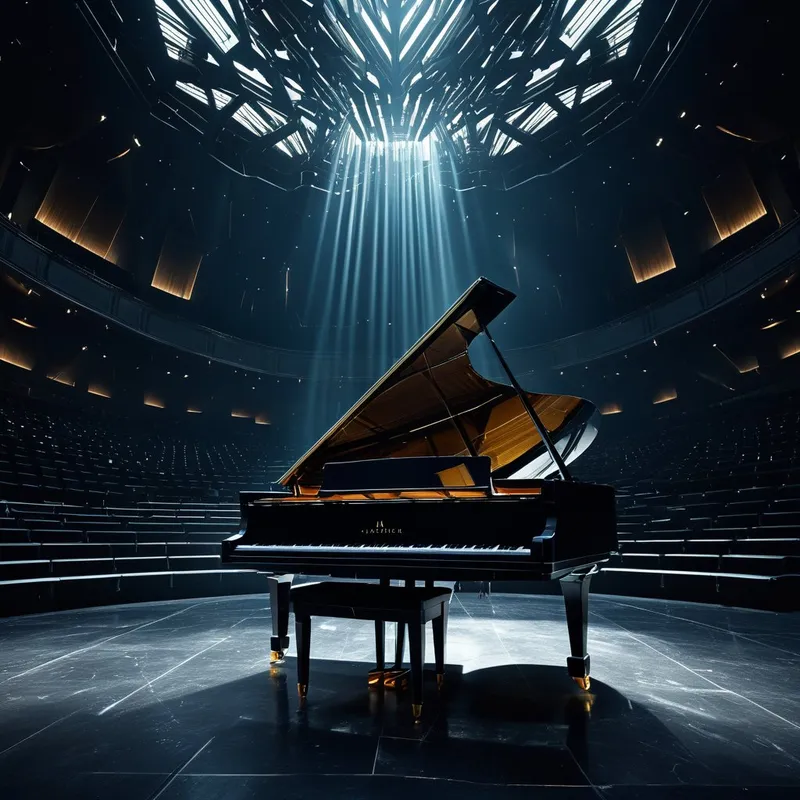
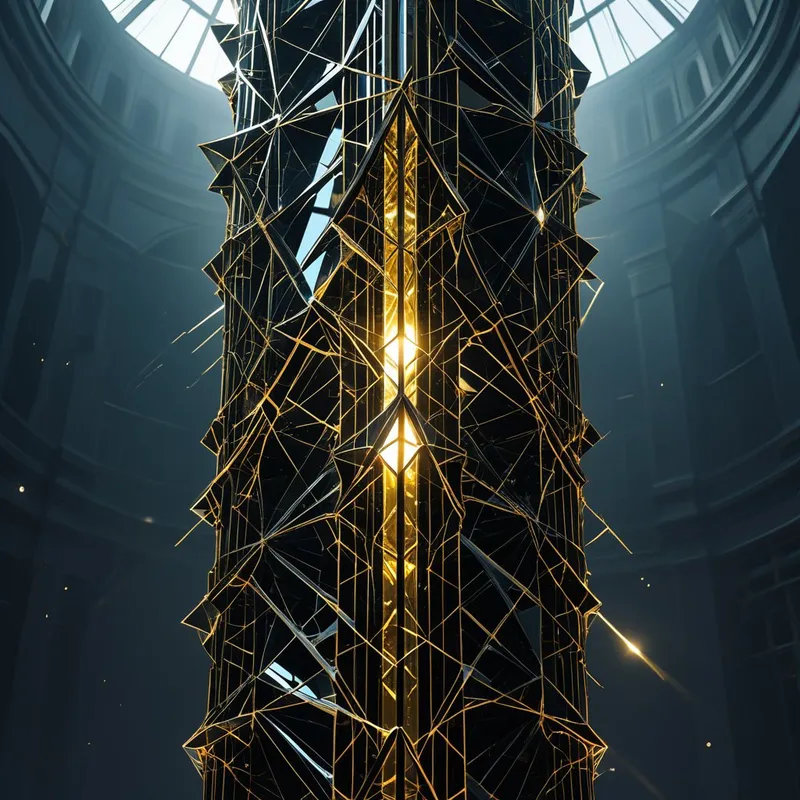
You stand in a vast, empty concert hall. You are to perform a duet, but you are alone. Your hands find the keys of a grand piano, but each note you play fractures in the air—a C major becomes a shattered pane of glass, an A minor a discordant, weeping crack. Yet, from the silence of the hall, a single, perfect note of pure gold rings out, holding the entire crumbling symphony in a moment of impossible, suspended beauty.
This dream is the alchemical solve: the conscious self dissolving in the solvent of its own unresolved inner dialogue, where every attempt to create harmony only reveals the deeper dissonance waiting to be heard.
The False Lead
This theme is not about external conflict or simple "bad luck" in your waking life. It is not a sign that you are failing or that the world is against you. To mistake the internal symphony for an external cacophony is to project the shadow onto the screen of your relationships and circumstances. The dissonance you feel is not a flaw to be eliminated, but a signal—a precise diagnostic tool of the psyche. It points not to what is wrong out there, but to where you are not yet whole in here. It is the friction between the life you are living and the truth you are carrying, between the role you play and the self you are becoming.
Psychological Architecture
To engage with this dream is to enter the council chamber of your own psyche, where the Internal Family speaks in a chorus of conflicting needs. The part that seeks peace and the part that craves revolution are not enemies; they are estranged members of the same cabinet. The Harmony is the ego’s desire for a tidy narrative, a seamless performance. The Dissonance is the Shadow’s insistent, often wordless, truth—the exiled feeling, the unexpressed grief, the stifled creativity that will not be silenced. The work here is Shadow work of the most intimate kind: it is not about battling a monster, but about listening to the cacophony until you can distinguish the individual voices. It is the Individuation process in its active, often painful, phase—the conscious differentiation of the "I" from the chorus of internalized "yous" (parent, critic, child, hero) so that a new, more complex harmony can be composed. The self does not emerge by silencing the orchestra, but by becoming its conductor.
Mythic Resonance
Consider the myth of Orpheus and Eurydice. Orpheus’s music could charm beasts and bend trees, the very epitome of harmonic power. His journey to the underworld is not one of brute force, but of resonant plea. Yet, the fatal dissonance is not in Hades, but within his own doubt. The glance back is not mere impatience; it is the catastrophic re-entry of human fear into divine harmony. The myth lives in us when we, having touched a moment of profound inner alignment—in love, in creativity, in purpose—introduce the discordant note of our own unresolved anxiety and watch the symphony unravel. We are both the divine musician and the doubting man.
Symbolic Nodes
- Broken or Out-of-Tune Instruments: A piano with missing keys, a guitar with snapped strings. The tools of creation and expression themselves are compromised.
- Architectural Cracks & Fault Lines: Hairline fractures in walls, shifting foundations, bridges that groan. The structures meant to provide stability are revealing their inherent tension.
- Interference Patterns & Static: Visual or auditory static on a screen, radio frequencies bleeding into one another, a beautiful image perpetually glitching. Clean signal corrupted by noise.
- Choirs or Orchestras Playing Different Scores: A unified group producing chaos, each member faithfully following a different sheet of music. Collective effort yielding disintegration.
- Two Elements Refusing to Mix: Oil and water in a single glass, fire and rain meeting in a steam that obscures, magnets of the same pole straining apart. Fundamental incompatibility made visible.
Archetypal Resonance
The core energy of Harmony/Dissonance resonates most powerfully with The Magician Archetype, specifically in its shadow manifestation. The Magician’s gift is to perceive and manipulate the unseen structures of reality, to align energy with will. The Shadow Magician arises when this power is used not for true transformation, but for the illusion of control—forcing harmony where there is none, masking dissonance with clever facades. The somatic echo of tightness and suspended breath is the Shadow Magician’s body holding the spell, maintaining a costly illusion of peace. The alchemical potential lies in the archetype’s core function: transmutation. The journey is from Shadow to integrated Magician, learning to stop imposing harmony and starting to listen to the dissonance, recognizing it as the raw, chaotic material—the prima materia—from which genuine, earned wholeness is forged.
The Alchemical Process
The alchemical vessel for this theme is your own aware consciousness. The prima materia is the raw experience of dissonance—the anxiety, the friction, the sense of being "off-key." The fire is not anger, but sustained, non-judgmental attention. You must apply the heat of your own focus to the very thing you wish would disappear. This is the nigredo, the blackening: allowing the discord to be fully heard, felt in the body, without immediately rushing to fix it or explain it away. The pressure is the tension of holding two contradictory truths: "I am capable" and "I am afraid," "I love this" and "This hurts me." In this pressurized heat, the elements begin to break down. The old, rigid form of "false harmony" (the ego’s neat story) dissolves. This is the albedo, the whitening: a clarifying moment where you see the separate components of your conflict with stark clarity—the loyal soldier, the wounded child, the ambitious creator all speaking at once. The transmutation occurs when you stop trying to make one voice win and instead ask, "What does each part need to feel safe enough to join a new whole?" The gold, the rubedo, is not a silent peace, but a complex, resonant integrity. It is a symphony that includes the minor keys, the rests, the dissonant chords resolved into a progression that is richer, deeper, and uniquely yours.
The Integration Protocol
Question 1: Where in my waking life do I feel the same somatic echo of suspended breath or tight anticipation that I felt in the dream? What situation or relationship feels like "playing the wrong score"?
Question 2: If the dissonant element in my dream (the broken instrument, the cracking wall) had a voice, what one sentence of truth is it trying to speak that my conscious mind has been overlooking or suppressing?
Question 3: What false or fragile "harmony" have I been maintaining—through people-pleasing, overwork, or spiritual bypassing—that this dream’s dissonance is now threatening to shatter?
Action 1 (Somatic Mapping): For one week, when you feel that familiar inner friction, pause. Place a hand on the part of your body where you feel it most. Breathe into that space for three cycles. Do not try to change the feeling; just acknowledge its presence with a simple internal label: "Ah, tension here," or "This is the dissonance."
Action 2 (Unstructured Sound Journal): Take 10 minutes with a voice recorder or notebook. Do not write words. Instead, give voice to the inner dissonance through non-verbal sounds—humming, sighing, vocalizing fragments of melody, even grating or sharp noises. Let the sound, not the thought, lead. Afterwards, listen back or review. What quality of energy was expressed (grief, frustration, longing)? This creative action bypasses the mind’s need for a tidy story.
Action 3 (Ritual of Re-tuning): Find a small object that symbolically represents the "instrument" from your dream or life (a stone, a key, a pen). Go to a threshold space (a doorway, the shore, a park bench). Hold the object and consciously release the old, forced harmony you’ve been carrying. Then, state aloud one small, authentic adjustment you will make to honor the dissonant truth you’ve discovered (e.g., "I will speak my need in this conversation," or "I will pause before saying yes"). Step across the threshold with the object, symbolizing your move toward integrated action.
Final Validation
The path from dissonance to harmony is not a gentle tuning; it is a willing descent into the orchestra pit of your own soul to hear each instrument, even the ones playing sharps when you want flats. It is profoundly difficult because it asks you to dismantle the facade of the composed self. Yet, this very difficulty is the measure of its importance. The dissonance is not your ruin; it is your blueprint. It shows you, with brutal precision, where you are not yet whole. And in that precise mapping lies your sovereignty—not the silence of a conflict resolved, but the powerful, resonant music of a self that has learned to include all of its own notes.