
The Alchemy of Absence: Dreaming the Fear of Loss
The Somatic Echo
It begins not as a thought, but as a hollowing. A sudden, silent evacuation in the gut, a cold tide receding from the chest, leaving a cavern of air where substance once lived. The body knows loss before the mind can name it. It’s the phantom weight of a missing limb, the instinctive reach for a hand that is no longer there in the dark. This is the somatic echo—the visceral, pre-verbal tremor that runs through the architecture of the self. It is the psyche’s early warning system, a deep tectonic shift felt in the marrow, signaling not an external event, but an internal re-organization. The fear is not of the empty hand, but of the self that was built to hold something within it. When that structure is threatened, the entire inner system reverberates with the shockwave of potential collapse.
The Dreamer's Log
The dream is simple, stark, and devastating. I am in a vast, silent library of my own memories, each book bound in familiar textures—a lover’s laugh, a friend’s confidence, a version of myself I thought was permanent. One by one, without a sound, they dissolve into fine ash that slips through my fingers. I am left standing in an immense, empty hall, holding nothing but the scent of ozone and old paper.
This is not a prophecy of abandonment, but the psyche’s brutal, necessary audit. It is the alchemical calcinatio—the burning away of forms to reveal the essential, indestructible substance of the Self that exists beyond attachment.
The False Lead
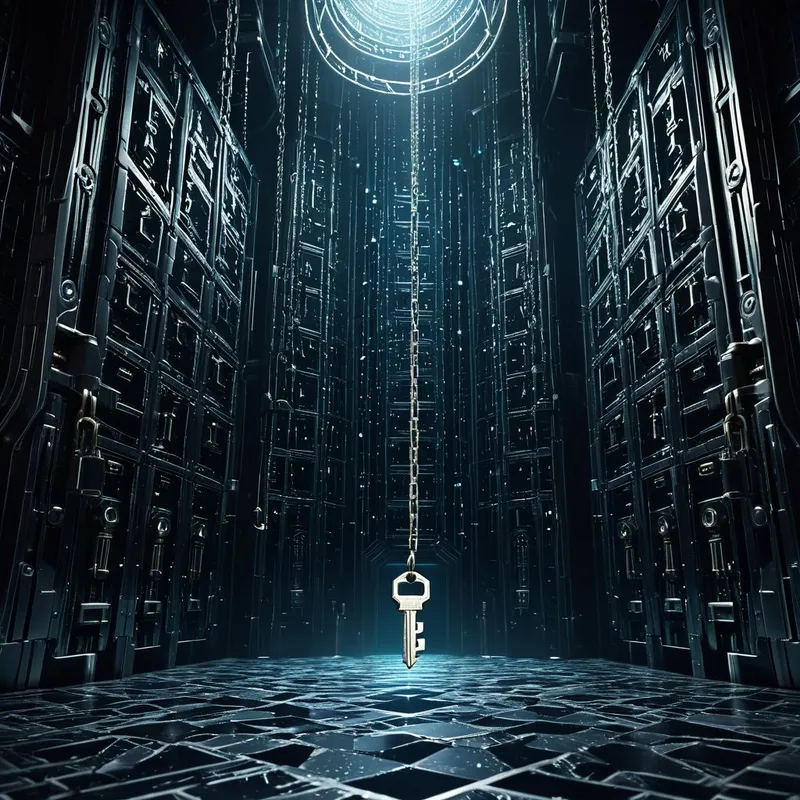
This theme is not about forecasting misfortune or diagnosing a curse of “bad luck.” To interpret these dreams as literal predictions is to mistake the map for the territory. The terror is not a warning about the external world crumbling, but a reflection of an internal process where outdated, rigid structures of identity—built upon people, roles, or possessions—are being dismantled. It is the difference between fearing the theft of a prized jewel and confronting the terrifying, liberating truth that you are not the jewel box. The dream does not show you what you will lose; it shows you what you are identified with, and that identification is what is being prepared for dissolution.
Psychological Architecture
To dream of loss is to be summoned to the most profound shadow work: the confrontation with impermanence as the fundamental law of your inner universe. The process of individuation here is a brutal, graceful unbinding. You are not integrating a lost part, but surrendering the illusion that any part of you can be truly owned. The psyche, in its wisdom, stages these rehearsals of bereavement. It allows the Orphan within to wail, the Caregiver to despair at its perceived failure to protect, so that a deeper, more sovereign presence can emerge from the ashes of attachment. This is the architecture of the soul being stress-tested. The foundation is not the relationships or achievements themselves, but your capacity to relate, to achieve, to be—even and especially when the forms change. The grief experienced in the dream is the heat required to forge a self that can stand alone, not in isolation, but in wholeness.
Mythic Resonance
We see this eternal process in the myth of Inanna’s Descent. The Queen of Heaven does not simply take a trip to the underworld; she is systematically stripped at each of its seven gates. Her crown, her lapis lazuli rod, her royal robes—each article of her identity is removed until she arrives naked and bowed before her sister, Ereshkigal, the Queen of the Great Below. This is not a punishment, but a necessary initiation. The fear of loss is the terror felt at the first gate, the clutching of the crown. The dream is the myth playing out in the personal psyche, guiding you through your own gates of surrender. Only through this stripping can one encounter the raw, unconditioned self and return, transformed, with a sovereignty that cannot be taken, because it is no longer worn as an accessory, but lived as essence.
Symbolic Nodes
- Empty Rooms, Halls, or Vast Landscapes: The internal space after an identification has been cleared.
- Dissolving Objects or Fading People: The direct experience of impermanence and the release of form.
- Keys That Don’t Fit or Melting Locks: The failure of old mechanisms of security and control.
- Sinking Ships or Crumbling Buildings: The collapse of foundational life-structures or belief systems.
- Searching Frantically in Vain: The ego’s desperate attempt to reclaim what the soul has already released.
Archetypal Resonance
The most active force in this theme is The Shadow Orphan. The Orphan’s healthy face is the resilient realist, the survivor who knows life can be hard but endures. Its shadow, however, is the perpetual Victicm, convinced of its fundamental abandonment and defined by its lacks. The somatic echo—that hollow, cold dread—is the Shadow Orphan’s native tongue. It whispers that to lose an external thing is to be annihilated, because it has conflated its being with its belongings. The alchemical potential lies in forcing this Shadow archetype through its own worst fear. By consciously experiencing the terror of loss in the dreamscape, we exhaust the Victim’s narrative. We discover, in that stark emptiness, that we are still here. The consciousness that witnesses the loss is not itself lost. This is the transmutation: the Orphan, having fully felt its desolation, realizes it was never truly alone, but was always the unshakable ground of its own experience.
The Alchemical Process
The transmutation of the fear of loss is the Great Dissolution, the solutio of the soul. The raw material is the calcified identity, the self that says, “I am what I have.” The intense psychological heat is applied by the dream itself—the searing grief, the paralyzing dread. This heat does not destroy; it dissolves. It breaks the bonds of attachment, not to the loved object, but to the configuration of the self that depended on it. The pressure is the unbearable tension between clinging and the inevitable flow of change. In this crucible, a profound separation occurs: the gold of your essential awareness is parted from the base metal of your transient identifications. The terror is the fire. The grief is the solvent. What emerges is not a self with better locks on its treasures, but a consciousness that has become so vast, so inherently rich, that loss becomes merely a change in its internal weather, not a threat to its existence. Sovereignty is born from realizing you are the sky, not the storm.
The Integration Protocol
Question 1: In the dream, what was the precise moment the loss became real? What sensation in my body announced it, before the story of “what was gone” took over?
Question 2: If the thing I fear losing is a pillar of my identity, what temporary structure can I imagine building within myself to hold the space if it were removed? What material would it be made of?
Question 3: What is one small, non-essential possession or habit I can consciously release this week? What inner space opens up when I do?
Action 1 (Somatic Re-Anchoring): When you feel the hollow echo of this fear in waking life, stop. Place both hands flat on your sternum. Breathe deeply into that space of perceived emptiness for two minutes. Do not try to fill it. Simply be the container that holds it. Notice how the container itself remains, solid and present.
Action 2 (Creative Cartography): Without planning, draw the landscape of your dream of loss. Use only abstract shapes, lines, and colors—no representational images. Where is the density? Where is the void? Let your hand map the emotional terrain. Then, with a different colored pen, draw a single, continuous line through the entire map, representing the path of your awareness witnessing it all.
Action 3 (Ritual of Transient Beauty): Find a beautiful, ephemeral natural object—a flower, a leaf, a perfect icicle. Spend time admiring it. Then, consciously destroy it—crush the leaf, melt the icicle in your hand. Sit with the loss. Then, write a short letter of thanks to the object, not for lasting, but for the beauty of its temporary form, and for showing you that your capacity to appreciate beauty remains, unchanged, after its form is gone.
Final Validation
This terror you feel in the dark is not a sign of weakness, but a testament to your depth. Only a psyche capable of profound connection can fear its severance so acutely. The dream does not come to punish you with premonitions of lack, but to initiate you into a terrifying, magnificent truth: you are being prepared to hold more by being taught you can survive with less. The ground is not falling away beneath you. You are being asked to discover that you are not standing on the ground at all—you are the ground. And from that unshakable foundation, every connection becomes a choice, not a chain; a celebration of form, not a fear of its passing.