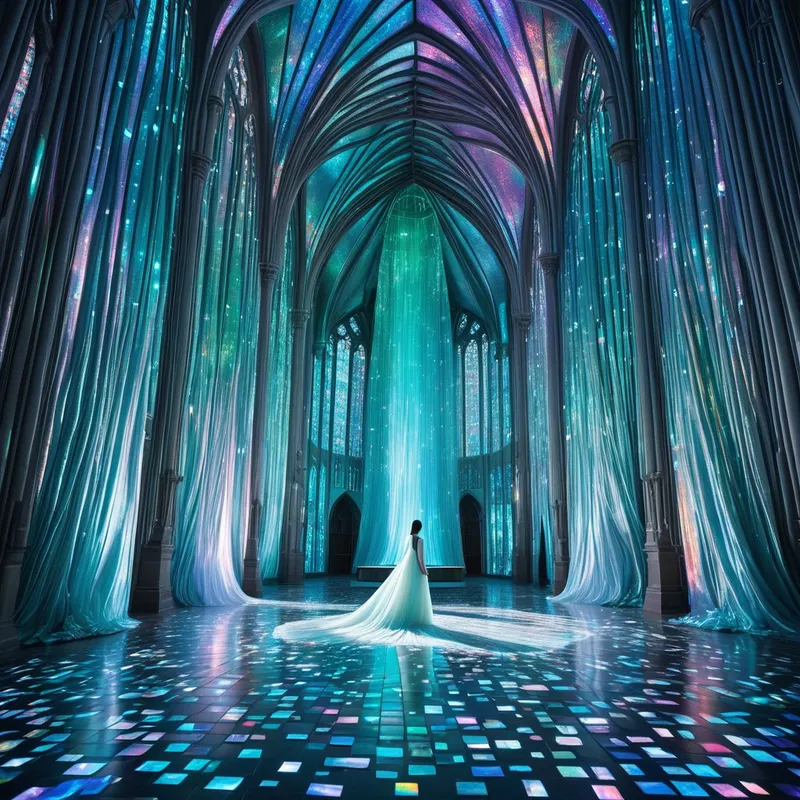
Fashion Statement: The Psyche's Urgent Need to Wear Its Own Truth
The Somatic Echo
Before the image forms, the body knows. It’s a sensation of profound dissonance, a psychic itch beneath the skin. You feel simultaneously exposed and suffocated. The clothes you wear in the waking world—the professional armor, the casual disguise, the costume of your roles—suddenly feel like a borrowed, ill-fitting skin. There is a pressure at the sternum, a tightness that speaks of a truth held in, a self edited for public consumption. This is the somatic prelude to the dream of the Fashion Statement: the visceral recognition that the persona has become a prison, and the soul is rattling the bars, demanding garments that match its authentic architecture.
The Dreamer's Log (Case Vignette)
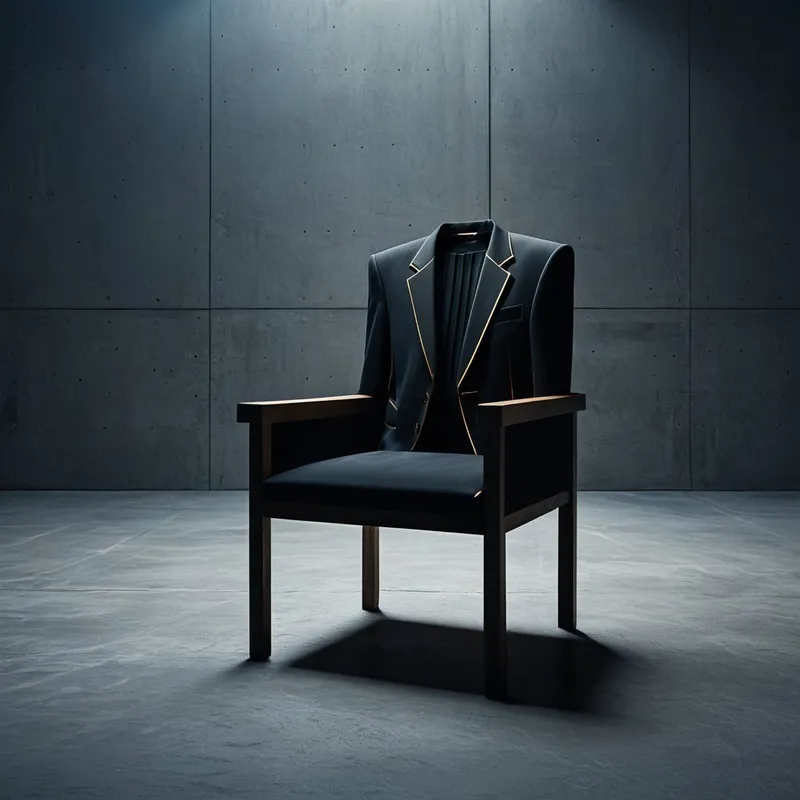
I am standing backstage at a grand, empty theater. I am meant to go on, but my costume is all wrong—a garish, sequined jacket that belongs to a clown. Panicked, I rifle through a rack of black, shapeless robes. Then I see it: a simple, impeccably tailored black suit jacket hanging alone on a wooden chair. As I put it on, I feel a thread of gold light stitch itself through my chest, from heart to shoulder. The jacket becomes not just clothing, but a second skin of calm authority.
The alchemy here is the rejection of the performative "clown" to consciously choose the austere, authentic "suit," allowing an internal golden thread of value to become the defining structural element.
The False Lead
This dream is not about vanity, trendiness, or a literal desire for new clothes. To interpret it as a prompt for a shopping spree is to mistake the symphony for a single note. It is also not merely about "expressing yourself" in a shallow, decorative sense. The Fashion Statement in the depths is a structural, not a decorative, event. It is the psyche initiating the critical, often terrifying, process of individuation—of becoming distinct from the collective wardrobe of expectations, familial scripts, and cultural uniforms you have unconsciously worn since birth.
Psychological Architecture
The dream of the Fashion Statement is Shadow work of the most intimate kind. It is the moment you look into the psychic mirror and see not your face, but the collage of masks you present to the world: the Good Child mask, the Competent Professional mask, the Agreeable Partner mask. These are not you; they are costumes you fashioned for survival and belonging. The dream arises when the cost of wearing them—the exhaustion, the inauthenticity, the feeling of being a ghost in your own life—outweighs their benefit.
The process is one of ruthless editing. The psyche begins to deconstruct the internal wardrobe. It asks: Does this belief still fit? Does this emotional pattern serve who I am becoming, or who I was told to be? This is not a rebellion for its own sake, but a sovereign act of re-tailoring the self from the inside out. You are not destroying the old costumes, but recycling their fabric. The strength of the "Caregiver" role becomes a cloak of self-compassion; the clarity of the "Professional" becomes a well-fitted insight. The goal is a garment of being that is seamless, where no division exists between the inner truth and the outer presentation.
Mythic Resonance
We see this in the myth of Psyche and her invisible husband, Eros. Forbidden from seeing his true form, Psyche exists in a blissful but blind relationship, knowing her lover only by touch and voice—a metaphor for living through feeling alone, without the clarity of self-knowledge. It is only when she disobeys, lights the lamp, and sees him that the true, difficult, and glorious work of their union (the integration of soul and love) can begin. The Fashion Statement dream is that lighting of the lamp—the conscious act of seeing the true form of your own soul, beyond the comforting darkness of unconscious compliance. Similarly, in many shamanic traditions, the acquisition of a ritual garment or adornment marks the passage from one state of being to another, a visible sigil of an invisible transformation.
Symbolic Nodes
- An Ill-Fitting or Absurd Costume: The felt sense of inauthenticity in current life roles.
- A Single, Perfect Garment Standing Alone: The emerging, authentic self, often perceived as "too simple" or "too stark" by the ego accustomed to ornamentation.
- A Thread, Needle, or Scissors: The active, precise work of psychological editing and integration.
- A Mirror That Reveals Your True Reflection Beneath the Clothes: The moment of unadorned self-recognition.
- A Crowd in Uniform, While You Are Dressed Differently: The tension between collective belonging and individual truth.
Archetypal Resonance
The Creator Archetype is the master weaver active in this theme. Not its shadow of the self-absorbed artist, but the Creator in its purest form: the architect of identity, the artist of the self.
The somatic echo of dissonance is the Creator’s raw material—the unshaped clay of potential selfhood feeling constrained by old forms. This archetype provides the core energy to not just complain about the ill-fitting costume, but to take up the psychic scissors and thread. Its alchemical potential lies in its drive to move from being a wearer of prescribed identities to the maker of a cohesive, authentic life-garment. The Creator does not follow fashion; it establishes a new line entirely, born from an internal blueprint. This dream is its atelier opening for business, demanding you move from the dressing room to the drafting table of your own existence.
The Alchemical Process
The transmutation here is from Costume to Vestment. A costume is worn to pretend; a vestment is worn to perform a sacred function. The alchemical fire is the heat of conscious choice under pressure. It is the unbearable moment when you must choose between the safety of the familiar uniform (and the approval it brings) and the terrifying freedom of the garment that feels true but will mark you as "other."
The pressure is the grief of shedding. You must grieve the simpler life of the unconscious wearer, the easy belonging of the uniformed crowd. In the crucible of this choice, the base metal of social compliance and borrowed identity is subjected to intense heat. What burns away is the need for external validation through appearance. What remains, and is forged into new shape, is the gold of intrinsic value. The tailored garment that emerges is not armor against the world, but an accurate representation of your soul's architecture to the world. You become sovereign because your authority is no longer borrowed from a role; it is woven from the thread of your own experience.
The Integration Protocol
Question 1: Where in my waking life do I feel most like I am wearing a "costume"? What specific feelings (constriction, fraudulence, boredom) signal that dissonance?
Question 2: If my authentic self were a garment, what would be its three essential qualities? (e.g., Is it flexible or structured? Simple or ornate? Protective or revealing?)
Question 3: What old "label" or identity (e.g., "the peacekeeper," "the achiever," "the helper") am I most ready to consciously remove, not out of rejection, but because it no longer encompasses who I am?
Action 1 (Somatic Unstitching): For five minutes, sit in silence and scan your body. Where do you feel the tightest, the most costumed? Place a hand there. Breathe into that space, imagining the breath as a gentle seam-ripper, loosening the psychic stitches of an old, tight role.
Action 2 (Creative Re-weaving): Without planning, draw or paint a "garment of becoming." Use colors, shapes, and textures—not literal clothing. Let your hand move intuitively. What wants to be included? What is absent? This is a blueprint of your psyche's current design.
Action 3 (Ritual of the Thread): Find a single thread from an old piece of clothing. In a quiet moment, hold it and name one quality of your old "costume" it represents (e.g., "people-pleasing"). Then, consciously tie it into a knot, thanking it for its past service, and place it in soil or flowing water—a physical act of composting an old pattern to feed new growth.
Final Validation
To have this dream is to feel the profound ache of being unseen, even by yourself. It is a difficult, disruptive grace. The path from costume to vestment is not walked in a day; it is stitched with the slow, sometimes painful, needle of daily conscious choice. But know this: the very fact that your psyche is presenting you with the dilemma is evidence of its readiness. You are not being stripped bare without recourse. You are being invited to the loom. The authority you seek does not come from the approval you will lose, but from the truth you, and only you, can choose to wear.