The Somatic Echo
Before the images form, before the story begins, the body knows. It is a specific gravity, a density in the chest that is not quite anxiety and not quite grief, but a compound of both—an ancient sediment. It feels like a pull in the solar plexus, a tether to a history you did not author. There is a warmth there, too, a cellular memory of shelter, but it is layered over with a cool, metallic tension, like the echo of a long-silenced argument still vibrating in the bones. This is the somatic ground from which dreams of family emerge: not as a simple memory, but as a living, internal ecosystem. It is the feeling of a system checking its own wiring, testing connections laid down before language, in the silent negotiations of infancy and the unspoken contracts of lineage.
The Dreamer's Log
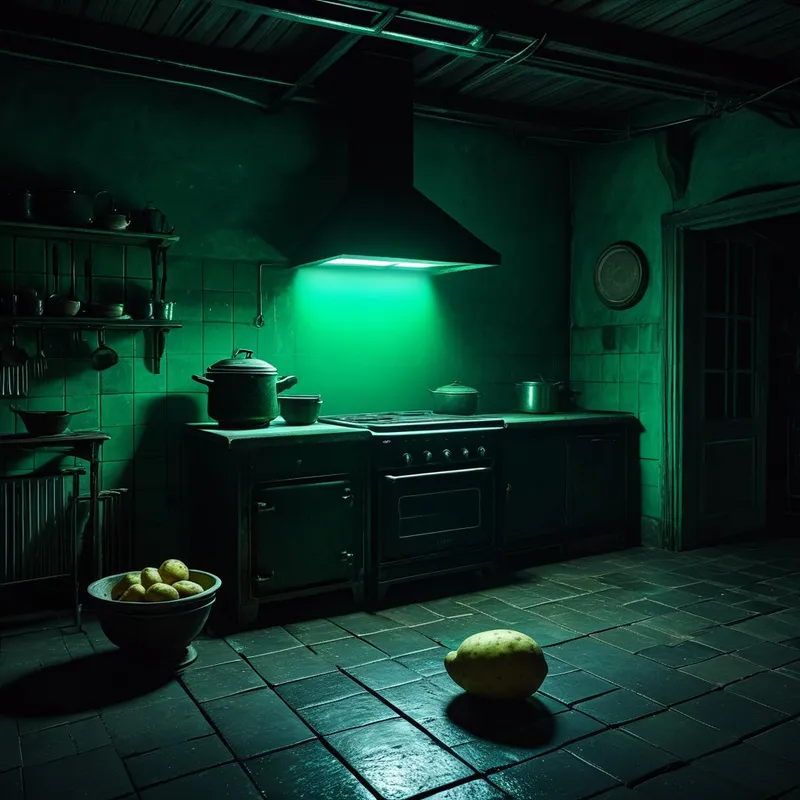
The dreamer stands in the vast, empty kitchen of their childhood home. The air is cold and smells of damp earth. The iron stove, a relic from a past century, gapes open, its fire long dead. On the floor, in a puddle of dark water, rests a single, unpeeled potato, solid and utterly alien in its solitude.
This is the dream of one who carries the unprocessed nourishment of their lineage—the raw, earthy potential that was never cooked, never transformed into a warmth that could be shared, leaving them to confront its cold, foundational simplicity.
The False Lead
Do not mistake this theme for a literal commentary on your waking family, a mere replay of yesterday’s tension or a sentimental longing for the past. The dream is not a family therapist. Its concern is not the repair of external relationships, but the integration of internalized relating. The terror of a pursuing parent-figure is not about that person, but about the part of your own psyche that wields their voice as a weapon. The grief of a lost sibling is not prophecy, but the soul mourning a disowned aspect of yourself you once saw reflected in them. To interpret these dreams literally is to remain trapped in the family drama; to interpret them symbolically is to begin the work of psychological sovereignty.
Psychological Architecture
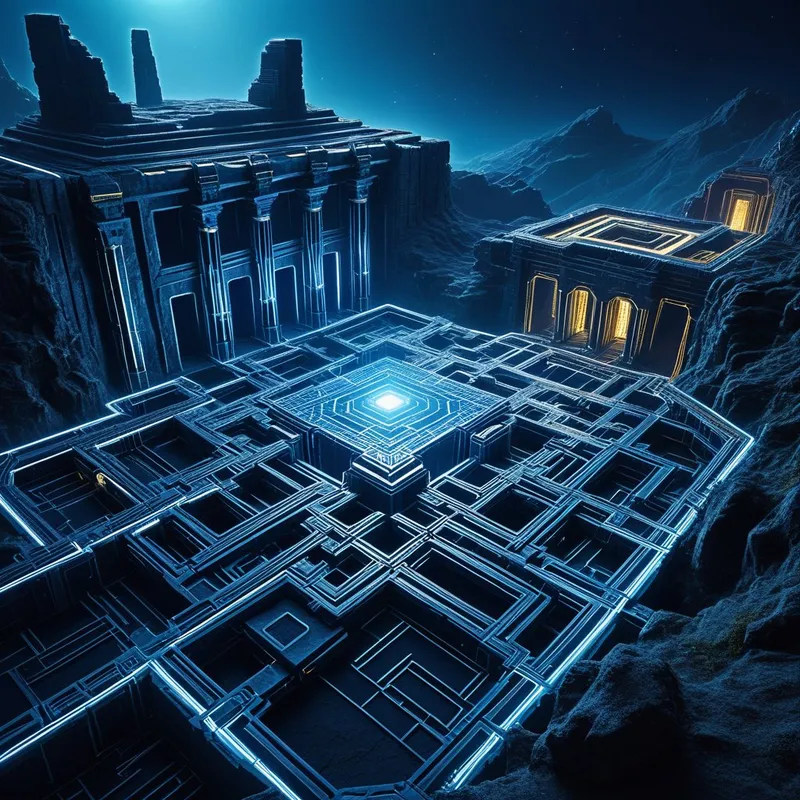
Here, in the dreamspace, the family is the first kingdom we ever knew, and its internalized rulers, exiles, and protectors now form the cabinet of our inner world. This is the territory of Internal Family Systems, rendered in mythic scale. That critical father is not a memory, but a Manager part, rigidly enforcing old rules for safety. That vulnerable child-you, hiding in the dream’s closet, is an Exile, carrying a burden of feeling too raw for daylight. The work is not to banish these figures, but to witness them. It is the slow, patient process of Individuation—not as a rebellion against the family, but as a differentiation from the unconscious psychic material it deposited within you. You are not dismantling your history; you are conducting an archaeological dig within your own soul, learning to hold the shards of inherited trauma and the gems of ancestral strength in the same conscious hands.
Mythic Resonance
Consider the Greek hero Theseus, who must journey into the Labyrinth—a structure built by his ancestor, Daedalus—to face the Minotaur, a monstrous half-brother born of his family’s transgression. His victory requires both the sword (conscious action) and the thread (connection to his source, Ariadne). He does not destroy the Labyrinth; he navigates its internal logic and emerges changed. Similarly, the West African Abiku or Ogbanje spirit-child, bound by a cosmic pact to cycle between the world of the living and the dead, tormenting a family with repeated loss. The breaking of this cycle often involves a ritual of marking, of binding the spirit to this world—a profound metaphor for the psyche’s need to consciously choose incarnation in its own life, to stop re-enacting ancestral patterns of abandonment or return.
Symbolic Nodes
- The Ancestral House: Represents the structure of the psyche itself—its rooms (conscious/unconscious), its foundations (core beliefs), its locked attics (repressed memories).
- Family Meals/Feasts: The quality of nourishment and communication within the internal system. A silent meal signifies withheld emotional sustenance; a chaotic feast points to indigestible, overwhelming feelings.
- Missing or Altered Family Members: A missing parent may symbolize a disowned inner archetype (e.g., the absent Nurturer); a sibling transformed into an animal may represent an instinctual aspect of the self that the family system could not recognize as human.
- Heirlooms or Relics: Inherited psychological material—a jewel (a latent talent), a heavy book (a burden of expectation), a broken watch (a frozen moment in familial time).
Archetypal Resonance
The Orphan Archetype is the prime mover in dreams of familial bonds. Not in its Shadow aspect of perpetual victimhood, but in its core essence: the realist who knows the foundational truth of separation. The somatic echo—that gravity of ancient sediment—is the Orphan’s felt sense of being cast from the original garden of unconscious belonging. This archetype does not wallow; it surveys the landscape of its inheritance with clear eyes. Its alchemical potential is immense, for the Orphan, by acknowledging this fundamental separation, is forced to build its own home, to find its own tribe within the psyche. It is the part of us that must learn self-reliance, not out of bitterness, but as the necessary precondition for forming authentic, chosen connections. The dream of the family is often the Orphan’s call to adventure—to leave the psychic homeland and, in doing so, discover what it truly means to belong to oneself.
The Alchemical Process
The alchemical vessel here is the heart-space itself, and the prima materia is the raw, conflicted emotion of our familial imprinting. The required heat is not anger, but the sustained, compassionate attention we bring to these internal figures. It is the pressure of holding two contradictory truths at once: the gratitude for life given and the grief for wounds inflicted within the same nexus. The transmutation occurs in the moment of recognition without identification. You see the internalized critical mother, feel the old fear in your body, but instead of becoming the chastised child, you say, "Ah, there you are. That is the voice I inherited." This conscious separation is the separatio—the dividing of the pure from the impure. The profound sovereignty that emerges is not cold independence, but a coniunctio: a sacred marriage within. The orphaned parts are adopted by the conscious self. The internal family system finds a benevolent, witnessing ruler—you.
The Integration Protocol
Question 1: In the dream, if the family home were a living entity, what is its primary desire? Is it to preserve, to communicate, to hide, or to transform?
Question 2: Which family member in the dream carries the emotion you are least allowed to feel in your waking life? What is that emotion?
Question 3: If you could offer one gift from your present, adult consciousness to the most vulnerable figure in the dream, what would it be? (Not a physical object, but a quality: safety, voice, forgiveness, warmth).
Action 1 (Somatic Mapping): For one week, upon waking, place a hand where you felt the dream's "echo" in your body. Breathe into that space for three cycles. Do not analyze, just feel its texture, temperature, and weight. This grounds the psychic material in your present physical reality.
Action 2 (Unsent Architecture): Draw a floor plan of the dream's house or primary space. Do not aim for art; aim for notation. Then, in unstructured writing, describe one room from the perspective of the house itself. What has it seen? What does it hold? This externalizes the internal structure for conscious observation.
Action 3 (Ritual of Nourishment): Prepare a simple meal with deliberate, ritual slowness. As you eat, in silence, contemplate this: you are now the source of your own nourishment. You are feeding the internal family. After, light a candle to honor the lineage that brought you here—not to worship it, but to see its thread in the light of your own flame.
Final Validation
This work is the archaeology of the soul, and it is messy, tender, and profound. To feel the weight of these bonds is not a weakness, but a testament to your depth. The longing, the frustration, the grief—they are the proof that you are no longer content to simply inherit a psyche; you are compelled to author it. The family in the dream is your past’s final gift: a map of your own interior, so that you may become the sovereign of a land you were once merely born into.