
The Emotional Thaw: When the Ice Begins to Weep
The Somatic Echo
It begins not as a thought, but as a sensation. A deep, internal creaking, like continental plates shifting in slow motion. A feeling of pressure building behind the sternum, a tightness in the jaw that has been there for so long it was mistaken for bone. There is a peculiar, unsettling warmth in places that have been numb for years—a thawing permafrost of the soul. The body knows the truth before the mind can formulate it: something long held in stasis is beginning to move. It is the somatic echo of a dam you didn’t know you had built, now feeling the first, undeniable trickle of what it contains. This is not panic; it is a profound, cellular remembering. The return of feeling is often announced by a tremor of vulnerability, a sense of inner landscape changing its very geology.
The Dreamer's Log
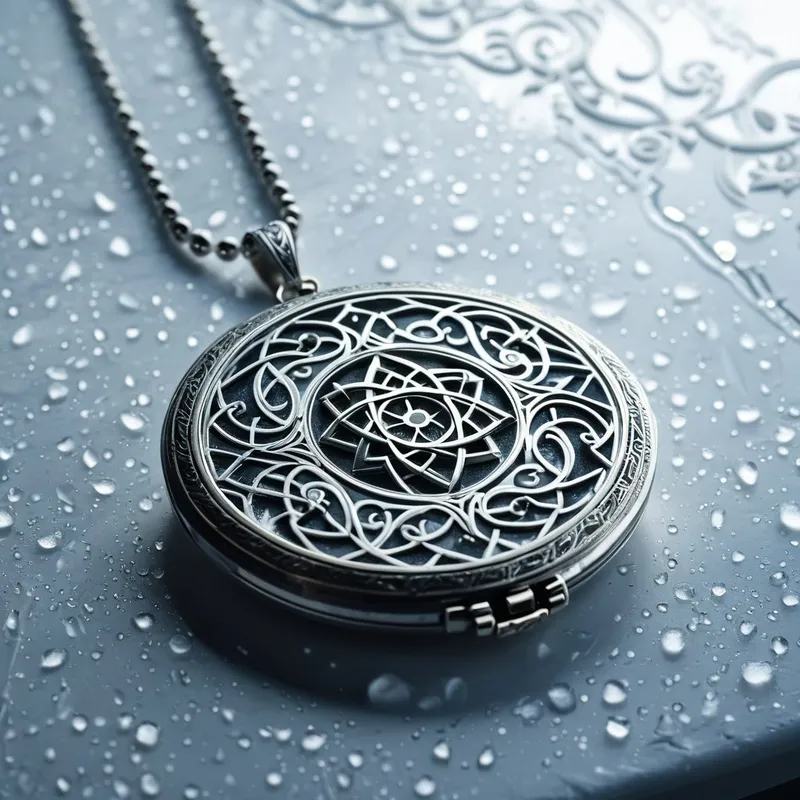
She stands in a room of pristine, white ice. In the center, on a pedestal of frozen light, rests a silver locket. It is shut, seamless, colder than the room itself. As she watches, a single drop of water forms at its hinge, hangs, trembles, and falls. Where it hits the floor, the ice doesn't melt—it becomes clear as glass, revealing a tangled, luminous root system pulsing far below.
The alchemical interpretation: The frozen artifact of a protected memory begins to release its encapsulated truth, and the initial release does not destroy the structure but transforms it into a medium of vision, revealing the connected, living systems beneath the personal history.
The False Lead
This is not a theme of simple "bad luck" or transient sadness. It is not the weather of a passing mood. To mistake an Emotional Thaw for mere melancholy is to confuse the birth pangs of a new consciousness with a common cold. The thaw is structural, not situational. It is the psyche initiating a necessary, often terrifying, process of liquefaction—turning frozen history back into navigable, if turbulent, current. It is the opposite of falling apart; it is the beginning of a profound reintegration, where solidified trauma and numbed grief are returned to their fluid, workable state. The discomfort is not a sign of breaking, but of becoming functional again.
Psychological Architecture
The architecture here is one of controlled dissolution. We freeze experiences not out of weakness, but as an act of profound survival. A trauma, a loss, a betrayal—the psyche, in its infinite wisdom, encases these events in psychological permafrost. It says, Here, we shall stop. We shall feel no more of this, for to feel it would overwhelm the system. And so, a part of the self goes into cryo-sleep, and with it, a spectrum of feeling is locked away. The Shadow work of the Thaw is the agonizing, respectful melting of this ice. It is the slow warming of exiled parts—the grieving child, the furious adolescent, the betrayed lover—who have been preserved in perfect, painful stasis. Individuation demands the reclamation of these frozen citizens. You do not heal the ice; you must, with unbearable compassion, allow it to become water again, to join the river of your being. This is the process of moving from a fragmented, frozen state to a fluid, integrated one. The ego does not direct this thaw; it must learn to stand in the resulting flood and trust it will not drown, but cleanse.
Mythic Resonance
Consider the myth of Demeter and Persephone. The world freezes not when Persephone is taken, but when Demeter’s grief becomes absolute, when she refuses all consolation and growth ceases. The thaw—the return of spring—is not triggered by Persephone’s mere return, but by the negotiated acceptance of the cycle. The thaw is the moment the rigid, absolute stance of winter-grief softens into the complicated, bittersweet truth of life-in-death and death-in-life. The ice of pure despair melts into the fertile mud of enduring, cyclical love. Similarly, in the Arthurian cycle, the Wasteland is a kingdom frozen by a hidden, unacknowledged wound—the Fisher King’s. Its thaw and restoration come only when the right question is asked, piercing the frozen silence of shame, allowing the waters of life to flow again. The thaw is always preceded by a question that vulnerability makes possible.
Symbolic Nodes
- Melting Ice & Thawing Rivers: The primary image. Ice turning to water, glaciers calving, frozen waterfalls beginning to drip.
- Frozen Objects Thawing: Clocks restarting, locked mechanisms becoming unstuck, food defrosting, flowers preserved in ice opening.
- Condensation & Beads of Water: Sweating walls, dewdrops on a spiderweb in a cold room, a glass of water "sweating" in a warm hand.
- Cracking Surfaces: Ice cracking underfoot (not breaking through), thawing mud with deep footprints, permafrost fracturing.
- Warmth in Cold Places: A single sunbeam in a snow-covered forest, a hearth fire in an abandoned cabin, a pocket of geothermal heat under ice.
Archetypal Resonance
The energy of the Emotional Thaw resonates most powerfully with The Innocent Archetype—not its naive, sunny shadow, but its core, essential self. The Innocent is not about ignorance, but about the capacity for basic trust and the raw, unfiltered experience of feeling. It is the part of us that can be wounded, that knows pure joy and pure sorrow without mediation. In the freeze, the Innocent is placed in suspended animation to protect it. The Thaw is the re-animation of this archetype—the return of the capacity to feel directly, to trust the process of life again, and to experience vulnerability not as a weakness, but as the fundamental condition of being alive. Its somatic echo is that first, shocking breath of warm air into frozen lungs; its alchemical potential is the transformation of brittle protection into resilient openness.
The Alchemical Process
The alchemy here is Solution—the stage where the solid is dissolved into the liquid by the gentle, persistent application of Aqua Vitae, the Water of Life, which is conscious attention and compassionate awareness. The heat is not a roaring fire, but a low, consistent warmth—the heat of held space, of therapy, of a safe relationship, of one’s own unwavering gaze. The pressure is the tension between the desire to re-freeze everything for peace and the soul’s imperative to flow. You are the vessel, the solvent, and the substance dissolving, all at once. The terror is the fear of drowning in the released emotions; the grief is for the frozen, simple stability that is being lost. The transmutation occurs in the moment you realize the water you are afraid of is you. Sovereignty is not built by stopping the flood, but by learning to swim in it, to direct its currents, and eventually, to drink from it. The frozen, separate thing becomes the fluid, integrated self.

The Integration Protocol
Question 1: Where in my body do I feel a sense of permanent "cold" or numbness? If that area could speak its first word upon thawing, what would it be?
Question 2: What single memory or feeling did I "put on ice" long ago because it was too much to feel then? What has changed in me that might make it possible to be with it now, not to solve it, but to let it exist?
Question 3: If my current emotional state were a landscape of water and ice, what is the proportion? Is it a glacier with a meltwater stream, a frozen lake with cracks, or a slushy, muddy field? What is the primary source of warmth causing the change?
Action 1 (Somatic Grounding): For three minutes, place your hands gently over your heart and solar plexus. Breathe naturally. Do not try to feel anything. Simply notice any sensation—warmth, coolness, pressure, vibration, emptiness. Your only task is to be the witness to that territory, without judgment, as if observing a distant landscape. This grounds the process in the body.
Action 2 (Unstructured Writing): Set a timer for 10 minutes. Write from the perspective of the ice itself. Let it speak. "I am the ice that holds… My job has been to… I am afraid that if I melt…" Do not edit or direct. Let the voice of the frozen protector express itself. This gives form to the structure that is changing.
Action 3 (Ritual of Flow): Find a natural body of moving water—a stream, river, or even a steady rain gutter. Hold a small, smooth stone in your hand. Name it for one frozen feeling (e.g., "the stone of silent grief"). As you hold it, feel its weight and temperature. Then, gently place it at the water's edge and watch the current flow over and around it. Do not throw it in. Simply observe the water interacting with the stone. This externalizes the process of the thaw—the persistent, gentle flow working on the solid object.
Final Validation
This thawing is a brutal kind of grace. It hurts because it is a return to life, and life is feeling. To feel the ice melt is to feel the ache of circulation returning to a limb long numbed. It is messy, uncontrollable, and often frightening in its power. Honor the intelligence that froze what it did to save you. And now, honor the deeper intelligence that is initiating the spring. You are not falling apart. You are becoming fluid, capable of navigating depths you could only stand upon before. The thaw does not ask you to control the water, but to remember you are made of it, and to trust the ancient, knowing course it will find.