
Emotional Texture: The Psyche’s Somatic Weave
Before a feeling has a name, it has a texture. It is the raw, pre-verbal data of the soul, the unprocessed material from which our conscious emotions are later, and often crudely, constructed. To dream of texture is to be invited into the loom room of the psyche, where experience is not yet story but sensation—a place where grief might feel like cold, wet granite, joy like sun-warmed honeycomb, and anxiety like the static buzz of frayed wool against the skin. This is the domain of Emotional Texture, the dream theme where feeling bypasses the mind’s lexicon and speaks directly to the body’s memory.
The Somatic Echo
It begins not as a thought, but as a resonance in the vessel. You wake with the ghost of a sensation imprinted upon your nervous system: the grating scrape of sandpaper where your heart should be, or the velvety, suffocating press of deep moss against your chest. This is the somatic echo—the body remembering what the mind has yet to articulate. It is the residue of an internal encounter, a tactile memory of a psychic event. The gut clenches like knotted rope; the shoulders carry the weight of rough-hewn stone. These textures are the first language of the unconscious, a direct broadcast from the shadowlands of feeling into the physical theater of the self. To ignore this echo is to dismiss the primary document of your inner world in favor of its clumsy translation.
The Dreamer’s Log
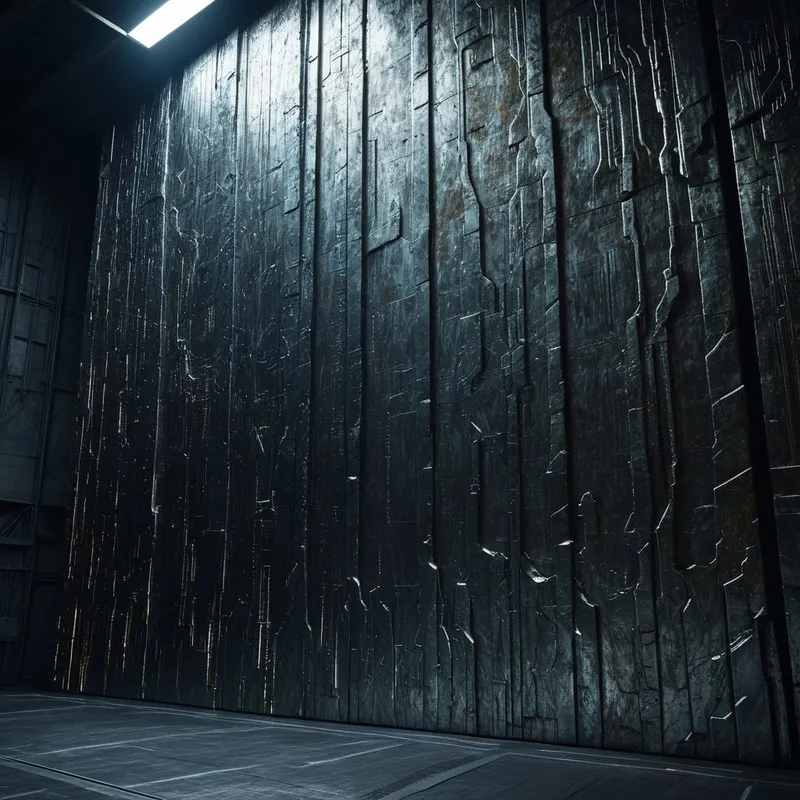
In the dream, I am in a vast, silent hall. My only task is to run my fingertips along a wall that stretches into darkness. One section is polished obsidian, cool and seamless. The next is a brutal patchwork of rusted iron and torn burlap that snags on my skin. I move between them, compelled, my sense of self shifting with each texture I encounter.
Here, the dreamer’s psyche presents its internal landscape as a tactile map. The alchemical interpretation: The conscious self is being guided to physically integrate the contrasting, unassimilated textures of its own history—the polished persona and the raw, corroded shadow.
The False Lead
This theme is not about superficial discomfort or the random “bad feel” of a dream. A nightmare of falling is not primarily a textural dream, though it may contain the sensation of wind. Emotional Texture is the substance of the encounter itself. It is not the monster, but the slime of its trail; not the lost lover, but the specific, lingering silk of their absence on your skin. To misinterpret this as mere unpleasantness is to confuse the messenger for the message. The texture is the message—the raw material delivered for your conscious hands to work.
Psychological Architecture
The work of Emotional Texture is the foundation of Shadow integration. Our psyche, in its wisdom, often cannot give us a coherent narrative of a trauma, a complex grief, or a buried joy. It can, however, encode it as a somatic signature—a texture. When you dream of crumbling drywall, you are not dreaming of home repair; you are being shown the friable, unstable structure of a belief you inhabit. When you feel the pull of viscous tar, you are being asked to experience the density of a resentment you carry, not just think about it.
This is depth work. It requires you to descend from the bright, wordy upper floors of your mind into the basement of sensation. Here, in this dark, you must feel the rough bark of old shame, the slippery algae of avoided truth, the piercing shard of a crystalline insight. This is Individuation in its most grounded form: the process of reclaiming every scrap of your feeling-self, every texture, and weaving it into the larger tapestry of who you are. You are not analyzing the shadow; you are learning its grain and its temperature.
Mythic Resonance
We see this in the story of the Gordian Knot. The kingdom’s future was bound not by a simple problem, but by an impossibly complex, textured entanglement—a knot of countless leather thongs, with no visible end or beginning. The oracle said whoever could untie it would rule Asia. Many tried and failed, tracing its convoluted pathways, feeling its stubborn, knotted resistance. Alexander, faced with this dense physical metaphor for intractable conflict, did not try to patiently unpick it. He understood its nature as an impenetrable texture of political and spiritual strife, and with a stroke of his sword, he cut through the core of the matter. The myth reminds us that some textured complexities in our psyche are not meant to be patiently untangled thread by thread; they require a profound, decisive shift in perception to transmute their nature.
Symbolic Nodes
- Rough Surfaces: Sandpaper, burlap, rust, bark, coarse hair. Unprocessed anger, neglected grief, abrasive memories.
- Smooth/Polished Surfaces: Glass, ice, marble, polished metal. Emotional defenses, intellectualization, a persona that feels seamless but cold.
- Porous/Absorbent Surfaces: Sponge, moss, damp earth, bread. Empathic overload, porous boundaries, soaking up the emotional states of others.
- Sticky/Viscous Substances: Tar, honey, sap, mud. Entanglement, obsession, guilt that clings, sweetness that traps.
- Fraying/Unraveling Materials: Frayed rope, unraveling knit, peeling paint. Erosion of stability, dissociation, a sense of coming apart.
- Interwoven Textures: Basketry, chainmail, quilts of disparate fabrics. Integration in process, the complex weaving of multiple life experiences or identities.
Archetypal Resonance
The psychological process of engaging Emotional Texture resonates most deeply with The Creator Archetype. This is not the Creator in its shadow aspect of mad, solipsistic invention, but in its essential form: the Artist, the Architect of the Self. The Creator’s fundamental drive is to bring raw, unformed material into a meaningful, tangible reality. In the realm of Emotional Texture, the raw materials are the very sensations of the soul—the grit, the silk, the cold, the heat. The Creator within us is summoned to take these disparate, often chaotic somatic echoes and, through the act of conscious attention and integration, weave them into the coherent fabric of a more whole self. The work is deeply alchemical: it transforms base, felt experience into the gold of self-knowledge and authentic expression.
The Alchemical Process
The transmutation of Emotional Texture requires the heat of sustained, non-judgmental attention—the nigredo, or blackening. You must hold the sensation in your awareness without fleeing into story or analysis. Feel the cold dread as if it were a literal sheet of ice against your skin. Endure the grating anxiety as a physical rasp. This focused attention is the alchemical fire. The pressure is the willingness to stay present with the discomfort, to allow the contradiction of, say, a “sharp loneliness” or a “heavy joy” to simply exist.
In this crucible of feeling, the texture begins to change. The ice may melt to reveal a clear, still pool (clarity). The grating rasp may wear down into a smooth, useful stone (resilience). This is the albedo, the whitening—the purification and separation of the essential quality from the raw, painful sensation. The grief was not just a suffocating weight; it was the density of love with nowhere to go. By feeling its texture completely, you liberate its core truth, integrating it into your being. The final sovereignty comes from knowing you can hold any texture your soul produces, and in holding it, you transform it from a foreign object into a thread in your own tapestry.
The Integration Protocol
Question 1: Upon waking, if you could assign one primary texture to the emotional residue of the dream (e.g., gritty, silken, viscous, brittle), what would it be? Don’t explain why—just name the texture.
Question 2: Where in your body do you most vividly feel the echo of this texture? Is it a surface sensation on the skin, or a quality deep within the organs or bones?
Question 3: If this texture were a material you had to work with—to sand, to mend, to polish, to weave—what would your first, most instinctual action be?
Action 1 (Somatic Anchoring): For one minute, sit quietly and physically mimic the dream texture with your hands. If it was rough, rub your palms together briskly. If it was sticky, press and slowly pull your fingers apart. If it was cold, hold a cool stone. Let the physical action bridge the dream sensation back into your waking body.
Action 2 (Texture Journal): Create a two-page journal spread. On one page, using only colors, lines, and shapes (no words or recognizable images), visually express the dream texture. On the facing page, write freely, but only using metaphors of touch, temperature, and substance to describe a current waking-life feeling. Let the two “textures” converse.
Action 3 (Elemental Ritual): Choose a natural element that corresponds to the texture (earth for grit/density, water for viscous/fluid, air for frayed/light, fire for sharp/burning). Go to that element—a garden, a sink, an open window, a candle. State aloud, “I release the story and keep the sensation,” then interact with the element (touch soil, run water over hands, feel the breeze, pass your hand safely through the flame). This ritualizes the act of transmuting raw sensation into conscious experience.
Final Validation
This work is not clean. It is the antithesis of intellectual neatness. To engage with the Emotional Texture of your dreams is to get your hands dirty in the primal clay of your own being. It is frustrating, confusing, and deeply vulnerable. Honor that difficulty; it is a sign you are touching the real, unvarnished material of your soul. Yet within this very vulnerability lies your profound agency. You are not a prisoner to these sensations. You are the weaver, the sculptor, the alchemist. By courageously feeling the texture, you claim the right to transform it. The rough becomes character. The cold becomes clarity. The tangled becomes tapestry. Your sovereignty is woven, thread by felt thread, in this intimate, tactile communion with all that you are.