
The Emotional Crucible: Alchemy of the Unbearable Feeling
The Somatic Echo
It begins not as a thought, but as a density. A weight in the solar plexus that feels both molten and leaden. The breath catches, not in the throat, but lower, as if the lungs themselves are resisting an atmosphere that has become too rich, too potent to process. The skin becomes a sensitive membrane, registering every shift in the emotional weather of the room, of memory, of a future not yet born. There is a hum in the bones, a low-grade fever of the spirit. This is the somatic signature of the Emotional Crucible—the body’s knowing that it has become the vessel for a transformation it did not consciously choose, but one it must now endure. The mind, our brilliant cartographer, is the last to arrive at the scene, scrambling to map a territory that is already shifting underfoot.
The Dreamer's Log
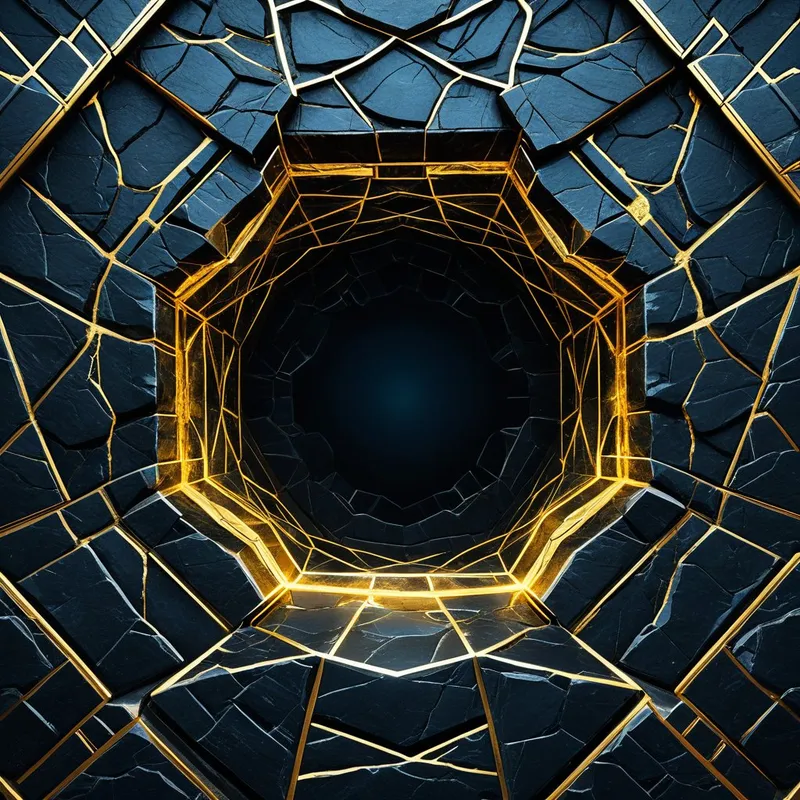
The dreamer finds themselves in a derelict data-center, the air humming with the ghost of old transmissions. In the center of the vault stands a single, transparent cylinder, cracked but holding. Inside, a viscous, amber-gold substance churns and bubbles, fed by a thousand thin, fiber-optic threads that pierce the glass from all directions, each carrying a flickering pulse of memory, regret, and unspoken truth. The dreamer knows, with a certainty that bypasses logic, that they are both the substance within and the fragile vessel containing it.
This is the psyche presenting its core dilemma: you are the raw, chaotic material of your history, and you are the only container strong enough to hold it while it transforms.

The False Lead
This is not a dream of simple misfortune or passing grief. The Emotional Crucible is not the universe handing you a "bad day" or a streak of "bad luck." To mistake it for such is to personalize a cosmic process. The pressure you feel is not persecution; it is purpose. The heat is not punishment; it is purification. The crucible dream signals a structural, foundational shift in the very composition of the self. It is the difference between weathering a storm and becoming the ground from which a new mountain range is born. The terror is real, but its source is not external malevolence—it is the terrifying friction of two selves, the old alloy and the nascent gold, grinding against each other in the dark.
Psychological Architecture
Within this vessel, the psyche’s internal family system enters a state of emergency council. The protective Manager parts, who built the old walls, scream about containment breaches. The exiled Firefighter parts, who numb and distract, find their usual solvents useless against this all-consuming heat. And the fragile, wounded Exiles—the sources of our core grief, shame, and fear—are no longer buried. They are presented. They are the very ore in the melt. This is the shadow work of the crucible: not fighting the darkness, but consenting to be immersed in it until your eyes adjust and you can see the shapes within. Individuation here is not a gentle unfolding; it is a volcanic event. It is the process by which the disparate, often warring, elements of your being are subjected to an intensity that forces a fundamental recombination. You do not emerge "healed" in the sense of being repaired to a prior state. You emerge reconstituted—a new compound, with new properties, forged in the heart of what you believed would destroy you.
Mythic Resonance
We see this in the tale of the goddess Inanna, who must descend through seven gates, stripped of her every worldly attribute and power, to face her sister Ereshkigal in the raw, screaming underworld. She is not fighting a monster; she is facing the part of herself that is pure, undifferentiated anguish. She hangs, a corpse on a hook, for three days and nights—the ultimate crucible. Her return, facilitated by allies, is not a return to her old self, but as a being who now carries the knowledge of both heaven and hell within her. Similarly, the alchemical nigredo, the blackening, was not a failure but the essential first step—the dissolution of all form into the primal massa confusa so that true transmutation could begin. The crucible is the mythic stage for this universal, non-negotiable law: creation requires a prior, terrifying un-creation.
Symbolic Nodes
- Forged or Melting Metal: Iron being shaped, gold liquefying.
- Pressure Vessels: Boilers, reactors, sealed chambers holding volatile forces.
- Geological Extremes: The magma chamber of a volcano, the intense pressure at a tectonic fault line.
- Contained Fires: A blast furnace, a kiln at peak temperature, a single flame in a glass bell jar.
- The Vessel Itself: A cracked but holding bowl, a crucible, a cauldron, a sealed capsule.
Archetypal Resonance
The energy of the Emotional Crucible resonates most powerfully with The Magician Archetype, specifically in its shadow phase as the trapped alchemist. This is not the Magician in command of reality, but the Magician who has become trapped within their own experiment. The core energy is one of intense, focused transformation, but the somatic echo is the claustrophobia and terror of the process itself—the fear that the formulas have failed and the elements have turned against their master. The alchemical potential lies precisely here: in the surrender of control. The shadow Magician must stop manipulating the elements and instead become the elements in flux, learning that true power arises not from command, but from a conscious, willing participation in one's own dissolution and rebirth. The crucible is the Magician's ultimate test of faith—not in their tools, but in the process itself.
The Alchemical Process
The transmutation here follows the ancient formula: Solve et Coagula—Dissolve and Coagulate. The "solve" is the brutal, necessary deconstruction. The heat of the crucible is applied by life itself—loss, betrayal, profound failure, existential dread—but its purpose is to break the brittle bonds of your old identity, your outdated narratives, your protective numbness. The grief and terror are not byproducts; they are the solvents. This is the phase where everything feels like it is falling apart because it is. The "coagula" cannot be forced. It is the mysterious emergence of a new pattern from the chaos, like a crystal forming in a supersaturated solution. It happens in the stillness after the fire, in the patient waiting. The sovereignty gained is not dominance over your emotions, but an unshakeable familiarity with them. You have met the chaos at its source and found, to your astonishment, that it is not alien. It is the raw material of your soul. The gold you forge is not happiness, but a profound and earned integrity—a self that can hold its own complexity without shattering.
The Integration Protocol
Question 1: Where in my waking life do I feel the most intense, inescapable pressure or heat? If I were to stop resisting it for a moment, what single, raw emotion is at its absolute core?
Question 2: What old, familiar part of my identity or belief feels like it is being dissolved or melted away in this process? Can I name it and thank it for its service, even as I let it go?
Question 3: If the substance in the crucible—that churning, chaotic mix—had a voice, what one word or phrase would it be repeating? Not a story, but a pure, distilled signal.
Action 1 (Somatic Anchoring): When you feel the crucible's heat rise, place both hands on your lower abdomen. Breathe deeply into that pressure for three cycles. Do not try to change it. Simply acknowledge, "This is the heat of the work. I am the vessel." This grounds the process in the body, transforming panic into witness.
Action 2 (Unstructured Expression): Set a timer for 10 minutes. With pen and paper, write or draw from the perspective of the material inside the crucible. Let it describe its state—its chaos, its heat, its fear, its potential. Use no logic. The goal is not a product, but a release of the internal pressure into a form outside yourself.
Action 3 (Ritual of Vessel-Hood): Find a small, durable stone or piece of metal. Hold it while you consciously recall a recent moment of intense emotional pressure. Pour that memory into the object in your mind's eye. Then, take it to a boundary—a river, a crossroads, the edge of a park—and bury it or place it securely. This is a physical ritual that says, "I can contain this, and I can also release its hold. I am both the crucible and the alchemist who decides when the work is done."
Final Validation
To dream of the crucible is to receive a testament to your own profound depth. It is, in its essence, a brutal compliment from your soul. The intensity you feel is the measure of the transformation underway; a shallow self does not require such heat. The fear is real, the grief is valid, and the exhaustion is earned. You are not breaking. You are being remade. And the sovereignty that awaits on the other side of this fire is not a calm, placid lake, but a deep, resilient mountain range—forged in pressure, tempered by time, and unshakeable because it has met its own core and found it to be, not a void, but a forge.