
The Emotional Core: Dreaming the Foundation of the Self
We do not live on the surface of our skin. We live from a center, a deep and often silent place where feeling is first born, before thought gives it a name, before story gives it a shape. This is the emotional core: the bedrock of being, the primal forge where experience is transmuted into the substance of a soul. To dream of it is to be summoned below the daylit world of persona, into the subterranean chambers where the raw materials of self are kept.
The Somatic Echo
Before the image forms, the body knows. It is a sensation of profound gravity, a pull toward the center that feels less like movement and more like a settling of all your atoms. There is a density in the chest, the solar plexus, the gut—not the sharp spike of panic, but the deep, resonant thrum of an ancient engine. It can feel like a hollow ache, a cavernous emptiness that paradoxically feels full of potential. Or it can feel like a pressurized core, a molten center contained by a thin shell, radiating a heat that is neither comfortable nor painful, but simply true. The breath becomes shallow, not from fear, but from reverence; you are in the presence of something foundational. Your mind may call it anxiety, grief, or longing, but the somatic echo whispers its real name: homecoming.
The Dreamer's Log
The dreamer stands in a vast, derelict server farm. The air hums with the ghost of data. Row upon row of black server racks stand silent, their indicator lights dark. In the center of the polished concrete floor, exposed like a forgotten relic, lies a single, human heart. It is not bloody or grotesque, but preserved, almost geological, and it pulses with a soft, internal light. Thin, crystalline filaments root it to the floor, as if it is both the source and the prisoner of this dead network.
This is the alchemical image: the living core, vital and vulnerable, discovered at the center of a defunct system of storage and processing. The dream reveals the emotional core not as a problem, but as the sole remaining power source in a psyche that has otherwise gone offline.

The False Lead
This theme is not about a passing mood or a circumstantial wave of sadness. It is not "feeling emotional" about a bad day. That is weather. The emotional core is climate. To mistake this profound, architectural encounter for mere "bad luck" or neurochemical fluctuation is to stand before a revealed cornerstone and complain about the dust. The terror or grief here is not a symptom to be medicated away, but a signal of immense pressure from within—the pressure of a self that has outgrown its old foundations and is now, inevitably, restructuring from the ground up.
Psychological Architecture
The work here is the deepest form of Shadow excavation, a descent past the familiar inner critics and wounded children, past the roles of victim and hero. You are digging toward the reason those parts formed. You are seeking the primal wound, the foundational fracture that caused the whole internal system to organize around a central, often unconscious, belief: I am unlovable. I am unsafe. I am a burden. I must not be felt.
Individuation in this realm is not about adding new traits to the personality, but about re-founding the personality upon this rediscovered core. It is the process of meeting that raw, pulsing heart in the data center and choosing, consciously, to reroute all power through it. To feel the old, paralyzing grief not as an enemy, but as the proof of your own capacity for depth. To allow the terror of being truly seen, even by yourself, to become the very ground of your authenticity. The architecture shifts from a fortress built to keep the core contained, to a temple built to house and honor it.
Mythic Resonance
This is the journey of Inanna, the Sumerian goddess who descends through the seven gates of the underworld, stripped of her symbols of power at each threshold, until she stands naked and lifeless before her dark sister, Ereshkigal. She does not go to fight, but to witness a death—the death of her surface self. Her return, facilitated by allies, is not a return to what she was, but an ascent with a new, hard-won depth etched into her being. The emotional core is that naked, lifeless state: not an end, but the essential, fertile void from which a more complete sovereignty is born.
Symbolic Nodes
- Hearts, Crystals, or Centralized Engines: The core itself, depicted as an object of power, vulnerability, or antiquity.
- Foundations, Basements, Sub-basements, Caves: The psychic location, always downward.
- Forgotten or Sealed Rooms: Parts of the self walled off during early construction.
- Central Power Sources (Reactors, Furnaces, Suns): Often depicted as damaged, overloading, or dormant.
- Root Systems, Mycelial Networks, Anchors: Images of connection to a deeper, sustaining ground.
- Empty Centers in Busy Places: A bustling city square with a still, silent fountain at its heart.
Archetypal Resonance
The Orphan Archetype is the eternal guardian of the emotional core. Not its shadow—the Victim, who wallows in the wound—but the Orphan in its essential, realist power. The Orphan knows, better than any other, that the surface world is not ultimately reliable. It has felt the foundational fracture. Its journey is not to avoid this pain, but to embrace its truth, to survive it, and in doing so, to discover an inner resourcefulness and resilience that needs no external validation. The somatic echo of the hollow ache is the Orphan's homeland. Its alchemical potential lies in its brutal, compassionate honesty: it refuses to pretty things up. It forces the confrontation with the raw, unadorned core feeling, and in that courageous act of witnessing, begins the transmutation of abandonment into profound self-belonging.
The Alchemical Process
The transmutation of the emotional core requires the heat of sustained attention and the pressure of radical acceptance. This is the nigredo, the blackening. You must consent to sit in the dark with the wound, not to analyze it, but to feel its full texture, its age, its weight. The grief is the solvent. The terror is the fire. The process feels like dissolution because it is; the old identity, built as a reaction to the core wound, begins to soften and melt under this direct gaze.
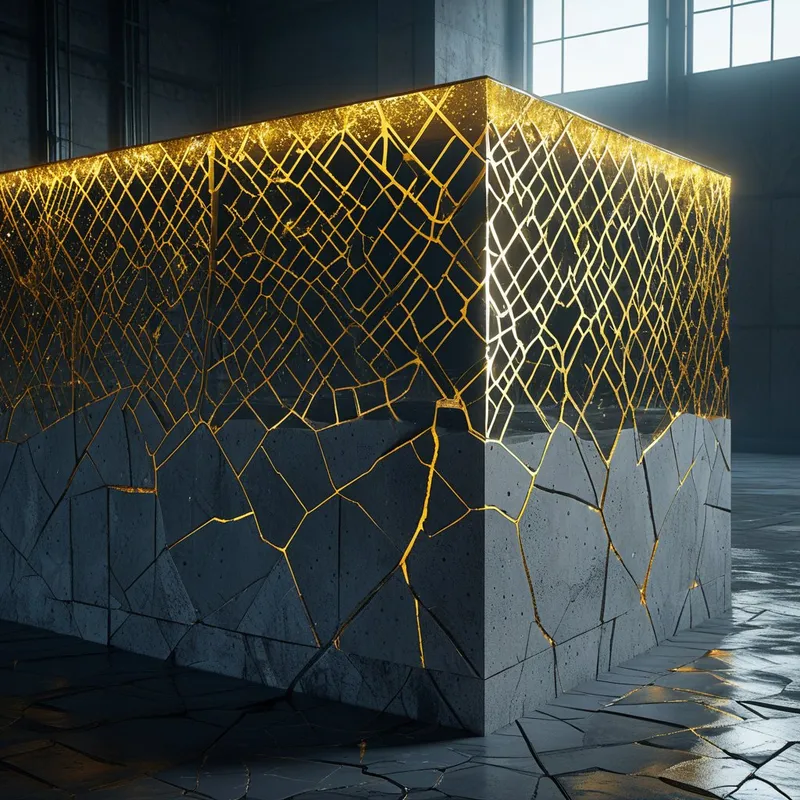
The pressure comes from refusing the old escapes—the spiritual bypass, the numbing agent, the frantic reconstruction of a new persona on the same cracked foundation. You must hold the space, allowing the molten core to reshape itself. The albedo, the whitening, appears when the feeling is fully felt and, in that completion, reveals its opposite: the deep peace at the center of the grief, the solid ground beneath the terror. The core is not healed by being replaced; it is integrated by being fully known. Its raw power, once a threat to the system, becomes the system's new, authentic source of energy.
The Integration Protocol
Question 1: If the feeling at my center had a shape, a weight, and a temperature, what would they be? Not a story about why it’s there, but its pure, physical properties.
Question 2: What is the oldest memory I have of feeling this exact somatic echo? What was the young self trying to protect by building walls around this core?
Question 3: If this core feeling were not a problem, but a source of power, what kind of strength would it give me? (e.g., the strength of deep empathy from grief, the strength of clear boundaries from terror).
Action 1 (Somatic Anchoring): For three minutes each day, place a hand over your heart or solar plexus. Breathe into that space. Do not try to change what you find there. Simply acknowledge its presence with the internal phrase: "This, too, is here."
Action 2 (Core Mapping): Engage in unstructured writing or drawing. Let the prompt be: "The geography of my center." Follow the impulse without judgment. Draw the cavern, the engine, the abandoned room. Write the description of the landscape. Let the creative act be an exploration, not a production.
Action 3 (Ritual Re-founding): Find a small, smooth stone. Holding it, pour into it—through silent intention or whispered words—the acknowledgment of one core feeling you have met (e.g., "I place my ancient grief here"). Take it to a natural body of water, a crossroads, or bury it in soil. This is not about discarding, but about consciously relocating that energy from your internal prison to the wider world, signaling that it is now free to transform.
Final Validation
This work is not for the faint of heart. To descend to the bedrock of your own being is to willingly enter the most vulnerable and powerful place that exists. The difficulty is the measure of its importance. That hollow ache, that pressurized heat, is not a sign of your brokenness, but a beacon from your wholeness. It is your untouched self, your foundational truth, calling you home. To answer that call is to begin the alchemy of turning the lead of ancestral wounding into the gold of unshakable, embodied sovereignty. The core awaits, not as a judge, but as the source. Your only task is to dare to feel it.